Bulk vs Bagged Chicken Feed: Which One Should You Buy?
Bulk and bagged feed differ in bag size, form and storage, not in the job itself: match the bag to the flock, the feeder and the storage you have.

On this page
Top picks at a glance
As an Amazon Associate I earn from qualifying purchases.
- 1
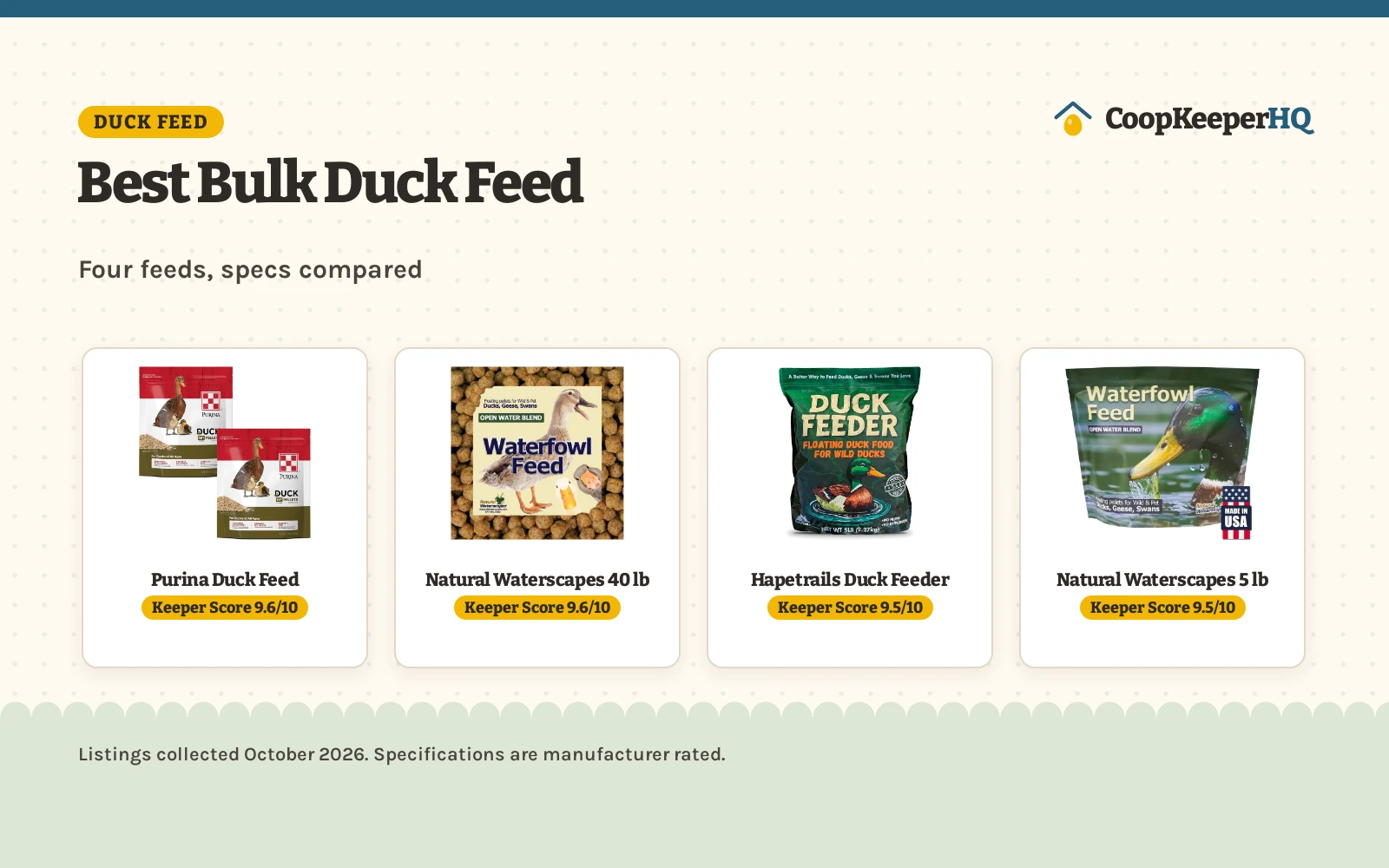
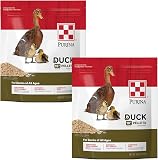 Purina Duck Feed for All Life-Stages9.6/10View on Amazon
- 2
 IRIS USA 58 lb Airtight Feed Storage Container with Wheels9.7/10View on Amazon
- 3
 Natural Waterscapes Waterfowl Feed Open Water Diet 40 lb9.6/10View on Amazon
- 4
 PurinaView on Amazon
- 5
 Prairie's Choice Non-GMO Backyard Chicken FeedView on Amazon
- 6
 Purina Layena + High Protein Layer Chicken FeedView on Amazon
- 7
 All Flock Feed PelletsView on Amazon
- 8
 Scratch and Peck FeedsView on Amazon
Bulk vs bagged chicken feed comes down to how fast the flock eats and how much dry storage the keeper has. A big bag suits a keeper who goes through feed quickly, while a smaller sealed bag suits a keeper who wants to keep feed fresh between fills. Neither format wins on its own: the right choice is the bag that matches the flock in front of you, the feeder you fill, and the storage you have.
Other options for the coop
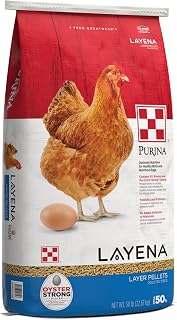 PurinaCheck price on Amazon
 Prairie's Choice Non-GMO Backyard Chicken FeedCheck price on Amazon
 Purina Layena + High Protein Layer Chicken FeedCheck price on Amazon
 All Flock Feed PelletsCheck price on Amazon
 Scratch and Peck FeedsCheck price on Amazon
CoopKeeperHQ earns a commission if you buy through our links, at no added cost to you. Affiliate disclosure.
Bulk vs bagged chicken feed: what the bag changes
Bag size is the first difference a keeper notices. The feeds in this guide run from an 8 lb bag to 50 pound bags, with a 25 lb bag in between, so the same shelf can hold a small bag for a slow flock and a big bag for a flock that eats fast. A bigger bag usually means fewer trips to buy feed, but it also needs a dry spot to sit and a way to haul it: our garden cart for hauling chicken feed picks cover moving heavy bags, and a chicken feed container keeps an open bag dry and out of reach of pests.
Form is the second difference. The listings here offer crumbles, pellets and scratch, and each form suits a different feeding routine. Crumbles are easy to peck, pellets hold together in the feeder, and scratch is a grains and seeds blend sold as hen scratch rather than as a complete layer feed. Protein is the third difference: three of the listings here carry 16% protein for laying hens, while the scratch listing carries 10% crude protein, so reading the listing matters more than reading the bag size.
The feeds in this guide
Country Heritage leads this guide with a 50 pound bag of pelleted layer feed at 16% protein, with 2.5% fat and 8% fiber. The listing states it is a complete layer feed to be fed as the sole ration, for laying chickens from 16 weeks through productive life, and it names chickens, ducks and geese. It also states fortified calcium for strong eggshells, plus vitamins, minerals and omega-3s. For a keeper buying in bulk for laying birds, this is a complete pellet ration in a 50 pound bag, tied with the scratch bag as the largest bag size here.
Prairie’s Choice follows with a 25 lb bag of layer crumble at 16% protein. The listing states non-GMO, all-natural, antibiotic-free, non-medicated and gluten-free ingredients, for chickens 16-18 weeks of age or older, and it states the feed is grown, milled and packaged in the USA. It describes balanced nutrition that is easier to digest for layer hens. For a keeper who wants a mid-size bag with a non-GMO claim on the listing, this is the middle of the guide by bag size.
Manna Pro comes next with an 8 lb bag of layer crumbles at 16% protein, presented as a complete feed for laying hens with added probiotics and a digestive aid. The listing states the crumbles encourage easy pecking and reduce waste, and it lists small breeds in its breed recommendation. For a keeper with a small flock, or a keeper trying a new feed before committing to a big bag, the 8 lb bag is the smallest bag in this guide.
AMERICAN CLASSIC closes the guide with a 50 pound bag of hen scratch. The listing states a blend of whole grains, seeds and protein meals, with 10% crude protein and less than 2.5% crude fat, no artificial colors, flavors or preservatives, and manufacture in the USA. Keep it in its lane: the listing sells it as hen scratch, while the other three listings sell complete layer feeds, so it plays a different role in the daily routine even though its bag matches the largest bag here.
Crumbles, pellets and scratch
Crumbles are the most common form in this guide, with two listings offering layer crumble at 16% protein. The Manna Pro listing states its crumbles encourage easy pecking and reduce waste, and the Prairie’s Choice listing describes its crumble as easier to digest for layer hens. A keeper whose birds scatter feed may like that crumbles are easy to peck, while a keeper who wants less dust in the feeder may look at pellets instead.
Pellets hold their shape in the feeder. The Country Heritage listing states its pelleted form reduces waste compared to mash formulations, and it is the only pellet in this guide. Scratch is different again: the AMERICAN CLASSIC listing describes whole grains, seeds and protein meals, and presents the product as hen scratch rather than as a complete layer feed.
Storage and freshness
Feed keeps best dry, cool and sealed, and bag size decides how much storage the keeper needs. A 50 pound bag needs a container or a dry corner that can hold it, while an 8 lb bag fits a small bin on a shelf. Once a bag is open, a sealed container keeps moisture and pests out, and it keeps the feed from spilling across the coop floor. For a flock that eats slowly, an open big bag sits longer, so a keeper with damp storage may favor smaller bags.
Hauling matters too. A 50 pound bag is a load to carry from the car to the coop, and a garden cart earns its place on that trip. A keeper who buys bagged feed in smaller bags can carry each bag by hand, but makes more trips. Neither routine is wrong: the right one is the one the keeper will actually keep up, week after week, without feed sitting damp or spilling.
Choosing for your flock
Start with the flock in front of you. A keeper whose birds eat through feed fast will get more from a 50 pound bag, while a keeper with a few hens may find an 8 lb bag easier to keep fresh, since the flock finishes it sooner. Next, look at the form: crumbles and pellets both appear here as complete layer feeds at 16% protein, so the choice between them comes down to how the flock eats and what the feeder handles well. Then check the listing details that matter to you, such as the non-GMO claim on the Prairie’s Choice listing or the probiotics on the Manna Pro listing.
Finally, check the age range on the listing. The Country Heritage listing states from 16 weeks through productive life, the Prairie’s Choice listing states 16-18 weeks of age or older, and the Manna Pro listing states all life stages. A keeper with young birds still growing should read that range before buying, and a keeper with laying hens should look for a complete layer feed rather than scratch alone.
A short checklist before you buy
- Check the form: crumble, pellet or scratch, and what the listing states it is for
- Check the bag size against the storage and hauling help you have
- Check the protein on the listing: 16% on the layer feeds here, 10% crude protein on the scratch
- Check the age range on the listing before ordering
- Keep feed dry and sealed once the bag is open
How much feed your flock eats a day and a month, how long a bag lasts, and what it costs.
Wash your hands after handling birds, eggs or equipment, supervise children around the flock, and check local rules on flock size and roosters before you buy. For sick birds, call a poultry veterinarian or your state extension office. See CDC backyard poultry guidance. Read our Safety Disclaimer.
FAQ for the flock
Is bulk feed the same recipe as bagged feed?
Bag size is packaging, not recipe. Compare the protein and form on the listing: three layer feeds here carry 16% protein, while the scratch listing carries 10% crude protein, so two bags of the same size can still hold different feeds.
What size bag suits a small flock?
The smallest bag here is the 8 lb Manna Pro bag. A keeper whose flock eats slowly may prefer a smaller bag, while a flock that eats fast suits a 50 pound bag, since the feed moves before storage becomes a problem.
Are pellets or crumbles better?
Both forms appear here as complete layer feeds at 16% protein. The Country Heritage listing states its pellets reduce waste compared to mash, and the Manna Pro listing states its crumbles encourage easy pecking, so pick the form the flock eats cleanly.
Can scratch replace layer feed?
Scratch and layer feed are different listings here. The scratch listing gives 10% crude protein in hen scratch form, while the layer feeds give 16% protein as complete feeds, and the Country Heritage listing states feed as sole ration. Keep scratch as scratch.
What does non-GMO mean on a feed listing?
The Prairie’s Choice listing states non-GMO ingredients, along with antibiotic-free and non-medicated. If that claim matters to you, check the listing for it before buying, since the other listings here carry different claims.
More coop guides
- Best Chicken Feeder for Small Flock (2026): Top Picks Compared
- Best Chicken Feed Container Under $50 (2026)
- Best Garden Cart for Hauling Chicken Feed (2026): 5 Compared
- Best Grower Feed for Chickens (2026): 5 Compared
See the feeder and waterer guides and the coop supply guides.