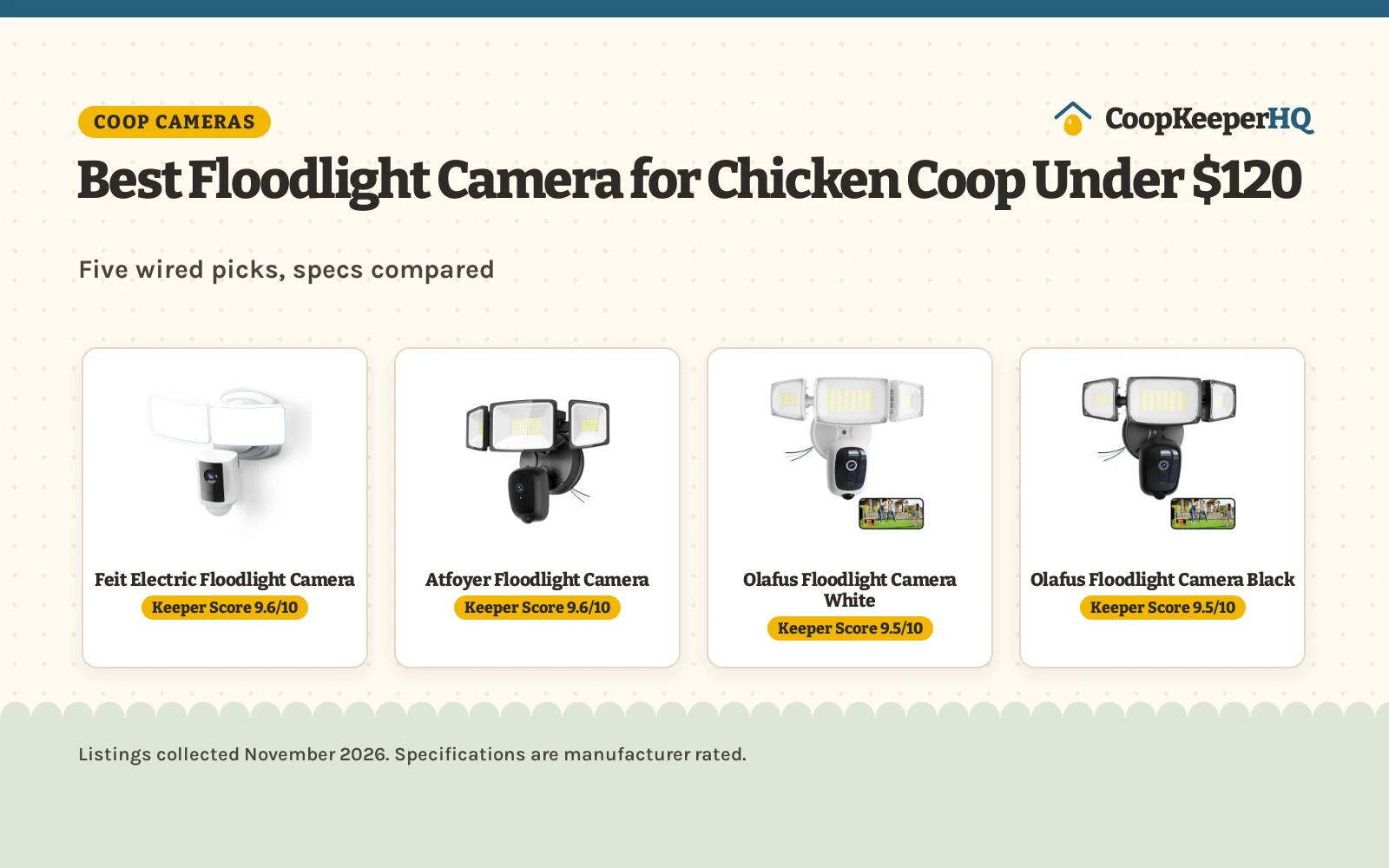
Best Floodlight Camera for Chicken Coop Under $120 (2026)
Five wired floodlight cameras for the coop compared on lumens, video, motion range, storage and warranty.

Automatic coop doors, timers, light sensors, coop cameras and coop lighting. Guides compare power source, trigger, door size, obstruction sensing, locking and how each door copes with cold weather.
The coop size calculator works out coop floor space, run space, roost length and nesting boxes for your flock, and the first-flock checklist walks through what to buy in order.
Five wired floodlight cameras for the coop compared on lumens, video, motion range, storage and warranty.
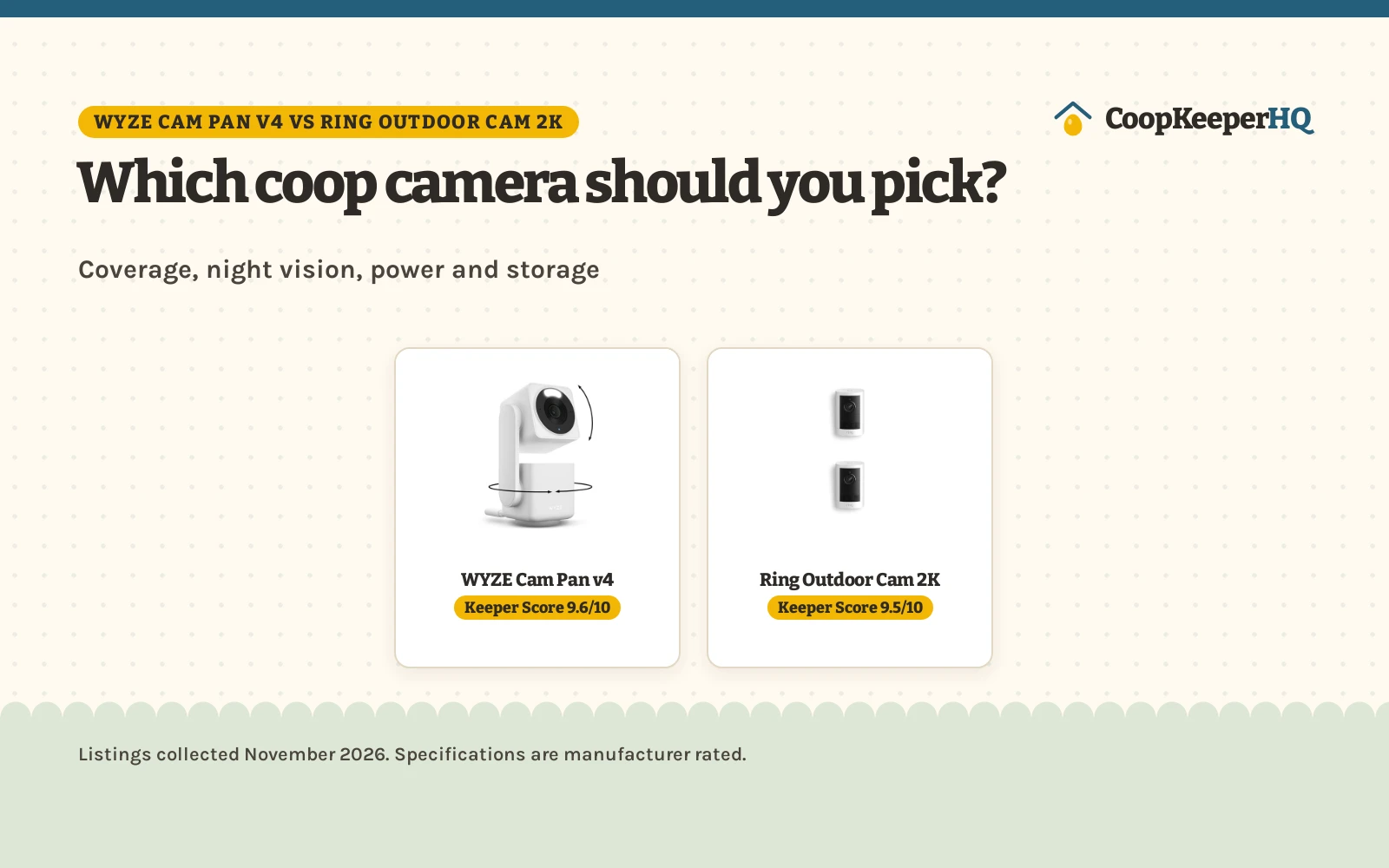
A 4K pan and tilt camera and a battery 2K camera compared on coverage, night vision, power and storage, with one example of each…
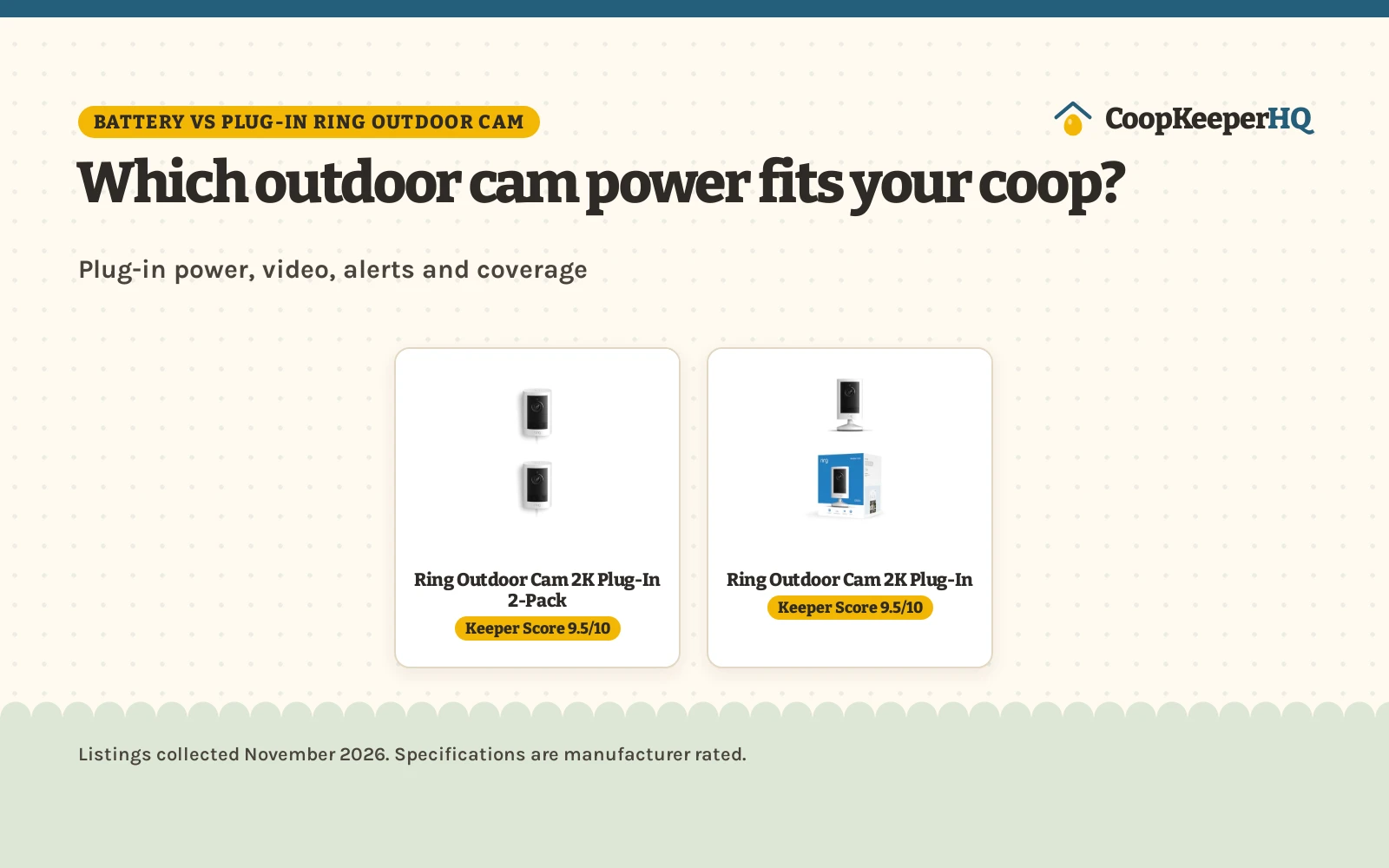
Battery and plug-in power compared for a Ring outdoor cam on the coop, with Retinal 2K video, zoom, night vision and alerts from two…
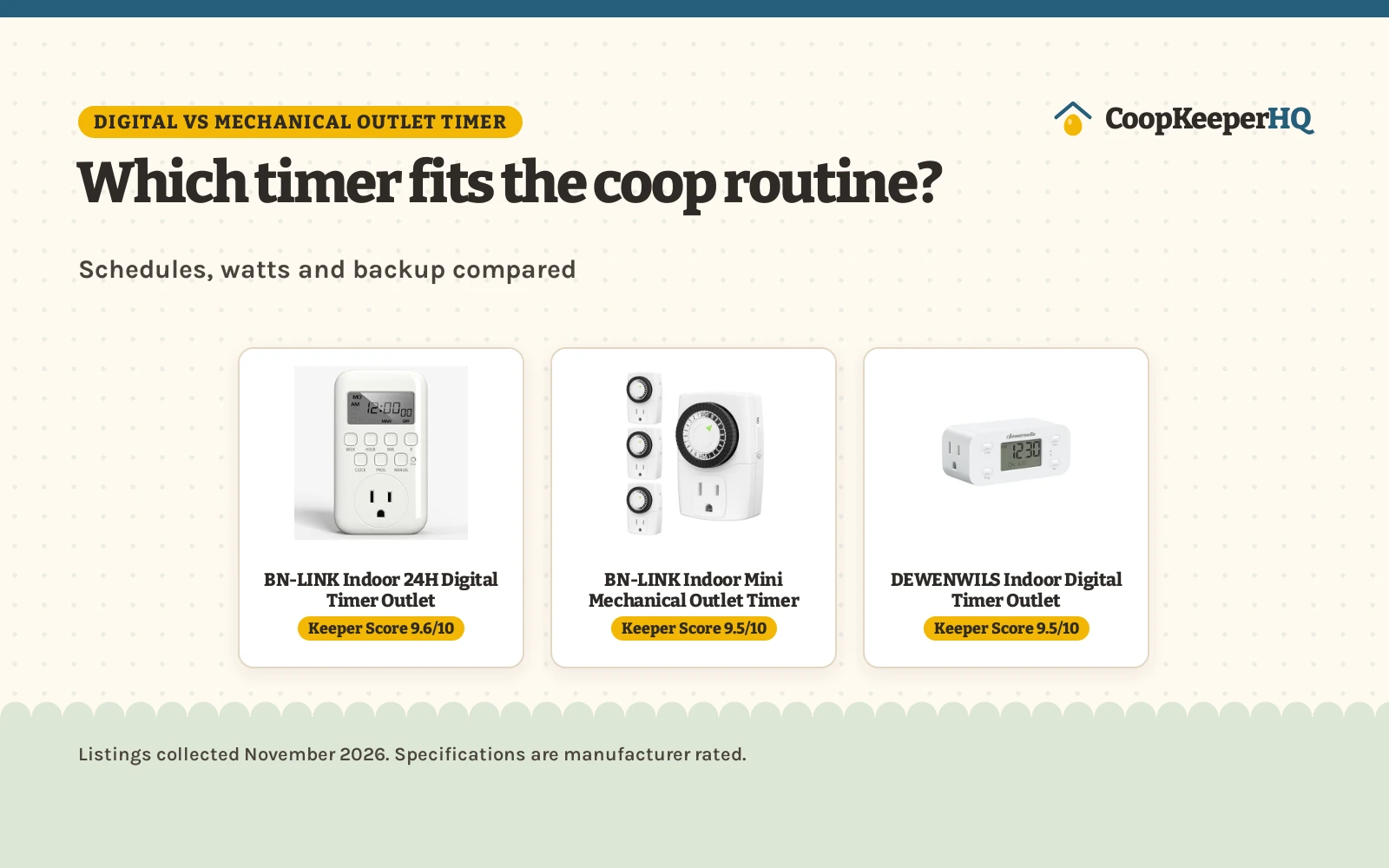
Digital and mechanical outlet timers compared on schedules, precision, power ratings and backup, with three examples from the listings reviewed.
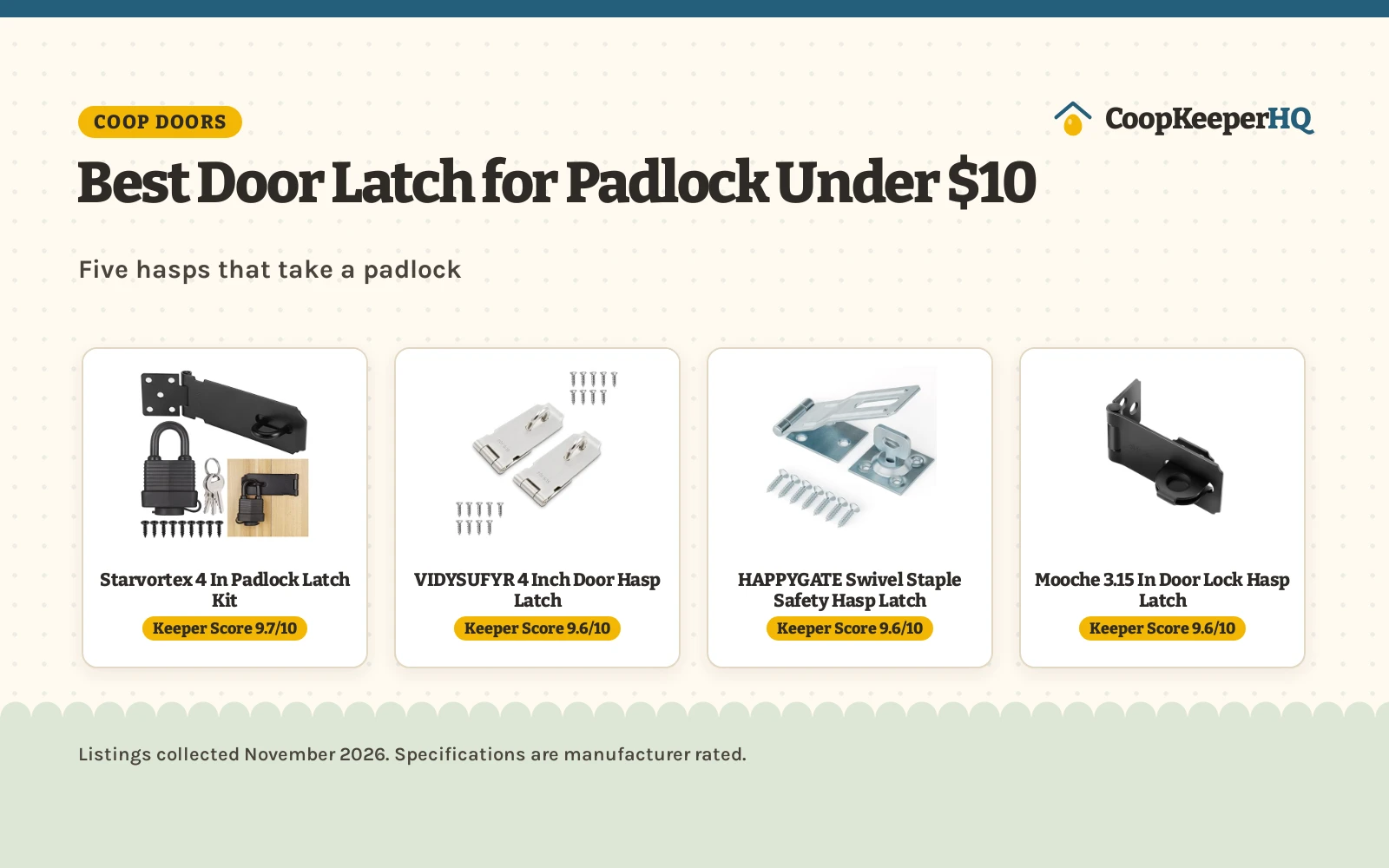
Five stainless steel hasp latches for a padlock, compared by size, screws and what comes in the box.
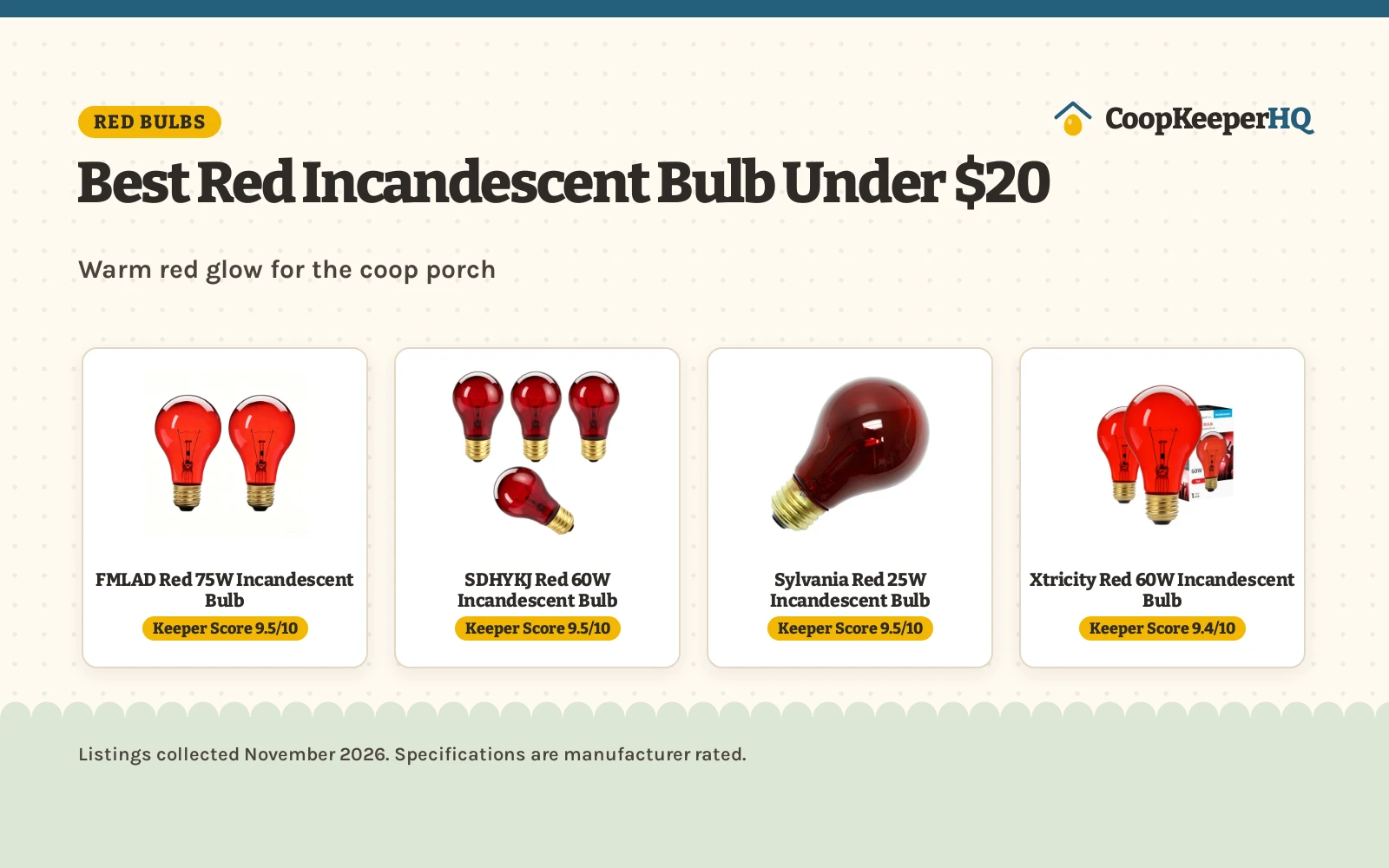
Four red E26 A19 incandescent bulbs compared by wattage, lumens, lifetime, dimming and pack size.
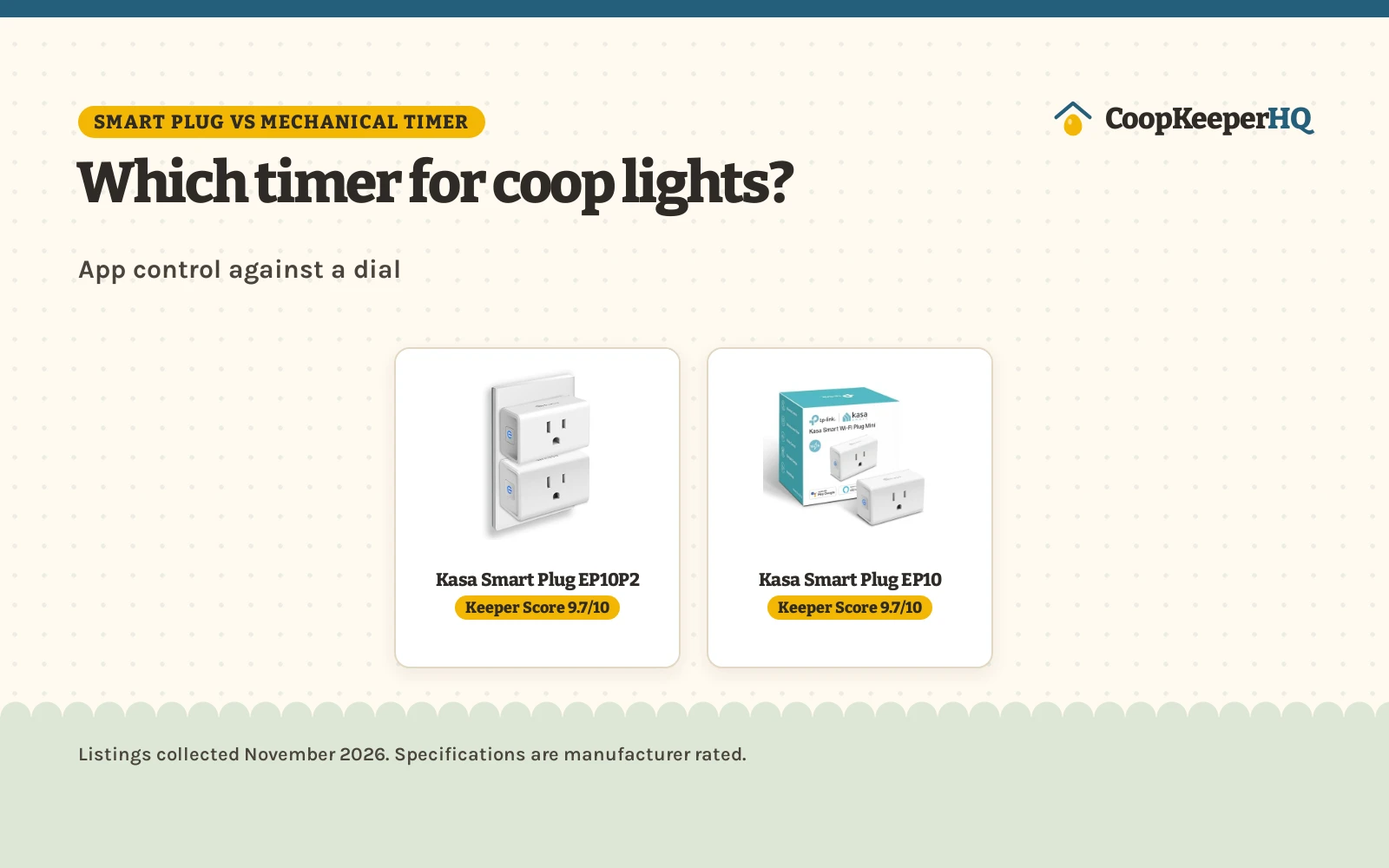
A smart plug and a mechanical timer compared for coop lights: app, voice and schedule control over Wi-Fi against a dial with no app,…
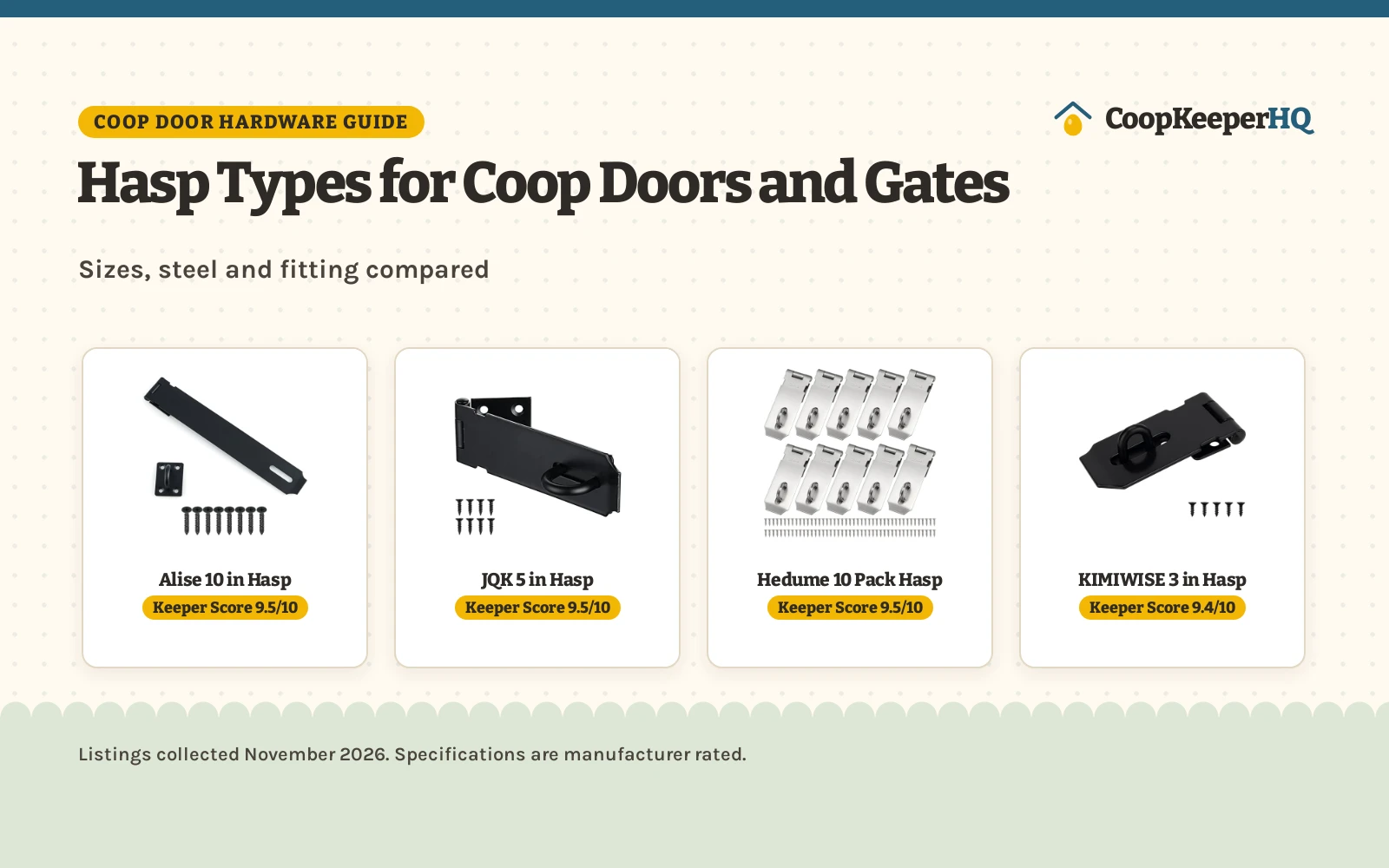
Four hasp types for coop doors and gates compared by size, steel, fitting and padlock use, with latches from 3 inches to 10 inches.
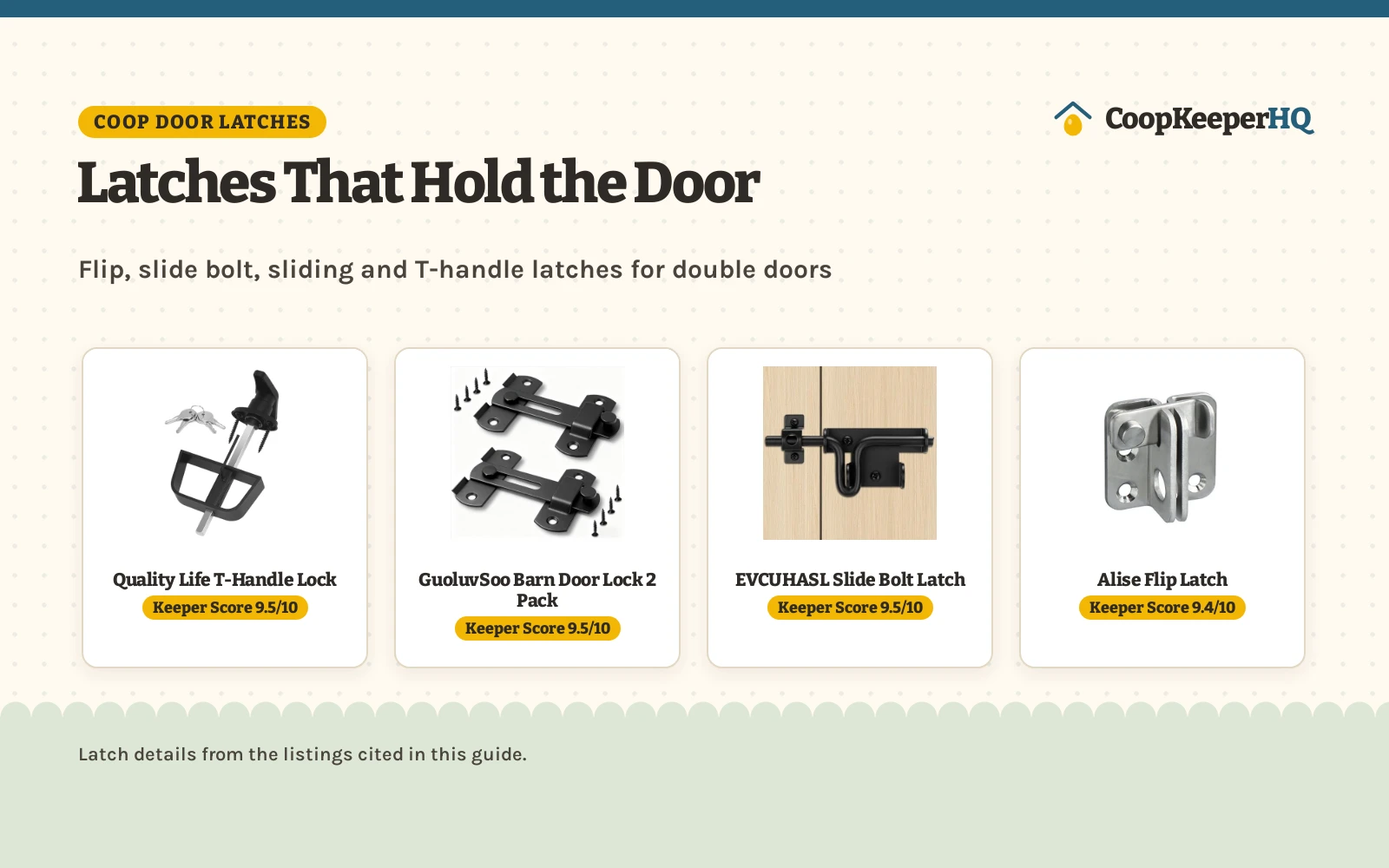
Double coop doors need latches that hold against wind and raccoons, and this guide compares flip, slide bolt, sliding and keyed T-handle types.
Automatic and manual chicken coop door ideas for a busy keeper, from sliding pop doors and hinged panels to light-sensing closers, ramps and latches…
An automatic door trades a daily chore for a device that has to work every dawn and dusk. The listing details show how dependable it is likely to be. Automation brings convenience, but it also brings a single point of failure at the coop opening. Keep a manual override in mind, and read what the maker says about temperature limits and the weight of the door panel.