Best Chick Feeder for Shipped Chicks (2026): 5 Small Picks for the Brooder
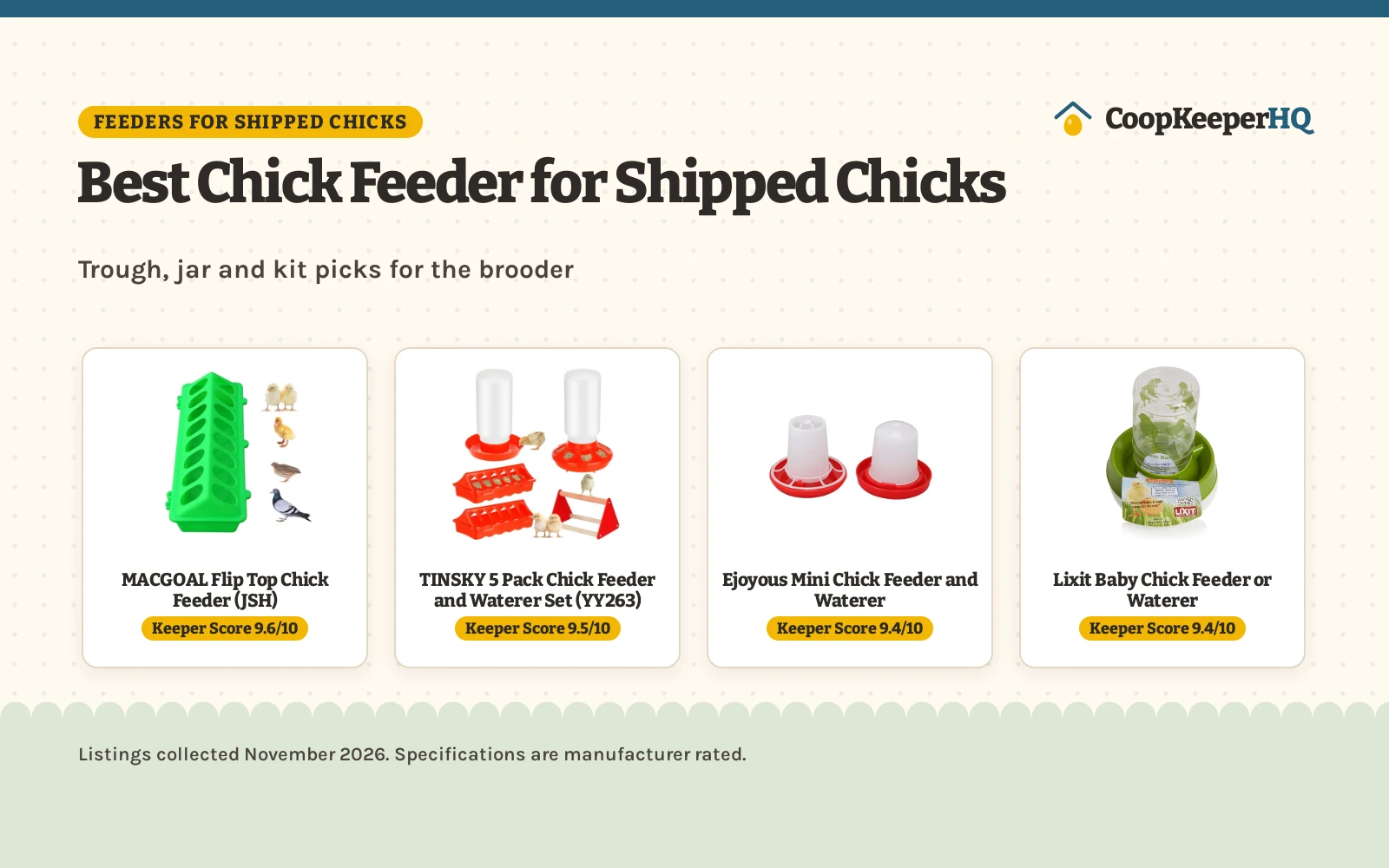
Five small feeders for shipped chicks compared by stated capacity, size, material and warranty, from a flip-top trough to a reversible jar.

Treadle, gravity and no-waste feeders, nipple and cup waterers, and heated waterers and bases. Guides compare capacity in pounds or gallons, birds served, rodent resistance, rain protection and heater wattage.
How much feed your flock eats a day and a month, how long a bag lasts, and what it costs.
Five small feeders for shipped chicks compared by stated capacity, size, material and warranty, from a flip-top trough to a reversible jar.
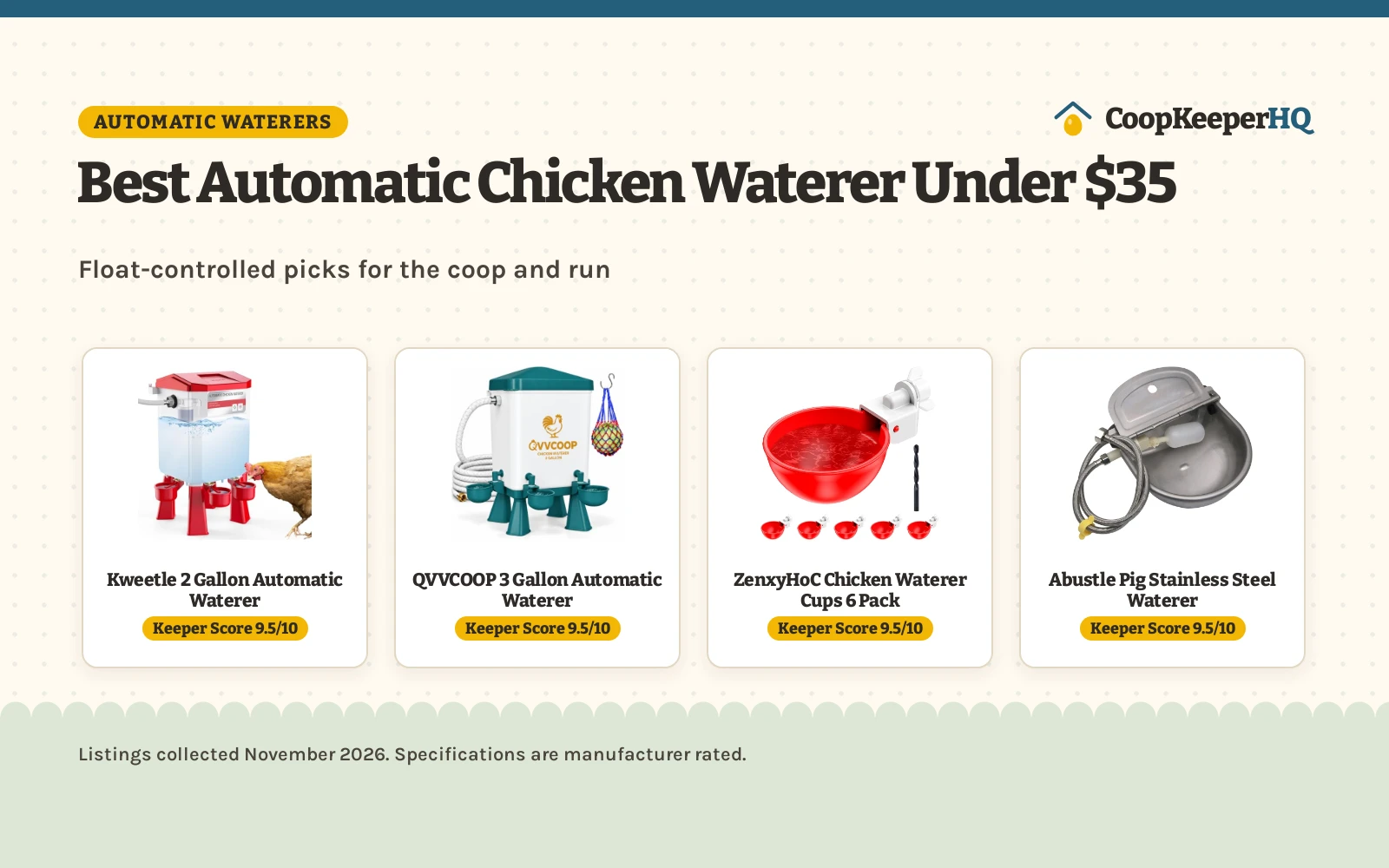
Five float-controlled automatic waterers compared by capacity, cups, hose length, fittings and warranty.
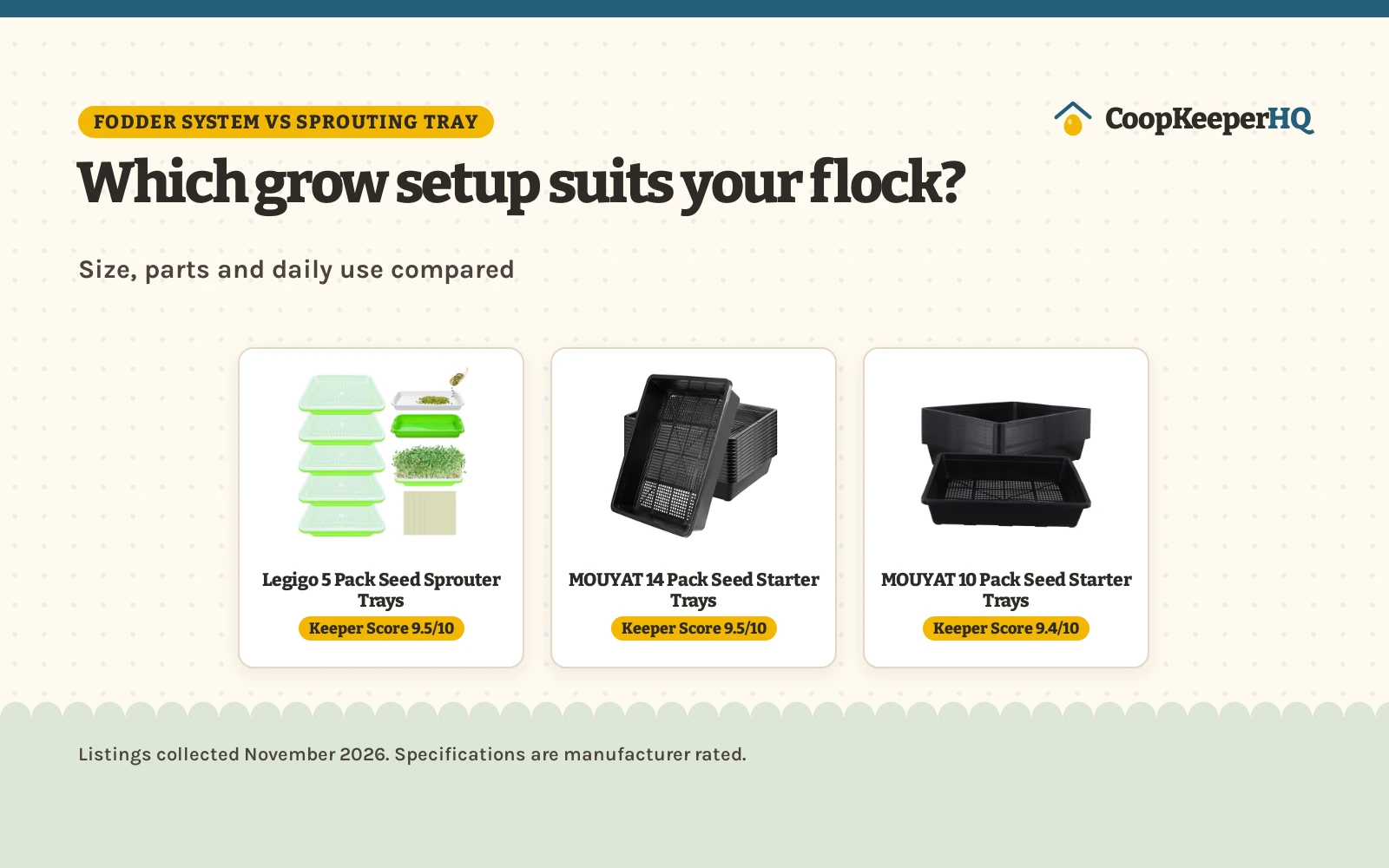
Mesh-bottom fodder trays in 10 and 14 packs face a lidded 5-kit sprouting set, compared on size, parts and daily use, with three examples…
Five small feeders for shipped chicks compared by stated capacity, size, material and warranty, from a flip-top trough to a reversible jar.
Five float-controlled automatic waterers compared by capacity, cups, hose length, fittings and warranty.
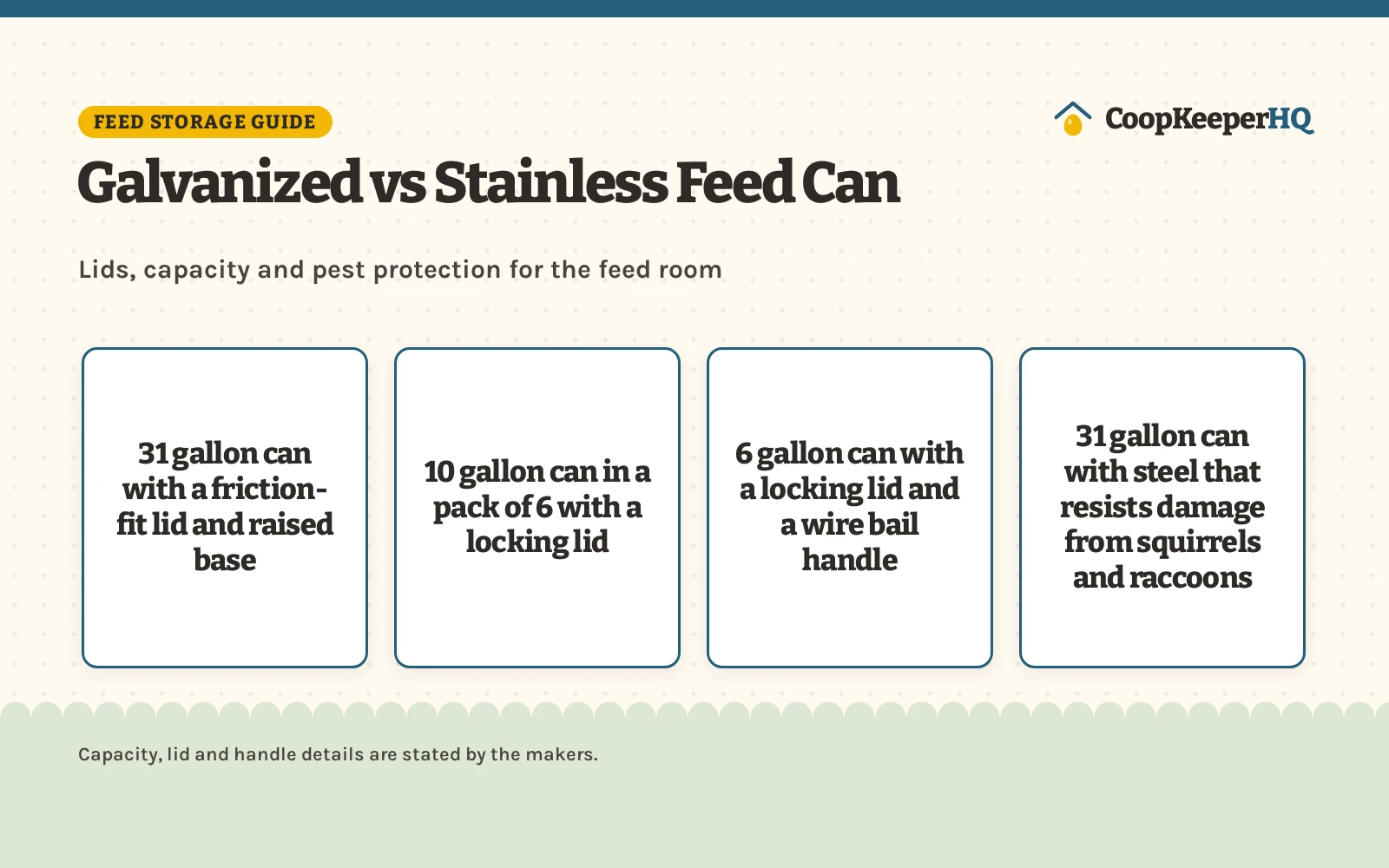
A galvanized feed can keeps chicken feed dry and out of reach of pests, and the ranked cans below show which lid and size…
Mesh-bottom fodder trays in 10 and 14 packs face a lidded 5-kit sprouting set, compared on size, parts and daily use, with three examples…
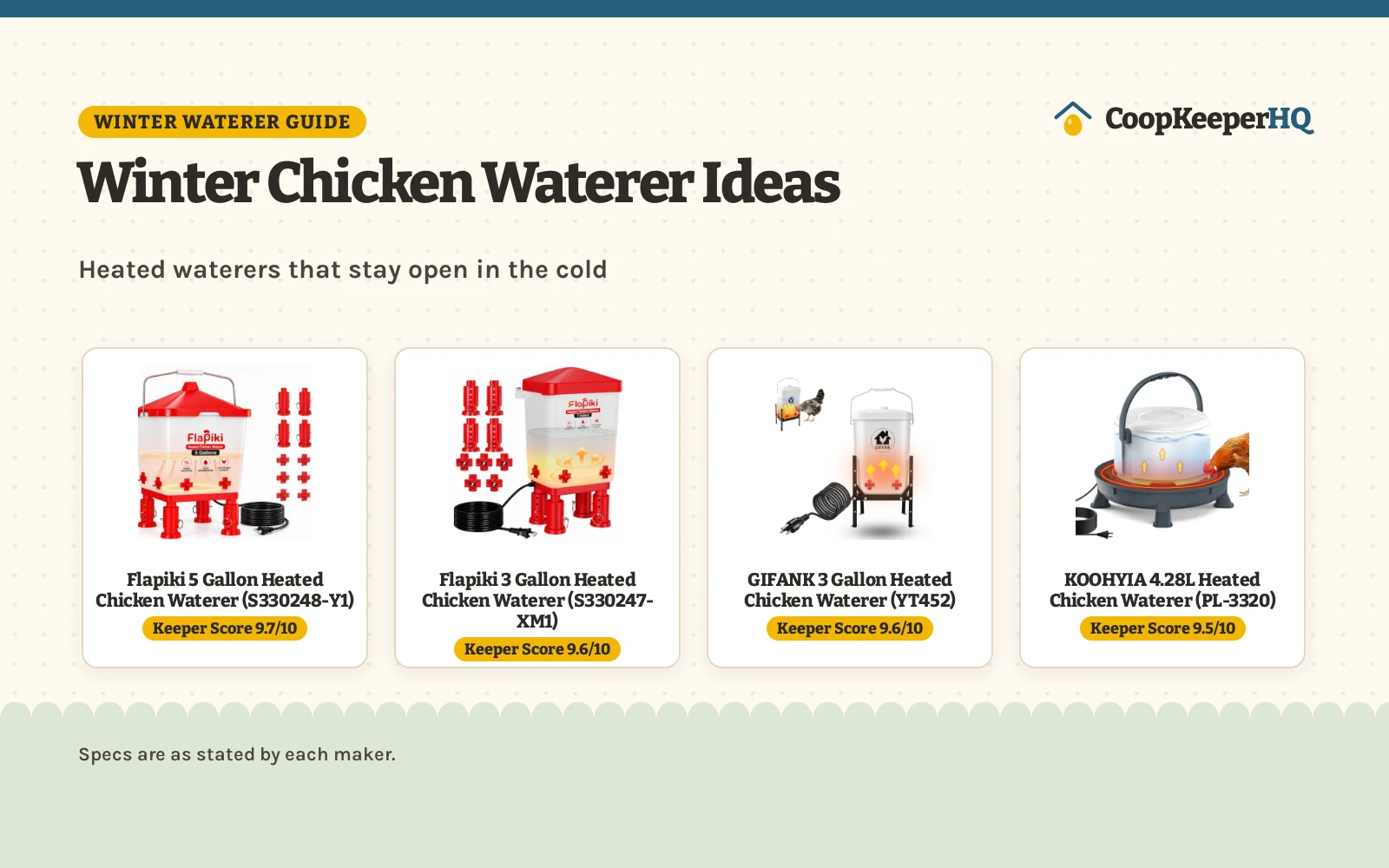
Heated nipple waterers, adjustable heights and thermostat controls that keep a flock drinking through freezing weather.
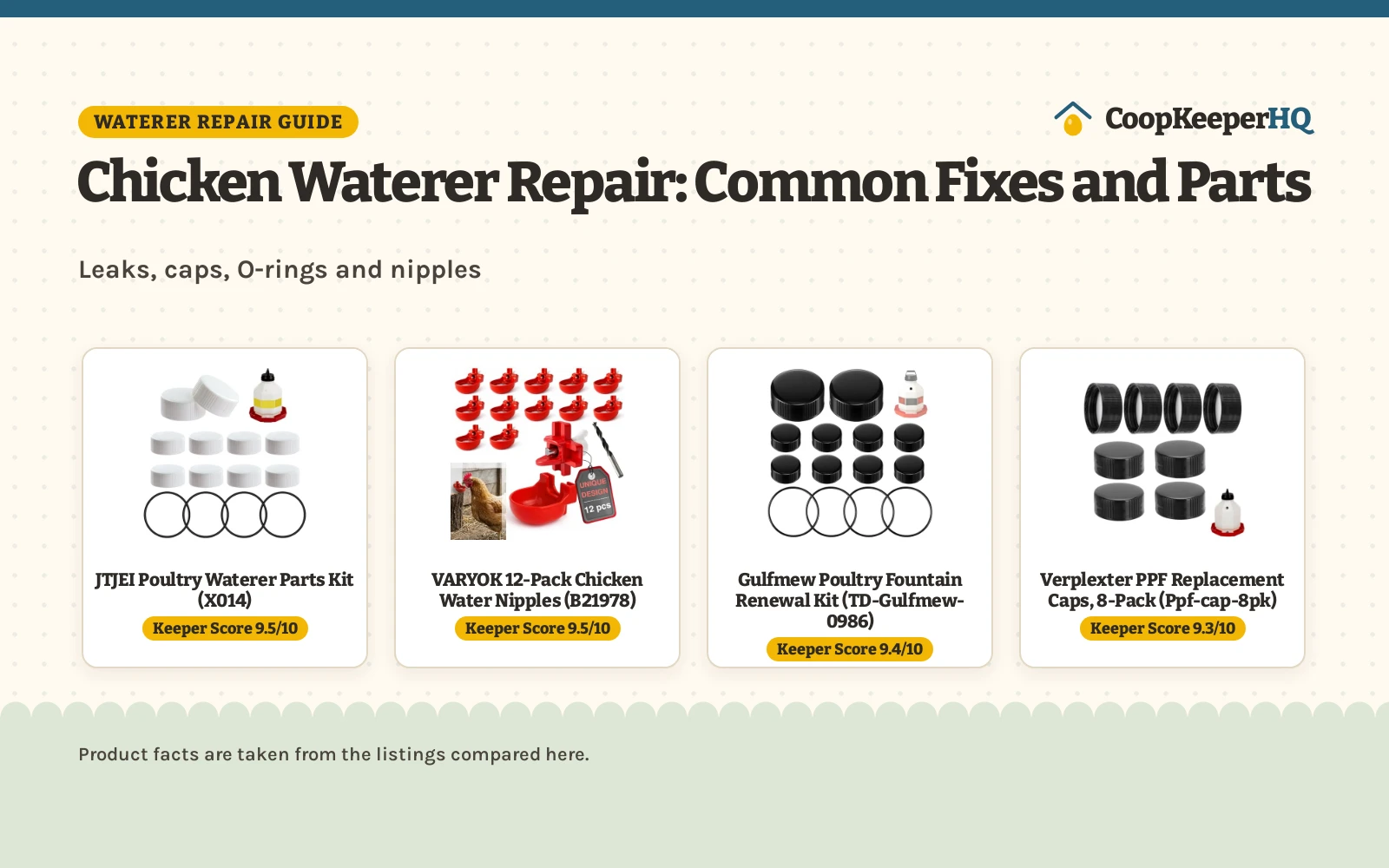
Worn caps, tired O-rings and dripping nipples cause most waterer leaks, and each has a simple fix with the right spare part.
PVC chicken feeder problems such as caked feed, waste, rats and wrong height mostly come from damp feed and poor placement, and each one…
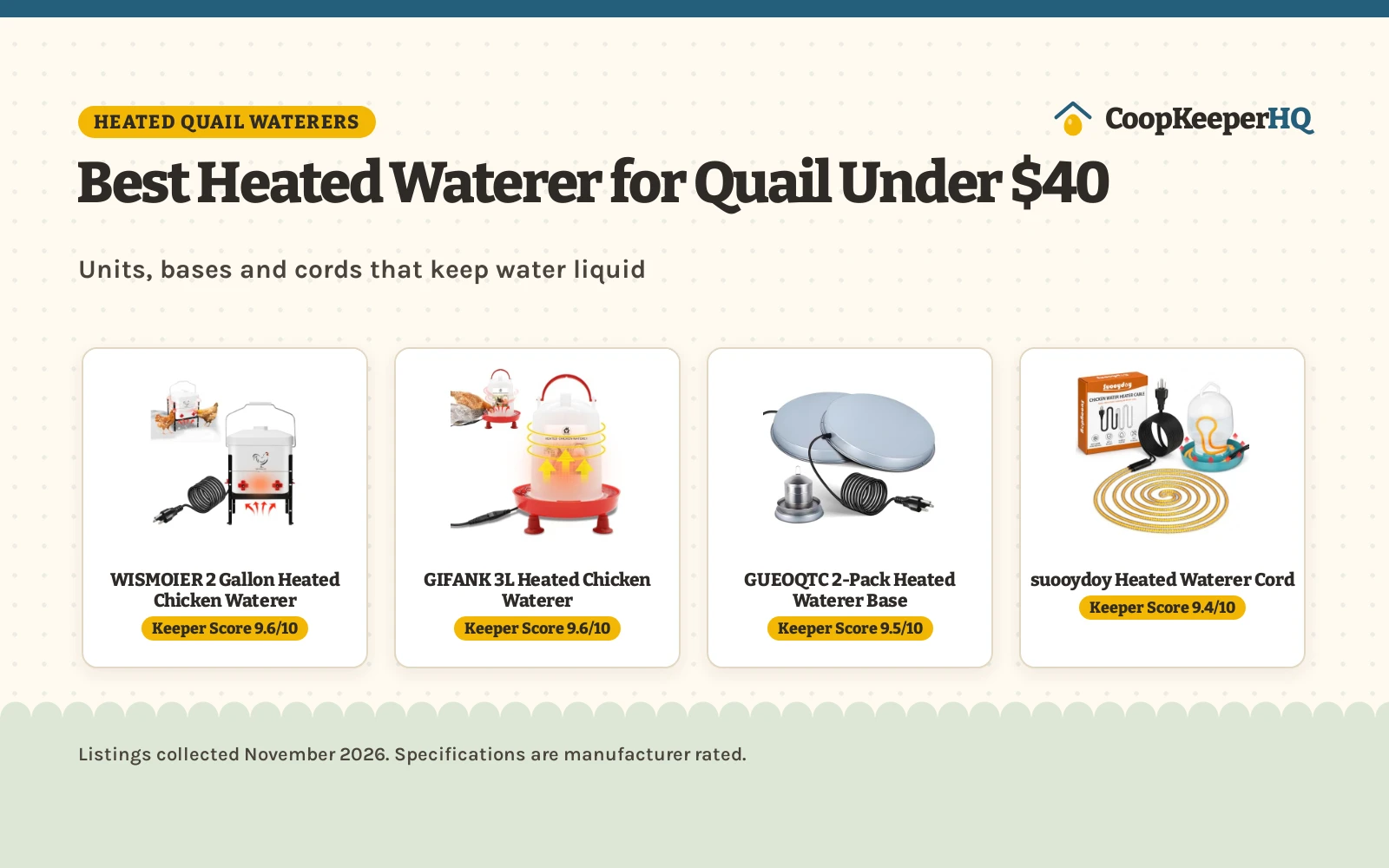
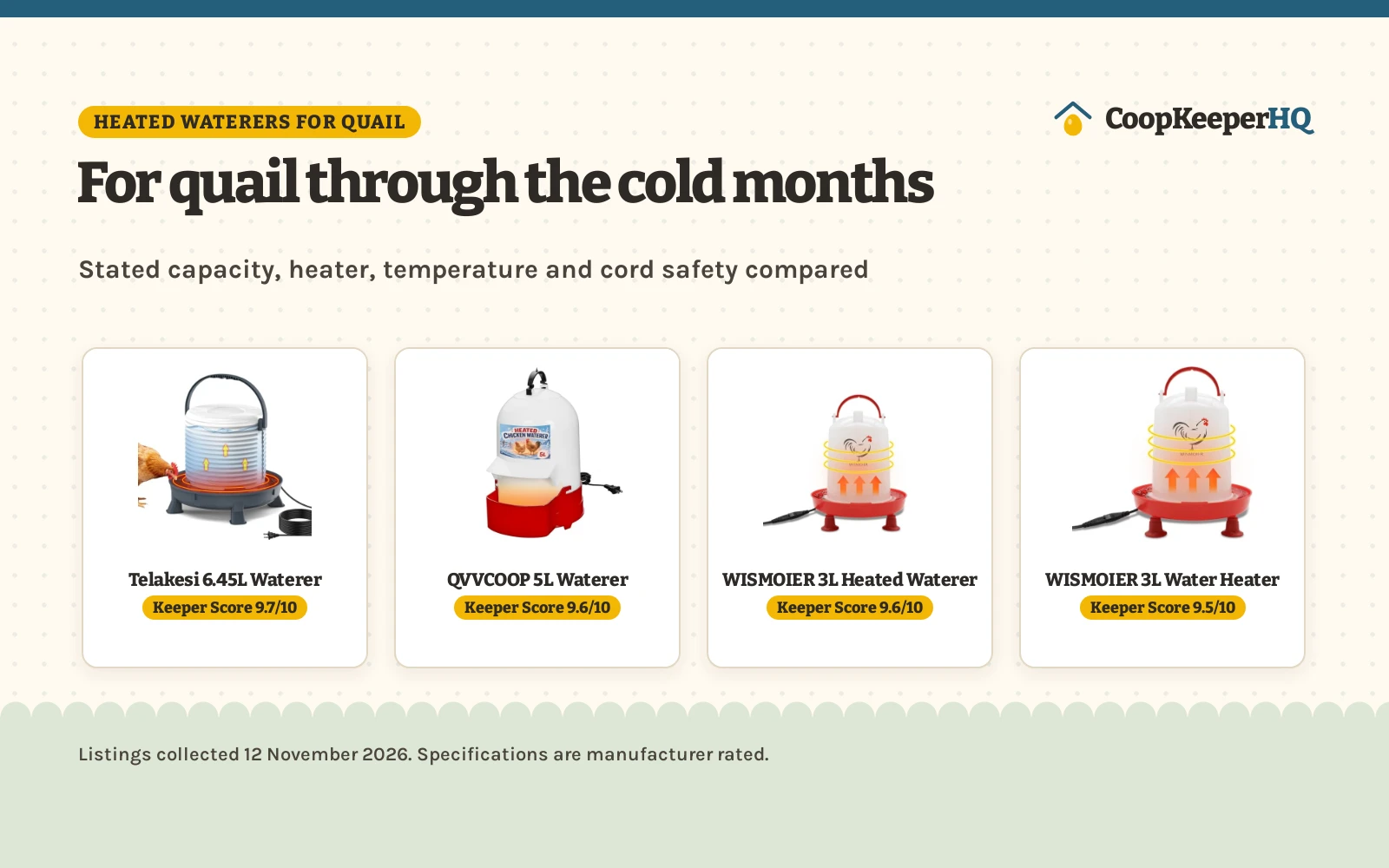
5 heated waterers, bases and cords compared by capacity, thermostat, cord length and stated safety features for quail keepers.
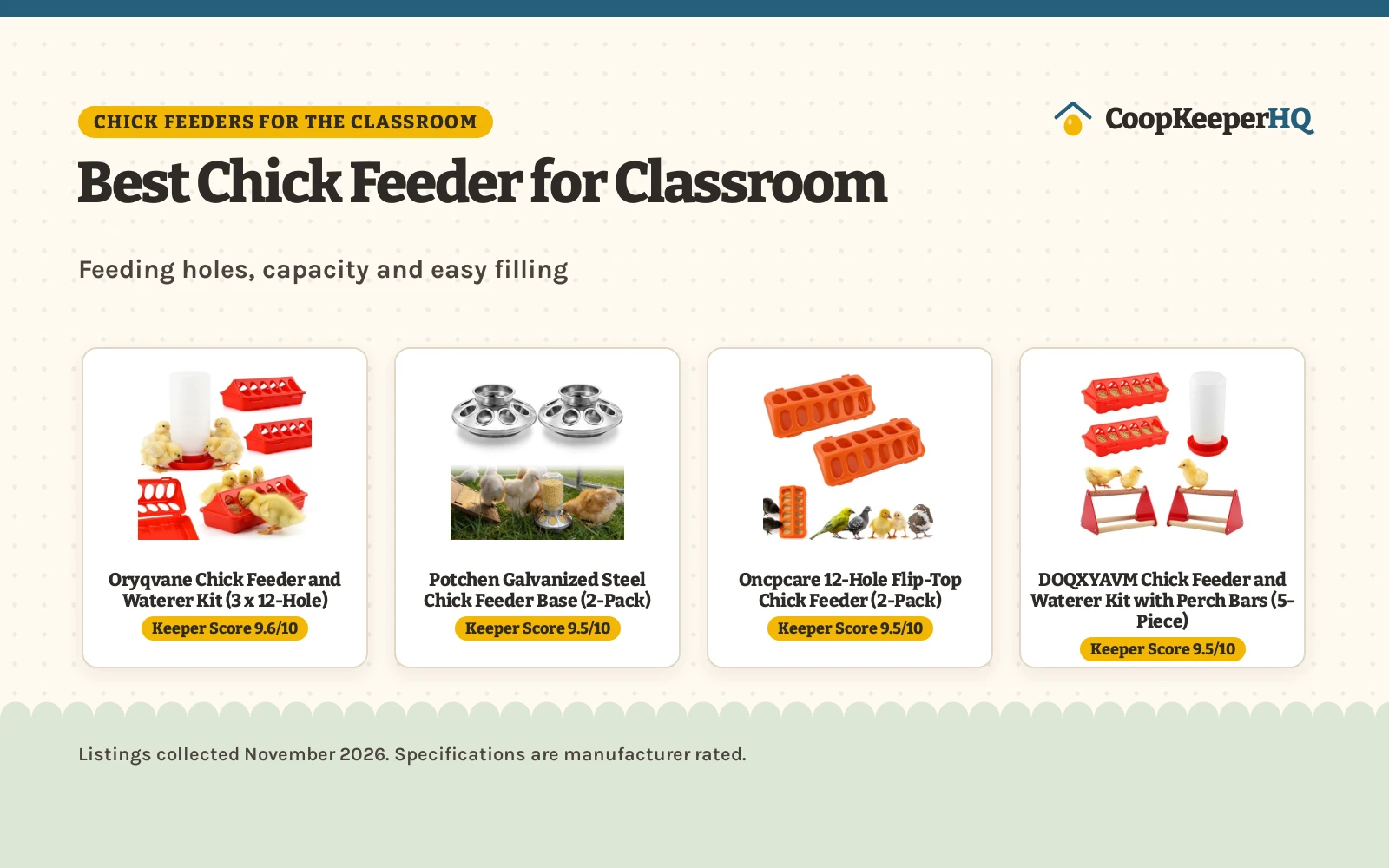
Five chick feeders compared for classroom brooders, from a galvanized steel jar base to flip-top troughs and kits with a waterer and perch bars.
5 heated waterers for quail compared by stated capacity, heater, temperature, cord safety, legs and warranty.
Feeders and waterers look alike until a flock sits down to use them. Match the type to your birds, climate and how often you refill. The right pick also depends on your flock size: two hens and twenty hens call for very different capacities. Where the listing says how many birds a unit serves, treat that as the maker's figure rather than a guarantee.