Chicken Coop Temperature Winter: What to Watch and What to Measure
A dry, draft-free roost, vents high on the wall and a thermometer in the coop matter more than any single temperature number.

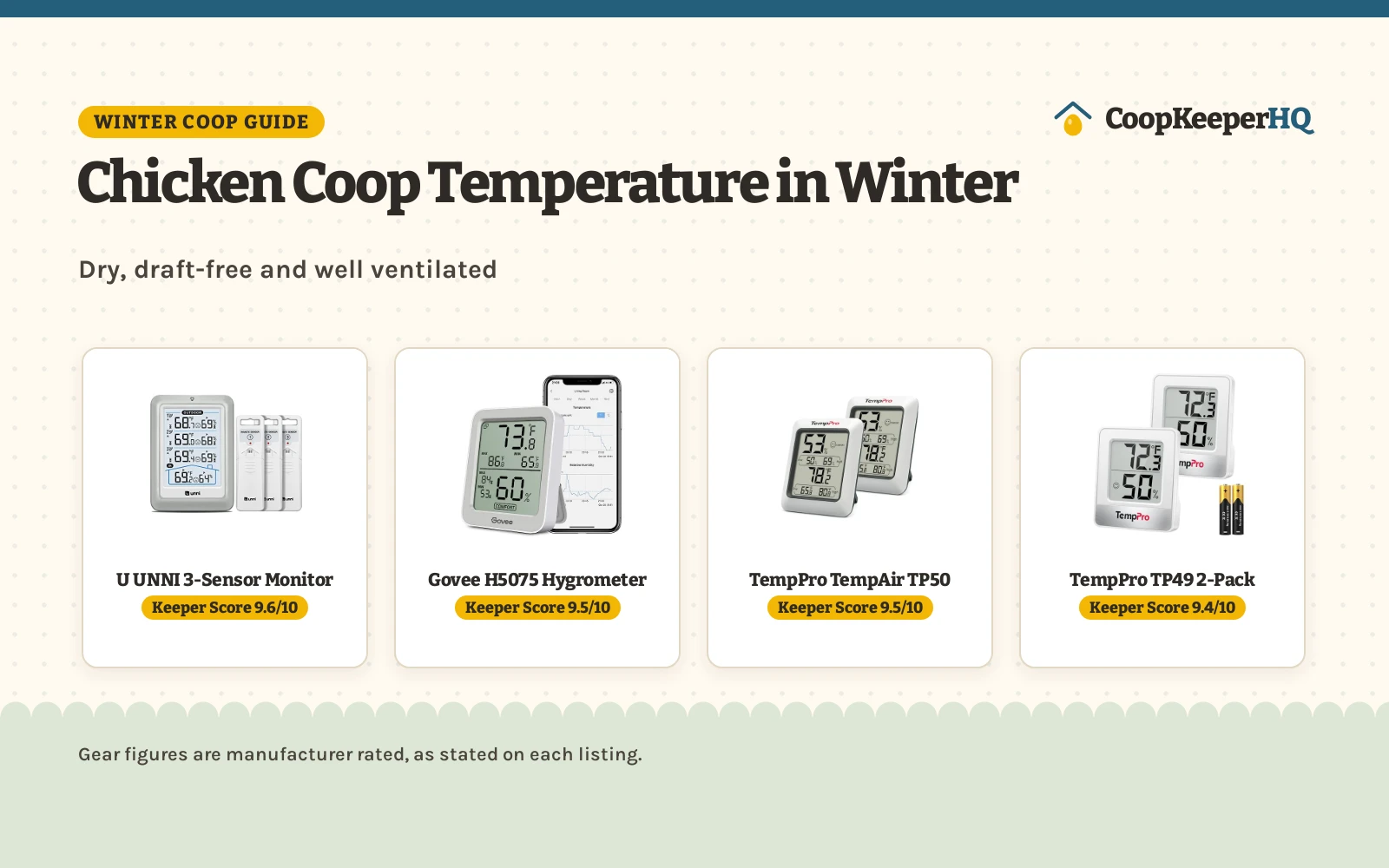
On this page
Top picks at a glance
As an Amazon Associate I earn from qualifying purchases.
- 1
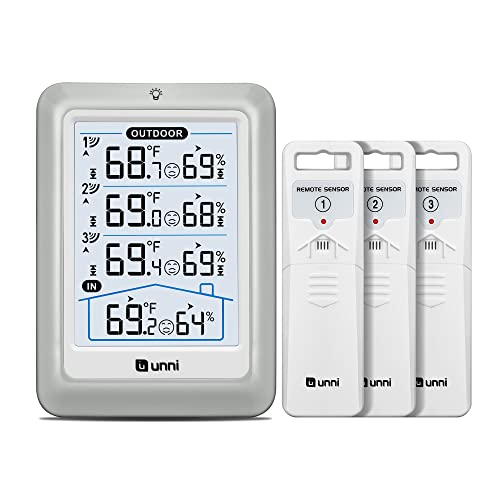 Indoor Outdoor Thermometer Wireless Digital9.6/10View on Amazon
- 2
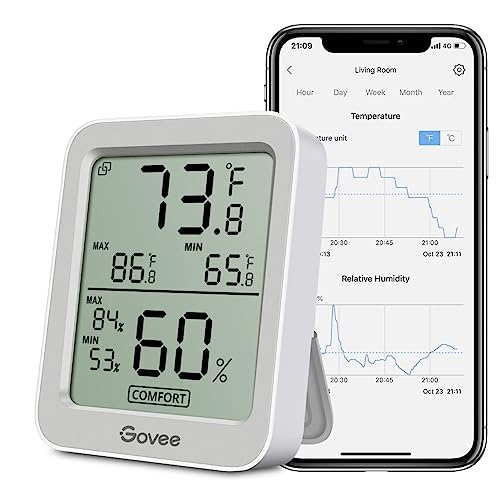 Govee Indoor Hygrometer Thermometer H50759.5/10View on Amazon
- 3
 TempPro TempAir Digital Hygrometer Indoor9.5/10View on Amazon
- 4
 TempPro TP49 2 Pack Digital Hygrometer Indoor9.4/10View on Amazon
On a cold morning the keeper’s round starts at the pop door: check the water, count heads on the roost and look over the bedding. Winter adds a question to that round, and this guide answers it: chicken coop temperature winter means watching the temperature and humidity inside the coop, keeping the roost dry and draft free, and letting the vents carry damp air out. Healthy adult chickens handle cold well, so the reading on a thermometer matters less than the state of the coop around the birds.
CoopKeeperHQ earns a commission if you buy through our links, at no added cost to you. Affiliate disclosure.
Indoor Outdoor Thermometer Wireless Digital
A wireless thermometer and hygrometer with 3 outdoor sensors, a 4.5 inch display, high and low alerts and a stated 1 year warranty.
Who it's for: a keeper who wants several spots read from one display in the house.
Who should skip it: anyone who wants the transmission range settled on one figure, or a single-spot meter.
U UNNI pairs a display with 3 outdoor sensors, so the keeper can read the coop and other spots without walking out to each one. The listing states an indoor range of 14.2°F to 122°F, an outdoor range of -40°F to 158°F and a humidity range of 20% to 95%, with temperature accuracy of +/-2°F and humidity accuracy of +/-5%. The 4.5 inch display shows indoor and outdoor temperature and humidity with trend, plus comfort indicator, outdoor alerts, daily max and min data and a low battery indicator, and the unit runs on battery or USB power.
The listing disagrees with itself on range: the title states transmission of 328 ft, while the bullets state wireless transmission up to 330 ft. The listing states a 1 year warranty, not including batteries, and that max and min records reset automatically every 24h.
Pros
- 3 outdoor sensors with wireless transmission, per the listing
- Indoor range 14.2°F to 122°F and outdoor range -40°F to 158°F stated
- Humidity range 20% to 95% with temperature accuracy +/-2°F and humidity accuracy +/-5%
- Stated 1 year warranty, the only one here
Cons
- Batteries are not covered by the 1 year warranty, per the listing
- Humidity accuracy of +/-5% is wider than the +/-3%RH stated on the Govee listing
- Max and min records reset every 24h, so longer trends need the display checked daily
Govee Indoor Hygrometer Thermometer H5075
A Bluetooth hygrometer thermometer with app control, a 3 inch LCD, smart alerts and data export for the past 2 years.
Who it's for: a keeper who wants phone alerts and a record to look back on.
Who should skip it: anyone who wants several spots from one unit, or a stated warranty.
Govee states the closest temperature accuracy here: +/-0.54°F, with humidity to +/-3%RH, a Swiss-made sensor and a refresh speed of up to 2S. The 3 inch LCD shows temperature and humidity with max and min records and a 3 level comfort indicator, and Bluetooth covers 164 ft, so the keeper gets an app alert when readings leave the preset range.
The listing states 20 days of online data storage, with a curve graph of recent records, and export of the past 2 years of data to CSV format. That covers a full winter of records, but only if the keeper exports them: the online view holds 20 days. No warranty term is stated in the listing.
Pros
- Temperature accuracy +/-0.54°F, the closest stated here, and humidity +/-3%RH
- Bluetooth range of 164 ft with app alerts when readings leave the preset range
- Refresh speed of up to 2S, per the listing
- Data export for the past 2 years in CSV format
Cons
- No warranty term is stated in the listing
- Online data storage is 20 days, so older records need exporting
- Needs the Govee Home app and Bluetooth pairing for alerts
- One sensor in one spot, against the 3 sensors on the U UNNI listing
TempPro TempAir Digital Hygrometer Indoor
A 2 pack of digital hygrometer thermometers with high and low records, a comfort indicator and 2 AAA batteries included.
Who it's for: a keeper who wants a simple two pack for the coop and the house.
Who should skip it: anyone who wants app alerts, data export or a stated warranty.
TempPro sells the TempAir as a 2 pack, so the keeper can put one unit at the roost and one where readings are checked through the day. The listing states an accuracy of +/-1°F and +/-2 to 3%RH, with data updated every 10 seconds, a DRY/COMFORT/WET indicator, and high and low records for temperature and humidity. It has a tabletop stand and a magnetic back, a °F/°C selector, and 2 AAA batteries are included.
The spec table lists a warranty description of 0, which states no warranty term. The listing names the house, office, cellar, kitchen, greenhouse and RV as uses, with no outdoor range stated, so it reads as an indoor meter that suits a coop interior.
Pros
- 2 pack, so one unit can sit in the coop and one where the keeper reads it
- Accuracy of +/-1°F and +/-2 to 3%RH
- High and low temperature and humidity records displayed
- Tabletop stand and magnetic back, with 2 AAA batteries included
Cons
- No warranty term is stated in the listing
- Refresh every 10 seconds, slower than the 2S refresh stated on the Govee listing
- No app, alerts or data export is stated
- No outdoor temperature range is stated in the listing
TempPro TP49 2 Pack Digital Hygrometer Indoor
A compact 2 pack of mini hygrometer thermometers with a face icon comfort indicator and 3 placement options.
Who it's for: a keeper who wants a small, simple two pack to hang or stand in the coop.
Who should skip it: anyone who wants alerts, stored records or a stated warranty.
TempPro sells the TP49 as a compact 2 pack with a face icon comfort indicator for DRY, COMFORT and WET air. The listing states an accuracy of +/-1°F/°C and +/-2% to 3%RH, with readings refreshed every 10 seconds, and a compact LCD with large bold digits. It offers 3 placement options: a tabletop stand, a magnetic back and a hanging mount.
The spec table lists a warranty description of 0, which states no warranty term. No app, alerts, data export or outdoor range is stated, so it reads as a simple indoor meter for the coop interior.
Pros
- 2 pack with 3 placement options: tabletop stand, magnetic back and hanging mount
- Accuracy of +/-1°F/°C and +/-2% to 3%RH
- Refresh every 10 seconds
- Compact LCD with large bold digits, readable from any angle
Cons
- No warranty term is stated in the listing
- No app, alerts or data export is stated
- No outdoor temperature range is stated in the listing
- Smaller display than the 3 inch Govee LCD or the 4.5 inch U UNNI display
Chicken coop temperature winter: what the thermometer tells you
A thermometer in the coop tells the keeper what the birds are actually sitting in, rather than what the weather report says for the yard. Temperature alone says little without humidity: damp air pulls warmth from the birds and makes a cold coop feel colder, while dry air at the same reading is easier for the flock. That is why the gear in this guide measures both, and why a hygrometer reading belongs next to the temperature reading on the keeper’s morning round. Watch the trend across cold snaps rather than one reading on its own, and look at the roost area, the bedding and the vents together with the meter.
Keep ventilation, even in the cold
It feels backwards, but a sealed coop is a problem. Chickens breathe out moisture overnight, and a closed-up coop holds it. Leave vents high on the walls, above the roosts, so damp air leaves without a breeze blowing across the birds. If the coop has a fan, the chicken coop fan picks compare the options.
Use deep bedding
A thick layer of dry bedding insulates the floor and lets the keeper add fresh material on top. Many keepers use the deep litter method in winter: stir the bedding, add a fresh layer when the surface gets damp and clean it out in spring. Dry bedding matters more than the type, and the hemp bedding picks and low-cost bedding picks compare the options. Keep the nest boxes lined as well.
Keep water from freezing
When the water freezes, the birds have nothing to drink, and keepers lose time carrying warm water out. A heated waterer base or heated waterer solves it. Use a GFCI outlet for any outdoor electrical gear, and check cords for chew marks.
Should you add a heater?
Most flocks do not need one. A heater is a choice the keeper makes for a particular climate or birds, and it brings a fire risk and a power cord into a coop full of dust and dry bedding. Do not use heat lamps in a coop. If the keeper decides to heat, a flat radiant panel with a stated UL or ETL listing is the safer type, and the radiant heater picks compare panels, with oil filled vs radiant heater for the choice between types. If the birds seem to need extra warmth, ask a poultry vet or the state extension office.
The gear: thermometers and hygrometers for the coop
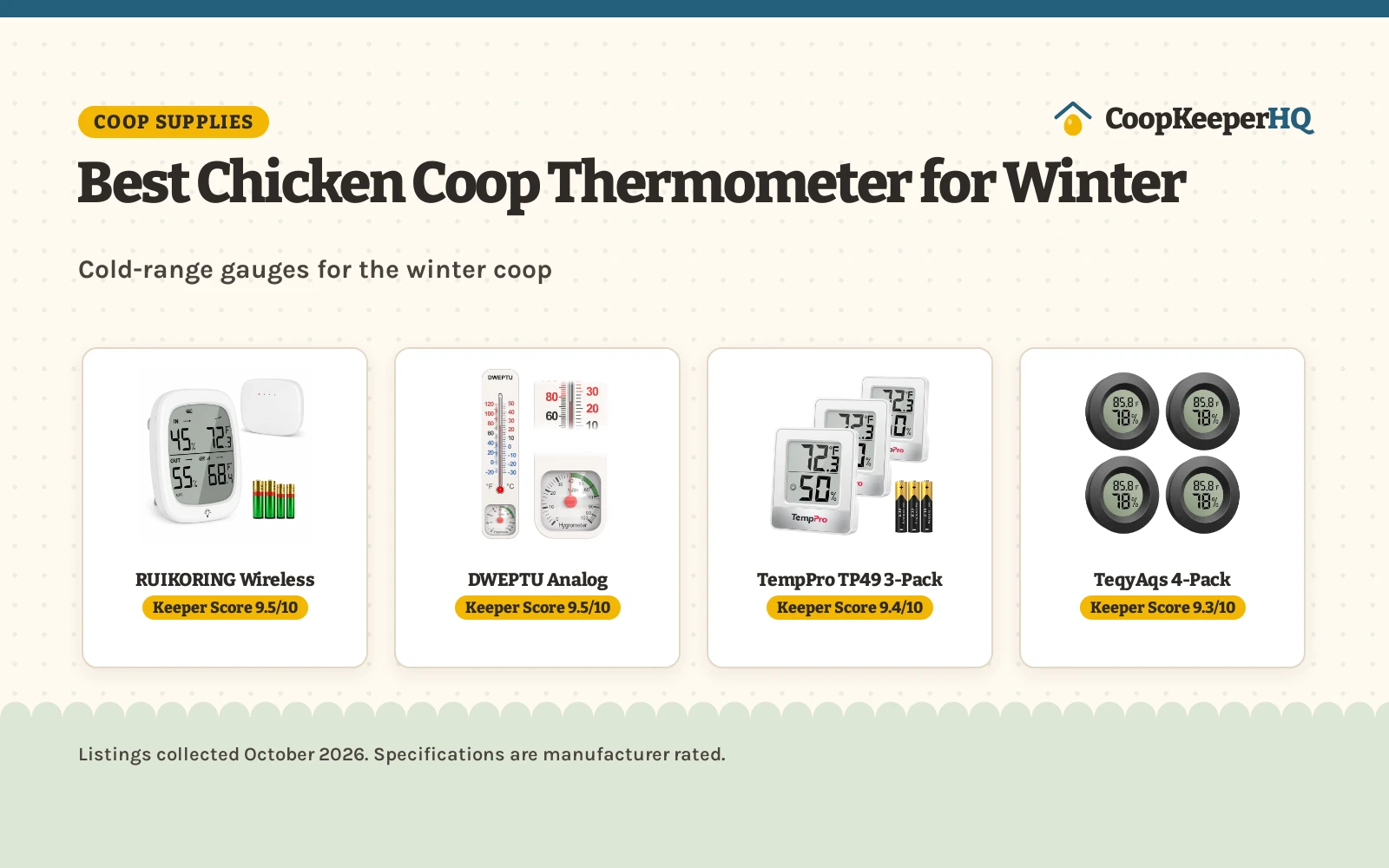
Knowing the coop temperature in winter starts with a meter that reads temperature and humidity where the birds roost, and the four picks below cover the coop from a single wireless set to a simple two pack. See also the incubator thermometer and hygrometer picks for the brooder side of the same job.
Birds, breed size, run time and climate in; coop floor, run space, roost length and nesting boxes out.
Wash your hands after handling birds, eggs or equipment, supervise children around the flock, and check local rules on flock size and roosters before you buy. For sick birds, call a poultry veterinarian or your state extension office. See CDC backyard poultry guidance. Read our Safety Disclaimer.
FAQ for the flock
What temperature is too cold for chickens?
There is no single number. It depends on the breed, age, feathering and how dry and draft free the coop is. Ask the state extension office or a poultry vet about the climate and flock.
Do chickens need heat in winter?
Most healthy adult chickens do not. A dry, draft-free roost with fresh bedding usually matters more than added heat. If the keeper adds a heater, use a radiant panel with a stated safety listing and a GFCI outlet.
How do I read the coop temperature in winter?
Put a thermometer and hygrometer at roost height, where the birds sit overnight, and check the reading with the bedding and the vents. The U UNNI set in this guide reads several spots at once with its 3 outdoor sensors, while the Govee H5075 (on Amazon) sends the reading to an app over Bluetooth with a stated range of 164 ft.
Should I close up the coop at night in winter?
Close the pop door for safety from predators, but leave vents high on the wall open so moisture can leave. A sealed coop is damp, and damp is the problem.
Is it safe to use a heat lamp in a coop?
Heat lamps are a well-known coop fire risk because the hot bulb can fall into bedding. A flat radiant panel or heat plate is the safer choice.
More coop guides
- Best Radiant Heater for Chicken Coop (2026): 5 Picks Compared
- Oil Filled vs Radiant Heater for Chicken Coop: Which One Should You Buy?
- Foam Board vs Fiberglass Insulation Chicken Coop: Which One Should You Buy?
- Best Hemp Bedding for Chicken Coop (2026): 5 Picks Compared
- Cheapest Chicken Bedding (2026): 5 Low-Cost Coop Picks
- Best Chicken Coop Fan Under $60 (2026): 5 Picks
- Best Incubator Thermometer Hygrometer Under $30 (2026): 5 Compared
- Best Automatic Chicken Coop Door for Small Coops (2026): 5 Picks Compared
See the incubator thermometer and hygrometer picks and the radiant heater picks for the coop.