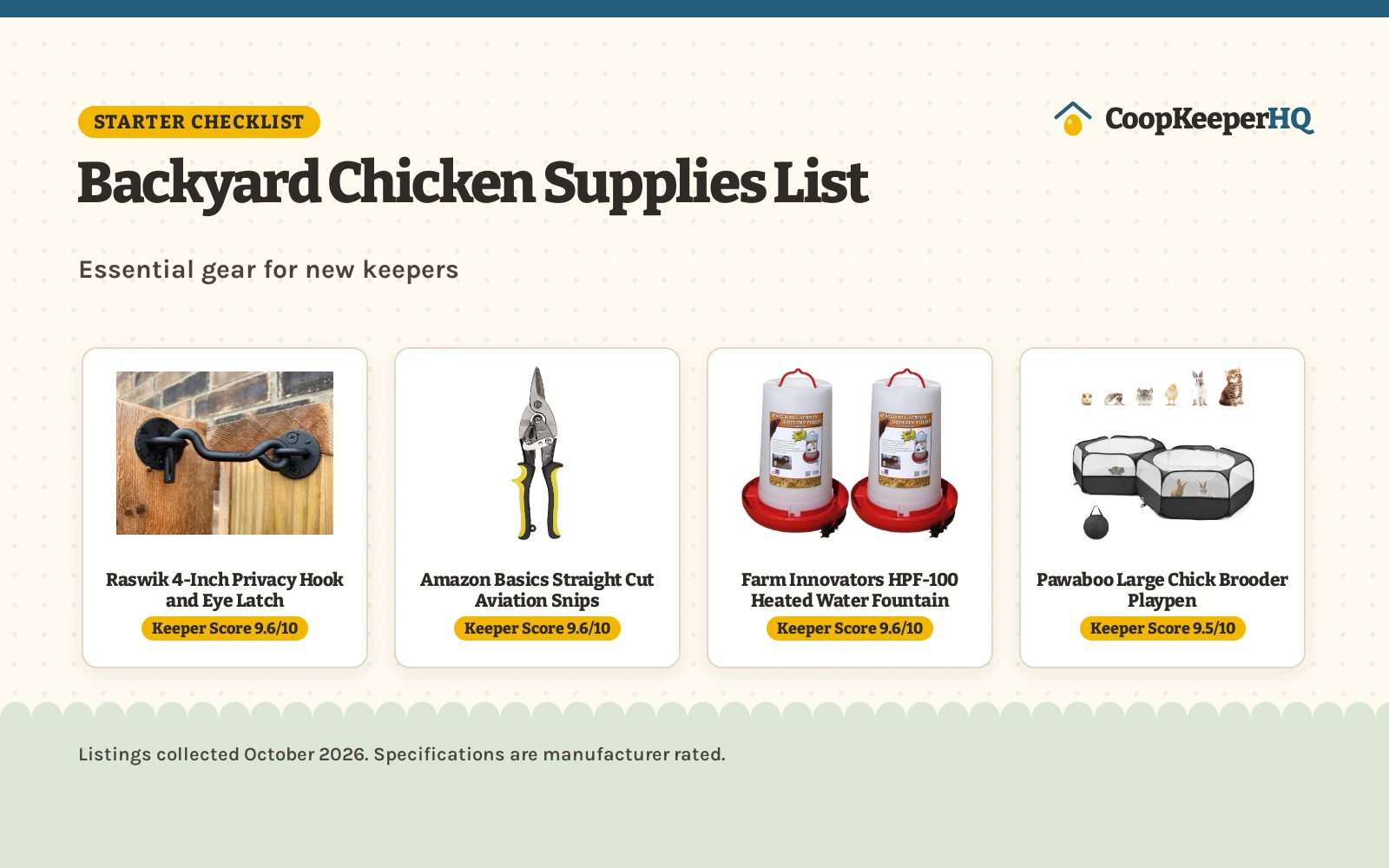
Chicken Keeping Supplies List: What You Need and What Can Wait
Essential coop gear, secure run fencing, feeders, waterers and basic flock care items for setting up a safe backyard chicken coop.

On this page
Top picks at a glance
As an Amazon Associate I earn from qualifying purchases.
- 1
 Sino Luban Walk-in Chicken Run9.7/10View on Amazon
- 2
 Mutai 16mm Chicken Identification Band 50PCS9.3/10View on Amazon
Early morning in the backyard starts with unlatching the coop, checking the roosts, and carrying fresh water out to the run while hens wake up and begin to cluck. Getting ready for a flock brings plenty of excitement, but flipping through poultry equipment catalogs makes it tempting to purchase excessive specialty gadgets before your birds arrive. A practical chicken keeping supplies list focuses on core necessities: predator-proof housing, secure fencing, reliable feeders, clean drinkers, absorbent bedding, and balanced feed, while optional accessories can wait until your daily flock routine is established.
Other options for the coop
 Chicken Feeder WatererCheck price on Amazon
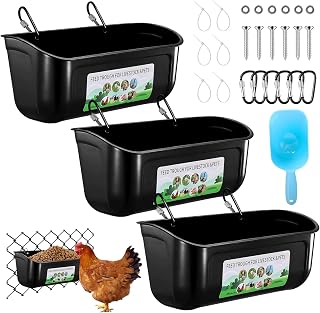 3 Pack Chicken FeederCheck price on Amazon
 5 Pack Chicken FeederCheck price on Amazon
CoopKeeperHQ earns a commission if you buy through our links, at no added cost to you. Affiliate disclosure.
Chicken keeping supplies list: essential gear you need from the start
Bringing chickens home requires having their living quarters fully prepared before the transport box opens. Chickens need immediate protection from predators, shelter from rain and wind, continuous access to clean drinking water, and dry feed. When setting up your backyard area, dividing your checklist into day-of-arrival necessities versus future upgrades saves money and prevents coop clutter.
The most critical shelter element is a secure house with adequate floor room, elevated roosting bars, and high wall vents for moisture exhaust. When planning a coop for a backyard flock, our guide to the best chicken coop for 4 chickens compares compact shelters designed with practical floor dimensions. For outdoor roaming, manufactured pens provide specific footprint dimensions. For example, the Sino Luban metal chicken run (on Amazon) provides 43.3 square feet of floor space measuring 79 by 79 inches with a height of 75 inches, and includes 14 ground stakes to anchor the structure against wind, carrying a manufacturer rating of 10 chickens or ducks. However, experienced keepers know manufacturer ratings often assume maximum capacity, so planning extra run space per bird ensures your flock can stretch, scratch, and dust bathe comfortably.
Predator-proof coop construction and fencing
Predator defense requires durable materials and careful installation. Standard chicken wire is woven from thin wire designed only to keep poultry inside an area, not to keep hungry predators out. Raccoons, foxes, neighborhood dogs, and weasels can tear through thin poultry netting or squeeze through wide fence gaps. Lining coop windows, open ventilation gaps, and run perimeters with welded wire mesh is essential. Our review of the best hardware cloth details galvanized wire rolls that withstand clawing and chewing.
Run enclosures also require sturdy framing and weather protection. Specific walk-in pen listings publish their frame dimensions: the Confote metal run (on Amazon) listing specifies a frame constructed from 1-inch steel pipe with an anti-rust finish and a waterproof 180D cover designed to shed rain and debris. In addition to sturdy wire mesh, every access door needs secure latches. Raccoons can easily manipulate simple sliding bolts, so keepers install lockable hasps secured with spring-loaded carabiners or padlock clasps. While automated pop doors can wait until later as an optional convenience, flock owners planning for automated morning let-out can check our guide to the best automatic chicken coop door for models with solid metal doors that lock against nighttime predators.
Sturdy feeders and fresh water stations
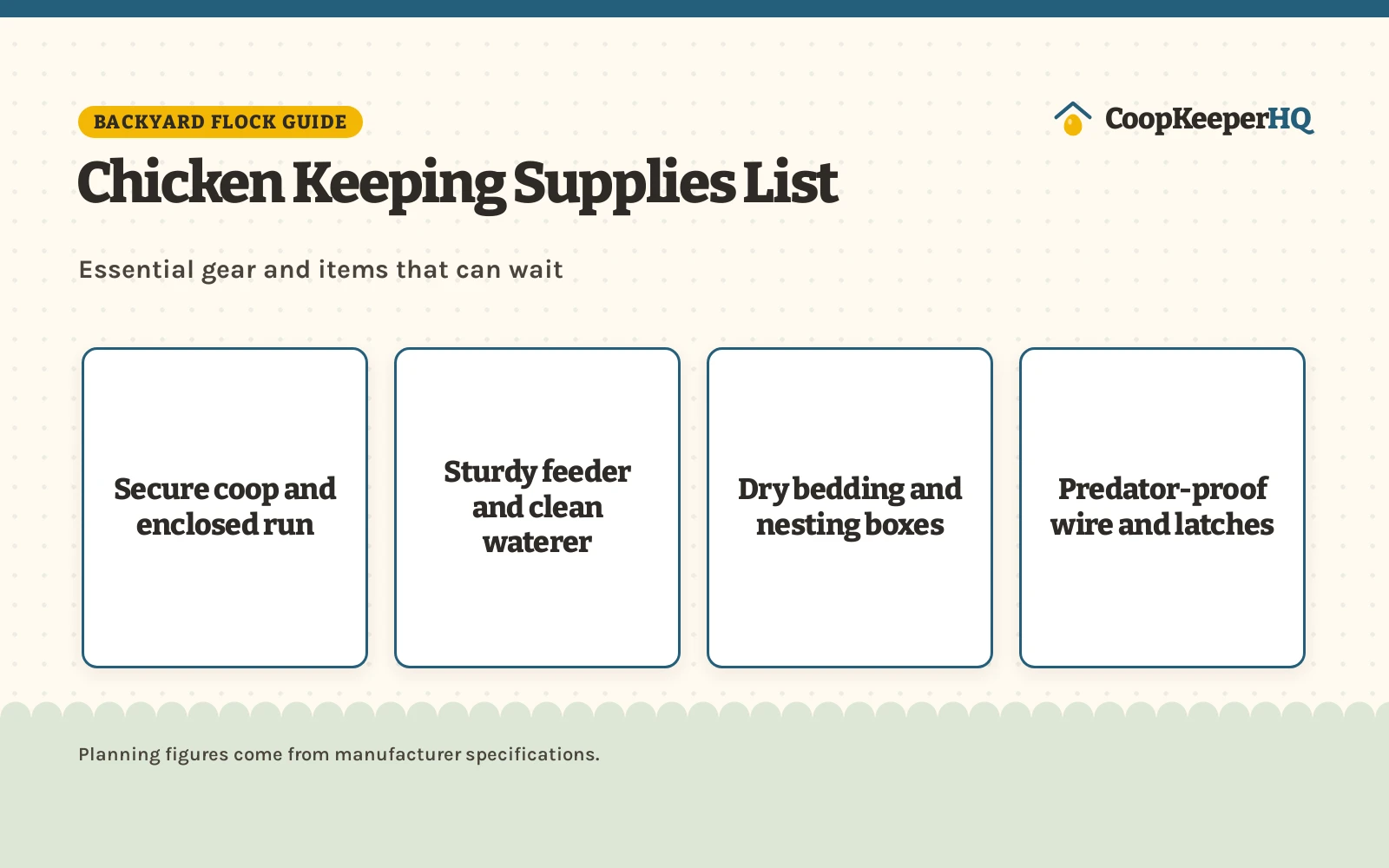
Adult chickens spend much of their waking time foraging, eating, and drinking. Keeping feed dry and uncontaminated requires a purpose-built dispenser rather than an open bowl. An open bowl quickly fills with kicked-up bedding, manure, and dirt. A dedicated gravity container or treadle box protects pellets from contamination and pests. In our guide to the best chicken feeder no waste designs, we evaluate models with feeding ports and overhangs that prevent hens from billing feed onto the ground.
Fresh water is equally vital because laying hens consume significant water daily to produce eggs and regulate body temperature. Traditional bell founts or nipple bucket systems keep water elevated above floor debris. For spring and summer setups, standard unheated gravity founts or nipple containers fulfill daily water needs. If you start a flock during freezing winter weather, water freezes quickly, and our roundup of the best heated chicken waterer options covers electric bases and de-icers, though keepers in mild climates or starting in spring can leave heated drinkers for later. To help keep drinking basins cleaner between scrubs, the maker of the ComiMag 3.94-inch copper disc claims its 99.9% pure copper disk with a 3-point raised design helps reduce slimy residue in water containers without added chemicals, though routine washing and fresh water changes remain essential.
Absorbent bedding and clean nesting boxes
Floor management inside the coop impacts air quality and flock comfort. Chickens produce high amounts of moisture in their droppings overnight. A deep base of absorbent bedding cushions foot pads, captures droppings, and controls coop odor. Our comparison of the best chicken coop bedding compares dry pine shavings, chopped hemp, and coarse sand. Cedar shavings must never be used in poultry housing because their aromatic oils irritate avian respiratory systems.
Hens also require private, dimly lit compartments to deposit eggs safely. Without dedicated nesting compartments, hens lay eggs on coop floors where shells get soiled, stepped on, or cracked. If you bring home point-of-lay pullets or mature hens, nesting compartments must be ready right away, whereas keepers starting day-old chicks can keep nesting areas closed off until birds approach laying age so young birds do not sleep in them. Our guide to the best chicken nesting box picks covers roll-away and stationary wooden compartments with perches. Lining nest floors with washable rubber pads keeps eggs clean. Some keepers add dried botanicals to nest boxes; for example, the MAQIHAN nesting herbs (on Amazon) listing describes a 10-ounce package of 10 kinds of dried herbs mixed with crushed oyster shells to scatter over clean bedding.
Brooder gear for starting day-old chicks
Flock keepers who begin their journey by ordering day-old chicks require a distinct set of nursery equipment before moving birds outside to the coop. Baby chicks cannot regulate their own body temperature and require a warm, draft-free brooding space, specialized starter crumble, and safe heat. Traditional heat lamps present severe fire hazards when hung over dry pine shavings because bulbs can loosen, shatter, or fall into dry bedding. A safer alternative is an adjustable radiant warming plate. Our guide to the best brooder heat plate reviews units that allow chicks to nestle underneath radiant warmth just as they would under a mother hen.
Brooder setups also require shallow waterers that prevent accidental chick drowning, small starter feeders that prevent chicks from scratching feed into litter, and absorbent non-slip bedding like paper toweling or textured shelf liner over wood shavings during early days so chicks do not slip or ingest wood shavings.
Flock supplies that can safely wait
While browsing poultry catalogs is exciting, many popular items are unnecessary when you are just getting started. Purchasing non-essential equipment too early ties up your budget and clutters your coop storage before you know your flock’s unique habits.
Egg handling supplies represent one category that can wait. Young pullets do not begin laying eggs until they reach maturity months down the road. You do not need gathering aprons, egg cleaning brushes, or countertop displays like the models reviewed in our best egg skelter guide until hens are actively laying. Similarly, automated coop doors, solar monitoring cameras, hanging treat balls, chicken swings, and prefabricated dust bath boxes can wait. Flocks naturally excavate their own dust baths in dry dirt or run corners, and daily manual coop checks help new keepers observe bird behavior and establish solid flock management habits.
Identification markers for adult birds also belong on the list of items that can wait. When flocks reach maturity, keepers managing breeding lines or identifying individual hens sometimes use clip-on rings. For example, Mutai 16mm (on Amazon) (0.63 inch) leg bands provide identification rings in a 50-count package across 5 colors designed for adult chickens and ducks, but leg tagging is unnecessary for young birds settling into a backyard coop.
Daily flock care routine and flock health
A consistent daily routine keeps chores quick and manageable while preventing small flock issues from turning into major problems. Morning tasks involve opening coop pop doors, inspecting waterers to ensure water is clean and flowing freely, checking feed levels, and visually inspecting the flock. Evening chores involve making sure every bird has returned to roost, counting heads, latching doors securely, and removing any wet bedding around drinker stations.
Observing your flock daily helps you notice subtle shifts in flock energy, posture, or feather condition. While common coop care involves keeping bedding dry and water clean, medical treatments require qualified oversight. If a bird in your flock appears lethargic, injured, or ill, consult a licensed poultry veterinarian or your state university agricultural extension office rather than guessing at home remedies or off-label treatments.
Backyard chicken keeping supplies checklist
Here is a summary checklist to help organize your backyard coop project:
- Housing and run: A weather-tight coop with roosting bars, predator-proof wire mesh such as hardware cloth on vents and windows, and lockable door hasps.
- Feeding and watering: A hanging or elevated no-waste feeder, a reliable poultry drinker, and balanced poultry feed suitable for your birds’ life stage.
- Bedding and nesting: Untreated kiln-dried pine shavings or chopped hemp for the coop floor, plus clean nesting boxes lined with nesting pads.
- Brooder nursery (if raising chicks): A draft-free brooder pen, a safe radiant chick heat plate, a chick-sized feeder, and a shallow chick drinker.
- Cleaning tools: A dedicated metal manure scoop or pitchfork, a scrub brush for cleaning waterers, and a sturdy storage bin with a locking lid for feed bags.
- Items that can wait: Egg cartons, countertop egg skelters, automatic pop doors, coop security cameras, adult leg bands, and flock toys.
What a dozen of your own eggs really costs, with and without startup costs, against the store price.
Wash your hands after handling birds, eggs or equipment, supervise children around the flock, and check local rules on flock size and roosters before you buy. For sick birds, call a poultry veterinarian or your state extension office. See CDC backyard poultry guidance. Read our Safety Disclaimer.
FAQ for the flock
What do you need for backyard chickens from the start?
From the start, chickens need a predator-proof coop with roosts and ventilation, an enclosed run, an elevated feeder, a clean poultry waterer, absorbent coop bedding, and balanced poultry feed. If starting with day-old chicks, you also need a brooder enclosure, a safe brooder heat plate, and chick starter feed.
What chicken keeping supplies can wait until later?
Items that can wait include egg collection aprons, countertop egg skelters, egg wash brushes, automated coop doors, flock cameras, treat dispensers, adult leg bands, and winter water de-icers. None of these items are required on the day your birds arrive.
Is a heat plate safer than a heat lamp for chicks?
A radiant heat plate is significantly safer than a heat lamp. Heat lamps use high-wattage bulbs that can shatter, overheat, or fall into dry bedding, presenting a severe coop fire hazard. Heat plates warm chicks through direct radiant contact without exposed hot bulbs.
Can you use standard chicken wire to secure a coop?
Standard chicken wire should not be relied upon for predator protection. Chicken wire is designed only to contain chickens. Common predators like raccoons, foxes, and dogs can easily tear through thin chicken wire or pull it apart. Heavy-duty galvanized hardware cloth is recommended for covering coop openings and run perimeters.
Do you need a heated chicken waterer right away?
A heated waterer is only necessary if you are keeping a flock in regions experiencing freezing winter temperatures. Flocks raised in warm climates or started during spring and summer do well with standard ambient gravity waterers or nipple buckets.
More coop guides
- Best Chicken Coop for 4 Chickens: Picks With Real Floor Space
- Best Brooder Heat Plate: Safer Heat for Chicks
- Best Chicken Feeder No Waste: Picks That Save Feed
Explore our detailed reviews for chicken coops, feeders and waterers, and essential coop supplies.