Duck Feeder vs Chicken Feeder: Which One Should You Buy?
A comparison of bill shapes, port sizes, feeding habits and feeder designs to help you choose the right feeding setup for ducks and chickens.

On this page
Top picks at a glance
As an Amazon Associate I earn from qualifying purchases.
- 1
 100lb Capacity Automatic Chicken Feeder Metal Poultry Feeder9.6/10View on Amazon
- 2
 Chicken Feeder Waterer9.6/10View on Amazon
- 3
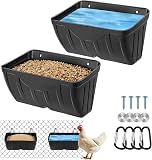 Chicken Feeder Waterer9.5/10View on Amazon
- 4
 Automatic Chicken Feeder No Waste Metal Poultry Feeder LargeView on Amazon
- 5
 100lbs Automatic Chicken Feeder with 12 Feeding Ports &View on Amazon
- 6
 25lb Automatic Chicken Feeders Metal Poultry Feeder no WasteView on Amazon
- 7
 Tgeyd Metal Chicken FeederView on Amazon
- 8
 Automatic Chicken and Duck FeederView on Amazon
- 9
 Automatic Chicken Feeder No Waste for CoopView on Amazon
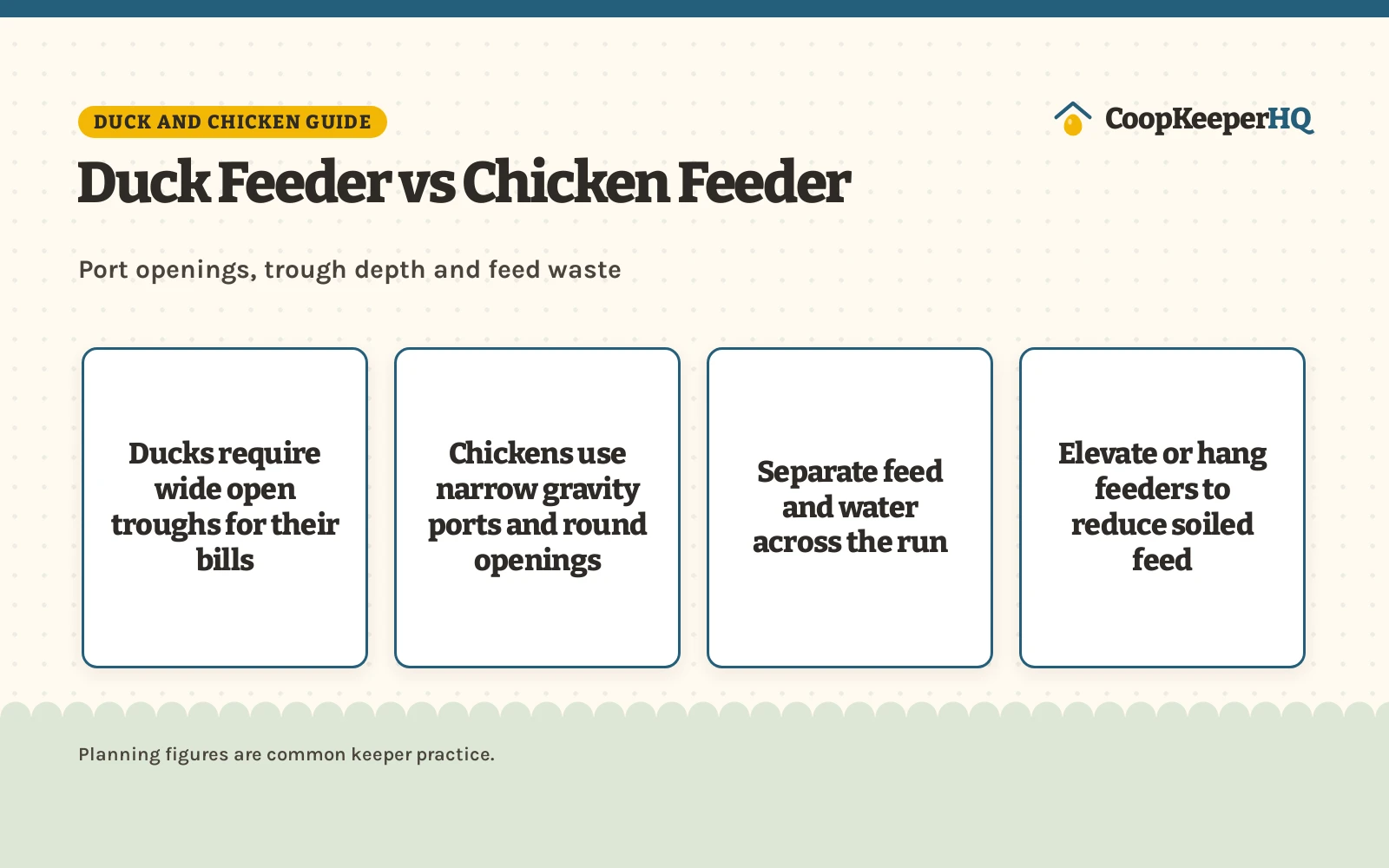
When choosing between a duck feeder vs chicken feeder, bill anatomy and feeding habits determine the right choice. Chickens peck at feed with narrow beaks and eat neatly from small gravity ports, while ducks use wide bills that require open troughs and separate access to drinking water. Because of these traits, ducks struggle with enclosed chicken ports, whereas chickens can readily share an open duck trough.
Other options for the coop
 Automatic Chicken Feeder No Waste Metal Poultry Feeder LargeCheck price on Amazon
 100lbs Automatic Chicken Feeder with 12 Feeding Ports &Check price on Amazon
 25lb Automatic Chicken Feeders Metal Poultry Feeder no WasteCheck price on Amazon
 Tgeyd Metal Chicken FeederCheck price on Amazon
 Automatic Chicken and Duck FeederCheck price on Amazon
 Automatic Chicken Feeder No Waste for CoopCheck price on Amazon
CoopKeeperHQ earns a commission if you buy through our links, at no added cost to you. Affiliate disclosure.
Duck feeder vs chicken feeder: bill anatomy and eating styles
The difference between a duck feeder vs chicken feeder begins with beak shape. Chickens have pointed beaks designed for pecking individual grains or crumbles, letting them use narrow ports cleanly.
Ducks feed differently. A duck has a wide bill with comb-like pecten along the edges. Ducks shovel into feed, scooping large mouthfuls with a dabbling motion. Forcing broad duck bills into narrow chicken ports scrapes delicate tissue and prevents proper feeding.
Feeder port design: narrow holes versus open troughs
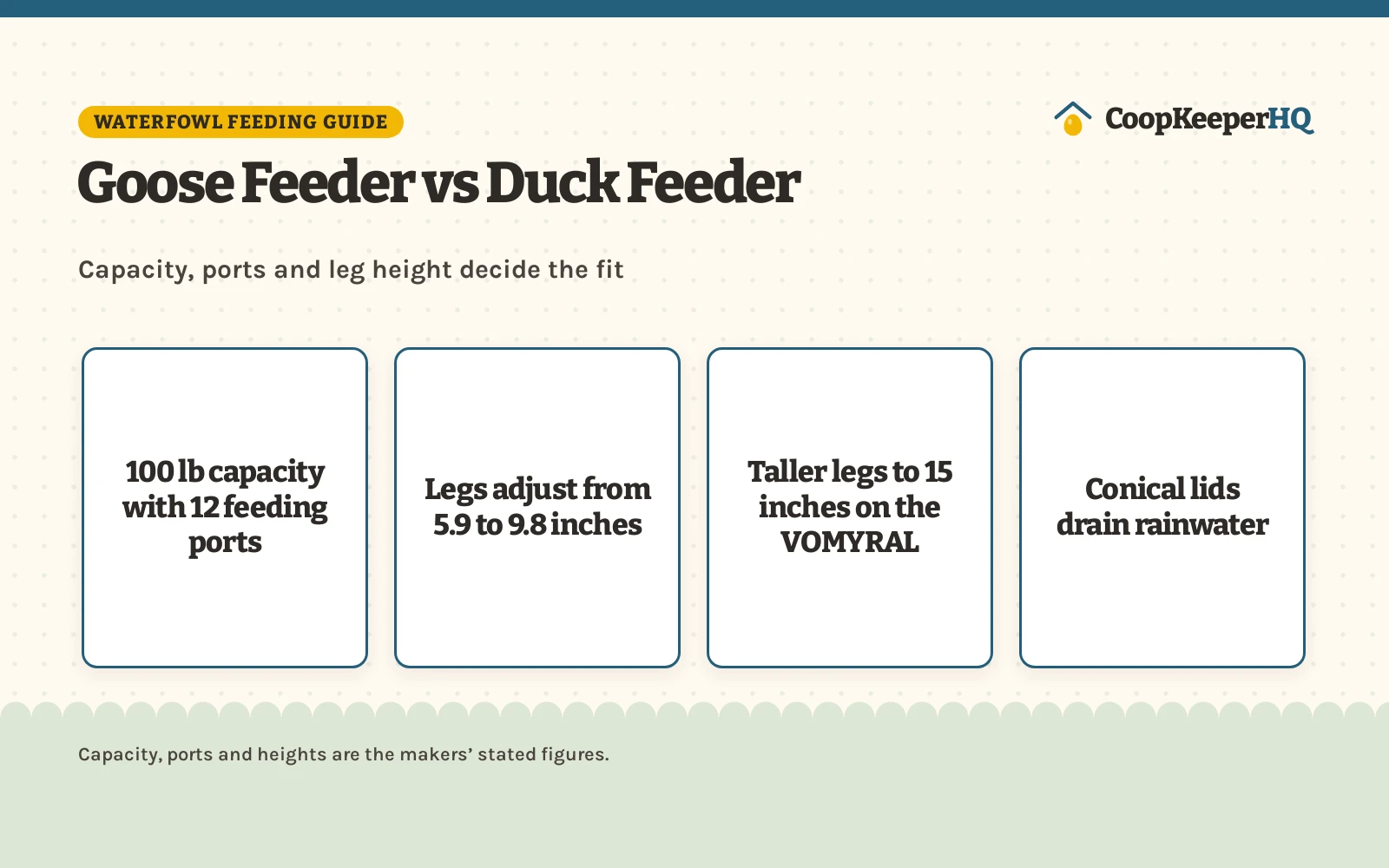
Chicken hoppers use recessed ports to restrict access and protect feed. For chickens, Dogetgd produces metal feeders with an 85 pounds capacity and 6 feeding ports. NeoTamarix lists an automatic metal feeder holding 100 pounds with 12 feeding ports, and Tgeyd provides a 20 pounds metal hopper with 12 feeding ports for flocks of 6 to 12 chickens. These ports keep hens from raking feed out.
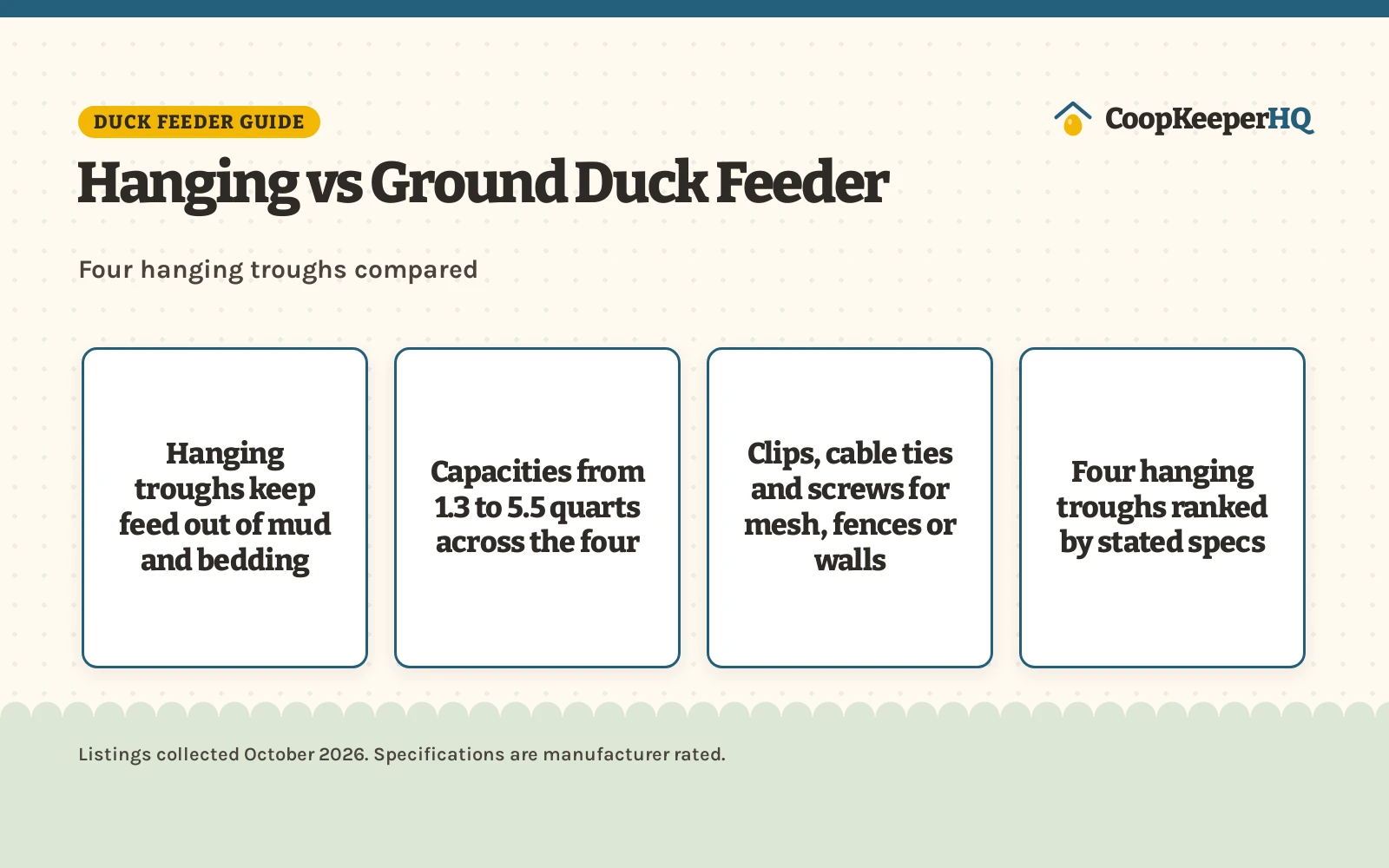
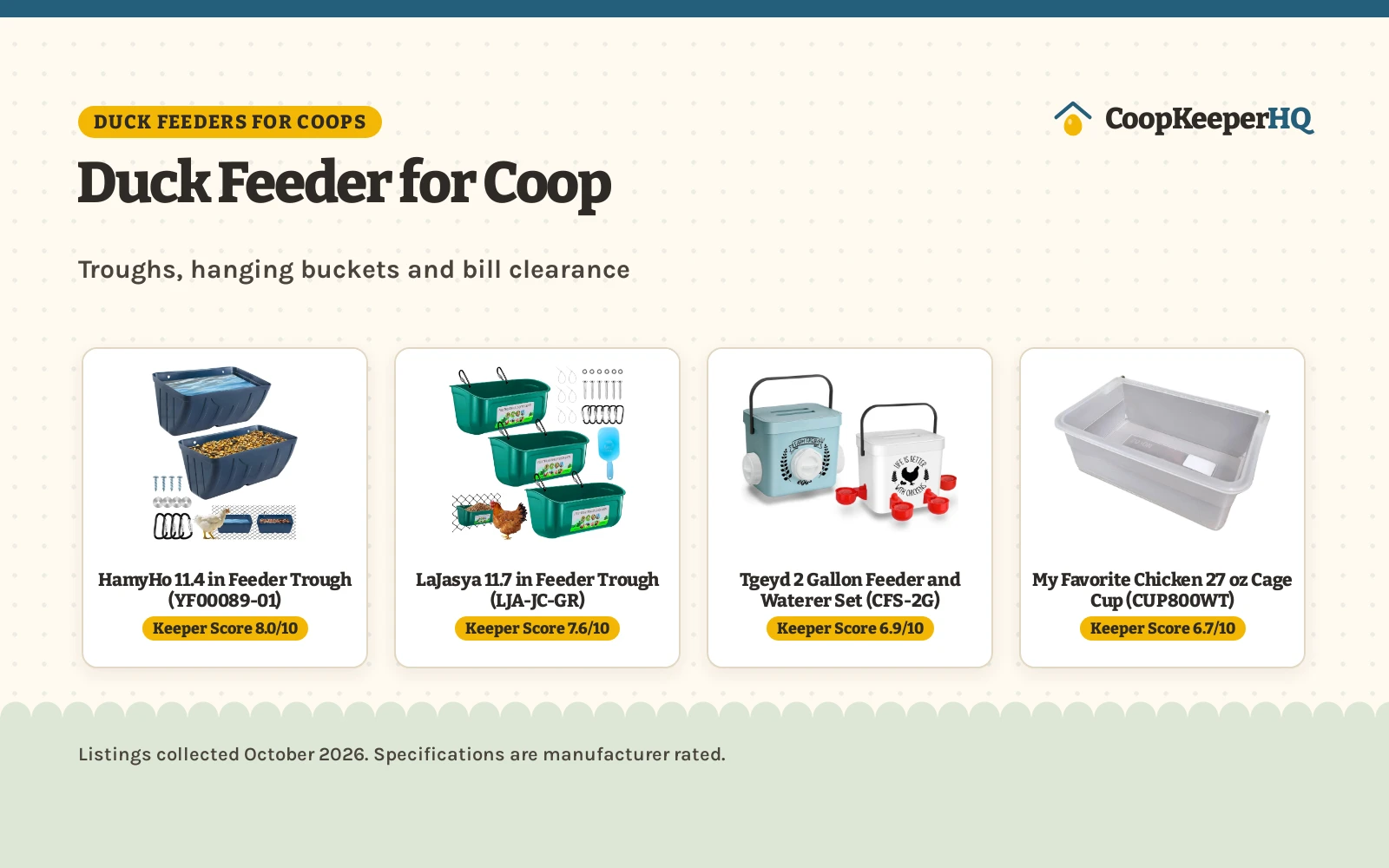
For ducks, standard enclosed ports do not fit broad bills. Duck keepers rely on open troughs. The Cedilis 4 pack provides open containers with a 2.5 quart capacity each, totaling 10 quarts across the set. Measuring 11.7 x 4.7 x 5.2 inches, these troughs allow ducks to feed without restriction.
Managing mess and feed waste: raking versus shoveling
Chickens waste feed by raking their beaks sideways, scattering crumbles into bedding. Enclosed ports and baffles prevent this behavior, as noted in our no-waste chicken feeder guide.
Ducks waste feed by shoveling crumbles and shaking their heads. To minimize waste, keepers use deep-walled troughs or fence bins that catch flung feed, stopping waterfowl from trampling crumbles into dirt.
Water placement and the duck feeding ritual
Chickens drink after eating and do not require water to swallow dry crumbles, so their hoppers stay dry inside coops.
Ducks rely on water to swallow dry pellets, marching to water after grabbing dry feed. Placing water beside a feeder turns feed into sour mash rapidly and fouls the drinker. Keepers separate the feeder and a dedicated duck water feeder across the run, forcing ducks to swallow feed before reaching the drinker.
Hanging height and mounting options
Suspending a hopper at hen back height keeps bedding out, as outlined in our hanging chicken feeder guide.
Ducks feed forward and down, preferring equipment set at chest height. The Cedilis 4 pack includes 8 clamps, 8 zip ties, and 8 pointed screws to mount 2.5 quart troughs to run fencing. For freestanding hoppers, NeoTamarix uses legs with adjustable settings from 5.9 to 9.8 inches, Tgeyd offers 4 adjustable height settings, and Yhhdjc uses 2 legs on its 80 pounds metal barrel. Wall sets like the TGEYD combination pair a 21 lb feed hopper with a 4.2 gallons water reservoir. See our feeders with legs review for more options.
Weather protection, lids and outdoor durability
Duck feeding stations remain outdoors to keep night shelters dry, requiring weatherproofing as covered in our weatherproof duck feeder guide.
The NAOEDEAH 25 pounds feeder features a cover board that props open for feeding and lowers at night for rain protection. The Yhhdjc 80 pounds galvanized steel barrel uses a sloped waterproof cover. Check specifications closely: PKNYBZH advertises a 30 lbs capacity in its title while listing 50 pounds in its spec table, with dimensions of 12.8 x 9.8 x 20.7 inches. Explore our outdoor duck feeder picks for rain-safe options.
Feeder materials: metal versus heavy plastic
Rust-resistant metal hoppers from Dogetgd and galvanized steel barrels from NeoTamarix and Yhhdjc provide durability and pest resistance. Empty weights like 19.8 pounds for Dogetgd and 22.05 pounds for NeoTamarix keep hoppers stable.
Polypropylene plastic troughs, like Cedilis 2.5 quart units and HAEZU 4 pack sets, never rust and rinse clean quickly with a hose. For flock supplements, the Hipykat dual metal hanging feeder holds 4.5 pounds and includes 4 bottom drainage holes to keep grit dry.
Can ducks and chickens share the same feeder?
Mixed flocks require separate feeding setups. Enclosed chicken port feeders leave ducks unable to eat, while open duck troughs allow chickens to scratch feed out.
The ideal setup uses an open duck trough at chest height in the run, paired with an enclosed chicken port feeder inside the coop or on an elevated platform ducks do not climb. Review our chicken feeder types overview for details.
Daily maintenance and coop cleanliness
Wet feed ferments quickly in warm weather. Inspect duck troughs daily and scoop out clumped feed before refilling. Tap metal chicken hoppers periodically to keep crumbles flowing smoothly. Store dry feed in rodent-proof bins. If a bird shows lethargy, consult a poultry veterinarian or local university extension office.
Duck feeder vs chicken feeder checklist
- Provide wide open troughs for duck bills and narrow port hoppers for chickens
- Mount duck troughs at chest level to prevent trampling
- Separate feed troughs from waterers across the run to prevent wet mash
- Use plastic troughs for quick hose washing or galvanized steel for large outdoor hoppers
- Maintain separate feeding stations for mixed flocks
- Clear damp leftover feed daily
How much feed your flock eats a day and a month, how long a bag lasts, and what it costs.
Wash your hands after handling birds, eggs or equipment, supervise children around the flock, and check local rules on flock size and roosters before you buy. For sick birds, call a poultry veterinarian or your state extension office. See CDC backyard poultry guidance. Read our Safety Disclaimer.
FAQ for the flock
Can ducks eat out of a standard chicken feeder?
Most ducks cannot eat comfortably from standard chicken ports because their broad bills do not fit. Ducks require open troughs or wide pans.
Why do ducks make such a mess with dry poultry feed?
Ducks shovel feed and shake their heads, scattering crumbles. They also carry feed to their drinker to swallow, creating wet mash.
How far should duck feed be placed from the waterer?
Separate feed troughs and waterers across the run so ducks swallow feed during their walk, keeping both cleaner.
Are metal or plastic feeders better for ducks?
Galvanized steel resists chewing and offers outdoor stability. Molded plastic troughs never rust from water exposure and rinse clean easily.
Can chickens eat out of an open duck trough?
Chickens can eat from duck troughs, but they scratch crumbles onto the ground. Separate feeding stations control waste in mixed flocks.
More coop guides
- Duck Feeder for Outside: 5 Top Weatherproof Picks (2026)
- Best Outdoor Duck Feeder: 5 Weatherproof and Trough Picks (2026)
- Best Chicken Feeder No Waste: Picks That Save Feed
See the ducks, quail and turkeys guides and the feeders and waterers section.