Hot vs Cold Compost Bin: Which One Should You Buy?
A hot pile breaks bedding down fast with turning and air, while a cold bin works slowly with little effort, and the right choice comes down to how much time the keeper wants to spend at the pile.

On this page
Top picks at a glance
As an Amazon Associate I earn from qualifying purchases.
- 1
 JupiterForce 120 Gallon Large Compost Bin9.6/10View on Amazon
- 2
 simplehuman Compost CaddyView on Amazon
- 3
 Algreen Products Soil Saver Classic Compost binView on Amazon
- 4
 BUKLIYN Compost Bin OutdoorView on Amazon
- 5
 Large Metal Wire Mesh Compost Bin OutdoorView on Amazon
- 6
 Toolsempire Compost Bin OutdoorView on Amazon
- 7
 HOTBIN100 Mini Standing Hot Composter Bin 26 gal.View on Amazon
The wheelbarrow by the coop door fills up fast on clean-out day, with soiled bedding, spilled feed and leaves from the run, and the heap by the fence needs a home before it starts to smell. Hot vs cold compost bin is the question that decides what happens next: a hot pile breaks that bedding down fast when it gets turning and air, while a cold bin lets the same material break down slowly with little effort, and a keeper short on time will be happier with the cold route. Every bin in this guide is a static bin with a lid and vents, so none of them turns on its own, and a hot pile in any of these bins means turning the material by hand.
Other options for the coop
 simplehuman Compost CaddyCheck price on Amazon
 Algreen Products Soil Saver Classic Compost binCheck price on Amazon
 BUKLIYN Compost Bin OutdoorCheck price on Amazon
 Large Metal Wire Mesh Compost Bin OutdoorCheck price on Amazon
 Toolsempire Compost Bin OutdoorCheck price on Amazon
 HOTBIN100 Mini Standing Hot Composter Bin 26 gal.Check price on Amazon
CoopKeeperHQ earns a commission if you buy through our links, at no added cost to you. Affiliate disclosure.
Hot vs cold compost bin: how the methods differ
A hot pile and a cold bin hold the same material and treat it in different ways. A hot pile relies on air, moisture and regular turning to keep the material active, and the keeper does the turning by hand when the bin has no moving parts. A cold bin relies on time instead: material goes in through the lid, air comes in through the side vents, and the heap breaks down slowly while the keeper adds fresh bedding and scraps on top. The choice is less about the bin and more about the routine, since a static bin can serve either method and only the amount of turning changes. The guide to how a compost bin works walks through the same idea in more detail.
What a hot pile asks of the keeper
Heat in a pile comes from active material with enough air, so a hot pile asks for turning, a mix of fresh green material and dry bedding, and a lid kept closed between visits. Kitchen scraps, grass clippings and leaves are the kind of material the makers name for these bins, and soiled bedding from the coop adds bulk that keeps the heap from packing down. A compost thermometer helps a keeper watch a hot pile without guessing, and the reading shows whether the pile is still heating. A hot pile also asks for space near the coop, since turning means lifting the lid, working the material with a fork and closing the lid again.
What a cold bin does on its own
A cold bin is a lidded container with vents, and it asks little of the keeper beyond loading it and leaving it alone. Air moves in through the vents, rain stays out under the lid, and the material settles and breaks down at its own pace. In the bins here with a bottom or access door, finished compost comes out below while fresh material goes in at the top, so the keeper can scoop from below. The closed lid also helps keep small animals out of the heap, which matters when kitchen scraps go in with the bedding.
Bins that fit this comparison
The bins below are ordered by how their stated specs line up for this comparison, led by the bin that pairs a stated warranty with wide access. Each bin here is a static bin, so a hot pile in any of them means turning the material by hand.
Redmon Outdoor Compost Bin, 65 gallon. The maker lists a 65-gallon bin that measures 26 x 26 x 30.75 inches and weighs 15.0 pounds, built from 80 percent recycled materials. A lift-off lid and 4-door access open the bin up for loading and for scooping finished compost, and assembly needs no tools. The maker states a 1 year limited warranty, the only warranty stated across the bins in this guide. The smaller capacity suits a keeper with a modest heap, while a keeper with a large clean-out load will fill it fast and may want an 80-gallon bin below.
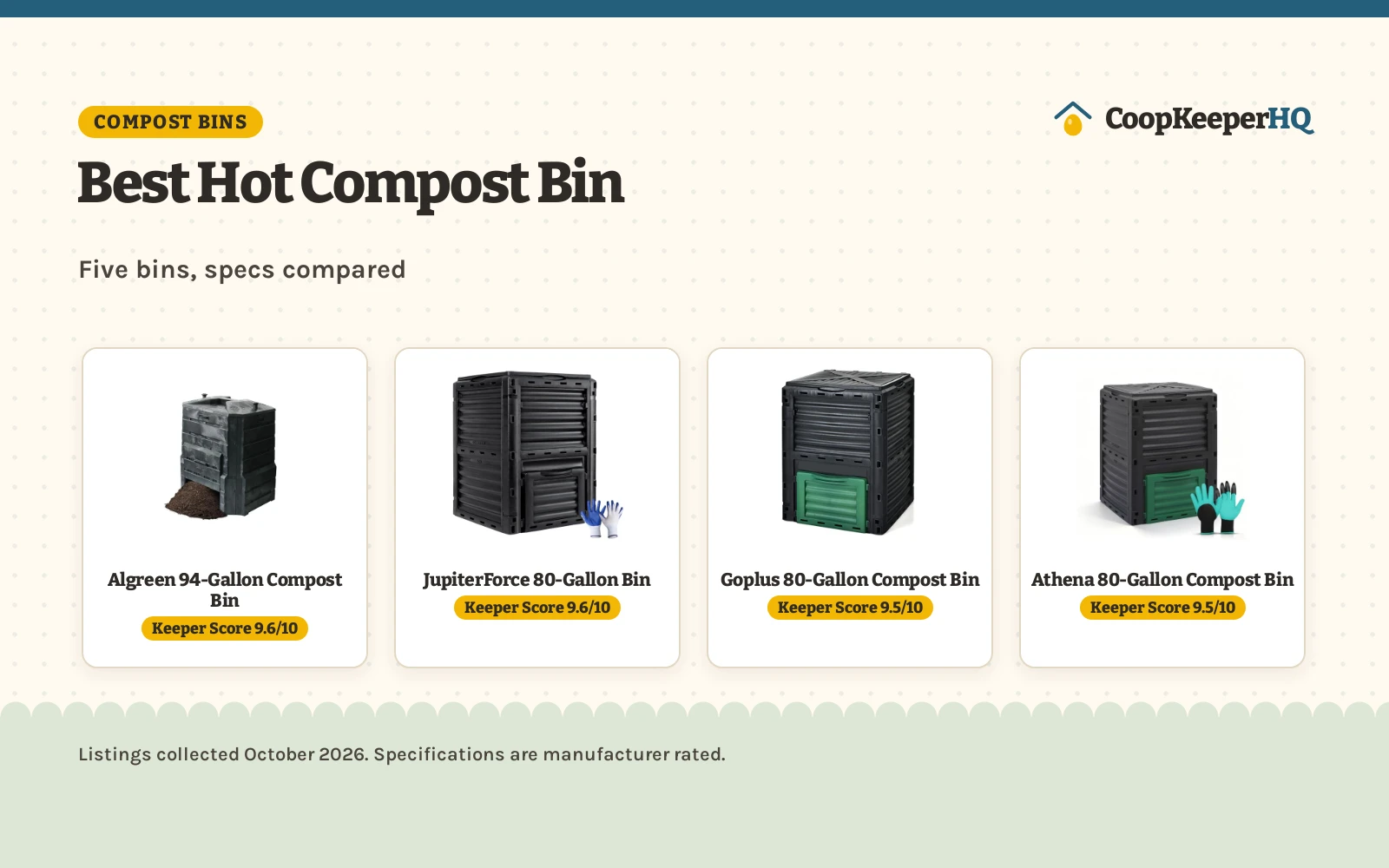
JupiterForce Garden Compost Bin, 80 gallon. The maker lists an 80-gallon (300 L) bin that measures 23.2 x 22.4 x 31.9 inches and weighs 11.9 pounds, made from BPA free material. Four vents on each side move air through the heap, a top lid takes fresh waste and a sliding bottom door gives out finished compost. Gloves come in the box, assembly takes 4 simple steps with no tools, and the maker notes the bin has no base and sits directly on the ground. The vent coverage and the bottom door suit a keeper who wants a hot pile with steady airflow, or a cold bin that still breathes.
Athena Collection Compost Bin, 80 gallon. The maker lists an 80-gallon bin that measures 23.0 x 23.0 x 31.5 inches and weighs 10.8 pounds, built from BPA-free polypropylene. A snap-on lid closes over the heap, side aeration vents bring air in, and gloves come in the box for handling the material. The maker states setup takes under 30 minutes with step-by-step instructions. The light weight and simple lid suit a keeper who wants a plain, low-effort cold bin by the coop, while a keeper chasing a hot pile will need to turn the material by hand since the bin has no turning parts.
Choosing between a hot pile and a cold bin
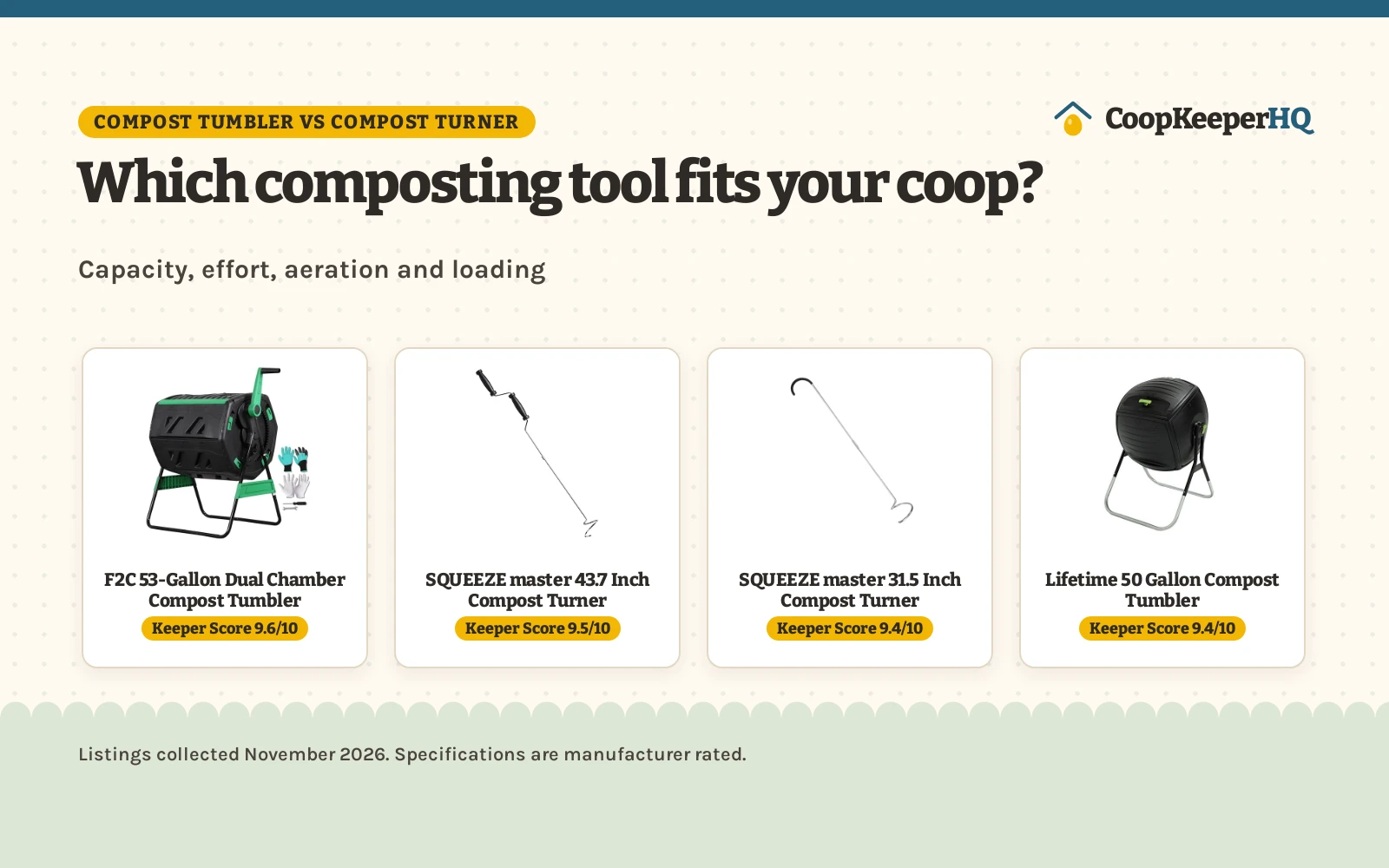
Start with the weekly routine, not the bin. A keeper who is already at the coop each day and does not mind working the heap with a fork can run a hot pile in a static bin, turning often and adding fresh material as the coop is cleaned. A keeper who visits the coop in a short round of chores and wants the heap out of sight will be better served by a cold bin, loading from the top and scooping finished compost out when it looks ready. The compost tumbler vs compost bin comparison covers a bin type that turns on its own, for keepers who want the turning done by the bin rather than by hand. The guide to using a compost bin for coop waste covers the loading routine in more detail.
Setting the bin by the coop
Place the bin on open ground near the run, with room to lift the lid and work the material. The JupiterForce bin is made to sit directly on the ground with no base, and a level spot near the run suits the other bins as well. Keep the lid closed between loads so rain stays out and small animals stay away from kitchen scraps. Gloves live by the coop door for handling the heap, and a scoop by the bin keeps loading and unloading tidy. A clean run helps the whole routine, and the guide to keeping a chicken run clean covers the daily round. For bedding that composts well, the chicken bedding for composting picks compare the options.
Birds, breed size, run time and climate in; coop floor, run space, roost length and nesting boxes out.
Wash your hands after handling birds, eggs or equipment, supervise children around the flock, and check local rules on flock size and roosters before you buy. For sick birds, call a poultry veterinarian or your state extension office. See CDC backyard poultry guidance. Read our Safety Disclaimer.
FAQ for the flock
Is a hot or cold compost bin better for chicken bedding?
It comes down to time. A hot pile breaks bedding down fast when it gets turning and air, while a cold bin breaks the same bedding down slowly with little effort. A keeper with time to turn the heap will get more from the hot route, while a keeper who wants the heap handled with a scoop and a lid will be happier with a cold bin.
Can soiled coop bedding go straight into a compost bin?
Yes. Soiled bedding, kitchen scraps, grass clippings and leaves are the materials the makers name for these bins. Load through the top lid, keep the lid closed between loads, and scoop finished compost out when it looks ready.
How long does a cold compost bin take?
The makers do not state a finished-compost time for these bins. A cold bin works slowly by nature, and airflow and the mix of material affect the pace. Load it steadily, keep the vents clear and let the heap work at its own pace.
Does a static bin need turning?
Not for a cold bin, since the vents bring air in and the heap breaks down on its own. For a hot pile, turning by hand is how air gets into the middle of the heap, and in a bin with a bottom or access door, finished compost comes out from below while fresh material goes in at the top.
What size compost bin suits a backyard coop?
The bins in this guide are 65-gallon and 80-gallon. The 80-gallon bins hold more clean-out material from a large coop, while the 65-gallon Redmon suits a smaller heap.
More coop guides
- How to Use Compost Bin for Coop Waste
- How Does Compost Bin Work: A Backyard Guide
- Compost Tumbler vs Compost Bin: Which One Should You Buy?
- Best Compost Thermometer (2026): 5 Compared
- Worm Farm vs Compost Bin: Which One Should You Buy?
- Black Soldier Fly Bin vs Compost Bin: Which One Should You Buy?
- Best Compost Tumblers (2026): 5 Dual Chamber Picks for the Coop
- How to Compost Chicken Poop at Home
- Wood vs Plastic Compost Bin: Which One Should You Buy?
- Compost Bin for Beginners: What to Buy
- Best Chicken Bedding for Composting (2026): 5 Picks Compared
- How to Keep a Chicken Run Clean
See the coop cleaning and compost guides and the coop supply picks.