Sand vs Dirt Chicken Dust Bath: Which One Should You Buy?
Sand vs dirt chicken dust bath: sand blends give a fine, dry texture out of the bag, while plain yard dirt costs nothing and varies with your soil.

On this page
Top picks at a glance
As an Amazon Associate I earn from qualifying purchases.
- 1
 Premium Chicken Sand 50 lbs9.6/10View on Amazon
- 2
 Arden Line Zeolite Chicken Dust Bath9.6/10View on Amazon
- 3
 World’s Best Chicken Dust BathView on Amazon
- 4
 4lbs Chic Hens Chicken Dust BathView on Amazon
- 5
 Cleanest Feathers Ever! Premium Herbal Dust Bath for ChickensView on Amazon
- 6
 Foldable Chicken Dust Bath TubView on Amazon
- 7
 Billy Buckskin Chicken Dust BathView on Amazon
- 8
 Lixit Chicken Dust Bath 5.5 lbsView on Amazon
If you have watched a hen sprawl in a sunny corner of the run, fluff her feathers and kick dust into them, you have seen the dust bath at work. Sand vs dirt chicken dust bath: either material can work, but ready-made blends give a fine, dry texture straight out of the bag, while plain yard dirt costs nothing and varies with your soil. This guide compares the two, then looks at three ready-made mixes and how to set up a bath the flock will actually use.
Other options for the coop
 World’s Best Chicken Dust BathCheck price on Amazon
 4lbs Chic Hens Chicken Dust BathCheck price on Amazon
 Cleanest Feathers Ever! Premium Herbal Dust Bath for ChickensCheck price on Amazon
 Foldable Chicken Dust Bath TubCheck price on Amazon
 Billy Buckskin Chicken Dust BathCheck price on Amazon
 Lixit Chicken Dust Bath 5.5 lbsCheck price on Amazon
CoopKeeperHQ earns a commission if you buy through our links, at no added cost to you. Affiliate disclosure.
Sand vs dirt chicken dust bath: the short answer
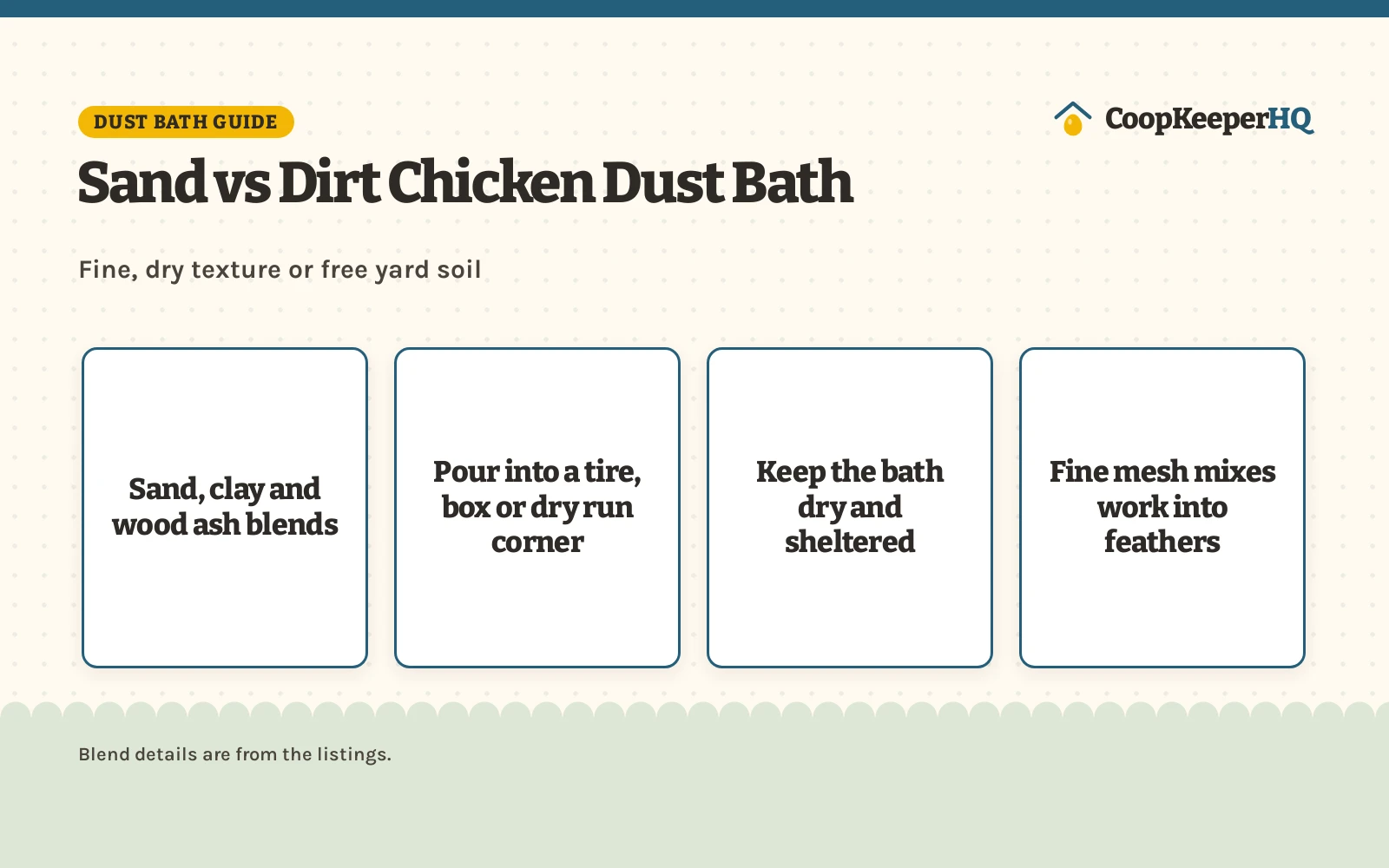
The listings in this guide sell ready-made blends, not plain dirt. The CZ Grain mix is a blend of natural sand, clay and wood ash in a 20 pound bag. The Impresa mix is a fine mesh blend of unscented natural sand and 100 percent white volcanic ash in an 8 lb bag. The Chic Hens mix is a 4 ingredient blend of diatomaceous earth, biochar, zeolite and sulfur in a 4 lb bag. Plain dirt from the yard is the free alternative, and the Chic Hens listing positions its blend as more complete than single-ingredient options, naming plain earth-only products as the comparison. If the run already has loose, dry soil the birds dig in on their own, dirt is doing the job. If the ground packs down or stays damp, a sand blend gives a consistent, dry texture.
What sand brings to the bath
Sand-based mixes are built for the way birds bathe. The Impresa listing calls its mix fine mesh and says the fine ash adheres to feathers, which the maker links to thorough insect removal. The CZ Grain listing describes a ready-to-use blend of sand, clay and wood ash that pours into a shallow container, a tire, a wooden box or a dry area of the chicken run. Fine particles work into the feathers and fall back out, and the Chic Hens listing notes that fine particles suit regular use in favorite bathing spots. Sand also gives you a repeatable product: every 20 pound bag from CZ Grain or 8 lb bag from Impresa is a consistent product, while yard dirt changes with the season.
What plain dirt brings, and where it falls short
Dirt is free, it is already in the run, and birds will dig their own hollows in it. The trade is consistency. Packed or clay-heavy soil does not fluff into feathers the way a fine sand blend does, and damp ground stays damp. The listings keep coming back to dryness: CZ Grain says to pour the mix into a dry area of the run, Impresa says to store the bag in a cool, dry place and notes the practical closure that keeps the contents dry, and Chic Hens recommends a sheltered dust bath area. Those habits matter for dirt too. A hollow under the coop overhang or a box with a lid stays usable in wet weather, while an open patch of dirt turns to mud after rain.
Three ready-made mixes, from strongest to weakest stated specs
The CZ Grain mix leads on stated detail. The 20 pound bag is the largest of the three, the ingredient list names natural sand, clay and wood ash, and the listing gives the most setup guidance: pour it into a shallow container, tire, wooden box or dry area of the run, and it suits laying hens, backyard chickens, homesteads, hobby farms, breeding flocks and free-range poultry. The maker packages it with quality and consistency as the stated promise.
The Impresa mix is the fine mesh option. The 8 lb bag holds a blend the listing describes as 100 percent white volcanic ash with unscented natural sand, and it is the only one of the three that names quails alongside chickens. The listing says to pour it into a designated area or scatter it over the ground so birds can extend their wings fully, and the practical closure plus cool, dry storage keeps the fine ash usable bag after bag.
The Chic Hens mix is the concentrated option. The 4 lb bag holds a 4 ingredient blend of diatomaceous earth, biochar, zeolite and sulfur, made in the USA, and the listing says a little goes a long way: use it in a sheltered bath area or a box, mix it into an existing setup, and refresh with small weekly top-ups. It is the smallest bag of the three, so it suits topping up a bath the birds already use rather than filling a big new one.
Setting up a bath the flock will use
Pick a dry spot first. The CZ Grain listing names a shallow container, a tire, a wooden box or a dry area of the run, and the Impresa listing adds a designated area or a scatter over the ground where birds can stretch their wings. A tire or a low wooden box keeps the mix where you put it and gives the birds an edge to lean against. The Chic Hens listing suggests mixing the blend into an existing bath setup, which is a good way to refresh a hollow the flock already favors. Keep the bath where you can see it during chores, so refills happen before the mix runs thin.
Keeping the bath dry
Dryness is the whole game. Impresa states the bag should live in a cool, dry place and that its closure keeps the contents dry, and that habit extends to the bath itself: a lid, a tarp or a spot under the coop overhang keeps rain off. The Chic Hens listing recommends small weekly top-ups, which is also the moment to scoop out damp or soiled mix and freshen the surface. If the bath sits in a low spot that puddles, move it before the next rain rather than after. For tubs and covered setups, see our chicken dust bath tub with cover and dust bath box picks.
Wash your hands after handling birds, eggs or equipment, supervise children around the flock, and check local rules on flock size and roosters before you buy. For sick birds, call a poultry veterinarian or your state extension office. See CDC backyard poultry guidance. Read our Safety Disclaimer.
FAQ for the flock
Can I use plain dirt from the yard as a chicken dust bath?
Yes. Birds dig their own hollows in loose soil, and dirt costs nothing. The trade is texture and dryness: packed or damp soil does not fluff into feathers the way a fine sand blend does, so a dry, loose patch works best. The Chic Hens listing positions its blend as more complete than plain earth-only products.
Is sand or dirt better for a chicken dust bath?
It depends on the soil. A sand blend gives a fine, consistent texture out of the bag, with the three mixes here built on sand, clay, wood ash, volcanic ash, diatomaceous earth and other fine ingredients. Plain dirt works when it is loose and dry. If the run soil packs hard or holds water, a sand mix is the steadier choice.
How much dust bath mix should I buy?
The three mixes here come in a 20 pound bag, an 8 lb bag and a 4 lb bag. The Chic Hens listing says a little goes a long way and recommends small weekly top-ups. A big new bath or box takes the 20 pound bag; the 4 lb bag suits refreshing a bath the flock already uses.
Where should I put the dust bath?
In a dry spot the birds already visit. The CZ Grain listing suggests a shallow container, tire, wooden box or dry area of the run, and Impresa suggests a designated area or a scatter over the ground. A sheltered spot or a cover keeps rain off, and the Chic Hens listing recommends a sheltered bath area.
Can quail use these dust bath mixes?
The Impresa listing names both chickens and quails for its fine mesh mix. The CZ Grain and Chic Hens listings speak to chickens and backyard flocks. A shallow tray of the fine mix suits smaller birds.
How do I keep the dust bath from getting damp?
Cover it or shelter it. Impresa states the bag should be stored in a cool, dry place with its closure keeping the contents dry, and the same thinking applies to the bath: a lid, a tarp or a spot under the coop overhang. Top up with small amounts weekly, as the Chic Hens listing recommends, and scoop out damp mix when you do.
More coop guides
- Best Chicken Dust Bath Boxes and Bath Setups
- Chicken Dust Bath Tub with Cover: 5 Top Picks Compared (2026)
- Best Chicken Dust Bath for Chicks (2026): 5 Mixes
- Best Chicken Dust Bath for Winter (2026): 5 Cold-Weather Flock Picks
See the winter dust bath guide for cold months and the chick dust bath guide for young birds.