24 vs 48 Inch Hardware Cloth: Which One Should You Buy?
Four 24-inch hardware cloth rolls compared by mesh size, gauge and coating, with guidance on choosing between 24 and 48 inch widths for a coop run.

On this page
Top picks at a glance
As an Amazon Associate I earn from qualifying purchases.
- 1
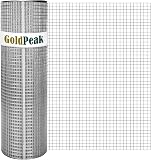 GoldPeak 19 Gauge Hardware Cloth Chicken Wire Fencing 1/29.7/10View on Amazon
- 2
 48x50 Hardware Cloth 1/2 Inch 19Ga9.6/10View on Amazon
- 3
 AMAGABELI Galvanized Hardware Cloth 1/4 inch 48 x 100 ft 239.6/10View on Amazon
- 4
 24'' x 50' 1.5inch Hardware Cloth 16 Gauge Black Vinyl CoatedView on Amazon
- 5
 Hot-Dip Galvanized 1/2in Hardware Cloth 24x25ft 19G ChickenView on Amazon
- 6
 HORCH Hardware Cloth 1/2 inch Chicken Wire Fencing 24 x 100View on Amazon
- 7
 Black 16 Gauge Vinyl Coated Hardware ClothView on Amazon
- 8
 Fencer Wire 16 Gauge Hardware ClothView on Amazon
- 9
 Black Hardware ClothView on Amazon
Standing in the run with a tape measure, deciding how much mesh to order, is where the 24 vs 48 inch hardware cloth question starts. The short answer: a 48-inch roll covers a taller run wall in one pass, while a 24-inch roll suits low runs, ground aprons and patching. The four rolls compared here are all 24-inch-wide, so this guide shows what the narrower width does well and where the wider roll earns its keep.
Other options for the coop
 24'' x 50' 1.5inch Hardware Cloth 16 Gauge Black Vinyl CoatedCheck price on Amazon
 Hot-Dip Galvanized 1/2in Hardware Cloth 24x25ft 19G ChickenCheck price on Amazon
 HORCH Hardware Cloth 1/2 inch Chicken Wire Fencing 24 x 100Check price on Amazon
 Black 16 Gauge Vinyl Coated Hardware ClothCheck price on Amazon
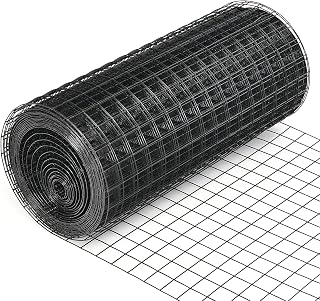 Fencer Wire 16 Gauge Hardware ClothCheck price on Amazon
 Black Hardware ClothCheck price on Amazon
CoopKeeperHQ earns a commission if you buy through our links, at no added cost to you. Affiliate disclosure.
24 vs 48 inch hardware cloth: what the width changes
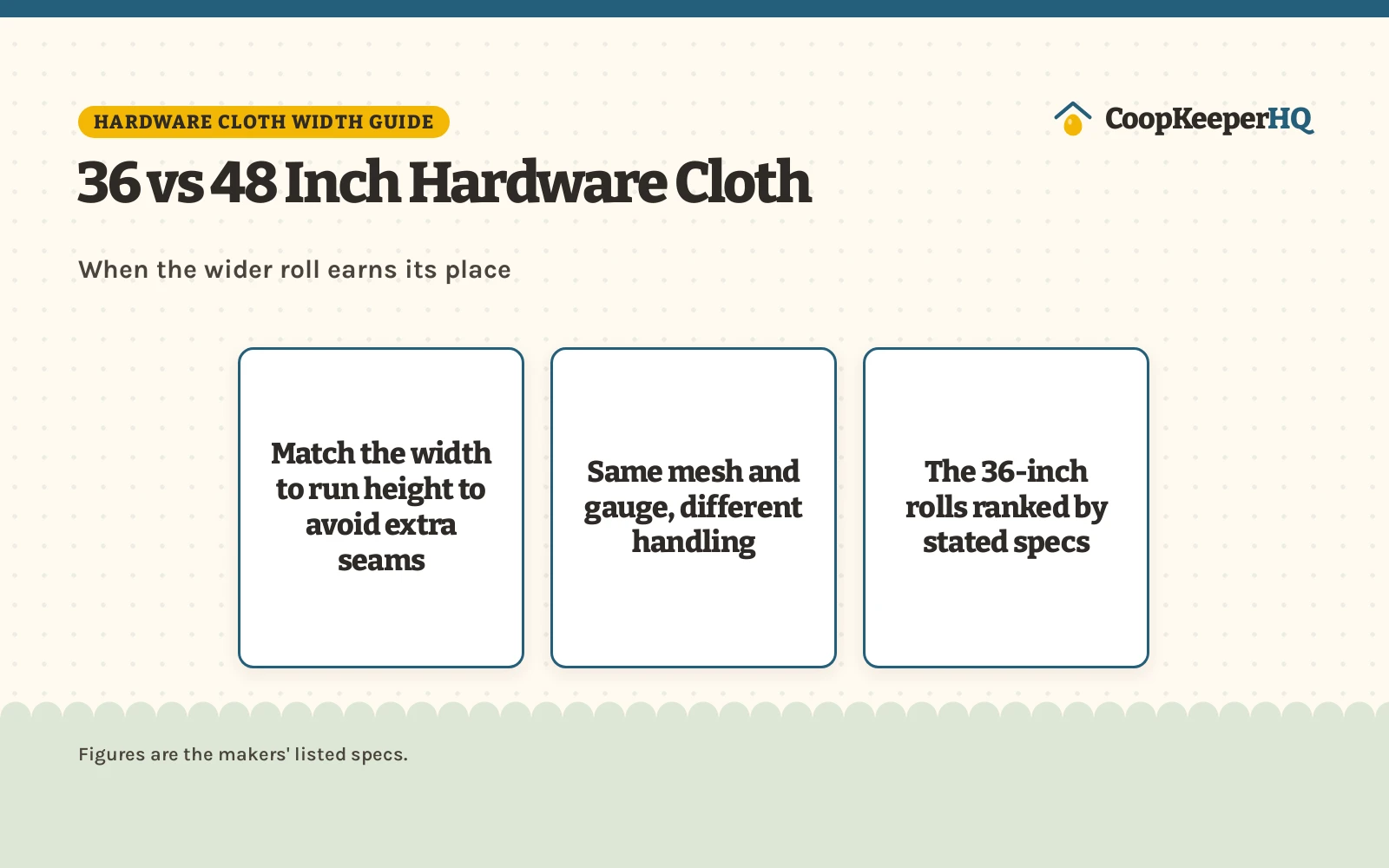
Roll width decides how much of a run wall one horizontal pass covers. A 48-inch roll spans a taller wall in a single pass, which means fewer horizontal seams to fasten. A 24-inch roll covers less height per pass, so it fits low run walls, the ground-level apron that turns digging predators away, and small patch jobs where a wide roll would leave waste. Measure the wall height first, then match the roll width to it.
Mesh size matters more than width
Three of the four listings use 1/2-inch mesh, and one uses 1-inch mesh. The finer mesh is the one makers point at small predators: the 1/2-inch VEVOR listing claims its mesh stands up to squirrels, rabbits, raccoons, skunks, foxes and snakes. The 1-inch VEVOR listing claims its mesh keeps small critters out of gardens and animal cages. For a coop or run where small predators are the worry, the 1/2-inch listings are the finer choice. Our half inch vs quarter inch comparison looks closer at mesh openings.
Gauge and coating: what the listings state
Three listings state 19 gauge wire, and one states 16 gauge; a lower gauge number means thicker wire. Coating differs by maker. SANZEUS states double-layer hot-dip galvanizing after welding, with every weld point secure. VEVOR states hot-dipped galvanization after welding on its 1/2-inch roll, with zinc-coated weld points. The 1-inch VEVOR roll is galvanized steel with a black vinyl coating, and YARDGARD states its wire is galvanized before weaving. See our galvanized vs vinyl coated comparison for how the coatings differ.
The 24-inch rolls we compared
Ranked by listed specs for coop and run use, finest mesh and clearest listing first.
SANZEUS 24 in x 50 ft, 1/2-inch mesh
The listing states a 24 inch x 50 foot roll with 1/2-inch openings, 19 gauge wire and double-layer hot-dip galvanizing after welding. It lists a weight of 13 pounds and names chicken pen and coop enclosures among its uses. The fine mesh and the after-welding coating put it first for predator protection.
VEVOR 24 in x 50 ft, 1/2-inch mesh
The listing states a 24in x 50 ft roll with 1/2-inch mesh, 19 gauge wire, hot-dipped galvanization and a listed weight of 13.2 pounds. It names chicken coops, rabbit fences and garden beds among its uses. It reads as the close second: the same width, mesh and gauge as the top pick, with a slightly different coating claim.
YARDGARD 24 in x 25 ft, 1/2-inch mesh
The listing states a 24 in x 25 ft roll with 1/2-inch mesh and 19 gauge wire, galvanized before weaving, for chicken coops and rabbit pens. Two cautions: the spec table lists Length as 5 Foot against the title’s 25 ft, and the title calls the wire welded while the bullets call it hexagonal and say it is galvanized before weaving. Trust the title and bullets on length, and confirm the mesh style before ordering. The shorter roll lands it third.
VEVOR 24 in x 100 ft, 1-inch mesh
The title and bullets state a 24 inch x 100 ft roll with 1-inch mesh, 16 gauge wire and a vinyl-coated galvanized finish, plus a wire cutter and gloves in the box. The spec table instead lists a 24 inch x 50 ft size, and it gives two different weights, 24.2 pounds and 14 pounds; the title and bullets are the figures to trust. The 1-inch mesh is the most open of the four, which puts it last for keeping small predators out of a coop.
When the 48-inch roll is the better buy
Pick the wider roll when the run walls are tall and you want one pass to cover them. A single wide course means fewer horizontal seams and less fastening work along the framing. If the listings you are choosing between only come in 24-inch widths, plan on stacking courses to reach the top of a tall wall.
When the 24-inch roll is enough
The narrower roll earns its keep on low runs, tractor sides and ground aprons, where a wide roll would leave offcuts. It also suits patching a torn section or wrapping a small pen. All four listings compared here are 24-inch-wide, in stated lengths of 25, 50 and 100 feet, so match the length to the job and buy the width that fits the wall.
Birds, breed size, run time and climate in; coop floor, run space, roost length and nesting boxes out.
Use a charger rated for the length of netting you run, ground it as the manual describes and post warning signs where neighbors or children can reach the fence. Keep grass and weeds off the bottom strands, and never leave netting unpowered, because birds and wildlife can tangle in it. Read our Safety Disclaimer.
FAQ for the flock
Is 1/2-inch or 1-inch mesh better for a chicken coop?
The finer mesh. Three of the four listings use 1/2-inch mesh, and the 1/2-inch VEVOR listing claims its mesh stands up to squirrels, rabbits, raccoons, skunks, foxes and snakes. The 1-inch listing claims its mesh keeps small critters out, but its openings are the widest of the four.
What gauge of hardware cloth should I buy?
The listings state 19 gauge on three rolls and 16 gauge on one. A lower gauge number means thicker wire, so the 16 gauge roll uses the thickest wire of the four.
What does galvanized after welding mean?
It means the weld points get coated too. SANZEUS states double-layer hot-dip galvanizing after welding with secure weld points, and VEVOR states zinc-coated weld points on its 1/2-inch roll. YARDGARD instead states its wire is galvanized before weaving.
How much hardware cloth do I need for a run?
Measure each wall of the run, then compare with the stated roll widths and lengths. The listings here state 24-inch widths in 25, 50 and 100 foot lengths, so a 48-inch width covers more height per pass where the run walls are tall.
Can I join two widths of hardware cloth?
Yes. Overlap the edges and fasten them well so no gap opens for predators. A lapped seam on framing holds better than a butt joint in the open.
More coop guides
- Galvanized vs Vinyl Coated Hardware Cloth: Which One Should You Buy?
- Half Inch vs Quarter Inch Hardware Cloth: Which One Should You Buy?
- Best Hardware Cloth for Chicken Coop Runs and Aprons
- Best Hardware Cloth Under 100 (2026): 5 Coop and Run Picks
See the predator protection picks and the chicken run and fencing guides.