Aluminum vs Steel Electric Fence Wire: Which One Should You Buy?
Aluminum vs steel electric fence wire answered: why aluminum suits coops, four aluminum wire listings by gauge and length, and where steel still makes sense.

On this page
Top picks at a glance
As an Amazon Associate I earn from qualifying purchases.
- 1
 Electric Fence Wire9.6/10View on Amazon
- 2
 Zareba 17 Gauge Aluminum Wire for Electric FencingView on Amazon
- 3
 Zareba Fi-Shock 17 Gauge Aluminum Wire for Electric FencingView on Amazon
- 4
 Aluminum Electric Fence Wire for Garden FenceView on Amazon
- 5
 17 Gauge Aluminum Electric Fence Wire 1312ft for Garden &View on Amazon
- 6
 Spool Aluminum Electric Fence Wire 250-Feet 17 GaugeView on Amazon
- 7
 17 Gauge Aluminum Electric Fence Wire 250ft for Garden &View on Amazon
Aluminum vs steel electric fence wire comes down to conductivity against strength. Aluminum conducts better, so the shock carries farther with less energy loss; steel is stronger, so it holds tension on long runs with less sag. All four listings here are aluminum wire, which is the conductivity-first choice, so the steel side below is described as a use case.
Other options for the coop
 Zareba 17 Gauge Aluminum Wire for Electric FencingCheck price on Amazon
 Zareba Fi-Shock 17 Gauge Aluminum Wire for Electric FencingCheck price on Amazon
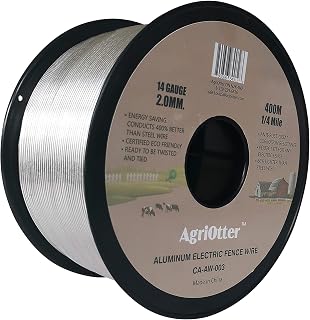 Aluminum Electric Fence Wire for Garden FenceCheck price on Amazon
 17 Gauge Aluminum Electric Fence Wire 1312ft for Garden &Check price on Amazon
 Spool Aluminum Electric Fence Wire 250-Feet 17 GaugeCheck price on Amazon
 17 Gauge Aluminum Electric Fence Wire 250ft for Garden &Check price on Amazon
CoopKeeperHQ earns a commission if you buy through our links, at no added cost to you. Read our affiliate disclosure.
The short answer: aluminum vs steel electric fence wire
Pick aluminum for most coop and garden fencing. The four listings state 17 and 14 gauge aluminum with 38,000 psi tensile strength and 90 lb breaking load on three of them, plus rust-proof build that steel wire cannot match without coating. Pick steel for long runs where tension matters more than conductivity, such as a perimeter fence with widely spaced posts. No steel wire is among these four, so the steel side is a use case, not a product.
The gear: four aluminum wire listings
1. Fi-Shock FW-00018D, 250 ft
The small-spool pick: 17 gauge aluminum, 250 feet, 90 lb breaking load and 38,000 psi tensile strength stated, with a built-in spool that spins freely while installing. The listing states a lifetime warranty, the only stated warranty here, and compatibility with all post types and plastic or porcelain insulators.
2. Fi-Shock FW-00001T, 1/4 mile
The long-spool pick: the same 17 gauge wire with the same 90 lb breaking load and 38,000 psi, on a 1/4 mile spool. The listing states the same 4x conductivity claim against steel and the same all-post compatibility. No warranty term is stated on this spool.
3. AgriOtter AW-003, 14 gauge
The heavy-gauge pick: 14 gauge, 2.0mm, on a 400-meter spool, with a stated 120 megapascal tensile strength and 3.62 kg weight. The listing states 40% better conductivity than steel and 66% lighter than steel, plus weather resistance for all North American climates. Note the conductivity figure disagrees with the Fi-Shock 4x claim; the listings measure the comparison differently.
4. HENGTONG AW-400, 400 m
The coop pick: 17 gauge aluminum on a 400-meter spool, stated as ideal for chicken coops and garden fencing, with the same 90 lb breaking load and 38,000 psi as the Fi-Shock spools. The listing states 4x better conductivity than steel and rust-proof build, working with all post types and plastic insulators.
Conductivity: the listings disagree
Three listings state aluminum conducts 4x better than steel; the AgriOtter states 40% better than steel. These are listing claims, not measured figures, and the listings do not say how each measured it. Treat the direction as agreed, aluminum conducts better, and the exact multiple as marketing. What matters for a coop run is that the shock reaches the far end of the wire, and all four listings are built for that.
Gauge and length
The listings state 17 gauge on three spools and 14 gauge on the AgriOtter. Stated lengths run 250 feet on the small Fi-Shock spool, 1/4 mile on the large Fi-Shock spool, and 400 meters on the AgriOtter and HENGTONG. A lower gauge number means thicker wire: the 14 gauge AgriOtter is the heaviest wire here, suited to longer runs where tension matters.
Strength figures
Three listings state 38,000 psi tensile strength with a 90 lb breaking load; the AgriOtter states 120 megapascal. The listings use different units, so compare within the same unit: the three 38,000 psi listings agree with each other, and the AgriOtter stands alone at 120 megapascal. For a chicken run, any of these holds the wire; for a cattle perimeter, match the wire to the charger.
Rust and maintenance
All four listings state rust-proof aluminum that does not rust, which is aluminum’s real advantage over steel: no coating to maintain, no rust weakening the wire over seasons. The Fi-Shock listings add a polished finish and a free-spinning spool for installation. Steel wire needs galvanizing or aluminizing to match, which is a cost the aluminum listings do not carry.
Where steel still makes sense
Steel wins on tensile strength for long, high-tension runs: a perimeter fence with posts far apart sags less in steel. None of these four listings is steel wire, so buy steel by its own stated gauge and breaking load. For a coop, a garden or a run under a few hundred feet, the aluminum listings here are the stronger answer.
Fitting It to Your Flock
Match the wire to the flock and the run. For chickens in a small yard, the 250 ft Fi-Shock spool or the HENGTONG 400 m spool covers the run with wire to spare. For a large property or a garden perimeter, the 1/4 mile Fi-Shock spool or the 14 gauge AgriOtter handles the distance. For wet climates, the rust-proof claim on all four matters most; for dry prairie, the AgriOtter’s weather-resistance claim is the one to read. Check your charger’s joule rating against the wire length before buying.
Wash your hands after handling birds, eggs or equipment, supervise children around the flock, and check local rules on flock size and roosters before you buy. For sick birds, call a poultry veterinarian or your state extension office. See CDC backyard poultry guidance. Read our Safety Disclaimer.
FAQ for the flock
Is aluminum or steel better for an electric chicken fence?
The listings here are all aluminum, stating better conductivity and rust-proof build for coop and garden fencing. Steel suits long high-tension runs where strength matters more than conductivity.
What gauge wire do I need?
The listings state 17 gauge on three spools and 14 gauge on the AgriOtter. Thicker 14 gauge suits longer runs; 17 gauge suits coops and gardens.
How much wire do I need?
The listings state 250 feet, 1/4 mile and 400 meters. Measure the perimeter, add a margin for corners and gates, then pick the spool that covers it.
Do any of these state a warranty?
Only the Fi-Shock 250 ft spool states a lifetime warranty. The other three listings state no warranty term.
Will aluminum wire rust?
All four listings state the wire does not rust, which is aluminum’s stated advantage over steel for outdoor fencing.
More coop guides
See the best electric fence charger for large property, polywire vs electric fence tape, the best electric fence charger for foxes and the best step in electric fence posts.