Best Way to Trap a Raccoon Around Your Coop
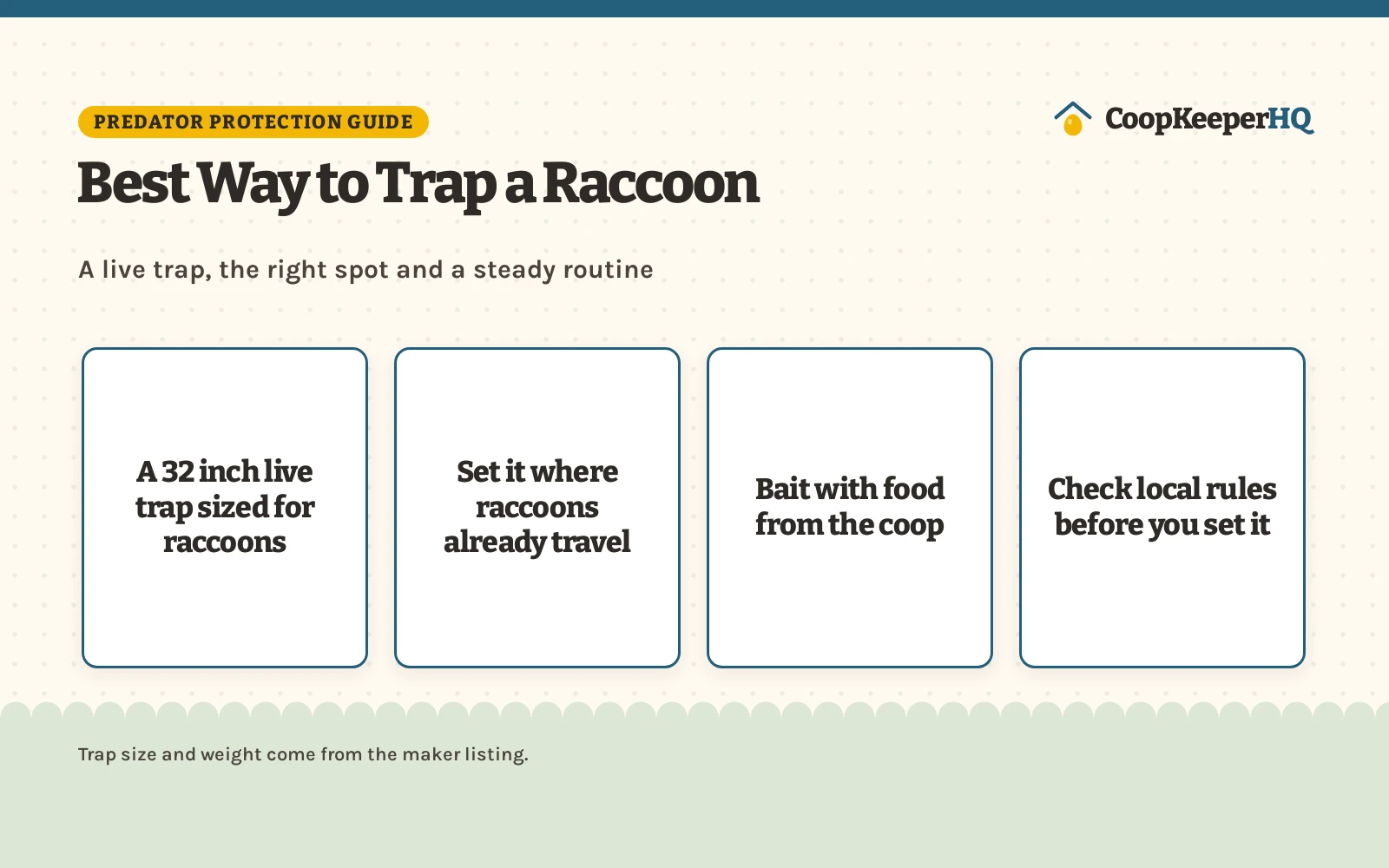
A live trap, the right spot and a steady routine keep raccoons away from the flock without harming the birds.

On this page
Top picks at a glance
As an Amazon Associate I earn from qualifying purchases.
- 1
 Faicuk 32-Inch Collapsible Raccoon Trap9.6/10View on Amazon
- 2
 SZHLUX 32-Inch Folding Raccoon Trap9.6/10View on Amazon
- 3
 dexyla 32 Inch Foldable Humane Animal Trap9.6/10View on Amazon
- 4
 Havahart Large 1-Door Live Animal Trap for RaccoonsView on Amazon
- 5
 Humane Way Folding 32 Inch Live Humane Animal TrapView on Amazon
- 6
 HOMESTEAD 2-Pack Live Animal TrapView on Amazon
- 7
 HOMESTEAD 32 Inch Live Animal TrapView on Amazon
- 8
 VEVOR Humane Live Animal TrapView on Amazon
- 9
 VEVOR Live Animal Cage TrapView on Amazon
- 10
 Humane Way Folding 50 Inch Live Humane Animal TrapView on Amazon
- 11
 Qualirey 2 Pcs Squirrel Trap Live Animal Cage Humane CatchView on Amazon
The best way to trap a raccoon is a live trap set on the path the animal already uses, baited with food from the coop, and checked as part of the daily routine. A live trap holds the animal without harm and lets the keeper deal with it under local rules, while a repellent or a scare device often stops working after raccoons get used to it. This guide covers picking a trap, placing it, baiting it, checking it and keeping raccoons from coming back.
Other options for the coop
 Havahart Large 1-Door Live Animal Trap for RaccoonsCheck price on Amazon
 Humane Way Folding 32 Inch Live Humane Animal TrapCheck price on Amazon
 HOMESTEAD 2-Pack Live Animal TrapCheck price on Amazon
 HOMESTEAD 32 Inch Live Animal TrapCheck price on Amazon
 VEVOR Humane Live Animal TrapCheck price on Amazon
 VEVOR Live Animal Cage TrapCheck price on Amazon
 Humane Way Folding 50 Inch Live Humane Animal TrapCheck price on Amazon
 Qualirey 2 Pcs Squirrel Trap Live Animal Cage Humane CatchCheck price on Amazon
CoopKeeperHQ earns a commission if you buy through our links, at no added cost to you. Affiliate disclosure.
Best way to trap a raccoon: pick a live trap
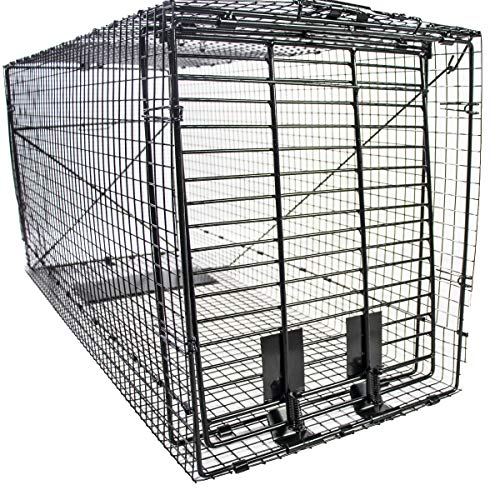
Start with a live trap built for animals the size of a raccoon. A trap that is too small lets the animal back out or refuse to enter, and a trap that is too large can be hard to carry and hard to place along a fence line. The listing for the Humaneway Sentinel 32 (on Amazon) states a trap that measures 32 inches long, 10.5 inches wide and 12.5 inches high, and weighs 7.0 pounds. That size suits a raccoon, a feral cat, a groundhog or an opossum, and the weight stays light enough to carry to the spot where the trap will sit.
The same listing states heavy-duty galvanized steel with a rust-resistant powder coating, which suits repeated outdoor use. A coated steel trap stands up to rain and damp ground, and the listing also states no assembly is required, so the trap is ready right out of the box, with a trigger that sets when the animal steps inside.
Before buying, look the trap over for a door that closes cleanly and a frame that feels solid at the corners. A door that sticks or a frame that flexes can let a strong animal push its way out. The live trap picks compare traps for the coop and run, and the same points about size and build apply to a raccoon trap.
Set the trap where raccoons travel
Raccoons follow the same paths night after night, so the trap works best where the signs are fresh. Look for tracks in soft soil, droppings near the run and feed scattered outside the feeder. Set the trap along a fence line, beside the coop wall or at the gap where the animals slip under the run, and point the open door toward the path the animals use.
Place the trap on flat ground so it sits level and does not rock when the animal steps in. Press the frame into the soil and clear sticks and stones from under it, and cover the floor with a thin layer of soil or leaves from the spot, which hides the metal and makes the floor feel like the ground around it.
Keep the trap away from the pop door and the nest boxes so the birds are not drawn to it. A spot at the edge of the run, near the compost heap or beside the feed store, puts the trap on the raccoon route. For the fence around the run, the hardware cloth guide covers the mesh that keeps paws from reaching through.
Bait the trap for a raccoon
Bait with food the raccoons already steal from the yard. A handful of feed, a cracked egg, a piece of fruit or a spoonful of peanut butter all work, and the bait should sit at the back of the trap, past the trigger, so the animal has to step right in to reach it. Put the bait in a small dish or on a scrap of cloth so it does not roll under the trigger plate.
Change the bait when it dries out or draws flies, and keep the area around the trap clean so the bait inside is the only meal on offer. If the bait goes untouched, move the trap to a fresh spot along the same path rather than piling on more bait.
Check the trap on a steady routine
A trap left unchecked is a problem for the animal inside and for the keeper. Check the trap at dawn and at dusk, when the flock is fed and the pop door is opened or shut. A caught animal waits in the trap until the keeper arrives, so a steady routine keeps the wait short.
Approach a caught raccoon with calm, slow moves and a blanket or tarp over the trap to keep the animal settled. Wear thick gloves, keep hands away from the mesh, and never reach into a trap with a live animal inside. If the animal looks hurt or acts strangely, call local animal control instead of handling the trap alone.
Know the local rules before the trap is set, not after the catch. Some places limit live trapping, some require a permit and some set rules for moving a caught animal, so check local and state rules and follow them. When the rules are unclear, local animal control can explain what applies in the area.
After the catch: what to do next
When the trap holds a raccoon, keep the trap covered and move it with care to the place the local rules allow. Set the trap down on level ground, stand behind the trap, lift the door and step back so the animal can leave on its own. Never tip the trap or shake it, and never free an animal near homes, roads or other coops.
Keep raccoons from coming back
Trapping solves the visit, but the coop is what brings raccoons back. Shut the pop door at dusk, lock the feed store and clear fallen fruit and scraps from the yard so the coop offers no easy meal. The predator protection guides cover more ways to harden the coop against night visitors.
Walk the fence line and patch gaps where paws can reach through, and fit hardware cloth over vents and windows so the mesh, not the wood, takes the push. The hardware cloth guide covers mesh sizes for the coop and run, and a solid latch on the pop door stops a raccoon from lifting it open.
A simple trapping checklist
- Trap is a live trap sized for raccoons, with a door that closes cleanly
- Trap sits on flat ground along a raccoon path, away from the pop door
- Bait sits past the trigger, with no trail of food outside the door
- Local and state rules are checked before the trap is set
- Trap is checked at dawn and at dusk as part of the daily routine
- Feed is locked away and the pop door is shut at dusk
- Trap is cleaned and stored under cover after the catch
Birds, breed size, run time and climate in; coop floor, run space, roost length and nesting boxes out.
Wash your hands after handling birds, eggs or equipment, supervise children around the flock, and check local rules on flock size and roosters before you buy. For sick birds, call a poultry veterinarian or your state extension office. See CDC backyard poultry guidance. Read our Safety Disclaimer.
FAQ for the flock
What size live trap works for a raccoon?
A medium live trap sized for raccoons works, and the listing for the Humaneway Sentinel 32 states a trap that measures 32 inches long, 10.5 inches wide and 12.5 inches high. A trap of that size holds a raccoon with room to step in and turn, while a smaller trap may not close cleanly around the animal.
What bait catches a raccoon?
Feed from the coop, a cracked egg, fruit or peanut butter all draw raccoons, since these are the foods they already steal from the yard. Put the bait at the back of the trap, past the trigger, so the animal must step right in to reach it, and change the bait when it dries out. If the bait goes untouched, move the trap to a fresh spot rather than adding more bait.
Where should the trap sit?
Set the trap along a fence line, beside the coop wall or at the gap where animals slip under the run, with the open door pointing toward the path the animals use. Look for tracks in soft soil, droppings near the run and feed scattered outside the feeder to find the path.
How often should the trap be checked?
Check the trap at dawn and at dusk, when the flock is fed and the pop door is opened or shut. A caught animal waits in the trap until the keeper arrives, so folding the check into the daily routine keeps the wait short. Never leave a set trap unchecked, since the animal inside has no water while it waits.
Is a permit needed to trap a raccoon?
Rules vary by place, so check local and state rules before setting a trap. Some places limit live trapping, some require a permit and some set rules for moving a caught animal. When the rules are unclear, local animal control can explain what applies in the area.
More coop guides
- Do Scarecrows Actually Work Against Predators
- Predator Deterrent Light vs Owl Decoy: Which One Should You Buy?
- Predator Urine vs Ultrasonic Repeller: Which One Should You Buy?
- Owl Decoy vs Predator Urine: Which One Should You Buy?
- Best Fox Traps (2026): 5 Live Traps for the Coop and Run
- Best Predator Deterrent Light for Coyotes (2026)
- Best Poultry Netting for Predators (2026): 4 Picks Compared
- Field Fence vs Poultry Netting: Which One Should You Buy?
- Best Predator Proof Chicken Coop Fencing Hardware Cloth (2026): 5 Rolls for the Run
See the predator protection guides and the runs and fencing picks.