Best Pin Feather Plucker (2026)
Four handheld pin feather pluckers compared by motor speed, battery size, weight and head design, plus a drill attachment for small flocks.

Chicken coops for every flock size, from a three-hen backyard coop to a walk-in coop for twenty and mobile chicken tractors. Every guide shows the hen count the maker claims next to a realistic count at about 4 sq ft per standard hen, plus ventilation, predator-proofing, cleanout access and wood quality.
Birds, breed size, run time and climate in; coop floor, run space, roost length and nesting boxes out.
Four handheld pin feather pluckers compared by motor speed, battery size, weight and head design, plus a drill attachment for small flocks.
Five clear tarps from 8 x 10 ft to 20 x 30 ft compared by thickness, grommet spacing, light transmittance and stated weather protection.
Clear tarps compared by thickness, UV protection, size, grommet spacing and included rope and ties.
An 8x12 chicken coop gives you two extra feet of floor length over an 8x10, with more room for feeders, waterers and a growing…
An 8x8 fits a small flock that stays small; a 10x10 fits a growing flock and winter crowding. Compare the four picks by stated…
Five hardware cloth rolls for chicken tractors compared by mesh size, gauge, roll dimensions and coating.
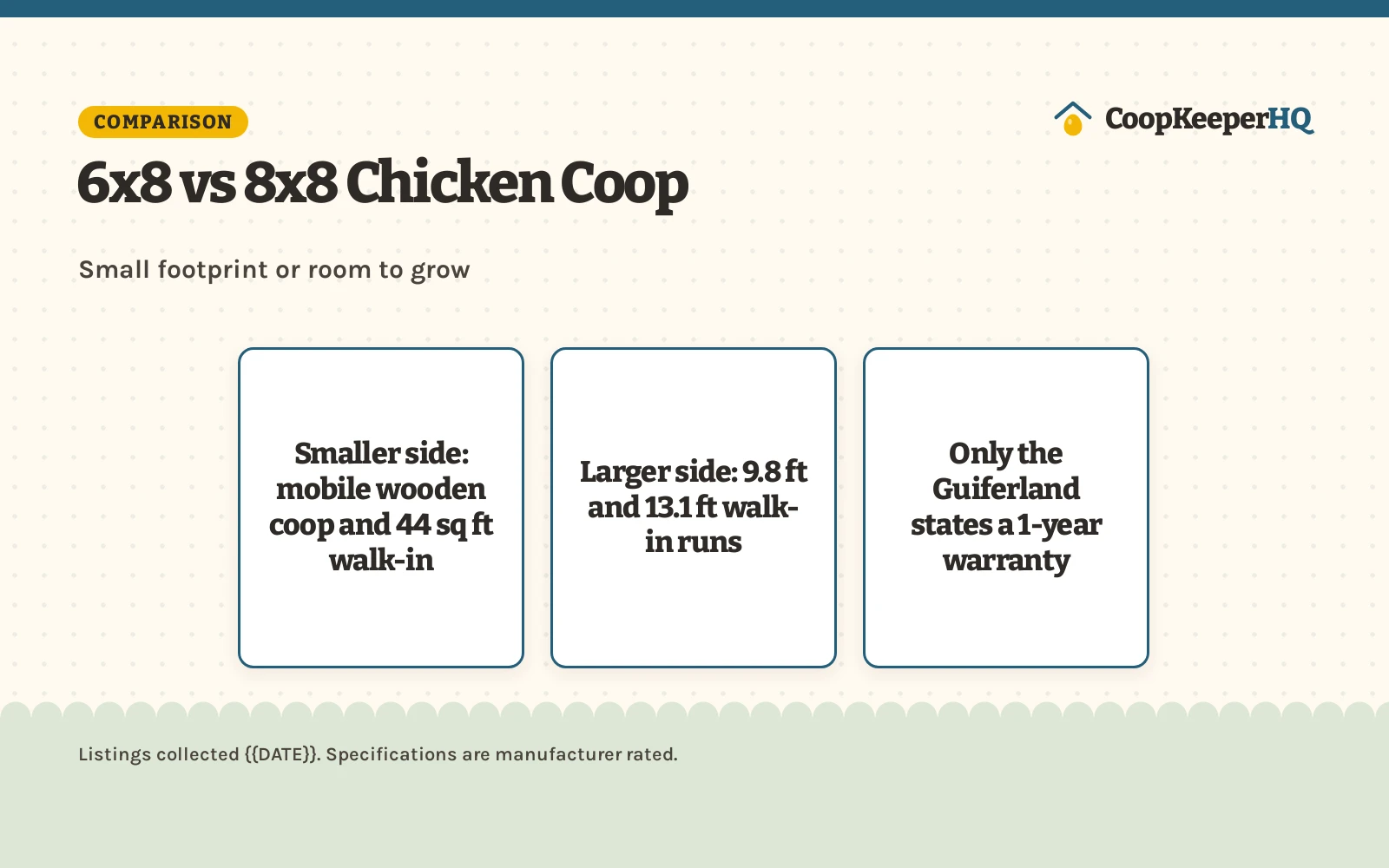
6x8 vs 8x8 chicken coop: four coops compared by footprint, from a mobile 6-8 bird hen house to a 128.38 sq ft walk-in run.
6x10 vs 8x10 chicken coop: how the two footprints compare for flock size, and three metal coops in that range.
Turkey coops need bigger doors for bigger birds; chicken coops need roomy, predator-proof runs: three listings compared side by side.
Chicken tractor vs chicken run compared: three mobile coops and one large walk-in run scored by mobility, space, nesting and predator protection.
Walk in vs A-frame chicken coop: how the two coop styles compare for space, predators, weather and chores, with four walk-in examples ranked.
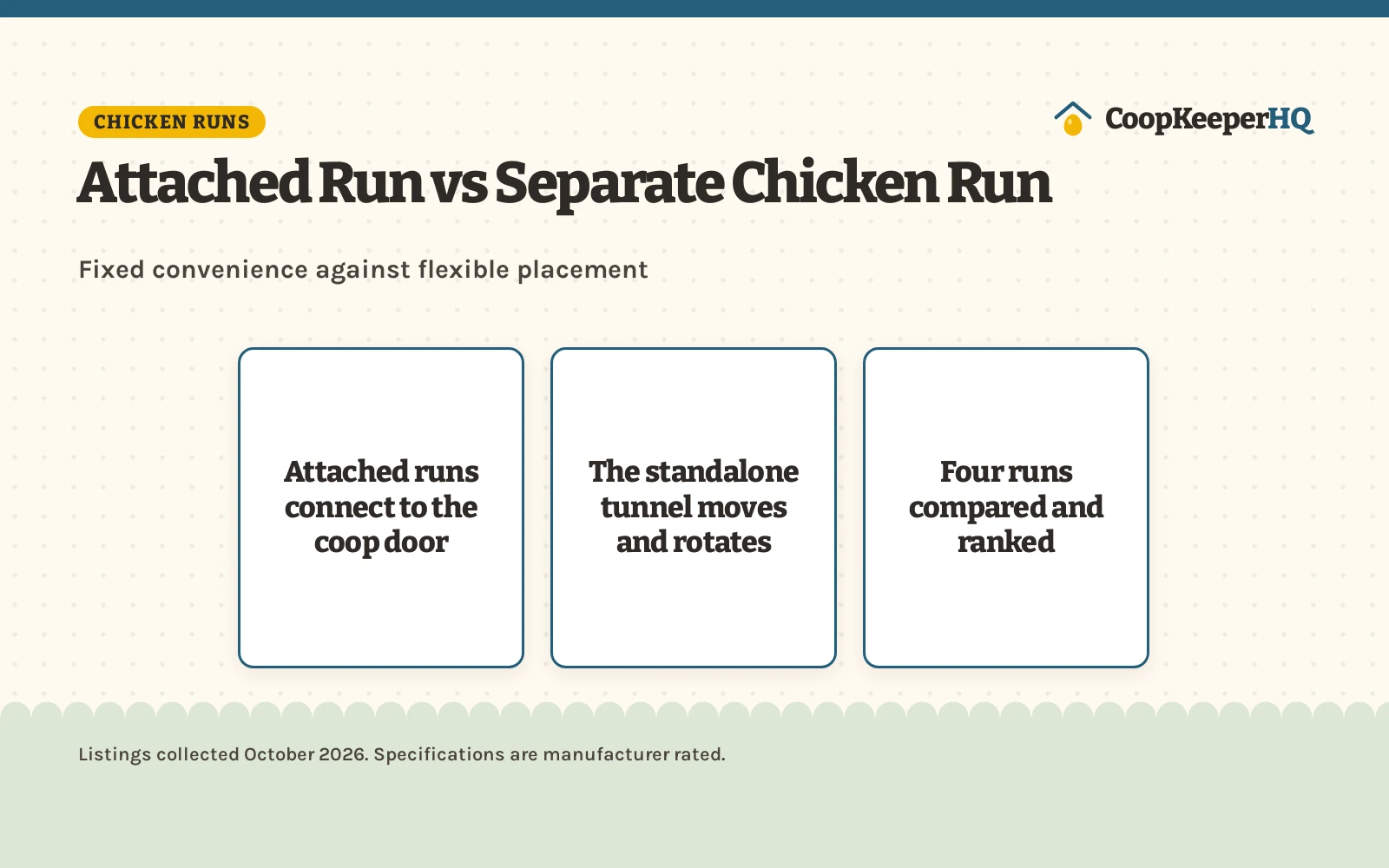
Attached run vs separate chicken run: four runs compared on connection, space, doors and wire.
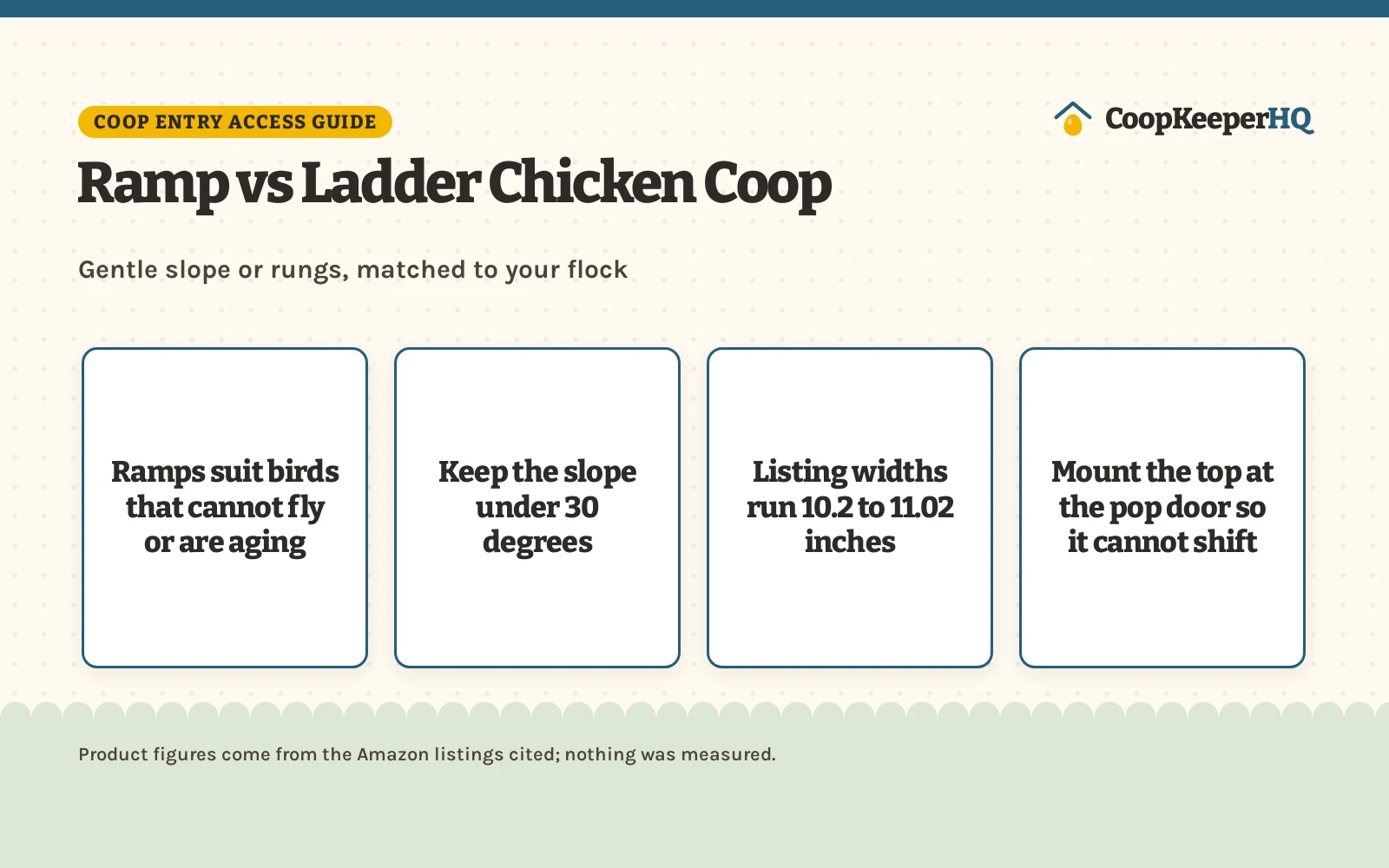
A continuous ramp suits birds that cannot fly or are getting older, while rungs work for young agile flocks and a short rise.