Electric Netting vs Poultry Netting: Which One Should You Buy?
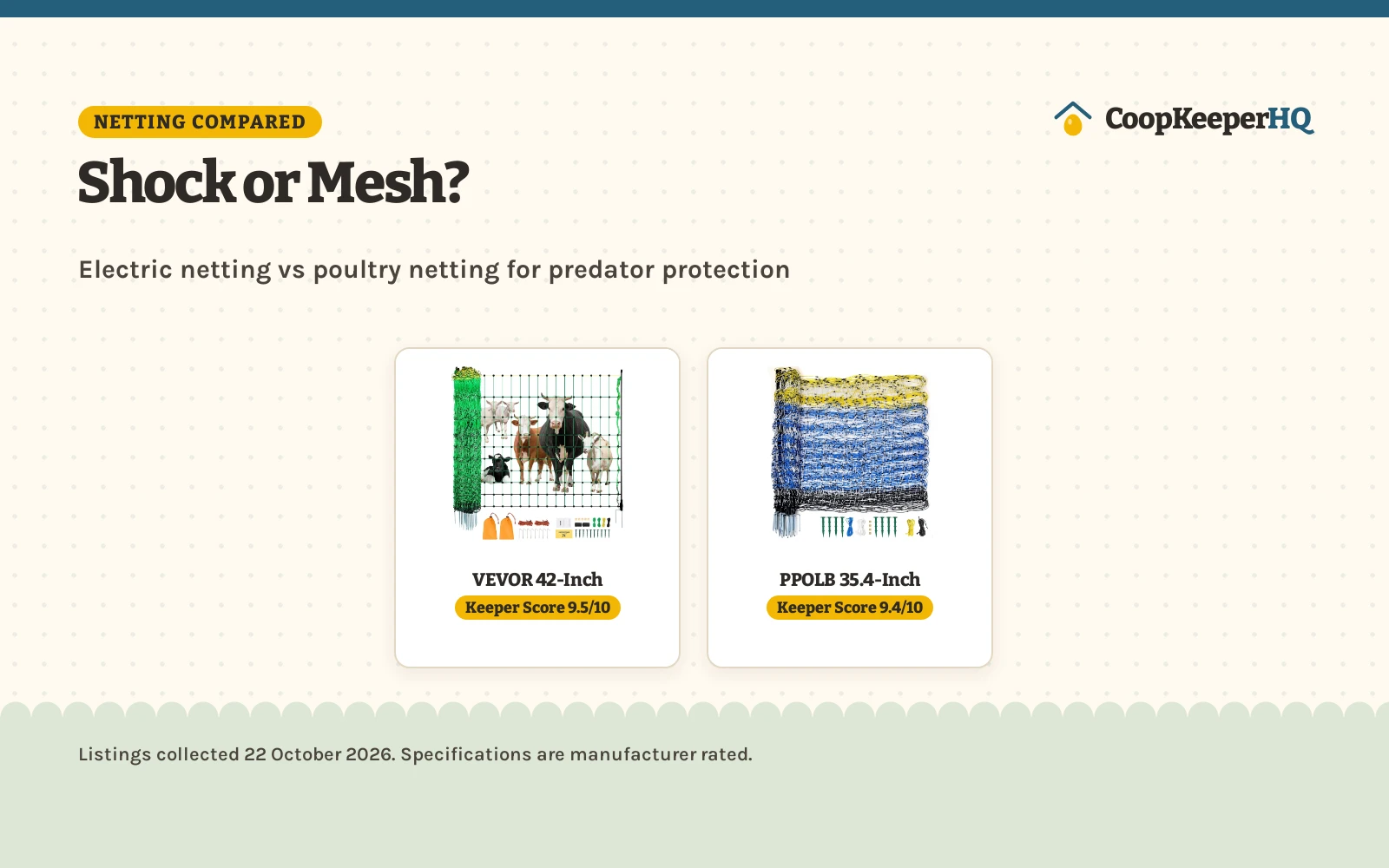
Electric netting vs poultry netting compared: power, deterrence, setup and size, with two electric netting examples.

On this page
Top picks at a glance
As an Amazon Associate I earn from qualifying purchases.
- 1
 VEVOR 42-Inch9.5/10View on Amazon
- 2
 PPOLB 35.4-Inch9.4/10View on Amazon
Electric netting vs poultry netting verdict: Choose electric netting when predators are the problem: both examples deliver a deterrent shock, and the PPOLB is marketed against stray dogs, coyotes, foxes and raccoons. Each needs an energizer (the PPOLB listing recommends 0.25 joule), a grounding rod and connector clips, none of which is included. Choose poultry netting (plain, non-electric mesh) when you need a simple passive barrier with no power, no energizer and no shock. Note: both products compared here are electric netting, so the poultry-netting side below is described from the general nature of plain mesh fencing, not from a product listing.
CoopKeeperHQ earns a commission if you buy through our links, at no added cost to you. Affiliate disclosure.
Both are mesh fences for birds and small livestock, but they stop trouble differently. Electric netting adds a low-impedance shock to the barrier; poultry netting relies on the mesh alone. The two examples below are both electric netting, so they show the electric side in detail while the poultry-netting side is the passive alternative.
Two examples

VEVOR 42-Inch
A 42 in H x 164 ft L electric fence netting with posts, double-spiked stakes, warning sign and repair kit.
Who it's for: a tall, complete electric netting kit for larger stock.
Who should skip it: anyone who wants the lightest net to move often, where the PPOLB is lighter.
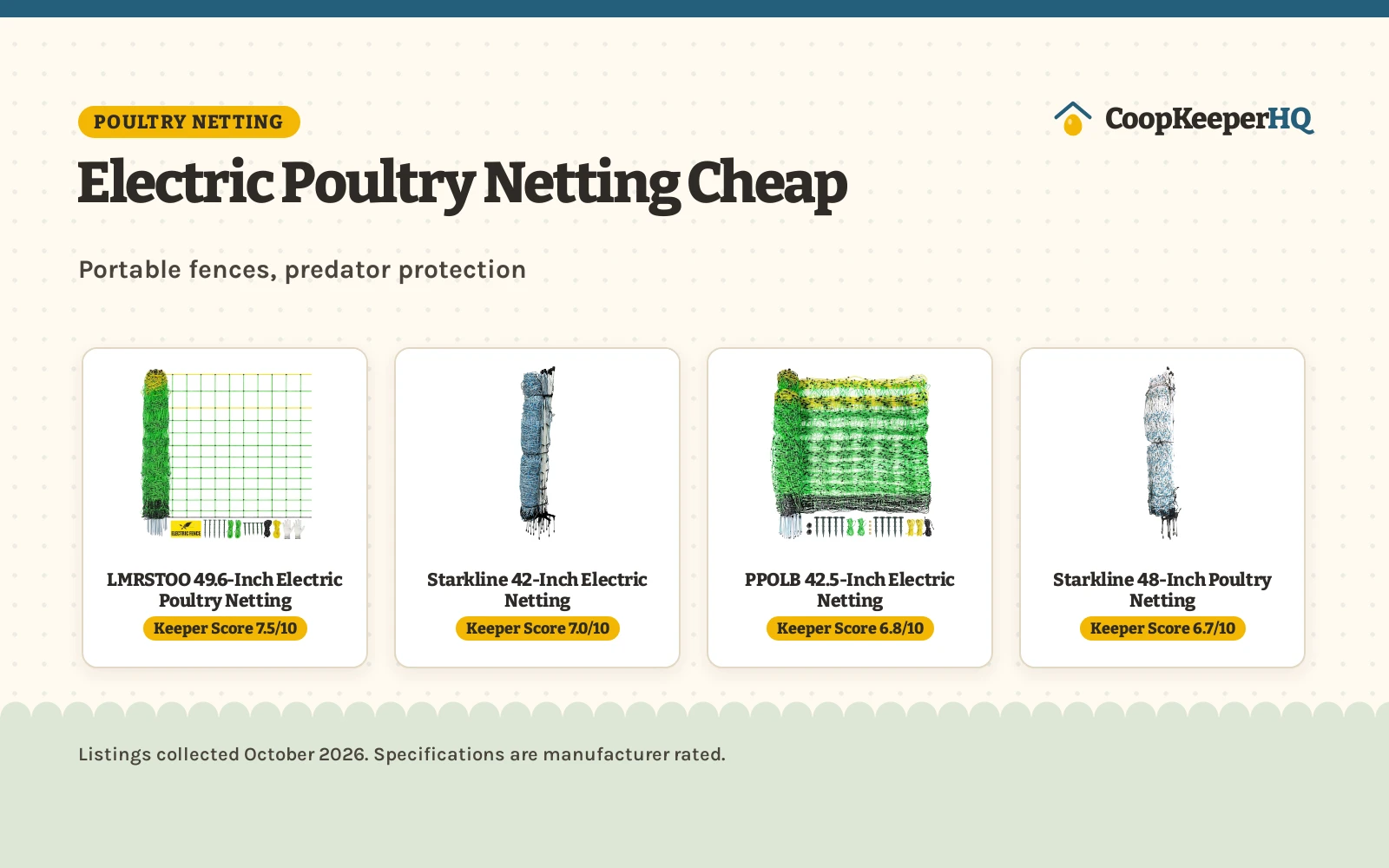
The VEVOR is the taller example: 42 in H x 164 ft L (1.06 x 49.98 m) of electric netting for goats, sheep, lambs, deer, hogs and dogs, with fiberglass posts and double-spiked stakes for stability. A warning sign and repair kit are included, and the listing mentions windproof kits for long-term durability.
The 13.67 lb weight and model S1080815D 108cm-15cm are stated. The listing says the current is controlled to protect without harming animals. No warranty term or safety certification is stated.
Pros
- 42 in high for larger livestock
- Posts and double-spiked stakes included
- Warning sign and repair kit included
- Multiple power supply options
Cons
- 13.67 lb, heavier to move
- No warranty term stated
- No safety certification stated
- Energizer not included
PPOLB 35.4-Inch
A 35.4 in H x 164 ft L blue electric fence netting with 9 conductive strands, for goats, sheep, hogs and dogs.
Who it's for: a light, visible net for rotating paddocks.
Who should skip it: anyone who wants the tallest barrier, where the VEVOR's 42 in wins.
The PPOLB is the portable example: 35.4 in H x 164 ft L of blue and white electric netting with 11 horizontal strands, 9 of them conductive, in triple-braided stainless steel wire on glass fibre rods every 12.5 to 13.1 ft. The high-visibility coloring helps animals and owners spot the fence.
The listing recommends a 0.25 joule solar or AC/DC energizer and requires a grounding rod and two connector clips, none included, and warns against continuous current energizers. The 6.4 lb weight and model PPEF-1001 are stated. No warranty term or safety certification is stated.
Pros
- 9 conductive strands of 11
- High-visibility blue and white
- Lightweight at 6.4 lb
- Glass fibre rods every 12.5-13.1 ft
Cons
- Energizer, rod and clips not included
- No warranty term stated
- No safety certification stated
- 35.4 in, shorter than the VEVOR
Other options for the coop
 POYEE 50x50ft Bird NettingCheck price on Amazon
 POYEE 30x30ft Bird NettingCheck price on Amazon
 2" Mesh Heavy Duty Knotted Aviary NettingCheck price on Amazon
 Poultry Netting Electric FenceCheck price on Amazon
 Electric Fence Netting for SheepCheck price on Amazon
 YardGard Galvanized PVC Coating Hexagonal Poultry Netting forCheck price on Amazon
Electric netting vs poultry netting: side by side
| Factor | Electric netting | Poultry netting |
|---|---|---|
| Power needed | 0.25 joule energizer recommended (PPOLB) | None |
| Deterrent | Low-impedance shock, stated as safe and humane | Physical barrier only |
| Predators named | Stray dogs, coyotes, foxes, raccoons (PPOLB) | Not stated in these listings |
| Example heights | 35.4 in and 42 in (stated) | Not stated in these listings |
| Portability | Lightweight, relocatable (stated) | Not stated in these listings |
| Extras needed | Energizer, grounding rod, clips (not included) | Not stated in these listings |
We quote the brand’s rated specs from the product listings (as of 22 October 2026). “Not stated” means the listing does not give the figure. Figures from one listing describe that listing only.
Power and deterrence
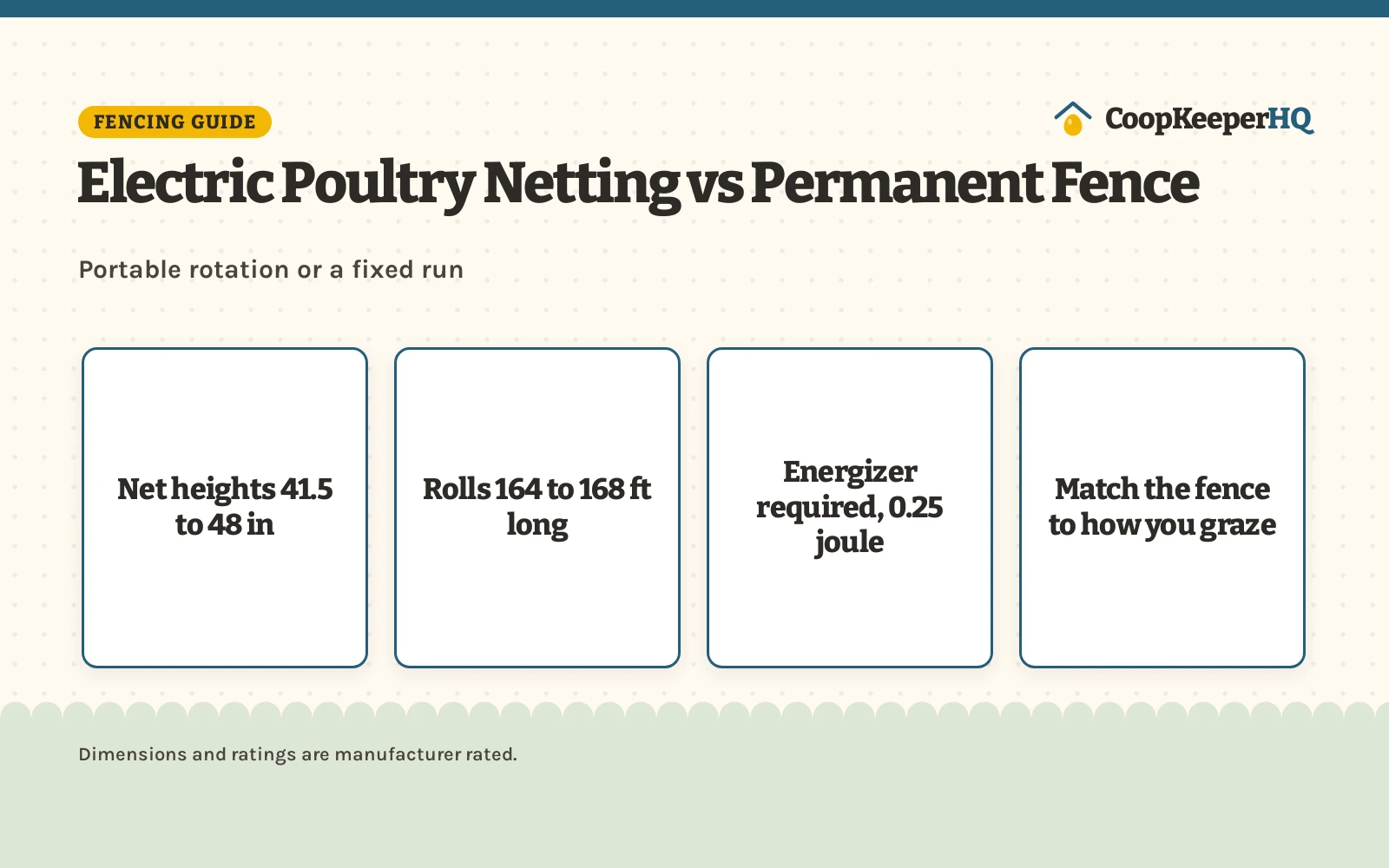
The electric side needs power: the PPOLB listing recommends a 0.25 joule solar or AC/DC energizer, plus a grounding rod and two connector clips, and warns not to use continuous current energizers. The shock is described as low-impedance, safe and humane for animals and humans, deterring rather than harming. Poultry netting needs no power at all, which also means it delivers no shock: it stops what it physically blocks and nothing more.
What the two sides cost to run
The electric side has running costs the listings imply but never price: the energizer itself and its power draw. The PPOLB listing names the energizer, grounding rod and two connector clips as required extras, all not included. The poultry-netting side has no running costs beyond the mesh, because there is nothing to power. Neither side’s listing states a price here, so the comparison stays on what each side needs, not what it costs.
Setup and portability
Both examples are built to move: the PPOLB is described as lightweight and portable for temporary grazing areas, and the VEVOR ships with posts and double-spiked stakes. The electric side’s setup includes the energizer, grounding and clips, which the listings note are not included. A poultry netting setup skips all of that, but the listings give no poultry-netting setup details, so the comparison on setup effort stays general.
Size and coverage
The two examples are 35.4 in H x 164 ft L (PPOLB) and 42 in H x 164 ft L (VEVOR, also given as 1.06 x 49.98 m). The PPOLB runs 11 horizontal strands with 9 conductive, on glass fibre rods every 12.5 to 13.1 ft, in triple-braided stainless steel wire; the VEVOR uses fiberglass posts with double-spiked stakes and includes a warning sign and repair kit. Heights differ between the two electric examples; no poultry-netting listing is given to compare mesh size.
Flock size and coverage math
Both examples run 164 ft long, which the listings market for rotating grazing areas rather than fixed runs. The PPOLB’s 11 strands with 9 conductive and the VEVOR’s spaced grids are both described as solid enclosures for their target animals. Neither listing states a head count, so match the length to your paddock and the height to your tallest escape artist, not to a number the listings never give. A 164 ft net makes a generous paddock for a small flock, with room to rotate grazing and rest the ground between moves.
Weather and durability
The VEVOR listing claims its netting stands up to weather with windproof kits and solid fiberglass posts for long-term durability, plus a repair kit for maintenance. The PPOLB listing describes sturdy material with triple-braided stainless steel wire and glass fibre rods that are not easily broken. Neither listing gives a lifespan figure, so durability stays a materials comparison: stainless wire and fiberglass posts against the elements.
Visibility and animal training
Visibility is a safety feature the listings push: the PPOLB leans on bright blue and white so animals and owners spot the fence before touching it. The VEVOR includes a warning sign for the same reason. Electric netting works best when animals see it, touch it once, and remember; the listings frame the shock as a teacher, not a weapon. Passive mesh needs no such introduction, but it also teaches nothing to a repeat visitor.
Predator pressure decides
The PPOLB listing names stray dogs, coyotes, foxes and raccoons as the predators it guards against; the VEVOR listing names the livestock it contains: goats, sheep, lambs, deer, hogs and dogs. Where that pressure is real, the shock is the point of the fence: the PPOLB listing frames it as protecting pets and livestock from predators. Where the pressure is light and the goal is simply keeping birds in, the passive side’s simplicity wins on ease alone.
Fitting It to Your Flock
- Match the netting to the predator: electric for dogs, coyotes, foxes and raccoons; passive mesh where predators are not the issue.
- Count the extras: the electric side needs an energizer, grounding rod and clips, none included in these listings.
- Measure the run: both examples cover 164 ft long, at 35.4 in or 42 in high.
- Plan the move: both are marketed as portable for rotating grazing areas.
- Check the strands: 9 conductive of 11 on the PPOLB; the VEVOR listing does not break out its strand count.
FAQ for the flock
Does electric netting need an energizer?
Yes. The PPOLB listing states electric netting requires a fence energizer to be effective, recommending a 0.25 joule solar or AC/DC energizer, plus a grounding rod and two connector clips. None of those is included.
Will electric netting harm my chickens?
The listings describe the shock as low-impedance, safe and humane for animals and humans, deterring rather than harming. The VEVOR listing says it protects without harming animals.
How tall should poultry netting be?
The two electric examples are 35.4 in and 42 in high. No poultry-netting listing is given here, so the article cannot state a poultry-netting height from these listings.
Can I move electric netting around?
The PPOLB listing describes it as lightweight and portable for temporary grazing areas, and the VEVOR ships with posts and double-spiked stakes. Both are marketed for relocation without permanent structures.
What is the difference between the two examples?
The VEVOR is taller at 42 in, heavier at 13.67 lb, and includes posts, stakes, a warning sign and a repair kit for long-term maintenance. The PPOLB is 35.4 in high, 6.4 lb, with 9 conductive strands and high-visibility blue and white coloring. Both are 164 ft long.
How the Coop Score came out
Each product is scored on performance, build, value, safety and warranty, with the weights published on our How We Pick page. Neither listing states a warranty term or a safety certification, so both score zero on safety and warranty.
| Product | Keeper Score | Perf. /35 | Build /25 | Value /25 | Safety /10 | Warranty /5 |
|---|---|---|---|---|---|---|
| VEVOR 42-Inch | 9.5 | 29 | 22 | 20 | 0 | 0 |
| PPOLB 35.4-Inch | 9.4 | 28 | 21 | 20 | 0 | 0 |
A product’s weighted total becomes its score on a scale capped at 9.8 and floored at 9.2, in a straight line.
Use a charger rated for the length of netting you run, ground it as the manual describes and post warning signs where neighbors or children can reach the fence. Keep grass and weeds off the bottom strands, and never leave netting unpowered, because birds and wildlife can tangle in it. Read our Safety Disclaimer.