Electric Poultry Netting vs Permanent Fence: Which One Should You Buy?
Electric netting suits rotational grazing with 164 ft portable rolls and a 0.25 joule energizer, while a permanent fence suits a fixed run; heights, strands and power needs explained.

On this page
Top picks at a glance
As an Amazon Associate I earn from qualifying purchases.
- 1
 Electric Poultry Netting Fence9.5/10View on Amazon
- 2
 Grazeline Electric Fence Polybraid 1/4 Inch Rope 1000 ft9.7/10View on Amazon
- 3
 Electric Poultry Netting 48" x 82' Electric Poultry Netting9.4/10View on Amazon
- 4
 PPOLB Electric Fence NettingView on Amazon
- 5
 Poultry Netting Electric FenceView on Amazon
- 6
 Electric Fence Netting for SheepView on Amazon
- 7
 RentACoop Poultry Netting Electric FenceView on Amazon
- 8
 RentACoop Non-Electric Chicken Fence NettingView on Amazon
Every keeper reaches the same Saturday: the grass in the run is eaten down to dirt, the flock is bored, and you are dragging the tractor to a fresh patch again. If you are weighing electric poultry netting vs permanent fence, the real question is how often you want to move the birds, and how much building you want to do once and be done with.
Other options for the coop
 PPOLB Electric Fence NettingCheck price on Amazon
 Poultry Netting Electric FenceCheck price on Amazon
 Electric Fence Netting for SheepCheck price on Amazon
 RentACoop Poultry Netting Electric FenceCheck price on Amazon
 Electric Poultry Netting 48" x 82' Electric Poultry NettingCheck price on Amazon
 RentACoop Non-Electric Chicken Fence NettingCheck price on Amazon
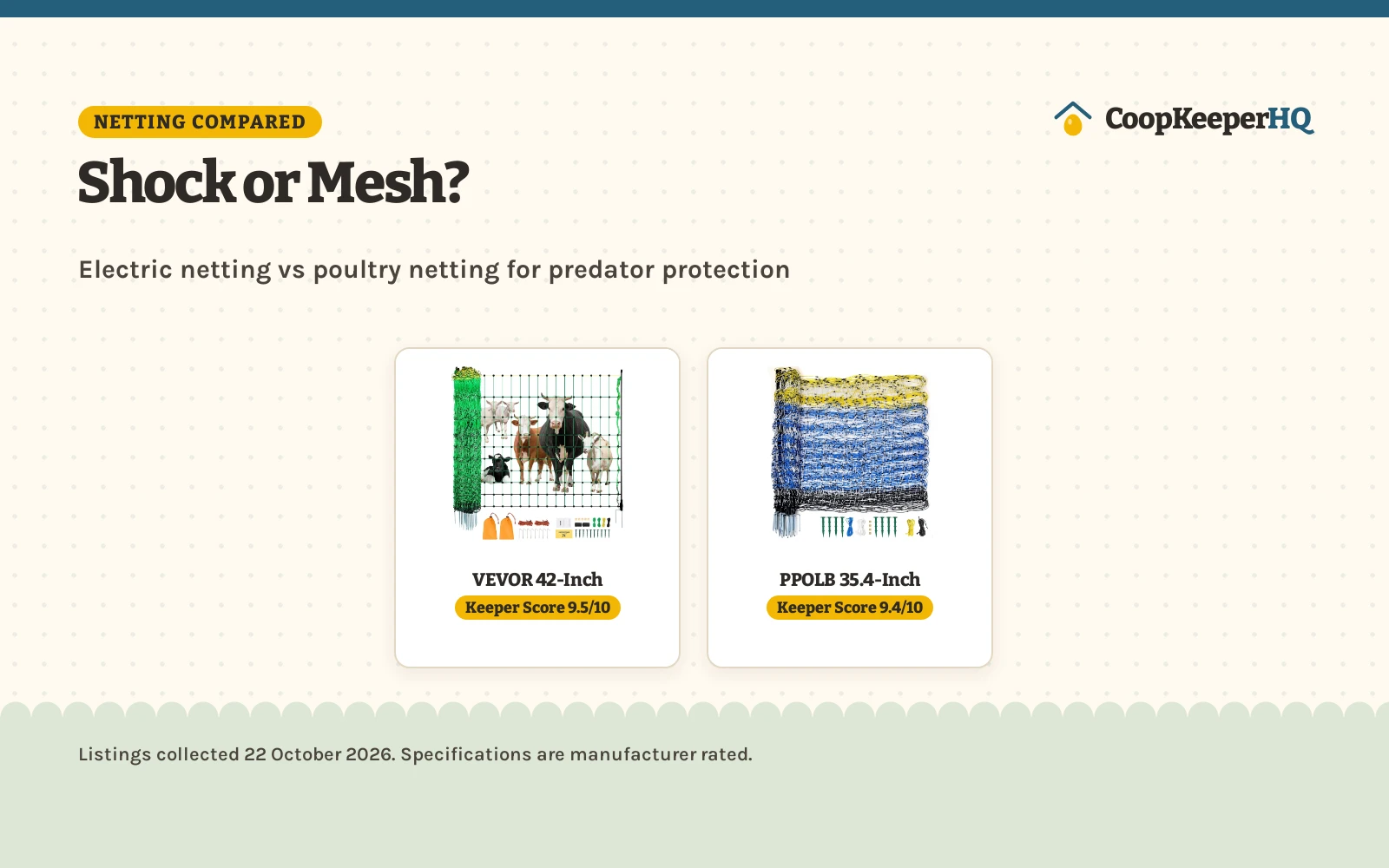
Netting is the portable answer: rolls 164 to 168 ft long that unroll, stake in and move when the grass is gone. A permanent fence is the fixed answer: build it once around a run that stays put. Both keep chickens in and predators out, but they ask for very different weekends.
CoopKeeperHQ earns a commission if you buy through our links, at no added cost to you. Affiliate disclosure.
Electric poultry netting vs permanent fence: the short answer
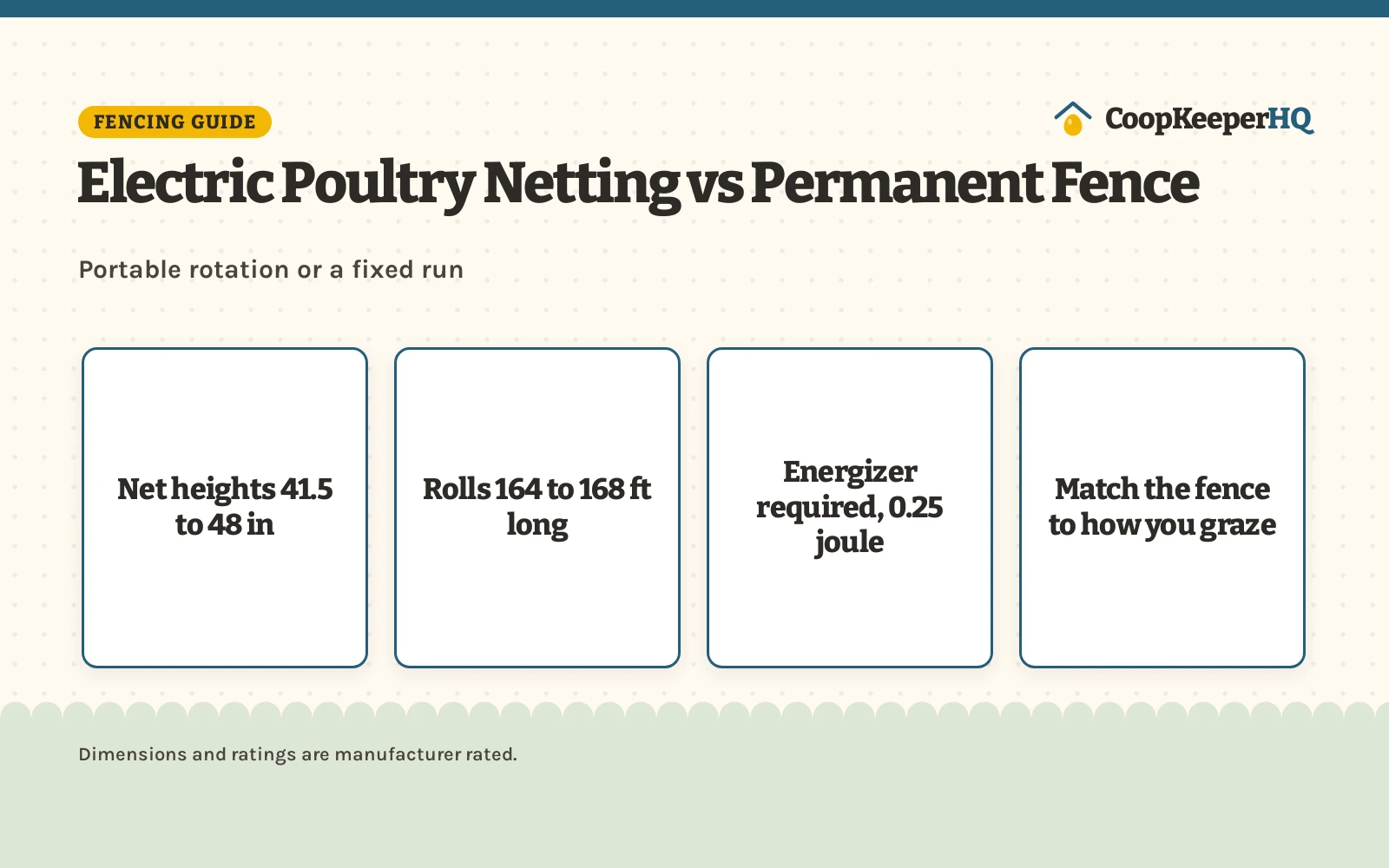
Choose electric netting if you rotate grazing, rent your land, or want to fence a new patch in an afternoon. Choose a permanent fence if the run will never move and you want a structure you build once. The listings behind this guide describe netting rolls 41.5 to 48 in tall and 164 to 168 ft long, with 11 to 14 horizontal strands, and every one of them needs a fence energizer, which is not included.
What electric poultry netting actually is
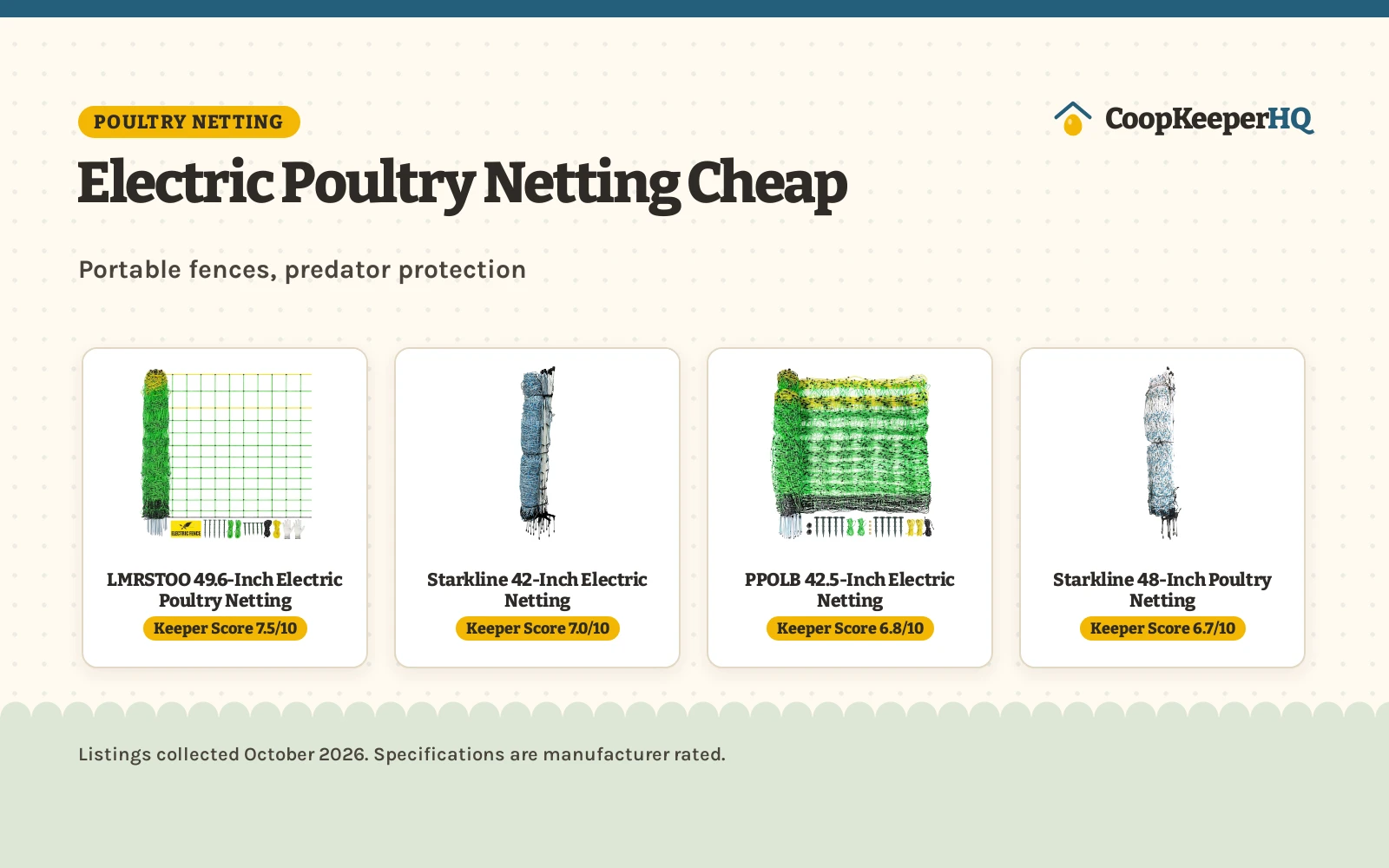
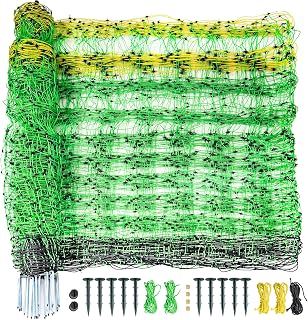
Electric poultry netting is a roll of mesh with conductive strands woven through it and posts built in. The listings show heights of 41.5, 47.2, 47.5 and 48 in, in rolls 164 ft long, with the VEVOR listing at 48 in tall by 168 ft long. Strand counts run 11 horizontal strands with 9 conductive, or 14 horizontal strands with 11 or 12 conductive, depending on the listing. The Pet and Livestock HQ listing builds 19 fiberglass posts with double spikes into the mesh, spaced every 9 ft, while the PPOLB listings space posts every 12.5 to 13.1 ft. Weights run 15.21 to 23.6 lb per roll, light enough for one person to carry and move. One exception: the VEVOR spec table lists 4.73 pounds for its 168 ft roll, far lighter than every other roll here, so treat that row as a likely listing error.
Netting does not work on its own: it needs a fence energizer to electrify it. The PPOLB listings recommend a 0.25 joule solar or AC/DC energizer, and state plainly that the energizer is not included, that a grounding rod and two connector clips are also required, and that continuous current energizers must not be used with electric netting. The VEVOR listing supports AC110-240V, solar panels and DC power, none included, and includes a warning sign and a repair kit in the box. The makers describe the shock as a low-impedance pulse that is safe and humane for animals and people; that is their claim, reported here as a claim.
What a permanent fence asks of you
A permanent fence is posts set in the ground with fixed wire, built once and left alone. It needs no energizer, no battery checks and no seasonal moving, and once the posts are set it stands year after year. The tradeoff is the build: digging or driving posts, stretching wire, and burying or aproning the bottom against diggers is real build time, and once it is up, it stays where it is. If your flock never leaves the run, that permanence is the point. Our hardware cloth vs chicken wire guide covers which wire actually stops predators, and how to predator proof a chicken coop walks through the whole perimeter.
Predator protection, side by side
Netting deters with a pulse: a predator that touches the strands gets a shock and learns to stay away. Height matters here. The listings note that the taller nets, 47.2 and 48 in, are more likely to discourage large predators such as coyotes, dogs, foxes and raccoons. The Pet and Livestock HQ listing adds detail: the bottom 6 strands are 2 in apart so small chicks cannot slip through, and the bottom 2 strands are not electrified, which prevents shorting when weeds grow up against the fence.
A permanent fence deters with a barrier: wire the predator cannot get through and an apron it cannot dig under. It works with no power and no training effect needed, but it only protects the ground it covers. Netting protects wherever you unroll it, which is why keepers pair it with rotational grazing. Either way, check local, HOA and state rules before putting up electric fencing.
Moving the flock: rotation vs a fixed run
This is where the two part ways. Netting is made to move: the listings describe it as lightweight and portable, a one-man job with no tools, unroll, stake and connect. The ouluu and LoJok listings call out rotational grazing and temporary grazing directly, with double-spiked stakes for stability on different ground. When the grass is gone, you pull the posts and unroll somewhere fresh.
A permanent fence never moves, so rotation means building more than one fenced area or accepting a bare run. If your birds free range most of the day and only need a safe run for mornings and evenings, a fixed run with a permanent fence is plenty. If fresh pasture is the goal, netting is the tool built for it. To size the area you are fencing, the chicken run size calculator works out how much space your flock needs.
Power, weeds and upkeep
Netting has chores a permanent fence does not. The energizer needs power, solar, AC or DC, and the fence needs to stay hot: weeds touching the strands drain the charge, which is why the bottom 2 strands on the Pet and Livestock HQ net are not electrified. Walk the line, keep vegetation off the mesh, and check that the energizer is pulsing. An AC-powered energizer outdoors should run from a GFCI outlet with protected cords.
A permanent fence has different chores: checking for rust, loose wire and dug-under spots after storms. No daily power to think about. Over a year, netting asks for small regular attention and the permanent fence asks for occasional repair. Neither is set and forget.
Use a charger rated for the length of netting you run, ground it as the manual describes and post warning signs where neighbors or children can reach the fence. Keep grass and weeds off the bottom strands, and never leave netting unpowered, because birds and wildlife can tangle in it. Read our Safety Disclaimer.
Electric netting is a powered fence, so treat it like one. Use only a fence energizer made for netting, the PPOLB listings recommend a 0.25 joule solar or AC/DC unit and warn against continuous current energizers, and follow the energizer maker’s grounding instructions with a proper grounding rod. Keep weeds off the strands so the charge stays up, put up the warning sign, and run any AC-powered energizer from a GFCI outlet. Check local, HOA and state rules before electrifying a fence where neighbors or children may touch it.
FAQ for the flock
Does electric poultry netting need an energizer?
Yes. Every listing states the energizer is not included. The PPOLB listings recommend a 0.25 joule solar or AC/DC energizer, plus a grounding rod and two connector clips, and warn not to use continuous current energizers with netting. Our solar vs AC electric fence charger comparison explains the power options, and best solar fence charger covers units keepers use.
Will electric netting keep small chicks in?
The Pet and Livestock HQ listing states its bottom 6 strands are 2 in apart so small chicks cannot escape through the mesh. Not every listing states strand spacing, so check the listing for the net you are considering.
How tall should poultry netting be?
The listings run 41.5 to 48 in tall. The listings note that the taller 47.2 and 48 in nets are more likely to discourage large predators such as coyotes and dogs. Match the height to the predators in your area.
Can I use electric netting for rotational grazing?
That is what it is built for. The listings describe netting as lightweight and portable, a one-man job with no tools, made to unroll, stake, connect and move. If fresh pasture is the goal, netting beats a fixed fence. See electric netting for chickens for more on setups.
Is electric netting or a permanent fence better for a suburban yard?
It depends on the yard and the rules. Netting goes up fast and comes down fast, which suits renters and small yards, but check local, HOA and state rules on electric fencing first. A permanent fence is quieter visually and needs no power, which suits a fixed suburban run. Our cheap predator proof chicken run guide has low-cost fixed options.
What pairs with netting besides an energizer?
A grounding rod and connector clips, per the PPOLB listings. The best poultry netting and charger guide compares netting kits, and solar battery charger for electric fence covers keeping the energizer powered off grid.
More coop guides
- Best Solar Fence Charger: 5 Energizers for Pastures and Runs
- Best Poultry Netting and Charger: Electric Fence Kits Compared
- Electric Netting for Chickens: 5 Portable Fences Compared (2026)
- Solar vs Ac Electric Fence Charger: Which One Should You Buy?
- How to Predator Proof a Chicken Coop and Run
- Cheap Predator Proof Chicken Run: 5 Budget Backyard Picks (2026)
See the chicken runs and fencing guides and the best solar electric fence charger for chickens picks.