Fermented vs Dry Chicken Feed: Which One Should You Buy?
Fermented and dry feed compared on form, serving, storage and flock fit, with starter and layer crumbles as gear examples.

On this page
Top picks at a glance
As an Amazon Associate I earn from qualifying purchases.
- 1
 Scratch and Peck FeedsView on Amazon
- 2
 PurinaView on Amazon
- 3
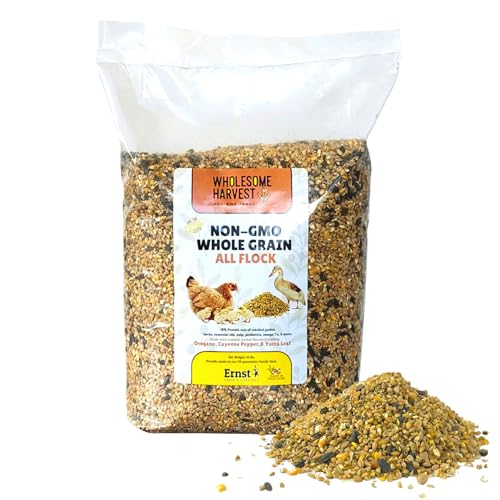 Wholesome Harvest All Flock FeedView on Amazon
- 4
 Nutrena Harvest Blend 18% Textured Chicken FeedView on Amazon
- 5
 Waggin' Train Layena Chicken FeedView on Amazon
- 6
 Bird Natural Aragonite Chicken Calcium FeedView on Amazon
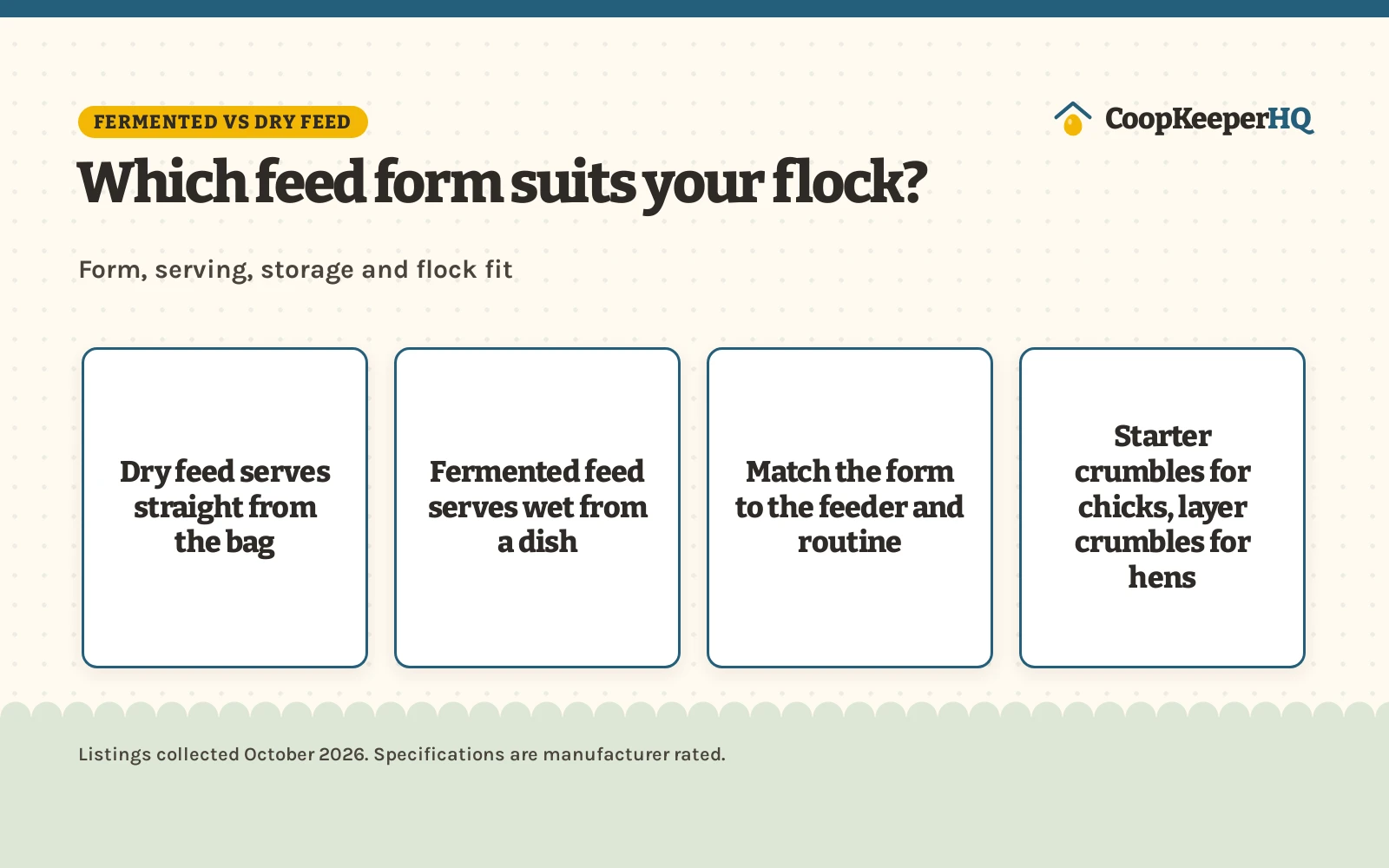
Fermented vs dry chicken feed comes down to form: fermented feed is dry feed soaked in water and left to ferment, while dry feed is served straight from the bag. For a keeper who wants a simple routine, dry feed fits, and fermented feed fits a keeper who wants to serve wet feed and manage a wet-feed routine.
Other options for the coop
 Scratch and Peck FeedsCheck price on Amazon
 PurinaCheck price on Amazon
 Wholesome Harvest All Flock FeedCheck price on Amazon
 Nutrena Harvest Blend 18% Textured Chicken FeedCheck price on Amazon
 Waggin' Train Layena Chicken FeedCheck price on Amazon
 Bird Natural Aragonite Chicken Calcium FeedCheck price on Amazon
CoopKeeperHQ earns a commission if you buy through our links, at no added cost to you.
Fermented vs dry chicken feed: what changes in the dish
The starting feed does not change. The dry feed here arrives as crumbles in a bag and pours into a feeder. Fermented feed starts as dry feed, soaked in water and left to ferment, then served wet from a dish. The feeder matters as much as the feed: dry crumbles suit a standard feeder, while wet feed suits a dish that holds moisture and cleans easily. A keeper switching forms should check the feeder before changing the feed, since a feeder built for dry crumbles may not handle wet feed well.
Serving fermented feed
Soaking starts the job. Cover dry feed with water, let it ferment, then serve it wet from a dish. Keep the routine steady: serve a fresh batch, clean the dish between servings, and watch how much the flock leaves behind. Wet feed left sitting in warmth turns stale, so a small batch that the flock finishes suits a keeper better than a large batch that sits. In hot or wet weather, extra care with freshness matters, since warmth and damp speed up spoiling.
Serving dry feed
Dry feed asks little of the keeper. Pour crumbles from the bag into a feeder, keep the bag in a dry spot, and refill when the feeder runs low. Dry crumbles suit gravity feeders, treadle feeders and hanging feeders, since the feed flows freely. For a flock that eats through the day, a feeder that holds a good amount means fewer refills, and a covered feeder keeps rain off the feed in an outdoor run.
Storage and waste
Storage is where dry feed wins on simplicity. A bag of dry crumbles stores in a dry spot and pours when needed, while fermented feed must be made up as it is used and cannot sit in a bag the same way. Wet feed also changes how waste shows up: dry crumbles spilled on the ground stay visible, while wet feed spilled in a dish or on the ground turns messy and draws flies in warm weather. A dish that cleans easily and a routine that serves what the flock finishes keeps waste down in either form.
Gear for each form
The listings reviewed here give crumbles for each flock stage. The gear below shows what each bag lists, so the form choice can be matched to the flock in the coop.
Manna Pro Chick Starter Feed lists a 5 lb bag of crumbles for chicks from hatching to 16 weeks, non-medicated, with vitamins and minerals listed. Its crumbles suit dry serving straight from the bag, and the same crumbles can be soaked for a fermented batch. The bag size suits a small starter flock, and the chick-stage range on the listing gives a clear window for use.
Manna Pro Layer Crumbles Chicken Feed lists an 8 lb bag of crumbles for laying hens, with 16% protein, a digestive aid and added probiotics listed, and vitamins and minerals including calcium. Its crumbles suit dry serving in a layer feeder, and the same crumbles can be soaked for a fermented batch. The layer listing names hens, so the bag fits a laying flock rather than a chick starter stage.
Switching forms without waste
Switching forms works best as a gradual change in routine, not a sudden swap. Start with the feeder: a dish for wet feed, or a dry feeder for crumbles, set out clean and ready. Serve a modest amount in the new form alongside the familiar form, and watch what the flock finishes before changing the mix. Keep water available at all times, since wet feed does not replace drinking water. If the flock leaves wet feed uneaten, serve less at a time and clean the dish before the next serving.
How much feed your flock eats a day and a month, how long a bag lasts, and what it costs.
Wash your hands after handling birds, eggs or equipment, supervise children around the flock, and check local rules on flock size and roosters before you buy. For sick birds, call a poultry veterinarian or your state extension office. See CDC backyard poultry guidance. Read our Safety Disclaimer.
FAQ for the flock
Can fermented feed replace dry feed?
Fermented feed starts as dry feed soaked in water and left to ferment, so the ration stays the same. A keeper can serve either form, and the choice turns on feeder, routine and storage rather than a new ration.
Does fermented feed need a different feeder?
It needs a dish or feeder that handles wet feed and cleans easily, since dry-feed dispensers suit dry crumbles. Check the feeder shape before switching forms.
Which bag suits chicks, and which suits laying hens?
The starter listing gives crumbles for chicks from hatching to 16 weeks, while the layer listing gives crumbles for laying hens. Match the bag to the flock stage the listing names.
Does dry feed store better than fermented feed?
Dry feed stores in the bag in a dry spot, while fermented feed is wet and needs a fresh routine. Keep dry bags dry and clean wet dishes between servings.
What protein level does the layer feed list?
The layer listing lists 16% protein in crumble form for laying hens.
More coop guides
- Starter Feed vs Grower Feed: Which One Should You Buy?
- Best Layer Feed Pellets (2026): 5 Bags Compared
- Bulk vs Bagged Chicken Feed: Which One Should You Buy?
- Best Type of Chicken Feeder: 5 Backyard Picks (2026)
- Chick Feeder vs Chicken Feeder: Which One Should You Buy?
- Best Grower Feed for Chickens (2026): 5 Compared
See every feeder and waterer guide.