How Many Nesting Boxes per Chicken? Sizes and Placement
A practical guide to nesting box ratios, dimensions and coop placement to keep your backyard hens laying cleanly and comfortably.

On this page
Top picks at a glance
As an Amazon Associate I earn from qualifying purchases.
- 1
 TRINFREE Wooden 4-Hole Chicken Nesting Box9.7/10View on Amazon
- 2
 Gush-Tuss Metal Front/Rear Roll Away Chicken Nesting Box9.7/10View on Amazon
- 3
 Chicken Nesting Pads for Chicken Coop Accessories9.6/10View on Amazon
- 4
 Chicken Nesting Boxes 3 HoleView on Amazon
- 5
 Gold Standard Chicken Nesting Box for Laying EggsView on Amazon
- 6
 Chicken Nesting BoxView on Amazon
- 7
 Roll Away Nesting Boxes for ChickensView on Amazon
- 8
 Brower 2-Tier 6-Hole Galvanized Steel Chicken Nesting BoxView on Amazon
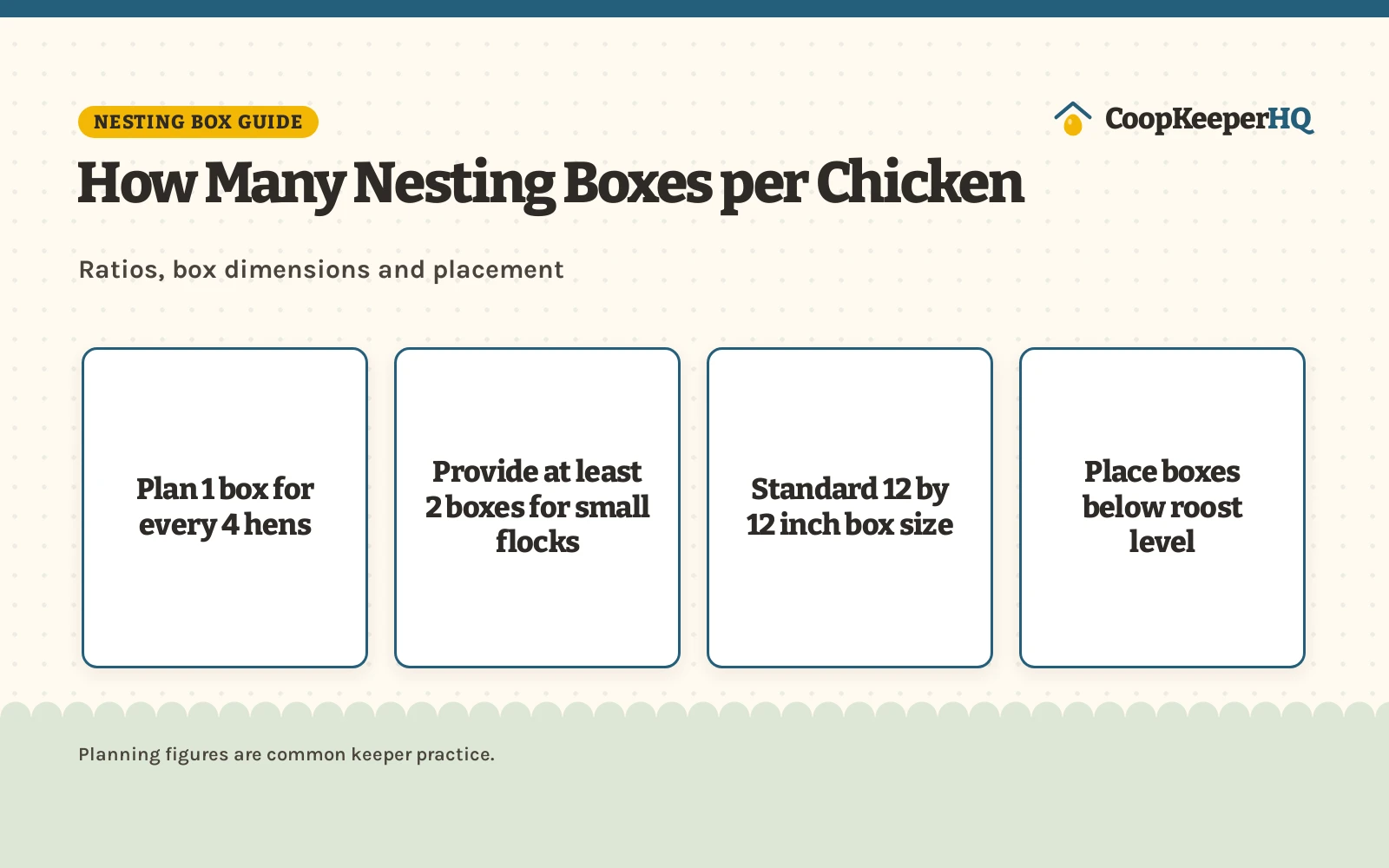
Stepping out to the coop in the morning with an egg basket in hand is one of the great pleasures of keeping backyard hens, until you find cracked shells on the coop floor or three hens squabbling over a single corner box. Wondering how many nesting boxes per chicken your flock needs is the first step toward calm mornings and clean eggs. The standard guideline is 1 nesting box per 4 hens. Even for a small flock of 4 to 6 birds, keepers provide at least 2 boxes so a slow layer or broody hen does not lock everyone else out of a laying spot.
Other options for the coop
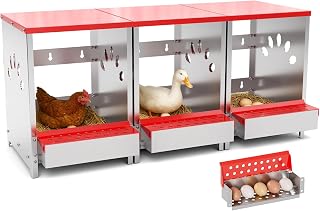 Chicken Nesting Boxes 3 HoleCheck price on Amazon
 Gold Standard Chicken Nesting Box for Laying EggsCheck price on Amazon
 Wooden 4 Holes Chicken Nesting Boxes for Laying EggsCheck price on Amazon
 Chicken Nesting BoxCheck price on Amazon
 Roll Away Nesting Boxes for ChickensCheck price on Amazon
 Brower 2-Tier 6-Hole Galvanized Steel Chicken Nesting BoxCheck price on Amazon
CoopKeeperHQ earns a commission if you buy through our links, at no added cost to you. Affiliate disclosure.
How many nesting boxes per chicken: the basic flock ratio
The golden rule of coop planning is 1 nesting box for every 4 hens. That ratio surprises many beginners who assume every laying hen requires her own private stall. In a healthy flock, hens do not all lay eggs at the exact same moment. Laying follows an individual rhythm throughout the morning and early afternoon, allowing several birds to share the same comfortable compartment over the course of the day.
Providing 1 box per 4 hens creates an efficient coop layout without sacrificing bird comfort. However, smaller coops need an important adjustment: never provide only 1 nesting box, regardless of how small your flock is. Even if you keep just 3 or 4 hens, install at least 2 boxes. If a single hen takes her time laying, or if she goes broody and sits on the nest, a second box ensures the remaining hens have an open spot to deposit eggs rather than resorting to the coop floor.
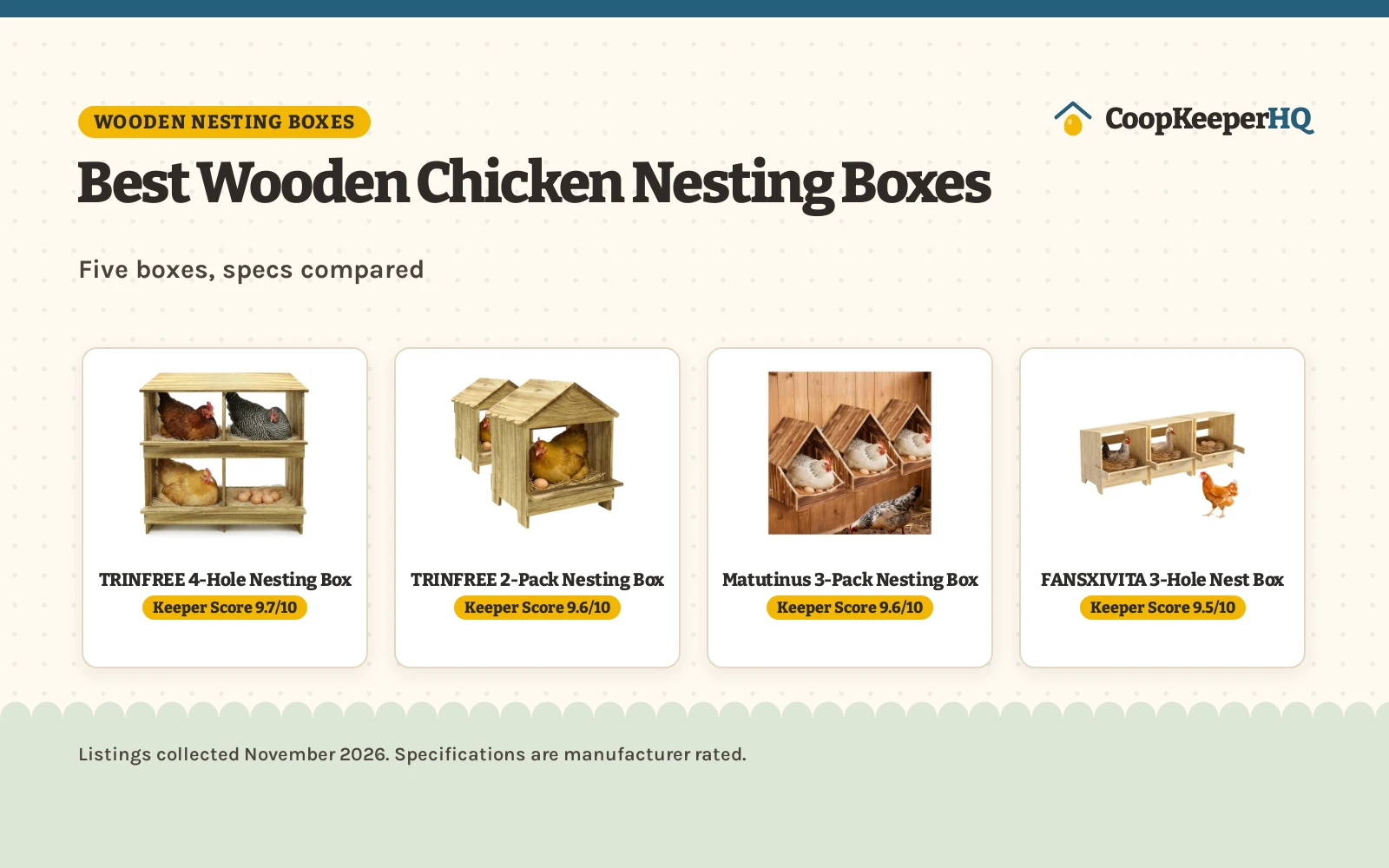
Equipment makers design their boxes around these ratios. The maker TRINFREE states each compartment supports 4 to 5 laying hens, noting that its 3 compartment wooden set easily handles the needs of small backyard flocks. For slightly larger coops, TRINFREE notes its 4 compartment unit supports 16 to 20 chickens. Similarly, the maker YENAM states each compartment accommodates 3 to 5 hens across its 3 hole metal box.
When planning your coop, match your box count to your flock category:
- Flocks of 4 to 6 hens: Install 2 nesting boxes. The maker HVDI lists a 2 compartment unit designed specifically for small flock setups.
- Flocks of 7 to 12 hens: Provide 3 nesting boxes. A 3 compartment unit from makers like TRINFREE or YENAM gives a dozen birds plenty of laying room.
- Flocks of 13 to 25 hens: Plan on 4 to 6 nesting boxes. Makers like Hipicute, JustSmart and YeeJinHong produce 6 compartment units for mid-sized flocks, while the maker Yhhdjc builds a 10 compartment wooden unit for larger setups.
Why too many nesting boxes can cause coop problems
When setting up a coop, it is tempting to assume that extra boxes beyond the standard ratio can only help. In practice, having too many nesting boxes often causes hygiene headaches. Chickens naturally seek dark, enclosed spaces when settling down to sleep at night.
If you offer too many empty compartments, hens will claim the surplus boxes as sleeping quarters instead of perching on the roosting bars. Chickens produce significant manure overnight while sleeping. A hen sleeping in a nesting box leaves droppings directly where eggs will be laid the next morning, resulting in soiled bedding and dirty eggs. Keeping your box count close to 1 box per 4 hens encourages birds to use boxes strictly for laying.
Standard nesting box dimensions and breed sizing
A nesting box must provide enough room for a hen to walk in, turn around completely, scratch down into the bedding, and settle comfortably. If a box is too cramped, the hen will struggle to adjust her position and may step on freshly laid eggs. Conversely, an oversized compartment can tempt two hens to crowd in together, which often leads to broken shells.
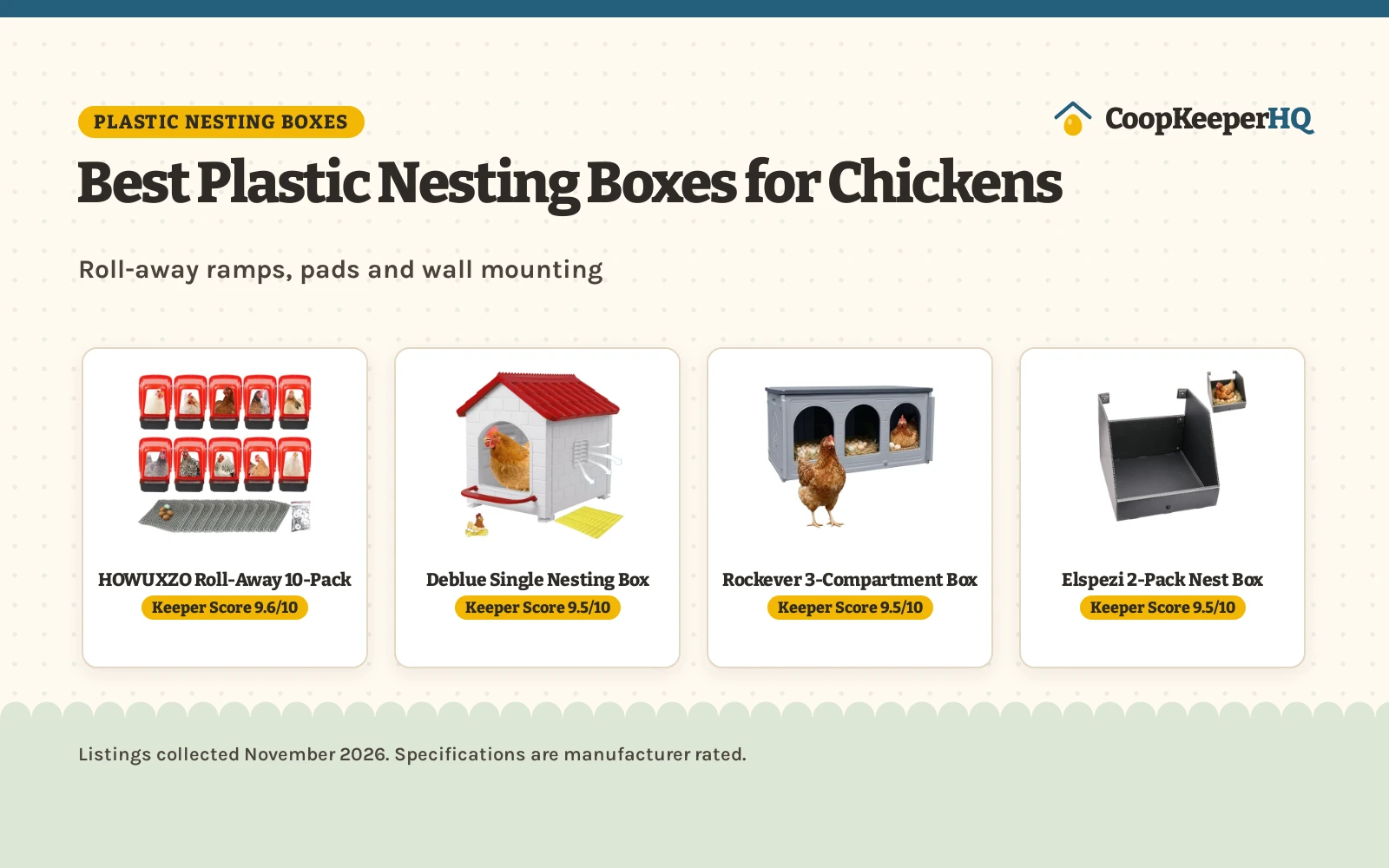
Equipment listings provide clear dimensions for standard boxes. The maker TRINFREE lists compartments measuring 12 by 12 inches, with heights from 10 to 14 inches on upper tiers and 11 inches on lower tiers. That 12 by 12 inch footprint is considered the standard benchmark for typical laying breeds. The maker Yhhdjc lists compartments sized at 11 by 12.3 inches in its multi-tier wooden unit, noting the space accommodates large breeds like Orpingtons. For metal designs, the maker YENAM lists compartments measuring 12.18 by 9.9 inches, while the maker HVDI lists a 2 compartment unit measuring 12.8 by 17 inches.
Where to place nesting boxes inside the coop
Placement inside the coop matters just as much as the number of boxes. Chickens have a natural instinct to roost on the highest available perch at dusk to stay safe. If your nesting boxes sit higher than your roosting bars, hens will head straight into the boxes to sleep every evening. Always position roosting bars higher than the tops of your nesting boxes to keep boxes clean.
Mounting boxes off the floor is another helpful practice. Placing boxes directly on the floor consumes walking space and allows litter and dust to kick into the compartments. Elevating the boxes preserves floor area and keeps bedding dry. The maker Yhhdjc includes elevated bases that raise its unit 18 to 20 inches above the ground, preventing contact with damp soil. You can balance floor space, roosts, and nesting stations with our coop space planning guide.
Position boxes in the darkest, calmest corner of the coop, away from the pop door and drafts. Hens prefer privacy and dim light when laying.
Preventing perching on top of nesting boxes
Even when nesting boxes sit lower than roosts, hens will often hop onto the box roof during the day. Flat-topped nesting boxes quickly collect manure that requires frequent scraping. Manufacturers solve this by building steep roof angles that make perching difficult.
The maker TRINFREE incorporates an 18 degree sloped roof on its wooden nesting boxes, which prevents birds from gaining footing. Metal models often use steep sloped canopies to slide birds off. In addition, the makers YENAM and YeeJinHong equip their boxes with swing perches that provide a landing step for entering hens, which can be flipped up in the evening if you want to close off compartments overnight.
Roll-away vs traditional open nesting boxes
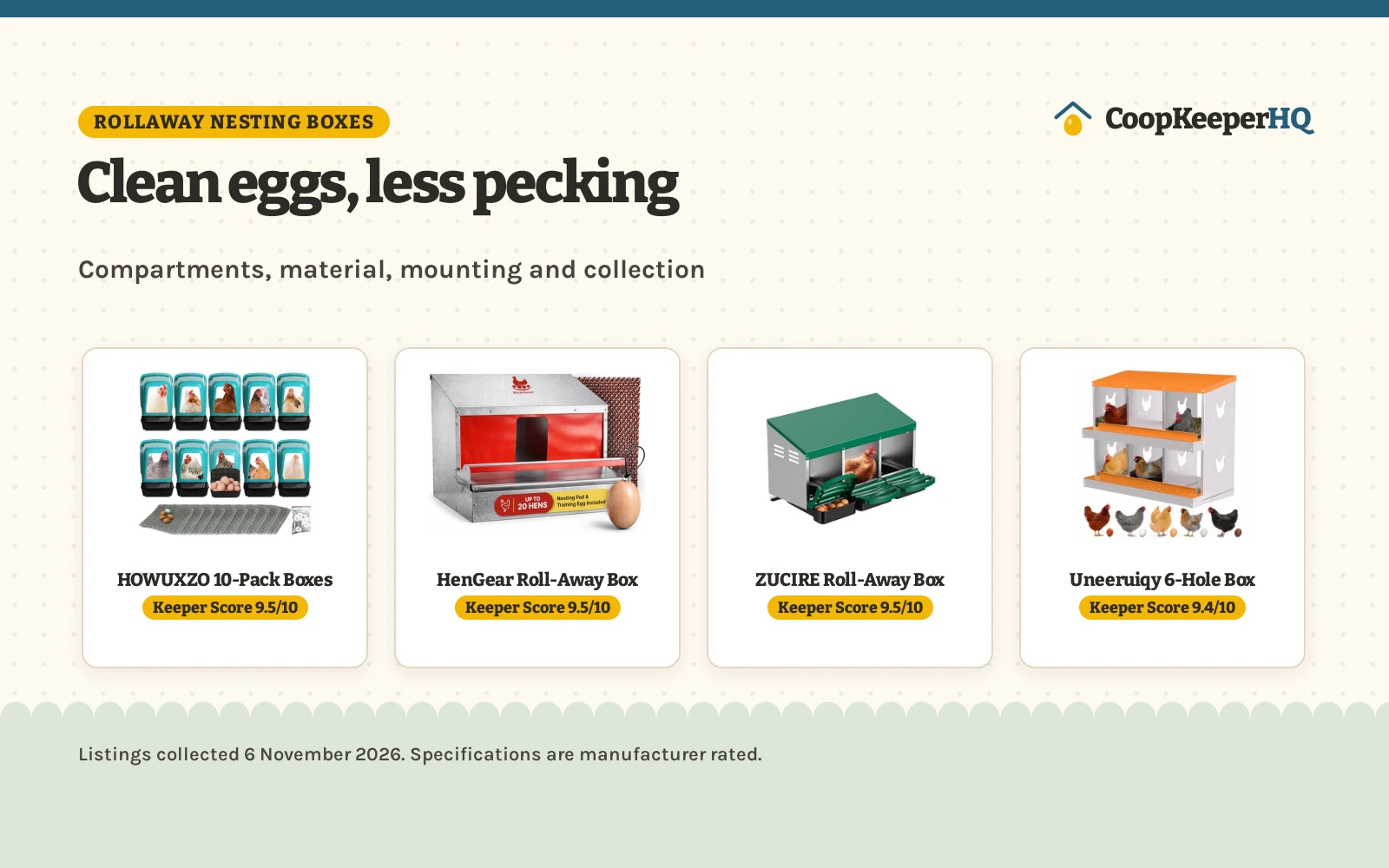
Keepers generally choose between traditional open boxes and roll-away designs. Traditional open boxes are simple wooden or metal cubbies with a front lip to hold loose bedding like wood shavings or straw. They are economical and provide a natural nesting bowl that hens instinctively enjoy.
Roll-away nesting boxes feature a gently inclined floor. When a hen finishes laying, the egg rolls forward or backward into a sheltered collection tray under a protective lid. The makers YENAM, Hipicute, HVDI, JustSmart, and YeeJinHong all build roll-away systems. This roll-away action protects eggs from dirty feet and prevents hens from pecking shells.
If you are deciding between wooden boxes and metal roll-away models, our chicken nesting box guide compares the top choices.
Keeping nesting box bedding clean and fresh
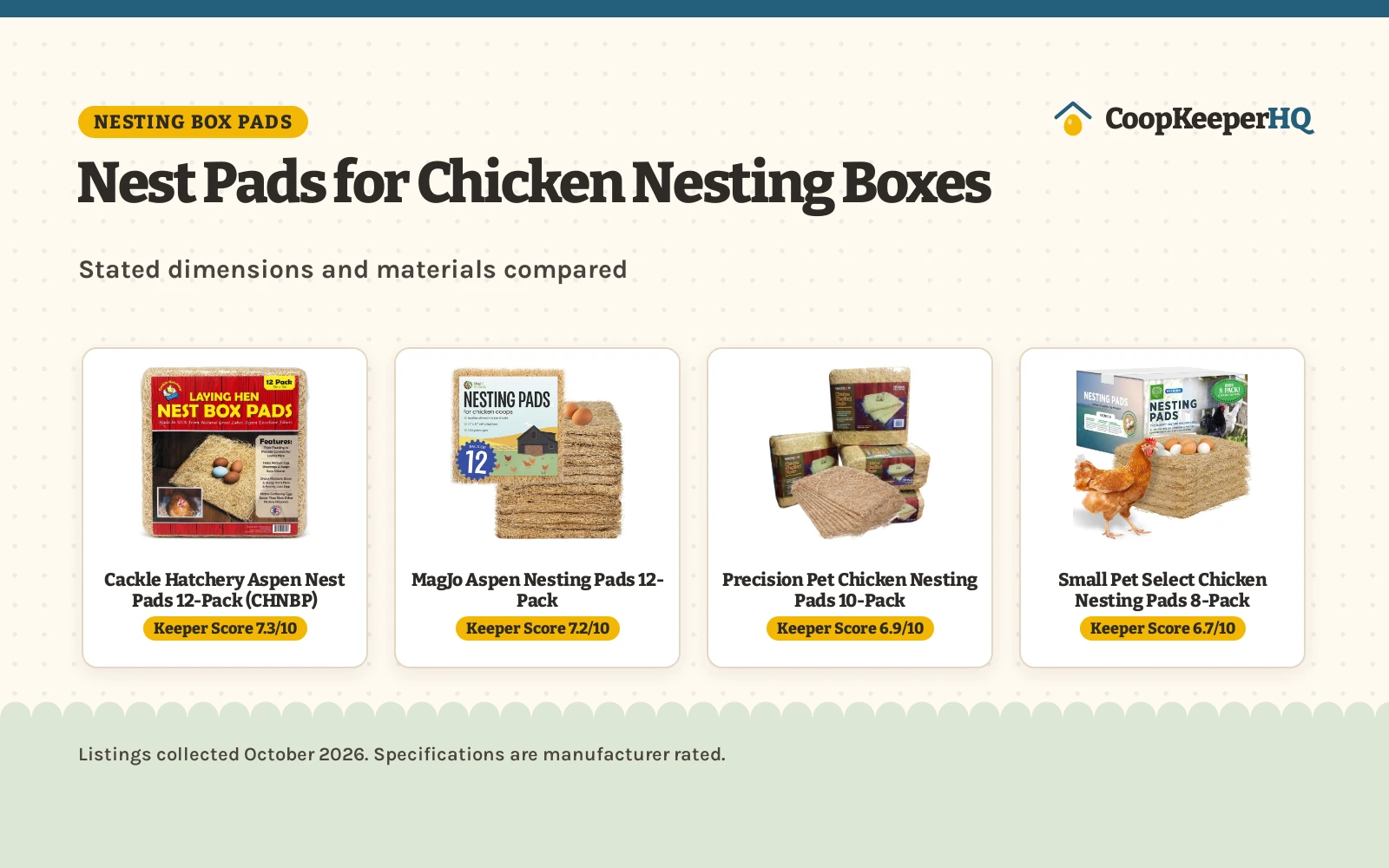
Clean nesting material cushions eggs, absorbs moisture, and keeps shells clean. Traditional boxes need a generous layer of clean pine shavings, chopped straw, or natural bedding. In roll-away boxes, loose bedding must be kept thin so eggs roll freely, or replaced with fitted plastic nest pads.
Metal boxes with removable plastic trays make maintenance simple. The makers Hipicute, JustSmart, and YeeJinHong use removable plastic trays with small drainage holes that prevent water pooling and allow fine debris to fall through. Keepers can slide the trays out, wash them clean with a hose, and return them without soaking the coop walls. You can find detailed bedding advice in our nesting box bedding guide and our general coop bedding guide.
Daily rhythms and egg gathering chores
A consistent daily routine keeps nesting boxes clean and eggs in good condition. Most hens lay within the first few hours after daylight. Checking the boxes in late morning gathers the bulk of the day’s eggs before they can be soiled. A quick second check in late afternoon collects any late eggs before evening.
A regular schedule also helps you catch broody hens early. If a hen sits persistently in a box refusing to move, gently lift her out into the run near the feeder and waterer. Installing an automatic coop door maintains a steady morning schedule, letting birds into the run at dawn so they can feed and drink before laying starts.
A simple nesting box setup checklist
Use this checklist when planning and maintaining nesting boxes for your flock:
- Provide 1 nesting box for every 4 hens, with at least 2 boxes for small flocks
- Choose compartments close to the standard 12 by 12 inch size for laying hens
- Mount boxes lower than the highest roosting bars to prevent sleeping in nests
- Select a box with an 18 degree sloped roof to stop birds from perching on top
- Place boxes in a quiet, dark, well-ventilated corner of the coop
- Gather eggs daily and clean bedding regularly
Birds, breed size, run time and climate in; coop floor, run space, roost length and nesting boxes out.
Wash your hands after handling birds, eggs or equipment, supervise children around the flock, and check local rules on flock size and roosters before you buy. For sick birds, call a poultry veterinarian or your state extension office. See CDC backyard poultry guidance. Read our Safety Disclaimer.
FAQ for the flock
How many nesting boxes do I need for 4 chickens?
A flock of 4 hens needs at least 2 nesting boxes. Although the standard rule is 1 box per 4 hens, a second box gives your flock an essential backup. If one hen sits on the nest for a long time, a second compartment prevents other hens from dropping eggs on the coop floor.
Can you have too many nesting boxes in a coop?
Yes, having too many nesting boxes often causes coop problems. When there are surplus empty boxes, chickens often adopt them as nighttime sleeping spots instead of using roosts. Sleeping in boxes leads to manure accumulation, soiled bedding, and dirty eggs.
What size should a chicken nesting box be?
For standard backyard laying breeds, compartments measuring 12 by 12 inches are the recognized benchmark. The maker TRINFREE lists compartments measuring 12 by 12 inches, while the maker Yhhdjc lists wooden compartments measuring 11 by 12.3 inches. Both provide plenty of room for hens to enter, turn, and lay comfortably.
Should chicken nesting boxes be on the ground?
It is best to raise nesting boxes off the coop floor. Elevating boxes preserves floor area for scratching and keeps litter and moisture out of the nesting material. The maker Yhhdjc designs (on Amazon) its elevated bases to raise compartments 18 to 20 inches above the ground.
Why do all my chickens lay in the same nesting box?
Chickens are creatures of habit and flock instinct. When one hen finds a quiet, dark spot and lays an egg, other hens view that location as safe and desirable. It is completely normal for several hens to take turns using the exact same box throughout the morning.
More coop guides
- Best Chicken Nesting Box: Roll-Away and Open Picks
- Best Chicken Nesting Box Bedding: 5 Clean Pads and Herbs
- How Big Should a Chicken Coop Be? Space per Bird Explained
See the chicken coop guides and the coop supply picks.