How to Predator Proof a Chicken Coop and Run
Hardware cloth, perimeter aprons, locking latches and secure nightly coop routines to protect your flock from digging and climbing predators.

On this page
Top picks at a glance
As an Amazon Associate I earn from qualifying purchases.
- 1
 GEROSSI Solar Predator Lights for Chicken Coop 4 Pack9.6/10View on Amazon
- 2
 YANSERY 19 Gauge Hardware Cloth 48inx100ft 1/2 in Predator9.6/10View on Amazon
- 3
 docagt 10 x 13.2 x 6.4 FT Metal Chicken Coop with Cover9.6/10View on Amazon
- 4
 Automatic Chicken Coop Door Solar PoweredView on Amazon
- 5
 RUNSHED 80" Large Wooden Chicken Coop with RunView on Amazon
- 6
 Chicken Coop for 2-3 ChickensView on Amazon
- 7
 Large Chicken Coop for 4-6 Chickens with Nesting BoxView on Amazon
- 8
 JVR Automatic Chicken Coop DoorView on Amazon
- 9
 Walk-in Metal Chicken Coop 10x6.5View on Amazon
Heading out to the coop at sunrise to find an undisturbed flock is what every backyard poultry keeper wants. Predator proofing means staying ahead of raccoons, foxes, dogs, hawks and rodents that treat the coop and run as an easy meal. Learning how to predator proof a chicken coop comes down to essential defenses: replacing weak wire with heavy welded mesh, burying a perimeter apron against digging pests, and locking every door and vent with predator-safe hardware.
Other options for the coop
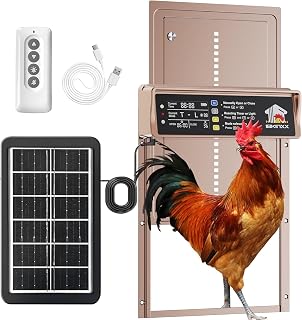 Automatic Chicken Coop Door Solar PoweredCheck price on Amazon
 RUNSHED 80" Large Wooden Chicken Coop with RunCheck price on Amazon
 Chicken Coop for 2-3 ChickensCheck price on Amazon
 Large Chicken Coop for 4-6 Chickens with Nesting BoxCheck price on Amazon
 JVR Automatic Chicken Coop DoorCheck price on Amazon
 Walk-in Metal Chicken Coop 10x6.5Check price on Amazon
CoopKeeperHQ earns a commission if you buy through our links, at no added cost to you. Affiliate disclosure.
How to predator proof a chicken coop: start with heavy hardware cloth
Standard hexagonal chicken wire keeps birds inside, but it does not keep hungry predators out. Raccoons can reach through wide wire gaps to grab birds on the roost, while foxes and large dogs can rip thin wire apart with their teeth. Securing your enclosure begins by lining all windows, vents and run panels with welded wire mesh. For wire mesh, the HMOLIKH listing specifies a 1/2 inch square opening with 19 gauge wire on a 24 in by 100 ft roll of galvanized, PVC-coated welded steel. That 1/2 inch opening prevents raccoons from reaching through and blocks rats and weasels from slipping inside. Fasten the mesh to wooden framing using heavy screws with wide washers or heavy-duty galvanized poultry staples driven deep into the wood. To compare wire mesh options for your enclosure, read our hardware cloth guide.
Predator proof bottom of chicken coop and run with a buried wire apron
Canines and foxes rarely try to jump over high fencing when they can dig under the framing instead. Learning how to predator proof bottom of chicken coop and run structures requires stopping diggers at the ground line. When a predator approaches a fence, it steps right up to the base and begins scratching downward into the soil. If your fencing stops at ground level, a determined dog or fox can dig a tunnel underneath the wood with little effort. A buried wire perimeter apron stops this tactic completely. Lay welded wire mesh flat on the ground extending outward from the bottom edge of the run. When a digging predator reaches the fence base, its claws hit the horizontal wire mesh, stopping its progress. You can pin the mesh flat against the turf using heavy ground stakes, or bury it shallowly under soil, gravel, or paving stones. As grass grows up through the mesh openings, it locks the wire into the root system and creates an invisible barrier against diggers.
How to predator proof a chicken run against climbing and aerial threats
Securing the ground line is only part of the task; a complete enclosure must guard against climbers and aerial raptors as well. Figuring out how to predator proof a chicken run means looking up toward the tree branches. Raccoons, opossums, and domestic cats climb vertical fencing with ease, while hawks and owls watch runs from overhead perches. Leaving an outdoor run uncovered invites raptors to drop in during broad daylight. Cover the entire top of the run with heavy wire mesh, solid roofing, or specialized overhead flight netting. If you use a walk-in metal run, the HERBAN listing specifies an ultra-low 0.5-inch base gap along the ground to prevent small animals from sliding beneath the frame. Make sure the run framing stays rigid against winds and snow loads so gaps do not open along the roofline. To verify that your flock has plenty of safe scratching room inside their secure pen, check our chicken run size calculator.
Secure coop doors and nesting boxes with raccoon-safe latches
Raccoons possess dexterous front paws that easily slide open basic barrel bolts, lift simple hooks, and loosen turning wooden catches. If a latch requires only an unsecured sliding motion, an adult raccoon can open it through persistence. Every exterior door, pop door, cleanout hatch, and nesting box lid requires secure hardware that stops clever paws. Install locking hasps or heavy slide bolts secured with a spring-loaded carabiner clip or a small padlock. A raccoon cannot compress a carabiner spring gate while simultaneously sliding a bolt. Nesting box access lids are a frequent entry point for predators searching for fresh eggs. Mount sturdy latches on nesting box lids and secure them with locking clips so raccoons cannot lift the roof panel from outside. For hardware recommendations, see our coop door latch guide.
Close ventilation windows and roof gaps without trapping moisture
Backyard coops require plenty of cross ventilation near the roofline to carry out moisture and ammonia fumes, but open gaps invite climbing pests. Weasels, rats, and snakes take advantage of any unprotected opening near the eaves. A small weasel can slip through a hole barely larger than a coin, killing roosting birds overnight. Never leave coop ventilation windows open without a welded wire barrier. Frame every vent and window with solid lumber and cover the interior opening with welded wire mesh screwed directly into the frame. Caulk or fill narrow cracks around the roof trim, floorboards, and corners so small rodents cannot chew through soft cedar or pine siding.
Lock pop doors at dusk with an automated system
Chickens naturally return to their roosts when daylight fades, but predators hunt most actively during twilight and darkness. If a keeper arrives home late, an open pop door leaves the entire flock vulnerable. Installing a motorized door provides dependable closure every evening. The IBKINXX auto door listing features an opening clearance of 9.6 inches in height and 8.2 inches in width, is rated for birds weighing up to 10 lbs, and states an operating range of -10℉ to 140℉. Motorized doors equipped with optical sensors or programmable timers close automatically after the birds roost. An integrated anti-pinch feature stops the door from trapping a lingering bird. To find dependable models for your backyard setup, explore our roundup of the best automatic chicken coop door options.
Deter ground predators with electric poultry netting
Backyard keepers managing larger flocks or pastured poultry need extra perimeter defense against larger predators. Hungry coyotes, roaming neighborhood dogs, and black bears can push through wooden fencing or break light frames if they smell poultry. Setting up an energized perimeter fence delivers a sharp, harmless electrical pulse that trains predators to stay away from the area. For pastured poultry and large run borders, our poultry netting and charger guide compares complete setups, solar chargers, and energized netting systems.
Step-by-step defenses by predator type
Understanding which predators live in your neighborhood helps you prioritize your coop security upgrades:
- Digging predators (foxes, coyotes, dogs): Lay a perimeter apron of welded wire mesh extending outward along the base of the run and secure it with heavy ground stakes.
- Dexterous climbers (raccoons, opossums): Secure all door latches, pop openings, and nesting box lids with spring carabiners or padlocks that require an extra clip removal to slide open.
- Small invaders (weasels, rats, snakes): Cover every vent, eave, drain, and window with small welded wire mesh, such as the 1/2 inch mesh listed by HMOLIKH, screwed into solid wood framing.
- Aerial raptors (hawks, owls): Enclose the top of the chicken run with solid roofing panels, welded wire mesh, or taut flight netting.
- Large predators (bears, wandering dogs): Install an electric perimeter fence around the coop and run area to stop large animals from pushing against coop walls.
Daily routine for flock security
Consistent daily habits keep your coop defense working without failure:
- Morning inspection: Walk the perimeter of the run to scan for fresh digging marks, loosened ground stakes, or chewed wire mesh.
- Midday check: Make sure waterers and feeders are clean and that overhead netting remains taut after wind or heavy rain.
- Dusk headcount: Confirm that every bird is inside the hen house and perched safely on the roosts before shutting the coop.
- Nighttime closure: Inspect all slide bolts, carabiner clips, and the automatic pop door to confirm everything is latched shut.
- Feed storage: Store poultry feed and scratch grains inside sealed galvanized metal trash cans so rodents and raccoons do not gather near the coop.
A simple predator-proofing checklist
- Hexagonal chicken wire is replaced by welded wire mesh on all run walls and openings
- A wire perimeter apron extends outward along the ground around the entire run
- All exterior coop doors, pop doors, and nesting box lids feature locking latches with carabiner clips
- Eaves and high ventilation windows are covered with wire mesh screwed into solid framing
- The run is completely covered overhead with roofing or heavy netting
- The pop door closes reliably at dusk to lock the flock inside the roost
- Feed is stored in chew-proof metal bins to deter rodents and raccoons
Birds, breed size, run time and climate in; coop floor, run space, roost length and nesting boxes out.
Chicken wire keeps chickens in but does not keep raccoons, dogs or foxes out. Use 1/2 inch hardware cloth on openings, bury or apron it at the base, close the coop at dusk and use two-step latches that raccoons cannot open. Read our Safety Disclaimer.
FAQ for the flock
Can raccoons open chicken coop latches?
Raccoons easily open simple hook-and-eye catches, wooden turn buttons, and sliding barrel bolts. Their nimble front paws can manipulate unsecured sliding mechanisms. Always secure coop latches with a secondary locking device, such as a spring-loaded carabiner or a padlock.
Why is chicken wire unsafe for predator proofing?
Standard chicken wire is designed only to keep chickens inside, not to keep hungry predators out. The thin wire is easily torn by dogs and foxes, while the wide openings allow raccoons to reach through and injure roosting poultry. Welded wire mesh provides much greater strength.
How does a predator apron stop digging animals?
Digging predators approach a fence and dig straight down at the perimeter base. When an apron of wire mesh is laid flat on the ground extending outward from the fence line, digging paws hit the wire barrier immediately, stopping the animal from digging underneath.
What mesh size keeps out weasels and snakes?
A wire mesh opening of 1/2 inch, as found on the HMOLIKH welded wire (on Amazon) roll, stops weasels, rats, and most snakes from entering the coop. Openings wider than that allow small predators to squeeze through ventilation gaps, roof eaves, and floor corners.
Should chickens be locked in the coop every night?
Chickens must be locked inside a secure hen house every evening at dusk. Most predators hunt under the cover of darkness. Locking the pop door ensures that even if an animal breaches the outer run fence, the flock remains safe inside the roosting quarters.
More coop guides
- Best Hardware Cloth for Chicken Coop Runs and Aprons
- Best Automatic Chicken Coop Door: Picks for Every Season
- Best Poultry Netting and Charger: Electric Fence Kits Compared
See the predator protection picks and the chicken runs and fencing guides.