Low Maintenance Chicken Coop: What to Look For
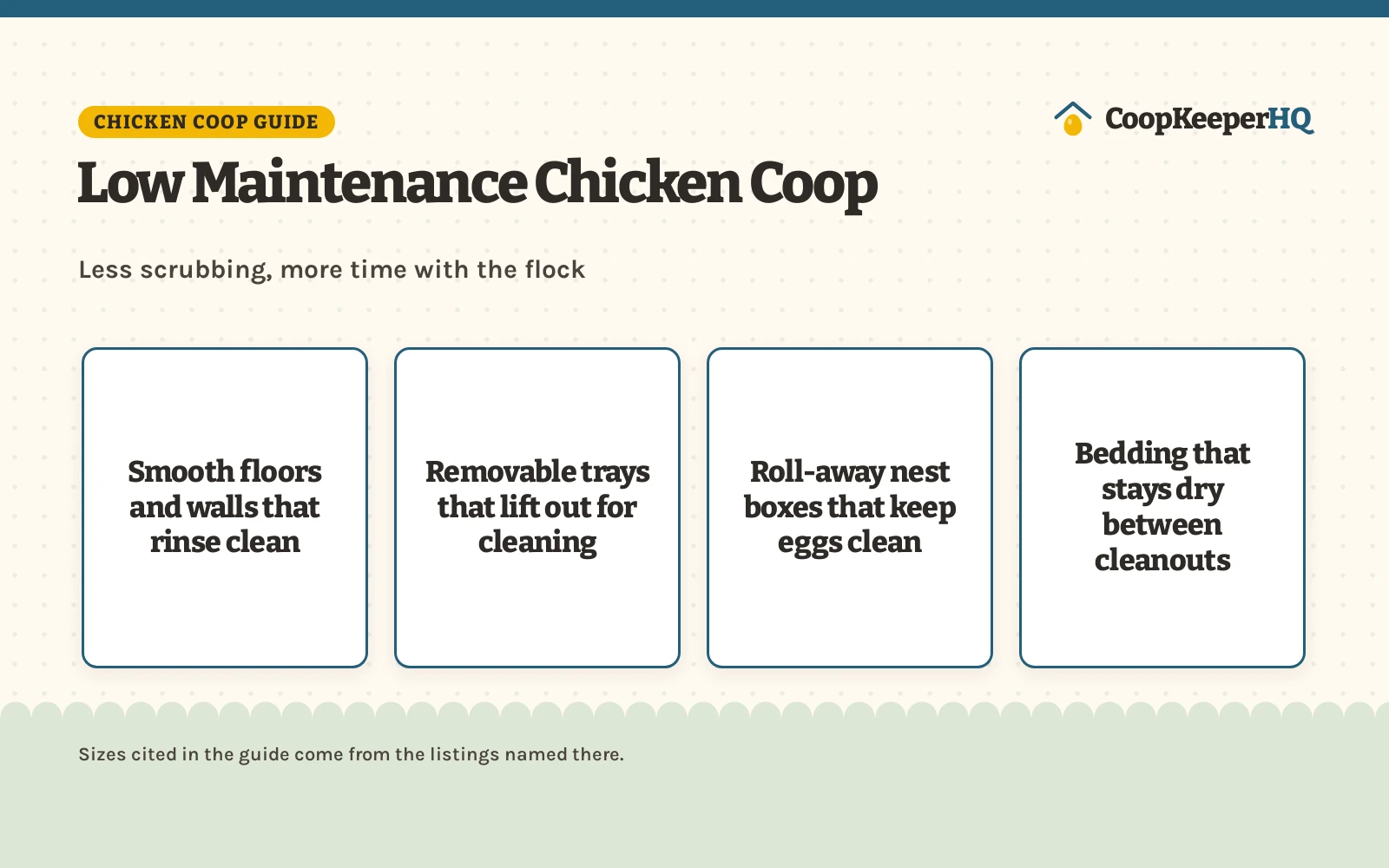
A low maintenance chicken coop stays cleaner with less daily work through smooth floors, removable trays, roll-away nest boxes and dry bedding.

On this page
Top picks at a glance
As an Amazon Associate I earn from qualifying purchases.
- 1
 Omlet Automatic Chicken Coop Door Opener Operated by LightView on Amazon
- 2
 Omlet Automatic Chicken Coop Door OpenerView on Amazon
- 3
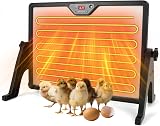 Smart 180W Chicken Coop Heater with Remote ControlView on Amazon
- 4
 Chicken Coop HeaterView on Amazon
- 5
 Sweet PDZ Chicken Coop RefresherView on Amazon
- 6
 Automatic Chicken Coop Door Solar Powered with Timer & LightView on Amazon
The morning coop round should take minutes, not the whole morning. A low maintenance chicken coop is one that stays cleaner with less daily work, because its floors rinse clean, its trays lift out, and its nest boxes keep eggs out of the bedding. The trick is not a bigger coop, it is a coop built around the chores you do every day.
Other options for the coop
 Omlet Automatic Chicken Coop Door Opener Operated by LightCheck price on Amazon
 Omlet Automatic Chicken Coop Door OpenerCheck price on Amazon
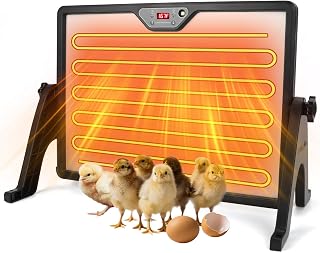 Smart 180W Chicken Coop Heater with Remote ControlCheck price on Amazon
 Chicken Coop HeaterCheck price on Amazon
 Sweet PDZ Chicken Coop RefresherCheck price on Amazon
 Automatic Chicken Coop Door Solar Powered with Timer & LightCheck price on Amazon
CoopKeeperHQ earns a commission if you buy through our links, at no added cost to you. Affiliate disclosure.
Low maintenance chicken coop: what makes one easy to keep
A coop earns the low maintenance name when a few things are true: droppings land where you can reach them, surfaces wipe or rinse clean, and feed and water stay put without daily fuss. That means wide doors you can reach through, a floor you can scrape or hose, and fittings that lift out instead of needing a full strip-down. Before you buy or build, walk through your daily round in your head, from opening the pop door to collecting eggs, and look for the spots where a chore takes longer than it should.
Start with smooth floors and walls
Droppings and damp bedding stick to rough wood and bare concrete, so the floor is the first place to spend your effort. A smooth floor, sealed or lined, lets you scrape it clean with a flat shovel and rinse it down, while a rough floor holds on to every bit. Walls want the same treatment: smooth panels wipe down fast, and corners without deep ledges leave less room for bedding to pack in. Keep the floor raised off the ground so rain does not run in under the walls, and give the coop a slight slope toward the door so rinse water runs out instead of pooling.
Use removable trays and droppings boards
A short cleanout lifts the mess out instead of chasing it around the floor. A tray under the roost catches the night droppings, and you slide it out, tip it into a cart and slide it back. The Mifoci set in the reference listings measures 35 x 23.6 inches and 1.57 inches high, with smooth edges and raised sides, plus steel mesh scoopers in 3.8mm and 5mm mesh for sifting bedding. 2 trays and 2 scoopers come in the set, so a tray can stay in the coop while the other airs out. A flat board under the roost does the same job in a coop without trays: scrape it each morning and the floor below stays clean.
Choose roll-away nest boxes
Eggs left in bedding get dirty and cracked, and dirty eggs mean extra washing at the kitchen sink. A roll-away nest box solves that with a sloped floor that lets each egg roll gently into a protected tray. The Garvee boxes in the reference listings measure 30.7 x 20.1 x 20.1 inches, come in 3-hole and 4-hole versions, and mount on the wall or stand on legs, with a recommended mounting height of 18 to 20 inches. The removable tray lifts out for rinsing, and the galvanized steel shell wipes clean. Check that the tray slides out without lifting the whole box off the wall, since that is the chore you will repeat each day. See the nesting box guide if you want more options.
Pick bedding that stays dry
Dry bedding is the quiet workhorse of a low maintenance coop: it soaks up droppings, keeps smells down and gives the flock somewhere soft to scratch. Pine shavings, hemp and straw all work, and the deep litter method lets you stir the top layer and add fresh bedding instead of stripping the coop bare. The trick is depth and dryness, not the brand on the bag, so keep the bedding dry, add a fresh layer when the surface looks damp, and clean it out when the base turns soaking wet. The bedding guide compares pine, hemp and straw for the coop, and the deep litter vs sand comparison weighs the common approaches.
Keep feed and water simple
Feeders and waterers cause more daily fuss than any other fitting when they spill, clog or tip over. Hang feeders where the flock can reach them without scratching bedding in, and set waterers on a firm base away from the roost. The DQITJ troughs in the reference listings are one example: a 4-pack of trough feeders 19.7 inches long, with a top width of 3.54 inches and a height of 1.57 inches, made to hang inside or outside the cage or sit on the ground. A trough that hangs stays cleaner than one on the floor, and a spare trough lets you swap a dirty one for a clean one without a trip to the sink. For watering that needs less attention, the automatic chicken waterer guide covers hose-fed and float picks.
Let the door and the run do some work
A coop that opens and closes itself takes a chore off your list morning and evening. An automatic pop door shuts the flock in at dusk and opens it at dawn, and a covered run keeps rain off the ground so the birds have somewhere dry to scratch. Shade cloth over part of the run gives the flock a cool spot in summer, and a clear path to the run means you are not wading through mud with feed and water. The automatic coop door guide compares doors for every season, and the run cover guide covers tarps and roofs that fit.
A short daily routine
Low maintenance does not mean no maintenance, it means the same few chores done in the same order. Open the pop door, check feed and water, slide out the tray or scrape the board, collect eggs from the nest boxes and give the bedding a quick stir. That is the whole round on most days, and it stays short when the coop is built for it. Each week, wipe the smooth surfaces, check the nest box trays and top up the bedding where it has thinned. The weekly pass catches the small jobs before they turn into a full cleanout. The daily rhythm guide lays out the same round in order.
What to check before you buy
Walk the coop with your chore list in hand before you pay for it. Can you reach every corner without climbing in, do the trays slide out, and do the nest boxes open from outside the run? Look for smooth floors, wide doors, a roof that overhangs the walls and vents set high, under the roof overhang, where rain is less likely to blow in. Ask how the coop drains after a wash, and where you will stand when you scrape the floor. A coop that is easy to reach into is a coop you will keep clean, and a clean coop is the whole point.
- Trays and boards slide out without tools
- Nest boxes open from outside the run
- Floors are smooth and raised off the ground
- Doors are wide enough to reach every corner
- Vents sit high, where rain is less likely to blow in
- The roof overhangs the walls
For a full cleanout walk-through, see the coop cleaning guide.
Birds, breed size, run time and climate in; coop floor, run space, roost length and nesting boxes out.
Wash your hands after handling birds, eggs or equipment, supervise children around the flock, and check local rules on flock size and roosters before you buy. For sick birds, call a poultry veterinarian or your state extension office. See CDC backyard poultry guidance. Read our Safety Disclaimer.
FAQ for the flock
What makes a chicken coop low maintenance?
Smooth floors and walls, removable trays under the roost, roll-away nest boxes and dry bedding. Those features cut the daily round to feed, water, a tray slide-out and egg collection.
How often should I clean a low maintenance coop?
Slide the tray out or scrape the board each morning, and wipe the smooth surfaces and top up bedding each week. A full cleanout comes when the bedding base turns soaking wet, not on a fixed date.
Do roll-away nest boxes keep eggs cleaner?
Yes, the sloped floor rolls each egg into a protected tray, away from bedding and droppings. The Garvee boxes measure 30.7 x 20.1 x 20.1 inches and come in 3-hole and 4-hole versions, so check the size against your coop wall before you buy.
What size tray fits under a roost?
Measure the space under your roost, then match it to a tray that slides out without lifting the roost. The Mifoci trays (on Amazon) measure 35 x 23.6 inches and 1.57 inches high, with 3.8mm and 5mm mesh scoopers for sifting bedding.
What bedding needs the least work?
Bedding that stays dry needs the least work. Pine shavings, hemp and straw all work, and the deep litter method lets you stir the top layer and add fresh bedding instead of stripping the coop bare.
More coop guides
- How to Clean a Chicken Coop
- Best Chicken Coop Bedding: Shavings, Hemp and Sand
- Best Rollaway Chicken Nesting Boxes (2026): 5 Roll-Away Picks
- Best Chicken Coop Poop Scoop (2026): 5 Picks Compared
- Best Dump Cart for Coop Cleanout (2026): 5 Picks Compared
- How to Clean Small Chicken Coop: Step-by-Step Care and Routine
- Best Chicken Coop Bedding for Deep Litter (2026): 4 Top Picks
- Deep Litter vs Sand Chicken Bedding: Which One Should You Buy?
- Best Automatic Chicken Coop Door: Picks for Every Season
- Best Automatic Chicken Waterer: Hose-Fed and Float Picks
- Chicken Coop Time Schedule: Daily Rhythm for the Flock
See the chicken coop picks and the coop supply guides.