Mechanical vs Digital Timer for Chicken Coop: Which One Should You Buy?
Dial timers repeat a simple daily schedule with pins, while programmable digital timers vary settings across the week for coop lights and outdoor devices.

On this page
Top picks at a glance
As an Amazon Associate I earn from qualifying purchases.
- 1
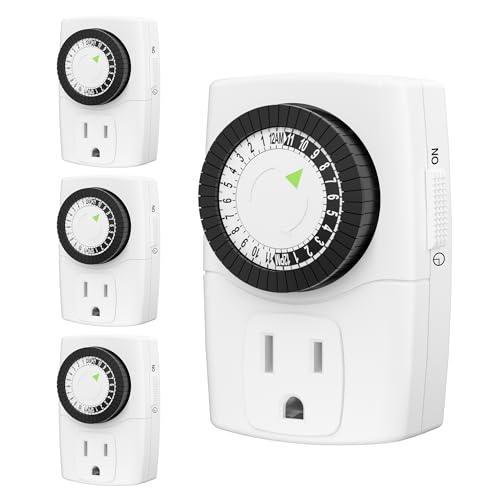 BN-LINK U47 Indoor Mini 24-Hour Mechanical Outlet Timer9.5/10View on Amazon
- 2
 BN-LINK Indoor 24H Programmable Digital Timer Outlet9.6/10View on Amazon
- 3
 DEWENWILS Indoor 24 Hour Programmable Digital Timer Outlet9.5/10View on Amazon
- 4
 BN-LINK U47 Indoor Mini 24-Hour Mechanical Outlet TimerView on Amazon
- 5
 BN-LINK Outdoor 7-Day Programmable Timer OutletView on Amazon
- 6
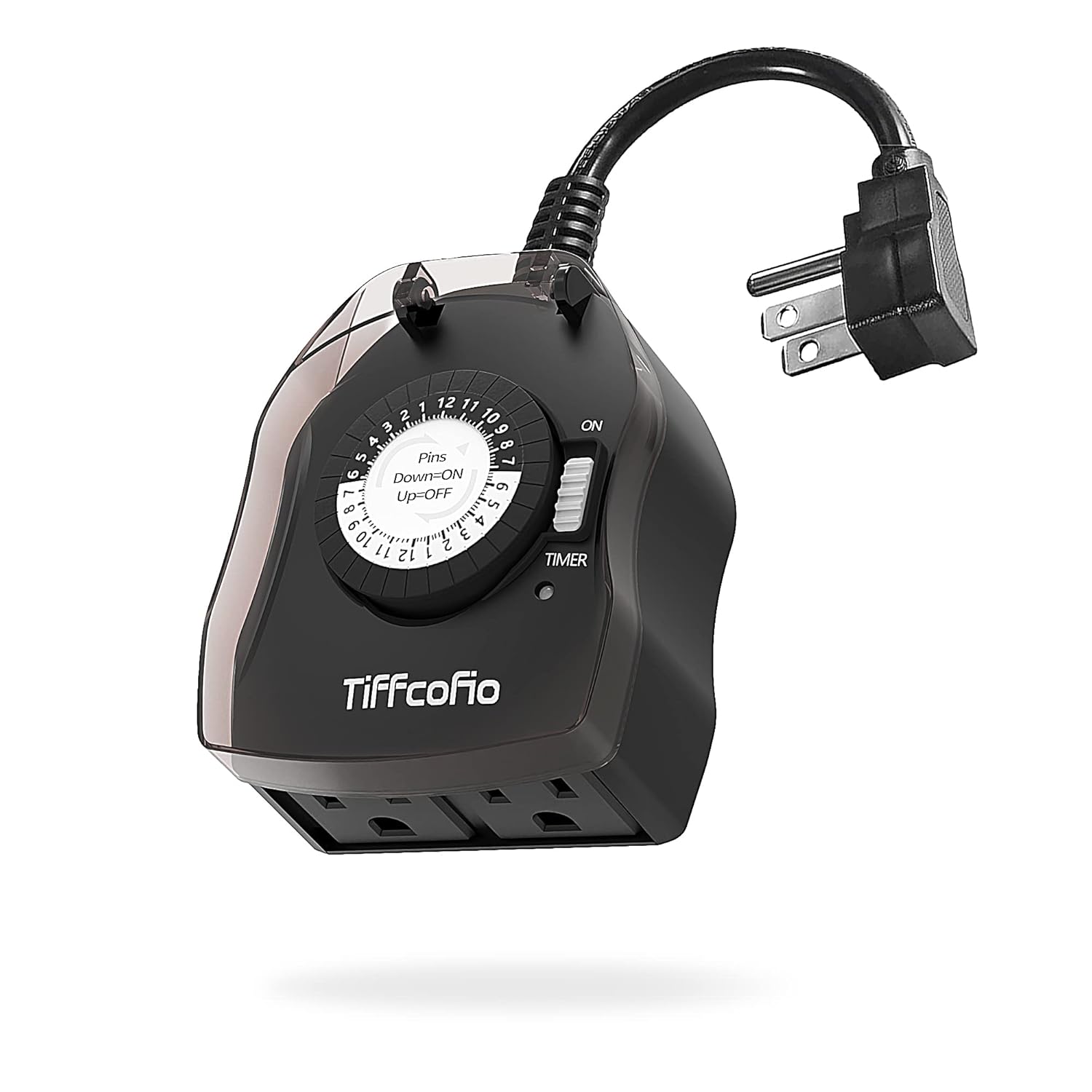 Outdoor Timer OutletView on Amazon
- 7
 HBN Outdoor Timer Outlet WaterproofView on Amazon
- 8
 Intermatic SW30MWK 30-Minute Spring-Wound TimerView on Amazon
Morning chores at the coop run on a clock: lights come on before the flock wakes, heaters switch off when the day warms, and the pop door routine waits on nobody. A mechanical vs digital timer for chicken coop use answers that routine in different ways: a mechanical dial repeats the same daily schedule with pins, while a digital timer stores a varied program that can change across the week. The right choice depends on how steady the coop schedule stays from day to day.
Other options for the coop
 BN-LINK U47 Indoor Mini 24-Hour Mechanical Outlet TimerCheck price on Amazon
 BN-LINK Outdoor 7-Day Programmable Timer OutletCheck price on Amazon
 Outdoor Timer OutletCheck price on Amazon
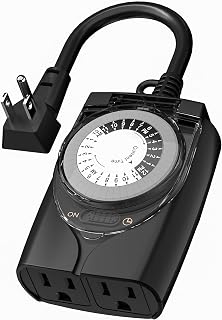 HBN Outdoor Timer Outlet WaterproofCheck price on Amazon
 Intermatic SW30MWK 30-Minute Spring-Wound TimerCheck price on Amazon
CoopKeeperHQ earns a commission if you buy through our links, at no added cost to you. Affiliate disclosure.
mechanical vs digital timer for chicken coop: how the types differ
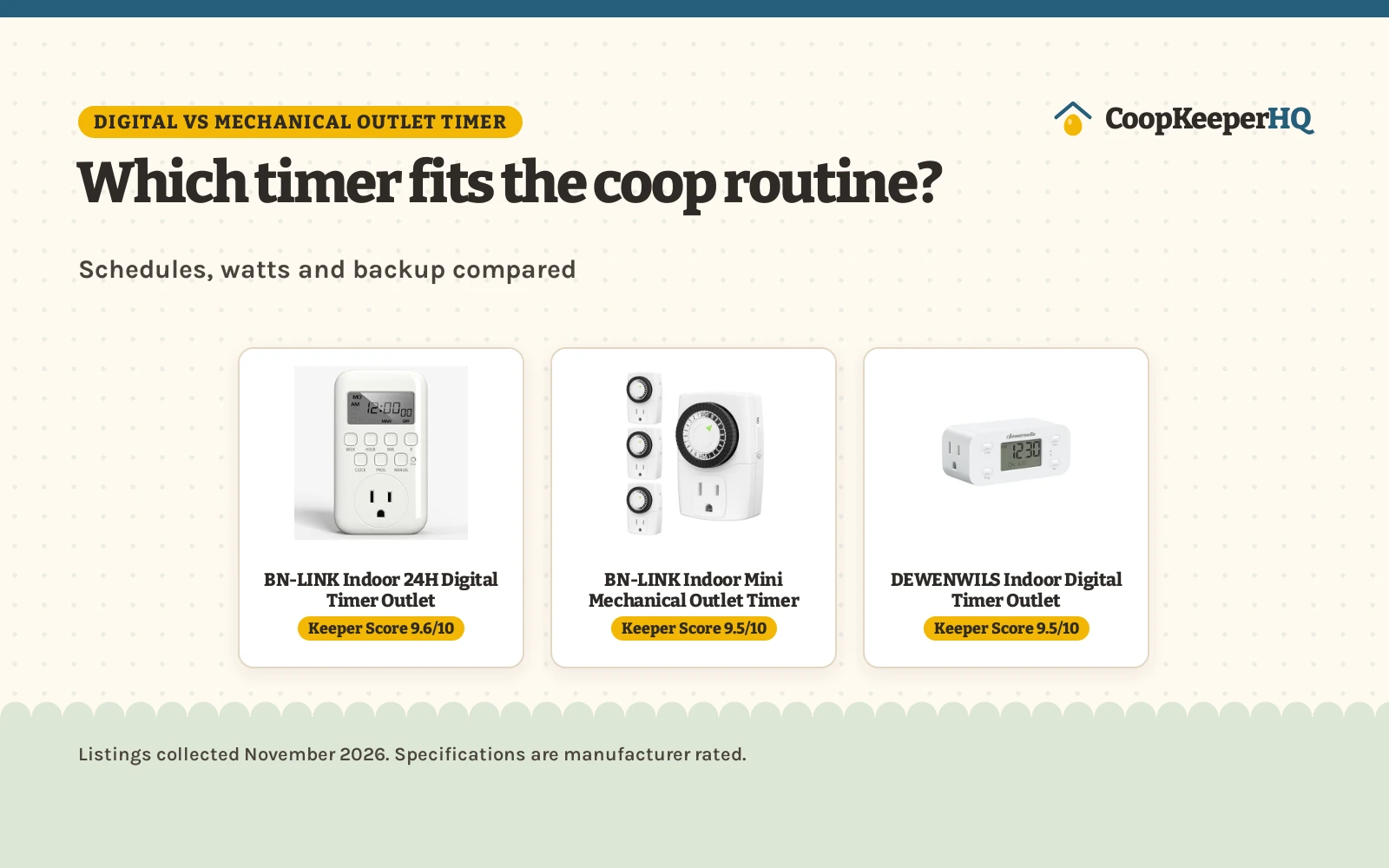
A mechanical timer works with pins around a dial. On the indoor BN-LINK dial, pins up mean the timer is off and pins down mean the timer is on, and the schedule repeats daily once the timer is plugged in. The mechanical models compared here switch in 30-minute intervals, so a keeper sets the on and off points by moving pins rather than by entering times on a screen.
A digital timer works with programs instead of pins. The BN-LINK digital model offers 8 on/off programs for 2 grounded outlets, with settings as short as one minute, and the outlets are controlled simultaneously. It also offers individual days or preset combination days, a Daylight Savings mode, a Random Vacation mode that varies the programmed lights, and a built-in backup battery that helps preserve settings after a power interruption or when the timer is unplugged.
The practical difference is flexibility. A mechanical dial suits a schedule that never changes: the same lights on and off points every day. A digital program suits a schedule that shifts across the week, or a keeper who wants a different pattern on some days than on others. Each type switches ordinary coop loads such as lights, and the choice comes down to how much variation the routine needs.
The gear: timers compared, ranked
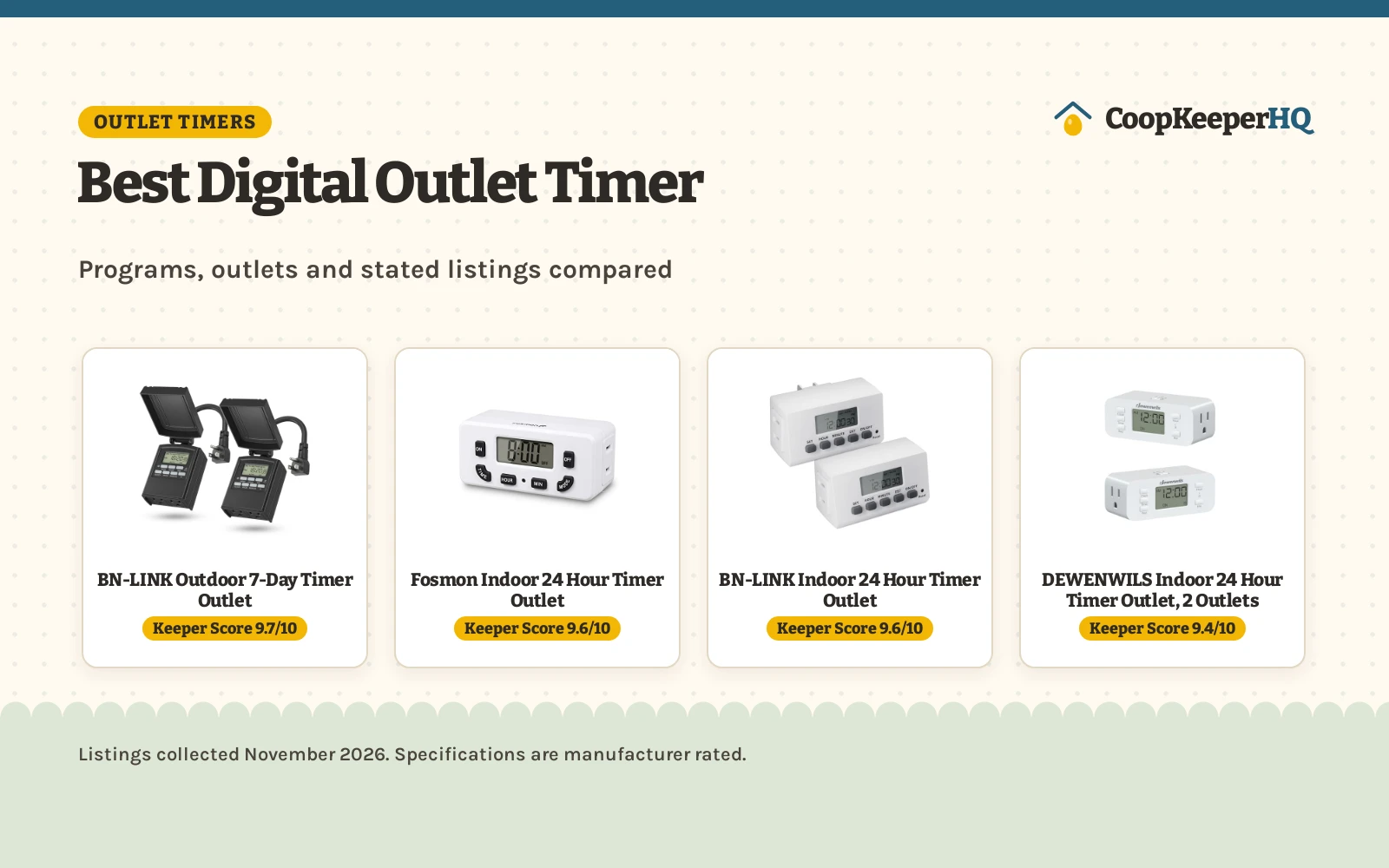
Leading the ranking is the BN-LINK Outdoor 7-Day Programmable Timer Outlet. It offers 8 on/off programs, 2 grounded outlets controlled simultaneously, settings as short as one minute, individual days or preset combination days, a Daylight Savings mode and a Random Vacation mode. The listing states a weatherproof cover, ETL listing, and ratings of 125V, 60Hz, 15A and 1875W resistive, plus a built-in backup battery that helps preserve settings after a power interruption. For a coop routine that changes across the week, that combination of flexible programming and outdoor build is the strongest fit.
Next is the Tiffcofio Outdoor Timer Outlet, a mechanical model with 48 ON/OFF setting options in 24 hours and pins that each mean a 30-minute interval, with the setting repeating daily. It offers 2 grounded outlets with a 6-inch heavy dual cord, weatherproof materials, and a CSA listing. The listing states mounting vertically at least 2ft above the ground for waterproof performance, and ratings of 15A and 1/2HP. It suits a keeper who wants a sturdy outdoor dial with a fine pin grid and no complicated programming.
Then comes the HBN Outdoor Timer Outlet, another mechanical model with 24 ON/OFF options within a 24-hour period and pins that each represent a 30-minute interval, with daily repetition. It offers a transparent waterproof cover for viewing timed tasks, and the same mounting advice: vertically at least 2ft above the ground for waterproofing. Ratings are 125 Volts, 60Hz, 15A, 1875W resistive and 1/2HP, and the listing states 1 year of coverage plus lifetime tech support. It suits a keeper who wants a simple outdoor dial with a clear cover.
Last in the ranking is the BN-LINK U47 Indoor Mini 24-Hour Mechanical Outlet Timer, sold as a 2-pack of mini timers. It offers up to 24 on and off settings per day in 30-minute intervals, with pins up for off and pins down for on, and settings that repeat daily once programmed and plugged in. Ratings are 125-Volt, 60 Hz, 15-Amp, 1875-Watt resistive, 8-Amp tungsten and 5 Amp ballast, and the listing states ETL listing and a 1-year warranty. It is an indoor timer, so it fits a coop setup where the timer sits indoors and the load is a lamp, a fan or a similar small appliance, but it is not the pick for a weather-exposed outlet.
How to choose for a coop routine
Start from the schedule, not the shape of the timer. When the lights go on and off at the same points every day, a mechanical dial covers the job with pins and a daily repeat, and the only setup is moving pins. When the schedule shifts across the week, the BN-LINK digital model earns its place with 8 on/off programs, individual days and settings as short as one minute.
Then match the timer to the place it will live. Outdoor outlets need a weatherproof model, mounted vertically at least 2ft above the ground where the listing asks for that height. Indoor timers stay indoors: the mini dial is rated for indoor use, and a weather-exposed coop outlet calls for an outdoor model instead.
Finally, match the rating to the load. The listings state a 15A rating, and the BN-LINK and HBN listings state 1875W resistive ratings, and the digital model also states 8A tungsten and 1/2HP ratings, so a keeper should confirm the device on the timer stays within the stated rating. A timer that fits the schedule, the location and the load is the one to pick.
Setting up a timer at the coop
Set a mechanical dial by pulling pins up for off times and pushing them down for on times, then plug it in and let the daily repeat run. Set a digital timer by choosing the days and the on and off programs, then use the Daylight Savings mode when the clocks change. On the digital model, the backup battery helps preserve settings after a power interruption.
Keep the setup simple after that: mount the timer where it can be seen and reached for seasonal changes. When the flock routine changes, change the pins or the program to match, and leave the rest of the routine alone.
Birds, breed size, run time and climate in; coop floor, run space, roost length and nesting boxes out.
Wash your hands after handling birds, eggs or equipment, supervise children around the flock, and check local rules on flock size and roosters before you buy. For sick birds, call a poultry veterinarian or your state extension office. See CDC backyard poultry guidance. Read our Safety Disclaimer.
FAQ for the flock
Can a mechanical timer run coop lights on a daily schedule?
Yes. The mechanical models compared here switch in 30-minute intervals and repeat the setting daily, so a keeper sets the pins once and the lights follow the same schedule every day.
Do digital timers keep settings after a power cut?
The BN-LINK digital model has a built-in backup battery that helps preserve timer settings after a power interruption or when the timer is unplugged.
Can an indoor timer be used at an outdoor coop?
No. The BN-LINK U47 mini timer is an indoor timer, and a weather-exposed coop outlet calls for a weatherproof model mounted vertically at least 2ft above the ground, as the Tiffcofio and HBN listings advise.
What is the smallest schedule step on these timers?
Mechanical pins switch in 30-minute intervals, while the digital model offers settings as short as one minute, so the digital timer gives finer control over on and off points.
Do mechanical timers need programming?
No complicated programming is required. The keeper pulls pins up for off times and pushes them down for on times, and the timer repeats the setting daily.
More coop guides
- Best Automatic Chicken Coop Door: Picks for Every Season
- Light Sensor vs Timer Coop Door: Which One Should You Buy?
- Thermostat vs Timer Chicken Coop Fan: Which One Should You Buy?
- Timer vs Motion Sensor Chicken Coop Light: Which One Should You Buy?
See the automatic coop door guide and the coop doors and automation guides for the rest of the setup.