Motion Sensor Light vs Predator Eyes: Which One Should You Buy?
Motion sensor light vs predator eyes: bright motion lights startle night predators, blinking predator eyes bluff them away. How they compare, with listing figures, and which fits your coop.

On this page
Top picks at a glance
As an Amazon Associate I earn from qualifying purchases.
- 1
 Foxlights Non-Solar Predator Deterrent9.7/10View on Amazon
- 2
 HMCITY 120 LED Outdoor Solar Lights with Motion Sensor and 3View on Amazon
- 3
 HMCITY Solar Lights Outdoor 120 LED with 3 Lighting ModesView on Amazon
- 4
 Tuffenough Solar Outdoor Lights 2500LM 210 LED SecurityView on Amazon
- 5
 LEPOWER LED Security Light Motion Sensor Outdoor LightsView on Amazon
- 6
 MIHANI Solar Flood Lights OutdoorView on Amazon
- 7
 EZVALO Motion Sensor Closet LightsView on Amazon
Motion sensor light vs predator eyes, the direct answer: a motion sensor light startles night visitors with sudden brightness, while predator eyes try to convince them a bigger predator is already watching. Lights are the stronger deterrent for coops near the house; blinking predator eyes are the low-maintenance option for remote runs. This guide compares them step by step, using figures from real listings for the lights.
Other options for the coop
 HMCITY 120 LED Outdoor Solar Lights with Motion Sensor and 3Check price on Amazon
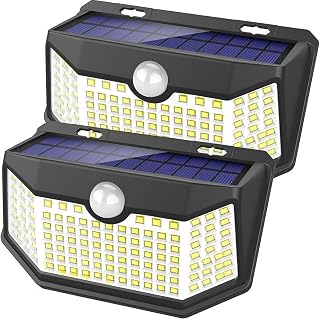 HMCITY Solar Lights Outdoor 120 LED with 3 Lighting ModesCheck price on Amazon
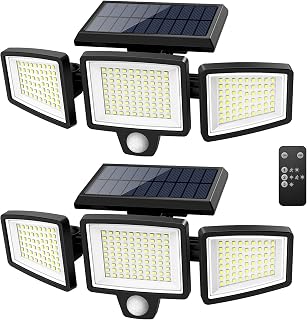 Tuffenough Solar Outdoor Lights 2500LM 210 LED SecurityCheck price on Amazon
 LEPOWER LED Security Light Motion Sensor Outdoor LightsCheck price on Amazon
 MIHANI Solar Flood Lights OutdoorCheck price on Amazon
 EZVALO Motion Sensor Closet LightsCheck price on Amazon
CoopKeeperHQ earns a commission if you buy through our links, at no added cost to you. Affiliate disclosure.
motion sensor light vs predator eyes: the short version
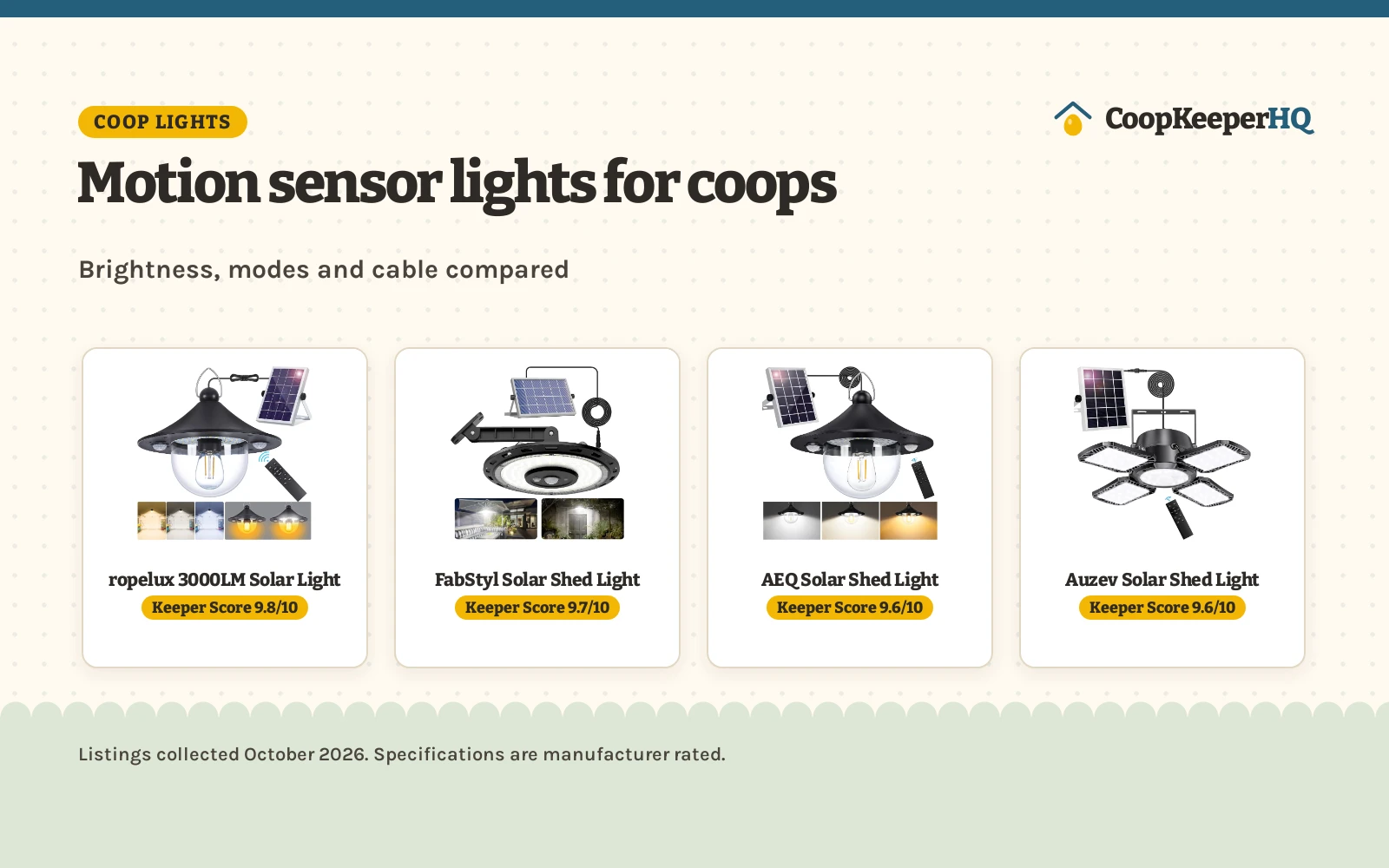
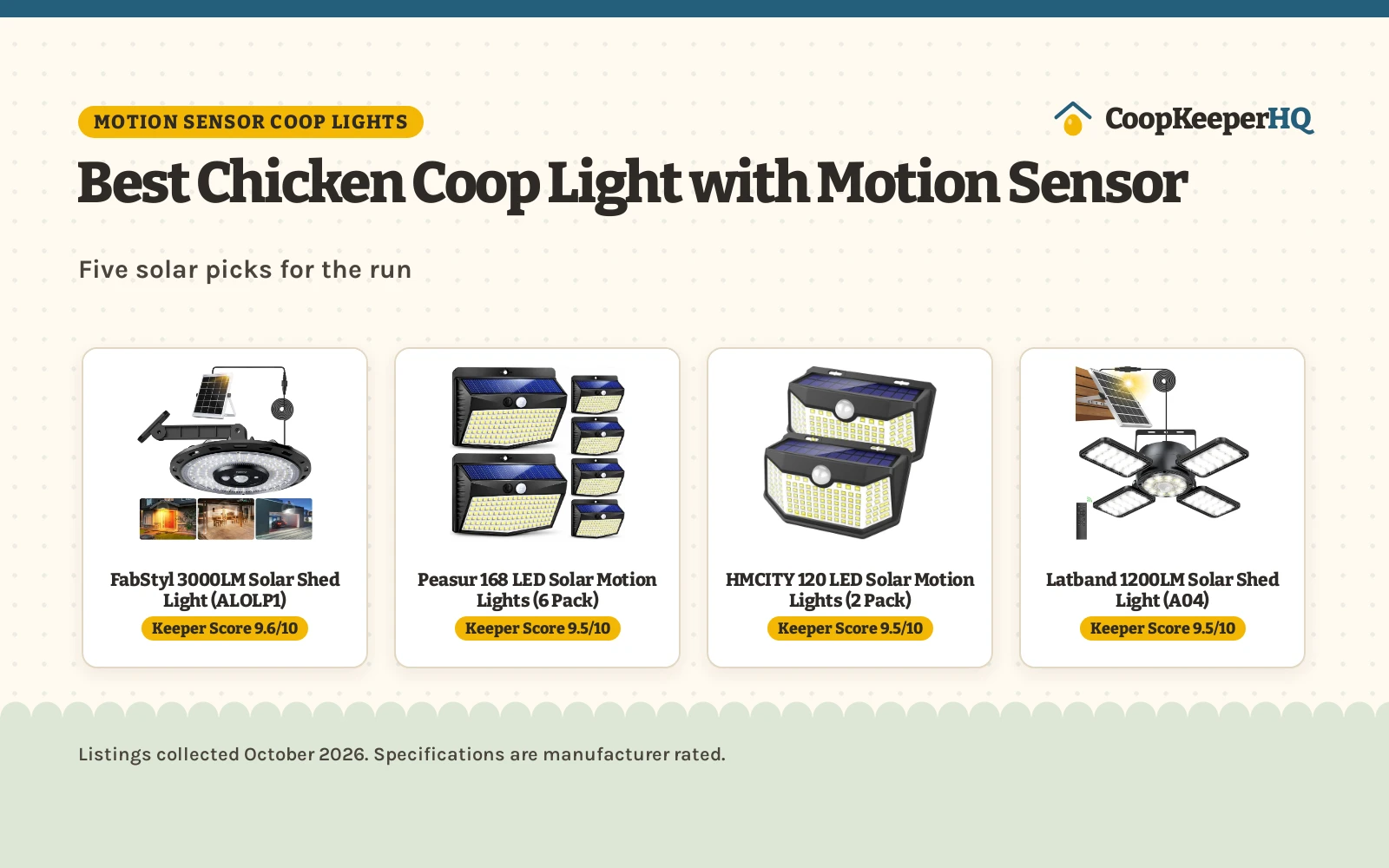
- Motion sensor lights flood the area with light when something moves. The listings show 120 LED solar models, a 210 LED 2500LM model, and a 58W 7000LM wired model with a 72 FT detection range. Light startles and exposes.
- Predator eyes are small units with blinking red LEDs that mimic the eye shine of a larger predator. They run on their own power, mount on posts or fences, and need no wiring.
- Neither replaces a fence: both are deterrents, not barriers. Hardware cloth, a solid coop and a locked door do the real work; lights and blinkers buy you the margin.
What motion sensor lights do
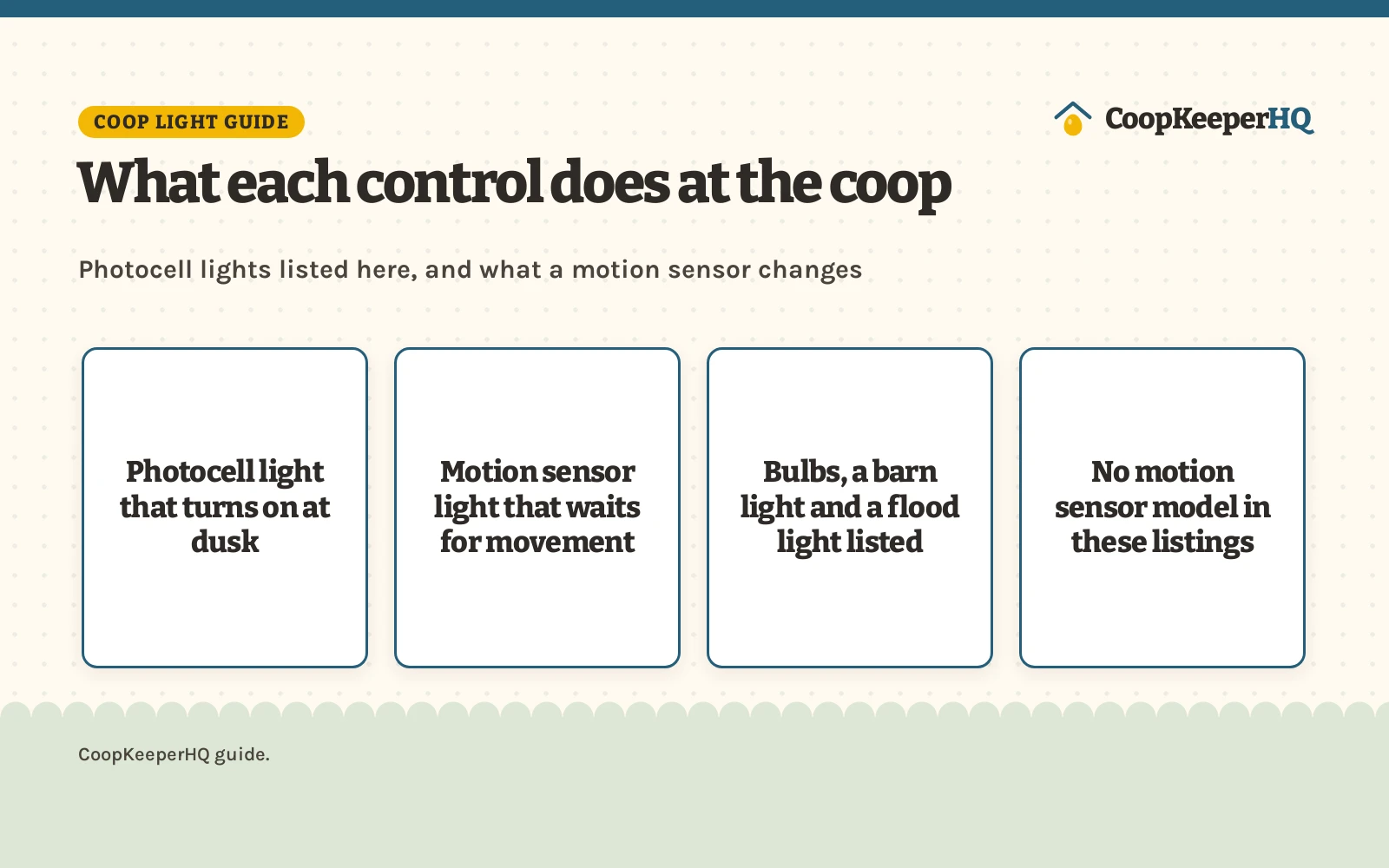
A motion sensor light watches its zone and fires the LEDs when something warm moves through it. The LEPOWER listing states a 72 FT range with a 180-degree motion sensor and 7000LM from 58W, which is security-light territory: enough to light a whole run and startle anything crossing it. The solar models are milder: the HMCITY lights run 120 LEDs with 3 lighting modes, the Aootek runs 120 LEDs with a 270-degree wide angle and a 26-foot range within a 120-degree angle, and the Tuffenough and MIHANI list 2500LM with 270-degree wide angle coverage. All six listings state IP65 waterproofing, so rain is not a concern.
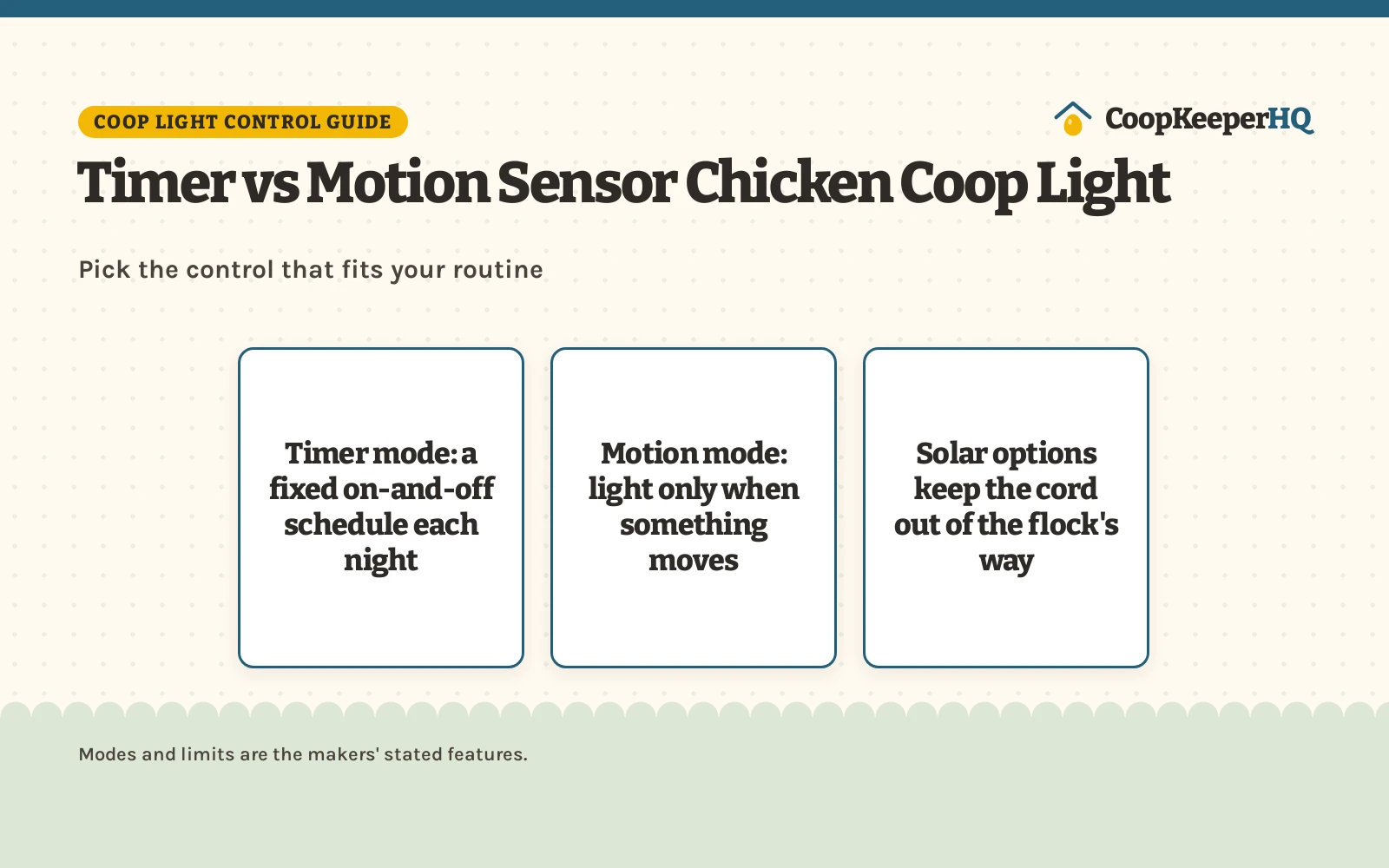
The strength of a motion light is the surprise. A raccoon or fox crossing a dark yard does not expect noon at midnight, and the sudden light both startles it and exposes it to you and your cameras. The weakness is habituation: a bold predator that learns the light never leads to consequences may start ignoring it. Solar models also depend on their charge; a week of overcast days means dimmer nights.
What predator eyes do
Predator eyes are small weatherproof units, usually solar powered, that flash red LEDs in a pattern meant to look like the eyes of a larger predator watching from the dark. You mount them around the run at predator eye height, facing outward, and they blink all night without any motion trigger. The idea is psychological: a fox or raccoon that thinks a bigger animal is already guarding the territory moves on to easier hunting.
The strength is set-and-forget coverage. There is no motion sensor to aim, no brightness to tune, and they work every night whether the sky was clear or not. The weakness is that they are a bluff, and a bluff only works until it is called. They also do nothing against a predator that hunts by day or one that has learned the area. See our Aspectek Predator Eye PRO review for one specific unit.
Which one fits your coop
Pick the motion sensor light if the coop sits near the house, where a sudden flood of light alerts you and the brightness itself is the deterrent. The 7000LM wired models suit coops with mains power nearby; the 120 LED solar models suit fence posts and run corners without wiring. Pick predator eyes if the run is remote, if you want zero-maintenance night coverage, or as a second layer behind real fencing.
Most keepers who take night protection seriously run both: lights on the coop and run corners where motion matters, predator eyes on the outer fence line as a first bluff. And neither replaces the fundamentals in our how to predator proof a chicken coop guide: hardware cloth over every opening, a solid floor or buried apron, and a door that locks against raccoons. For the full deterrent lineup, see our predator deterrent lights for chicken coop picks.
Buying advice: sizing deterrents to your coop
Start with power. The 7000LM wired models need mains nearby; if the coop has no outlet, the 120 LED solar models are the practical pick, but remember they depend on their charge, so a shaded or overcast site means dimmer nights. Match the light to the wiring you actually have.
Then match detection range to the area. The LEPOWER listing states a 72 FT range with a 180-degree sensor, which covers a whole run from one corner; the Aootek lists a 26-foot range within a 120-degree angle, which suits a single gate or coop door. Walk the perimeter at night and count the approaches a predator would use; one unit per approach is the honest math.
Mount with intent. Aim motion sensors outward at the yard and run, not into the coop windows, and set predator eyes at predator eye height facing outward around the run. All six light listings state IP65 waterproofing, so rain is not the constraint; aiming is. And budget the fundamentals first: no light or blinker compensates for missing hardware cloth or an unlocked door.
FAQ for the flock
Do motion sensor lights scare away foxes and raccoons?
Sudden bright light startles most night predators and exposes them, which is usually enough to send them elsewhere. A bold or hungry animal can habituate if the light never leads to consequences, so pair lights with solid fencing.
Do predator eyes actually work?
They are a psychological deterrent: blinking red LEDs mimic a larger predator’s eye shine. They work best as one layer among several, not as the only protection. Results vary by predator and by how bold the local animals are.
Should I use both at once?
Yes, they complement each other: predator eyes bluff on the outer fence line all night, and motion lights startle anything that gets close to the coop. Layer them over hardware cloth and a locking door.
Will a motion light bother my chickens?
Chickens sleep through brief light flashes inside a dark coop, but aim the sensor outward at the run and yard, not into the coop windows. A light that fires all night from wind-blown branches helps nobody; aim it carefully.
What is a low-cost effective night setup?
Solar motion lights on the coop corners plus predator eyes on the fence line, over hardware cloth and a locking door. The lights in the listings run from 120 LED solar models to 7000LM wired units, so match brightness to the area.
More coop guides
For more night protection, see our predator deterrent lights for chicken coop picks, the best automatic coop door for predators, and our how to predator proof a chicken coop guide.