Nipple vs Cup Chicken Waterer: Which Stays Cleaner?
A practical comparison of horizontal nipples and auto-fill cups to help you choose the cleanest, most reliable drinker for your backyard chicken coop.

On this page
Top picks at a glance
As an Amazon Associate I earn from qualifying purchases.
- 1
 Whimsii 15-pack nipple waterer9.7/10View on Amazon
- 2
 Fvlotrik 3 Gallon Automatic Chicken Waterer9.5/10View on Amazon
- 3
 Complete Set Pipeline Automatic Chicken Nipple Waterer CupsView on Amazon
- 4
 15 Pack Horizontal Chicken Waterer NipplesView on Amazon
- 5
 ZenxyHoC Baby Chick Waterer with Nipple Drinker 0.26 GalView on Amazon
- 6
 TIHOOD 30PCS Automatic Chicken Water Nipple Drinker FeedersView on Amazon
- 7
 TIHOOD 35PCS Automatic Chicken Water Nipple Drinker FeedersView on Amazon
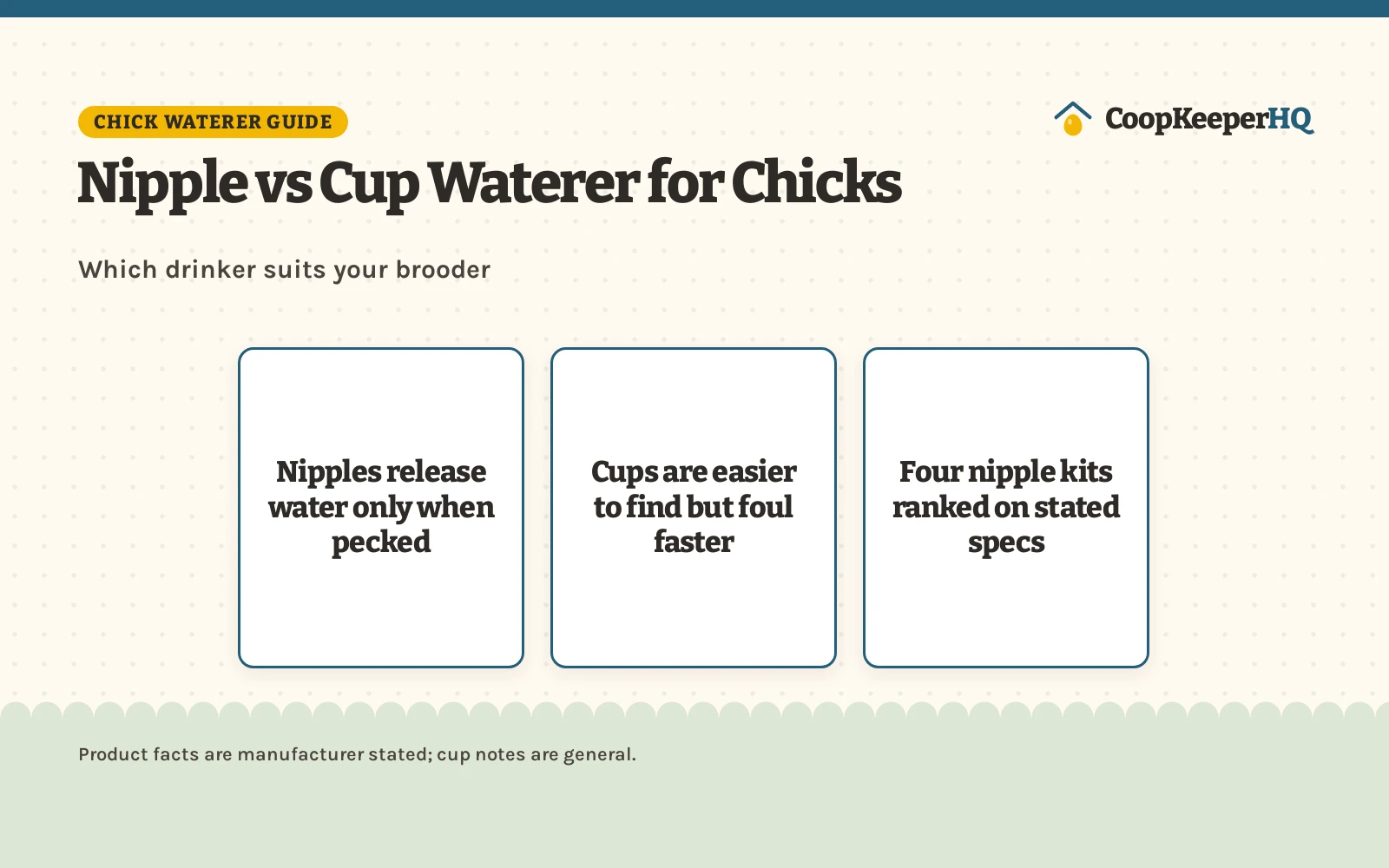
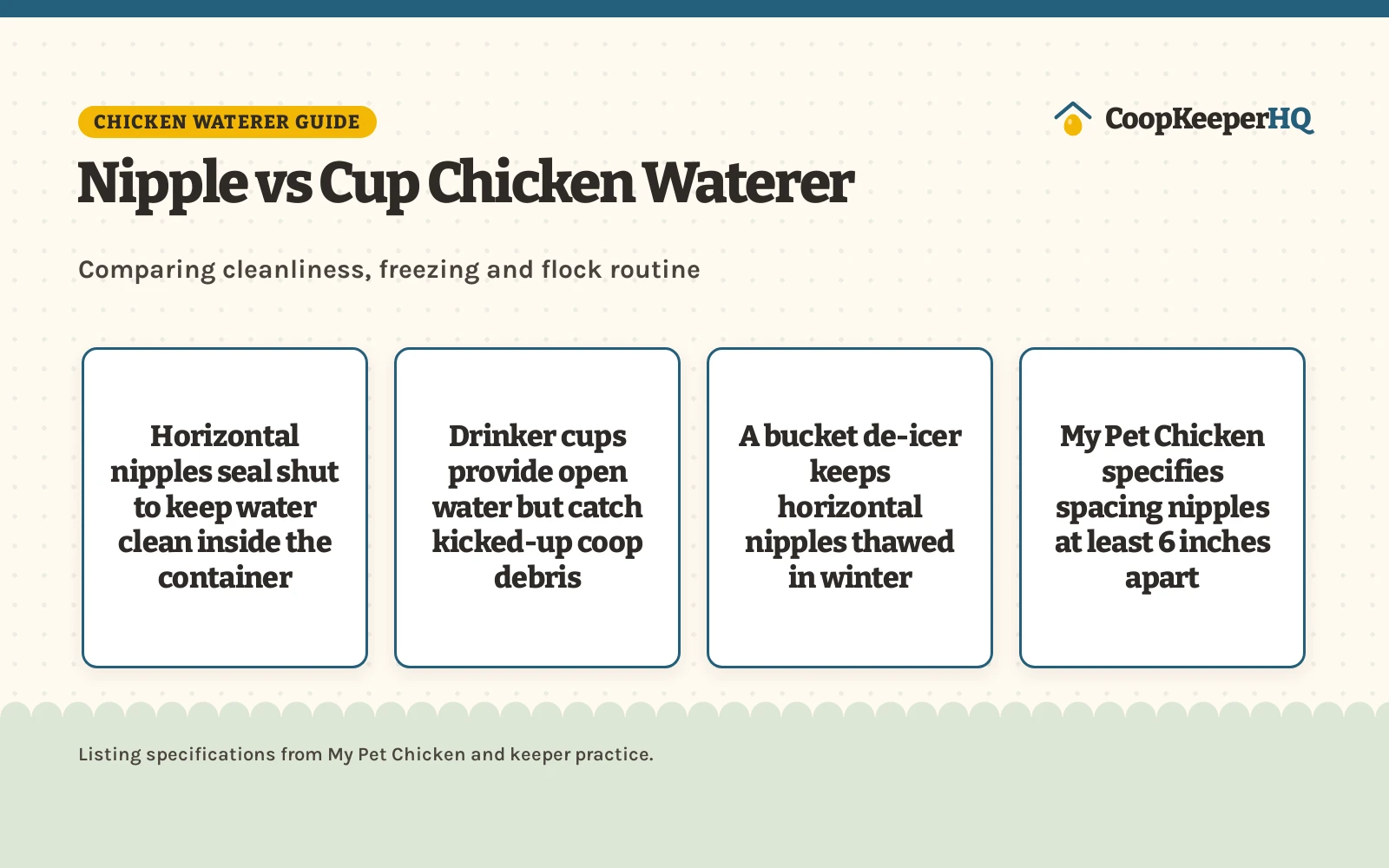
Every backyard keeper knows the chore of dumping out a slimy, bedding-filled water pan before breakfast. Chickens scratch continuously in the run, kicking wood shavings, dry soil and droppings straight into open fonts. When choosing between a nipple vs cup chicken waterer, the nipple design wins on cleanliness: horizontal side-mount nipples keep the entire water supply sealed inside the container, releasing clean drops only when a hen pecks the stainless steel pin. Automatic drinker cups offer easier flock training and faster drinking, but their open basins still collect airborne dust and scratched-up dirt that require routine cleaning.
Other options for the coop
 Complete Set Pipeline Automatic Chicken Nipple Waterer CupsCheck price on Amazon
 15 Pack Horizontal Chicken Waterer NipplesCheck price on Amazon
 ZenxyHoC Baby Chick Waterer with Nipple Drinker 0.26 GalCheck price on Amazon
 TIHOOD 30PCS Automatic Chicken Water Nipple Drinker FeedersCheck price on Amazon
 TIHOOD 35PCS Automatic Chicken Water Nipple Drinker FeedersCheck price on Amazon
CoopKeeperHQ earns a commission if you buy through our links, at no added cost to you. Affiliate disclosure.
Nipple vs cup chicken waterer: which design stays cleaner?
Cleanliness is the primary reason keepers switch away from open troughs and galvanized fonts. Between nipples and cups, horizontal side-mount nipples provide the cleanest drinking water in a backyard coop or run. Because the water remains enclosed inside a bucket, drum or pipe, dust, loose feathers and droppings cannot contaminate the supply. The valve releases water only when pecked, so no exposed surface water sits open to collect coop grime.
Automatic cups improve considerably on open pans because they draw fresh water from an enclosed container. However, the cup bowl itself sits open to coop air. Hens scratching for grain flick bedding and dry run soil directly into the cups. Chickens also dip beaks coated in feed mash into the standing water, creating a layer of sediment at the bottom of the basin. While wiping out a small cup takes only seconds compared to scrubbing a heavy font, cups cannot match the sealed cleanliness of horizontal nipples.
How horizontal nipples work and why they stay clean
Horizontal side-mount nipples install into the lower sidewall of a plastic bucket, drum or PVC pipe. Inside the plastic fitting, a stainless steel pin rests against an internal seal and spring. When a chicken pecks the exposed metal pin sideways, the movement breaks the seal momentarily, allowing water droplets to trickle along the metal stem directly into the bird’s beak. As soon as the hen withdraws her beak, the internal mechanism reseats the pin, closing the valve tight.
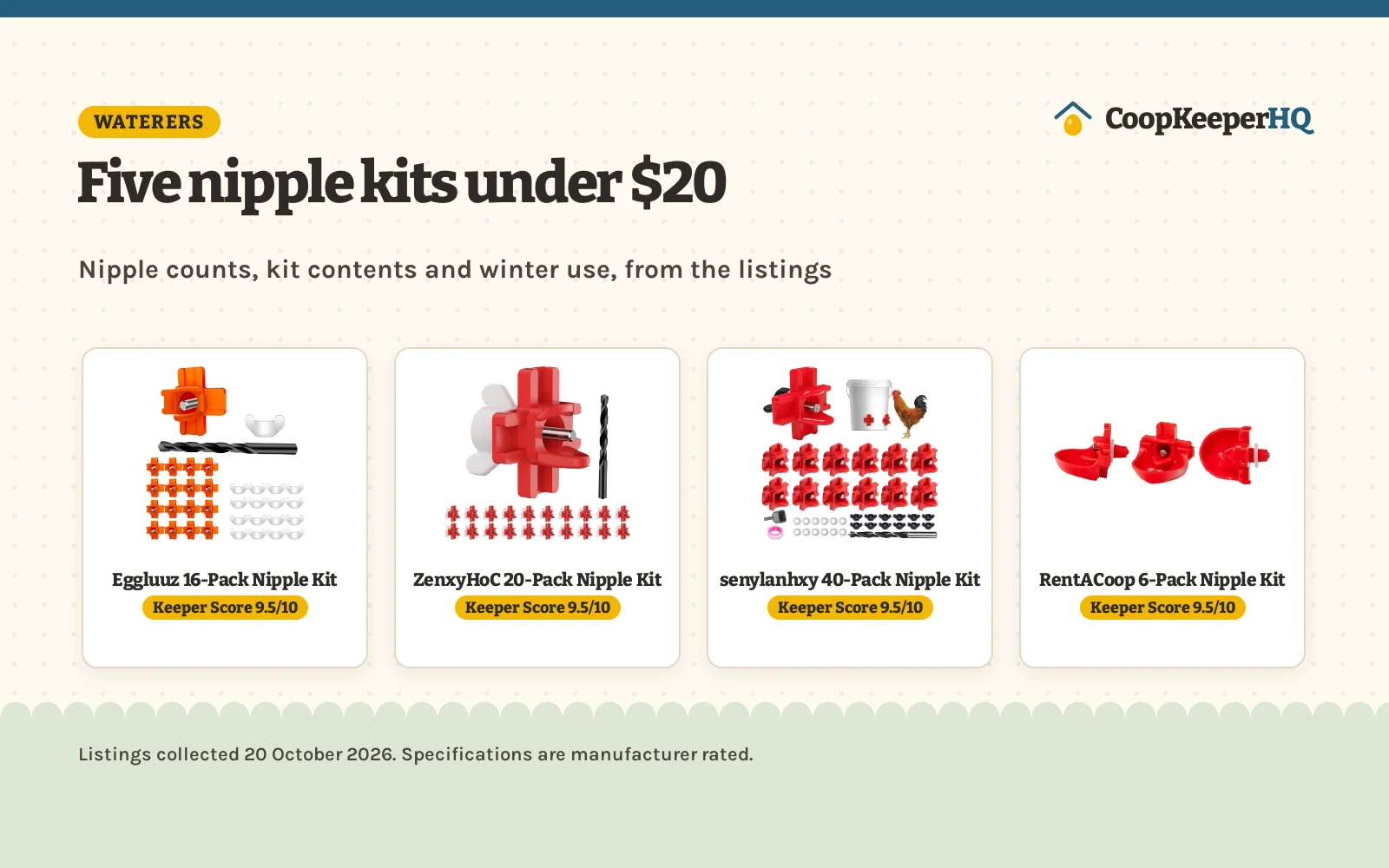
Because the valve mounts on the container sidewall rather than pointing straight down from the bottom, it stays cleaner than older vertical drip designs. Chickens cannot bump it accidentally while walking beneath the bucket, and roosting birds cannot soil the valve from above. Listings from Eggluuz, Lil’Clucker and ZenxyHoC specify a 5 gallons capacity for their side-mount nipple kits, designed for mounting on standard buckets. For flock sizing, the senylanhxy listing recommends 3 chickens aged 2 weeks or older share one nipple, giving keepers a concrete reference for planning valve counts around a container.
How automatic drinker cups work and why they catch debris
Automatic drinker cups feature a small plastic bowl attached to a supply line. Depending on the design, water flow is regulated either by a buoyant float that refills the basin automatically as water is consumed, or by a trigger paddle that releases water when a chicken pecks it. In both styles, water flows in by gravity from the supply container.
The main advantage of cups is that chickens can see the water and drink naturally from a pool. The trade-off is that open water inevitably gathers coop debris. Scratching hens flick shavings into the basin, and outdoor runs expose the cups to windblown dust and fallen leaves. Hen’s Choice offers a 1L (32 oz) drinker that illustrates this choice, providing interchangeable cup and nipple fittings for cage and wall mounts. To compare standalone cup hardware for DIY builds, see our guide to water cups for chickens.
Flock training and ease of learning
When introducing a new drinker to your flock, cups require very little training. Chickens spot the standing water immediately and begin drinking without hesitation. With trigger-style cups, curious pecks at the brightly colored tab quickly teach the birds how water refills the basin.
Horizontal nipples require a brief learning period because chickens do not instinctively associate a metal pin with drinking water. The My Pet Chicken listing notes that training may take a day or so of several attempts. Keepers can speed up adaptation by tapping each metal pin so a droplet hangs from the tip to attract the flock. Manufacturer guidelines on age vary: My Pet Chicken notes that its heavy-duty nipples are not suitable for chicks during their first week of life due to the force required to depress the pin; Eggluuz and senylanhxy list horizontal nipples for chicks aged 2 weeks or older; and ZenxyHoC specifies its horizontal drinker for birds over 7 weeks old. Removing competing open fonts during training encourages the flock to learn the new valves quickly. To compare valve styles, see our guide to nipple drinkers for chickens.
Winter freezing and heated water setups
Freezing weather highlights an important practical difference between both drinkers. Automatic cups hold standing water in thin plastic bowls that freeze solid rapidly during cold weather. Because the cup extends away from the main container, a heated bucket cannot keep the water inside the exposed cup from freezing, and expanding ice can warp the plastic or jam the valve.
Horizontal nipples perform much better in freezing conditions when paired with a heated supply. The My Pet Chicken listing states that horizontal nipples will not freeze during winter provided you heat your water supply, because no water is stored in an external cup. When installed in a bucket equipped with a submersible de-icer, heat circulating through the reservoir keeps the stainless steel pin and valve seat thawed at the container wall. In unheated setups, however, water at the valve will freeze in sub-freezing weather just like any other drinker. If your coop faces freezing winters, see our guide to the best heated chicken waterer options to maintain ice-free water.
Water pressure, bucket builds and leak risks
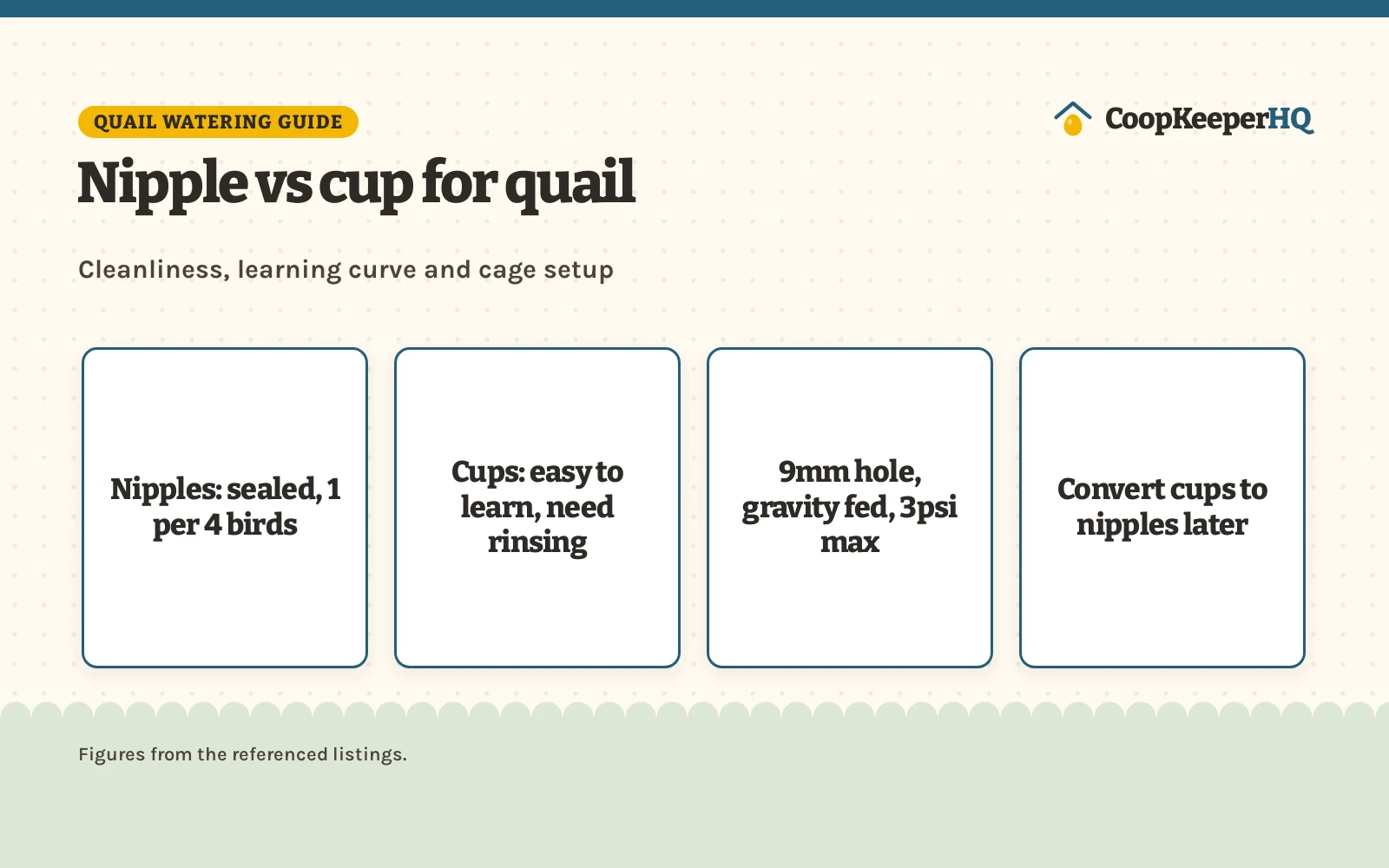
Both horizontal nipples and auto-fill cups are engineered for low-pressure gravity systems. Connecting either drinker directly to household water line pressure will blow past the internal seals and flood your coop or run. Instead, both styles connect to covered buckets, barrels or gravity-fed PVC loops.
Preventing leaks comes down to clean installation and debris control. The My Pet Chicken listing specifies using an 11/32 drill bit to create holes in a bucket, keeping nipples a minimum of 6 inches apart. Wrapping threads with sealing tape and tightening the included rubber washer and wingnut creates a watertight seal against curved bucket walls. With cups, leaks typically occur when wood shavings, fine sand or mineral scale lodge beneath the valve seat, holding it slightly open. Keeping the water container covered and positioning drinkers above litter height prevents most valve sticking issues. For whole-coop plumbing plans, read our guide on automatic chicken waterer systems.
Water flow rate and summer hydration
During hot summer months, chickens consume significantly more water to regulate body temperature through panting. When temperatures climb, flow rate and drinking speed become vital flock considerations.
Automatic cups excel in high heat because hens can submerge their beaks, scoop water and drink deeply in seconds. Horizontal nipples dispense water drop by drop, requiring chickens to peck repeatedly to quench their thirst. In warm weather, a flock with too few nipples may crowd around the drinker, with subordinate birds waiting while dominant hens drink. If you choose nipples for summer, install enough ports around the bucket so multiple hens can drink simultaneously without competition.
Daily coop routine and cleaning chores
The right drinker depends heavily on your daily coop routine. If your goal is to spend less time scrubbing drinkers and more time enjoying your flock, horizontal nipples offer a clear advantage. Because the reservoir is completely sealed, the drinking water stays clean until the container runs dry. Keepers only need to check the water level and periodically rinse out the bucket interior to prevent biofilm.
Drinker cups reduce chores compared to open pans, but they still require daily visual checks. If scratching birds kick pine shavings into a cup, you must wipe or rinse the debris out so the water stays appetizing. A small bottle brush kept near the coop makes quick work of cleaning fouled cups. For a wider look at feeding and watering gear, explore our full feeders and waterers hub.
A simple waterer setup checklist
- Horizontal nipples provide maximum cleanliness by keeping the water supply completely sealed inside the container
- Automatic cups allow faster drinking and intuitive flock training but collect small amounts of coop debris
- Mount drinkers at bird shoulder height to keep scratching hens from kicking litter near the drinking stations
- The My Pet Chicken listing specifies using an 11/32 drill bit and spacing nipples a minimum of 6 inches apart on a container
- The senylanhxy listing recommends 3 chickens aged 2 weeks or older share one nipple to avoid crowding
- Use a secure lid on buckets and drums to prevent airborne dust, feathers and sunlight from reaching the water
For more layout tips on keeping drinkers tidy in the coop and run, see our guide on chicken waterer ideas.
How much feed your flock eats a day and a month, how long a bag lasts, and what it costs.
Wash your hands after handling birds, eggs or equipment, supervise children around the flock, and check local rules on flock size and roosters before you buy. For sick birds, call a poultry veterinarian or your state extension office. See CDC backyard poultry guidance. Read our Safety Disclaimer.
FAQ for the flock
Which stays cleaner, chicken waterer nipples or cups?
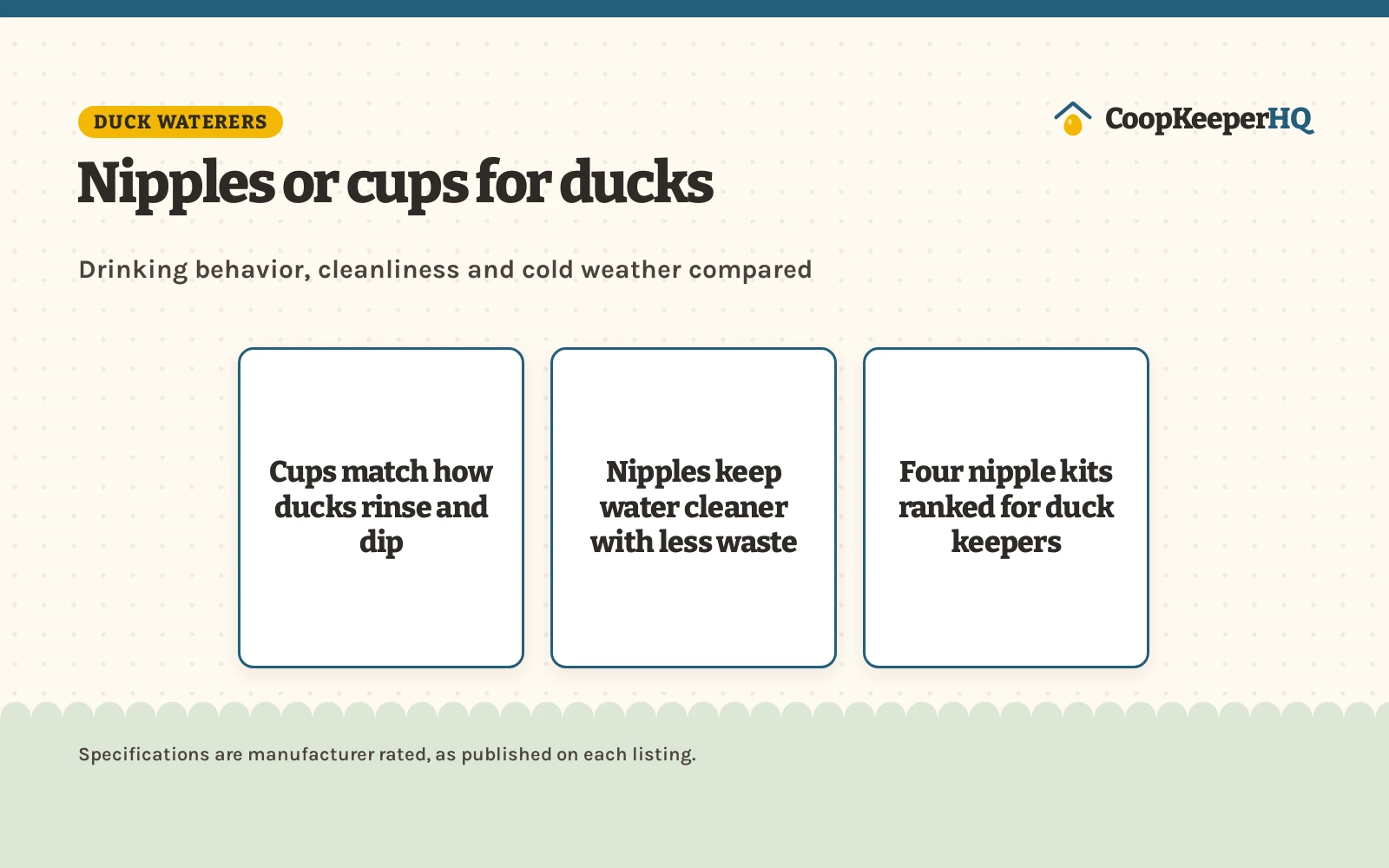
Horizontal waterer nipples stay cleaner than cups because the closed pin mechanism seals the water inside the bucket. Dirt, bedding and droppings cannot enter the reservoir. Automatic cups hold standing water in an open basin, which collects airborne dust and scratched-up litter.
Can baby chicks use water nipples?
Manufacturer recommendations vary by design. The My Pet Chicken listing notes that its heavy-duty nipples are not suitable for chicks during their first week of life due to the force needed to depress the pin. However, listings from Eggluuz and senylanhxy indicate chicks aged 2 weeks or older learn to peck nipples easily, while ZenxyHoC specifies its horizontal drinker for birds over 7 weeks old. For newly hatched chicks, shallow brooder fountains or specialized starter drinkers are safer.
Do horizontal chicken nipples freeze in winter?
Horizontal nipples do not store water in an exposed cup, but water at the valve will freeze in sustained sub-freezing weather unless the water supply is heated. The My Pet Chicken listing notes that horizontal nipples will not freeze during winter provided you heat your water supply, such as by using a bucket with a submersible de-icer.
How many chickens can share one water nipple?
Manufacturer recommendations vary; for example, the senylanhxy product listing recommends 3 chickens share one nipple. Spacing multiple nipples around a bucket ensures timid hens can drink freely without dominant flock mates blocking access.
Why do chicken watering cups leak?
Watering cups typically leak when dirt particles, wood shavings or mineral grit get trapped beneath the rubber seal or float valve, preventing it from closing completely. Rinsing the cup valve and keeping the main reservoir covered prevents sediment from clogging the mechanism.
More coop guides
- Nipple Drinkers for Chickens: 5 Top Picks Compared (2026)
- Water Cups for Chickens: 5 Automatic Drinker Kits Compared (2026)
- Best Heated Chicken Waterer: Picks That Will Not Freeze
See the feeders and waterers category and our guide on automatic chicken waterer systems.