Chicken Waterer Ideas: Clean Water Setups for Your Coop and Run
Practical chicken waterer ideas covering gravity buckets, automatic cups, horizontal nipples and heated drinkers to keep coop water clean and fresh.

On this page
Top picks at a glance
As an Amazon Associate I earn from qualifying purchases.
- 1
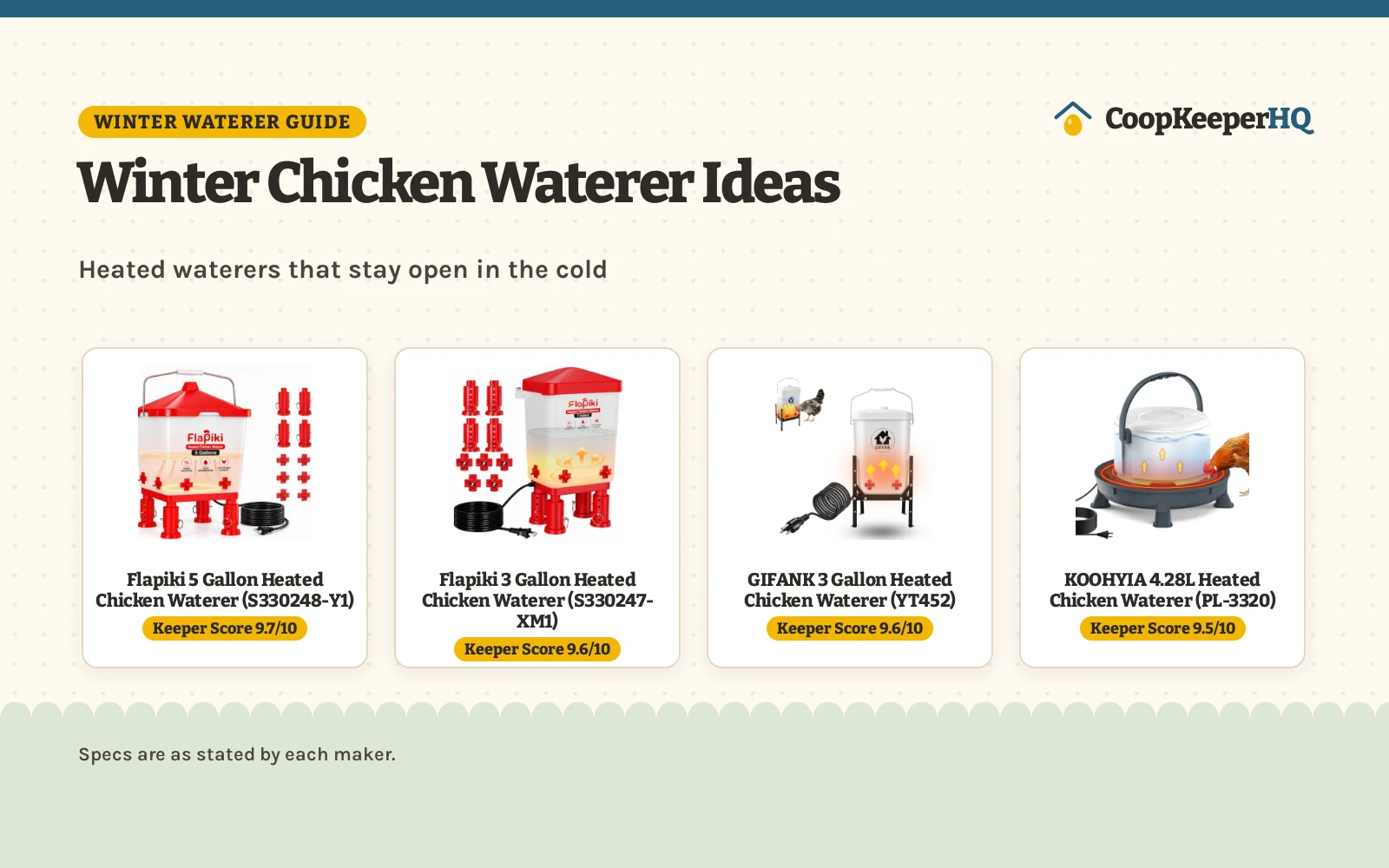
 Flapiki 5 Gallon Heated Chicken Waterer9.7/10View on Amazon
- 2
 Flapiki 3 Gallon Heated Chicken Waterer9.6/10View on Amazon
- 3
 GIFANK 3 Gallon Heated Chicken Waterer with Heater9.6/10View on Amazon
Hauling heavy water buckets to the coop every morning gets old quickly, especially when chickens scratch dirt and bedding straight into an open pan. Backyard flocks need steady access to clean water that stays free of debris throughout the day. Practical chicken waterer ideas focus on closed reservoirs, elevated drinkers, automatic cups, horizontal nipples, and gravity-fed systems that keep drinking stations clean and cut down on daily chore time.
CoopKeeperHQ earns a commission if you buy through our links, at no added cost to you. Affiliate disclosure.
Chicken waterer ideas: start with clean and elevated water
Open water pans and ground-level troughs cause constant headaches in a chicken coop. Chickens scratch backward while foraging in bedding, kicking wood shavings, spilled feed, and droppings straight into exposed drinking water. Standing water contaminated with coop litter fouls quickly, forcing keepers to dump and scrub pans multiple times a day.
The foundation of every good watering setup is elevating the drinking point. Raising a drinker so the drinking cups or nipples sit level with the flock’s backs stops scratching debris from landing inside. Choosing a closed reservoir rather than an open pan keeps dust and airborne fluff out of the main supply. If you are setting up your run layout alongside coop housing, our chicken coop waterer overview outlines how different drinker shapes fit tight quarters.
Gravity bucket waterers for simple daily chores
Large plastic or metal buckets fitted with drinking valves make dependable gravity-fed reservoirs. A sealed lid prevents dust, wild bird droppings, and leaves from contaminating the water, while gravity feeds water down to drinker fittings along the base. Because the supply stays enclosed, keepers can fill the container from the top without disassembling the entire unit.
Drinker sizes vary based on flock size and routine. For a smaller setup, Pickmesh lists a 1 gallon plastic waterer in a 2 pack. Flocks of moderate size benefit from larger reservoirs that stretch refill intervals. Aowoil lists a 3 gallon stainless steel container with 4 water cups and 4 horizontal nipples designed to supply 6 to 8 chickens. For larger backyard flocks, Tgeyd lists a 4.2 gallon drinker, while ZINZINULER lists a 9 gallon waterer bucket with 5 watering cups and 5 chicken waterer nipples. Using a high-capacity reservoir means your flock has plenty of water even during warm afternoons when consumption increases.
Automatic watering cups for on-demand drinking
Automatic drinker cups provide a small bowl of standing water that refills automatically as birds drink. Unlike open dishes, these cups present only a tiny surface area, which dramatically cuts down on litter contamination. Chickens take to cups readily because they can see standing water right in the bowl.
Different cups use different valve mechanisms. Some rely on a float valve, while others utilize a balanced lever. For instance, the DEZHXHE waterer includes an intelligent tilt valve where the cup tilts up to open the valve when the water level drops, and tilts down to shut off the flow once the cup fills. If debris ever causes a valve to stick, turning the valve mechanism frees trapped grit. If you want to build a customized setup from a bucket or pipe, our water cups for chickens guide compares different drinker cup designs.
Horizontal poultry nipples to prevent bedding contamination
Horizontal side-mount poultry nipples offer the cleanest possible drinking system for a chicken coop. Unlike downward-pointing vertical nipples that often drip when bumped, horizontal nipples incorporate an internal spring and O-ring that seals tightly against water pressure. When a chicken pecks the metal pin sideways, water releases directly into its beak, leaving zero standing water exposed to coop dust.
Horizontal nipples keep bedding bone-dry underneath the drinker, which reduces coop humidity and discourages odors. Some systems combine both nipples and cups on a single bucket. For example, Aowoil equips its 3 gallon stainless steel drinker with 4 horizontal nipples alongside 4 automatic cups, giving birds access to both drinking methods. For keepers building custom setups, DEZHXHE supplies 10 bonus nipple drinkers with its 11 liter waterer system. You can explore pipeline fittings in our nipple drinkers for chickens guide.
Hanging waterers to clear run and coop floor space
Floor space in a chicken coop and run is valuable real estate. Setting heavy buckets directly on the ground takes away scratching area and creates dark corners where damp bedding can collect. Suspending a drinker from coop rafters or run fencing solves both problems at once.
A suspended waterer swings slightly when bumped rather than spilling, and keeping it off the ground prevents birds from kicking dirt into the drinking ports. DEZHXHE provides two S-hooks with its hanging buckets, along with detachable legs that feature 4 long legs and 4 short legs so keepers can either suspend the bucket from fencing or adjust its standing height as chicks grow into adult hens. Tgeyd lists a 4.2 gallon drinker with a molded handle designed to hang directly on wire mesh fencing. If you prefer an overhead setup, see our hanging chicken waterer guide for hardware tips.
Wall-mounted drinkers to prevent tipping
In compact coops where hanging from a central ceiling hook is impractical, mounting a drinker directly to a wall or run post provides exceptional stability. Chickens are active birds that flap, jump, and crowd around resources, and an unanchored bucket can get knocked askew. Wall brackets hold the container firmly in place at your chosen height.
Fastening a drinker to coop studs or fence wire keeps the waterer steady during vigorous drinking. Tgeyd features a flat-back wall-mountable design with screw slots for its 4.2 gallon reservoir, holding the container flush against the wall so birds cannot roost on the back edge. APlayfulBee includes 4 mounting bolts with its automatic drinking bowl to anchor the unit firmly to wood walls or masonry. Choosing a wall-mounted setup keeps floor litter completely clear, making bedding changes much faster during coop cleaning.
Float-valve drinking systems for continuous supply
Carrying water out to the flock every day can be demanding, particularly during heatwaves. Automatic float-valve systems connect a drinking basin to a low-pressure rain barrel, gravity reservoir, or regulated garden line, keeping fresh water flowing without daily refills.
A float valve functions just like a livestock trough: as birds drink, the float drops, opening the inlet valve; once water reaches the proper depth, the buoyant float rises and shuts the seal. APlayfulBee lists a 2.5 liter automatic animal drinking bowl constructed from 304 stainless steel that uses a float valve mechanism and includes a bottom drain plug for quick rinsing. For larger flocks or mixed poultry yards, stainless steel construction resists pecking and weathering while remaining easy to wipe down. Keepers interested in assembling their own pipeline setup can review our automatic chicken waterer DIY guide.
Winter waterer solutions to stop freezing
Freezing winter weather presents the toughest watering challenge for chicken keepers. When temperatures drop below freezing, open pans turn into solid ice blocks within hours. Chickens cannot drink frozen water, and dehydrated birds stop laying eggs and struggle to maintain body warmth. Breaking ice with a hammer cracks plastic containers and wastes valuable time.
A dedicated heated waterer or heated base solves the problem cleanly. ZenxyHoC lists a 3.6 gallon heated chicken waterer bucket equipped with 4 water nipples and a 10 foot power cord. Its built-in thermostat automatically powers on when ambient temperature falls below 35°F and disconnects when the temperature approaches 77°F, ensuring water stays liquid without unnecessary power draw. An anti-roost cone on the lid prevents birds from perching on top and fouling the water. Always plug coop heating gear into a GFCI outlet and protect cords from inquisitive beaks. For comparisons of winter equipment, consult our heated chicken waterer guide.
Daily maintenance routine for flock waterers
Even the smartest watering system requires a sensible maintenance habit to keep the flock healthy and hydrated. Developing a quick morning and evening routine prevents clogs, leaks, and grime before they interrupt your flock’s water supply.
During your morning visit, glance at the water level and check that drinking nipples or cups operate smoothly. Tap the float or valve pin lightly to confirm water flows freely without sticking. If dust or feed has collected in drinker cups, swish them with a splash of clean water or a small brush. In summer, check that water reservoirs stay sheltered from direct baking sunlight to prevent algae growth and keep drinking water cool. In winter, verify that electrical connections remain dry and de-icing elements are functioning. If you ever observe an individual bird acting weak, lethargic, or refusing water, consult a poultry vet or your state extension office for guidance.
A simple chicken waterer checklist
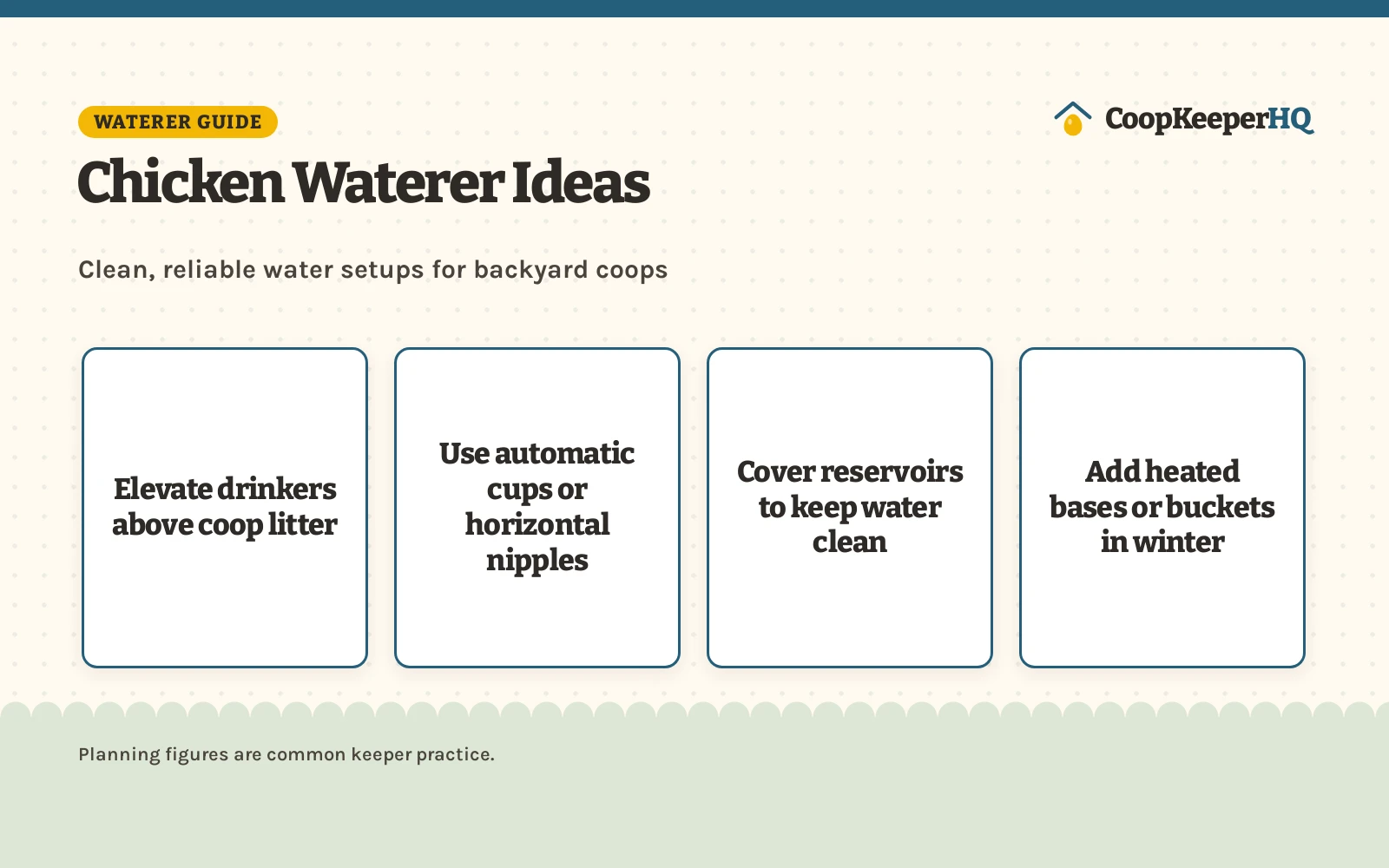
- Elevate drinker ports to the height of the flock’s backs to keep bedding out
- Keep reservoirs covered with tight lids to block dust and wild bird droppings
- Check cups and horizontal nipples regularly for smooth valve operation
- Hang or wall-mount containers to save coop floor space and prevent tipping
- Provide frost protection or heated buckets when temperatures drop below freezing
- Connect all electrical de-icing equipment to a protected GFCI outlet
For more equipment choices and setups, browse our feeders and waterers hub.
Birds, breed size, run time and climate in; coop floor, run space, roost length and nesting boxes out.
Wash your hands after handling birds, eggs or equipment, supervise children around the flock, and check local rules on flock size and roosters before you buy. For sick birds, call a poultry veterinarian or your state extension office. See CDC backyard poultry guidance. Read our Safety Disclaimer.
FAQ for the flock
What is the cleanest type of chicken waterer?
A closed reservoir fitted with horizontal poultry nipples is the cleanest watering setup for a coop. Because the water remains completely sealed inside the container and dispenses only when birds peck the stainless steel pin, shavings, dust, and droppings cannot enter the drinking supply.
Are horizontal nipples better than water cups for chickens?
Horizontal nipples provide superior cleanliness because there is no open pool of water to collect dirt. However, automatic cups are easier for young or timid birds to learn because standing water is visible in the bowl. Many keepers use both options successfully.
How do I keep chicken water from freezing in winter?
Use a thermostatically controlled heated waterer bucket or place a metal drinker on an electric heated base. The heating element activates when ambient temperatures drop near freezing, keeping water liquid. Always plug winter heating devices into an outdoor GFCI outlet.
How high off the ground should a chicken waterer be placed?
Position waterer cups or nipples roughly level with the backs of your chickens. This height allows birds to drink comfortably while preventing them from scratching dirt, bedding, and coop litter into the drinking ports.
Can ducks and chickens share the same waterer?
Ducks require deeper water to submerge their bills and nostrils, which quickly fouls shallow chicken watering cups and nipples with mud. While chickens can drink from duck stations, keeping separate drinkers designed for each species helps keep the chicken water clean.
More coop guides
- Automatic Chicken Waterer DIY: Step-by-Step Setup Guide
- Best Heated Chicken Waterer: Picks That Will Not Freeze
- Best Chicken Coop Waterer: 5 Top Picks for Backyard Flocks (2026)
See the feeders and waterers hub and our chicken coop setup guides.