Solar Animal Repeller vs Motion Sprinkler: Which One Should You Buy?
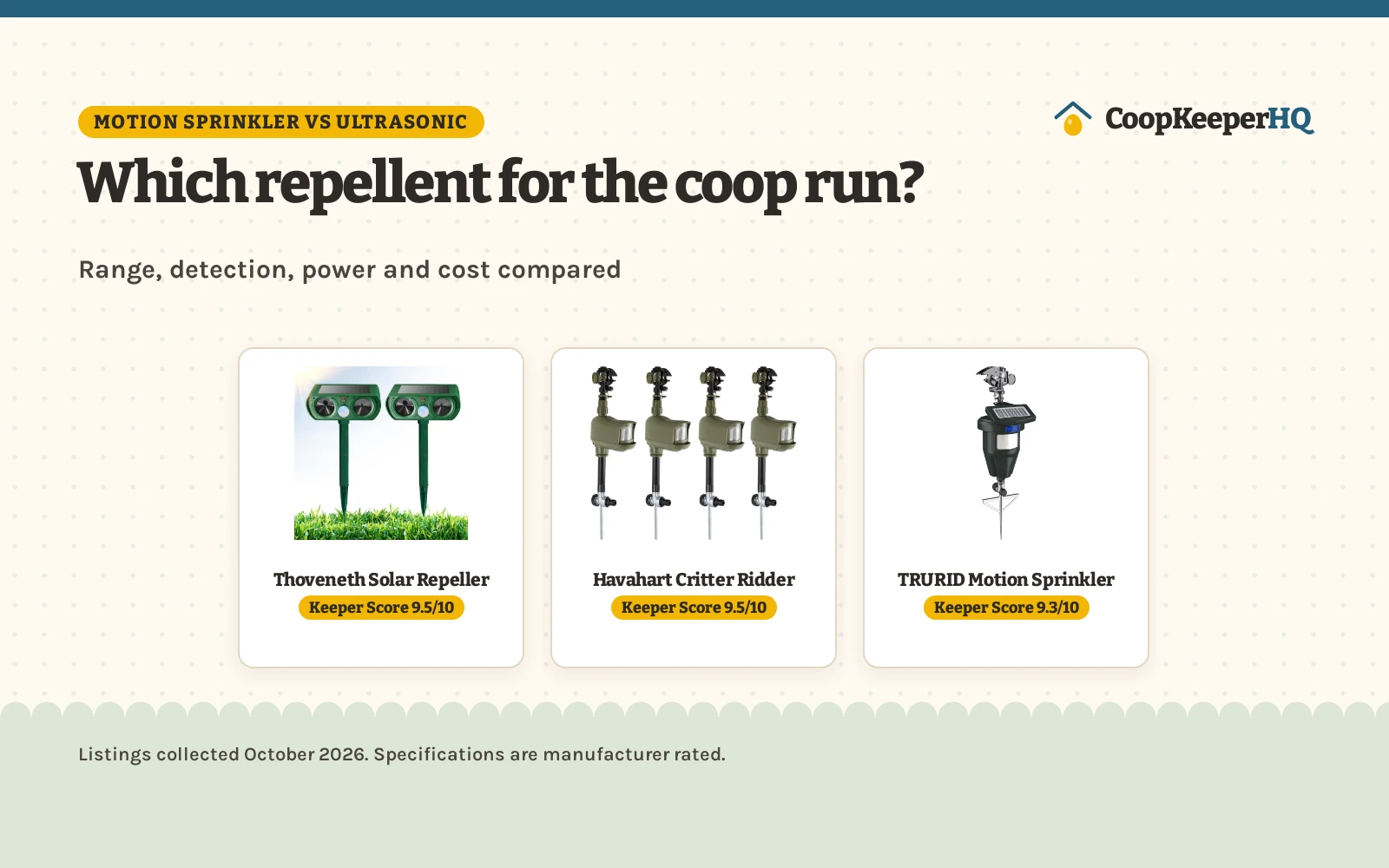
Solar repellers answer motion with sound and light while motion sprinklers answer with water, and the choice depends on sun, water supply and the animals involved.

On this page
Top picks at a glance
As an Amazon Associate I earn from qualifying purchases.
- 1
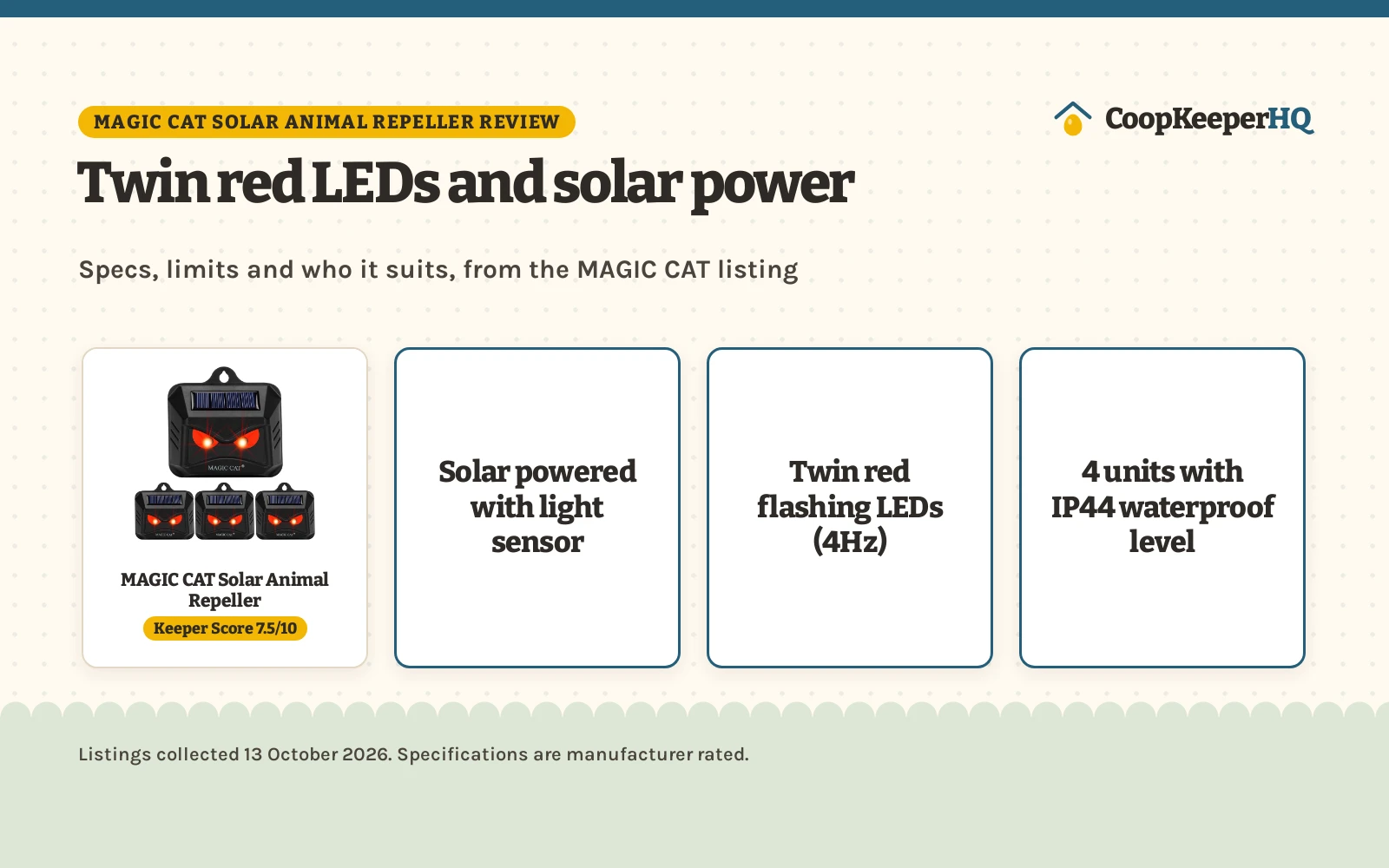
 MAGIC CAT Solar Animal Repeller Outdoor Predator Deterrent9.5/10View on Amazon
- 2
 Peepst 2 Packs Solar Motion Activated Sprinkler Animal9.6/10View on Amazon
- 3
 Motion Activated Animal Repeller with Water SprinklerView on Amazon
- 4
 G-Jyuncyou 2 Packs Solar Ultrasonic Animal Repeller OutdoorView on Amazon
- 5
 4 Pack Solar Nocturnal Animal Repeller OutdoorView on Amazon
- 6
 2026 Upgraded Solar Ultrasonic Animal Repeller OutdoorView on Amazon
- 7
 8 Pack Solar Nocturnal Animal Repeller Predator Eyes CoyoteView on Amazon
- 8Solar Animal Motion Activated Sprinkler Deer Repeller CatView on Amazon
A solar animal repeller answers motion with sound and light, while a motion sprinkler answers with a burst of water, so the solar animal repeller vs motion sprinkler choice comes down to water, sun and where the device sits. A repeller suits a dry spot with sun and no hose nearby, while a sprinkler suits a garden bed with a hose already in reach and plants that welcome a splash.
Other options for the coop
 Motion Activated Animal Repeller with Water SprinklerCheck price on Amazon
 G-Jyuncyou 2 Packs Solar Ultrasonic Animal Repeller OutdoorCheck price on Amazon
 4 Pack Solar Nocturnal Animal Repeller OutdoorCheck price on Amazon
 2026 Upgraded Solar Ultrasonic Animal Repeller OutdoorCheck price on Amazon
 8 Pack Solar Nocturnal Animal Repeller Predator Eyes CoyoteCheck price on Amazon
 Solar Animal Motion Activated Sprinkler Deer Repeller CatCheck price on Amazon
CoopKeeperHQ earns a commission if you buy through our links, at no added cost to you. Affiliate disclosure.
Solar Animal Repeller vs Motion Sprinkler at a Glance
| Solar animal repeller | Motion sprinkler | |
|---|---|---|
| What it does on motion | PIR units: ultrasonic sound and flashing LED strobe lights; mole stakes: timed underground pulses | A burst of water |
| Power | Solar panel with a rechargeable battery | Battery power for the sensor and valve, plus a hose water supply |
| What it needs | Direct sunlight for charging, and a stake or hanging spot | A hose in reach, and ground that can get wet |
| Detection range | PIR units: up to 30 feet, with a 150 degree angle; mole stakes: no motion detection, spaced every 70 feet | No sprinkler listing is featured here, so no range is stated |
| Best for | Dry yards, gardens and coop surroundings | Garden beds where water is welcome |
| Watch out for | Needs sun to charge | Wets paths and people as well as animals |
The Solar Repellers in This Guide
All four listings in this guide are solar repellers, listed here from the two-unit kit to the most specialized one.
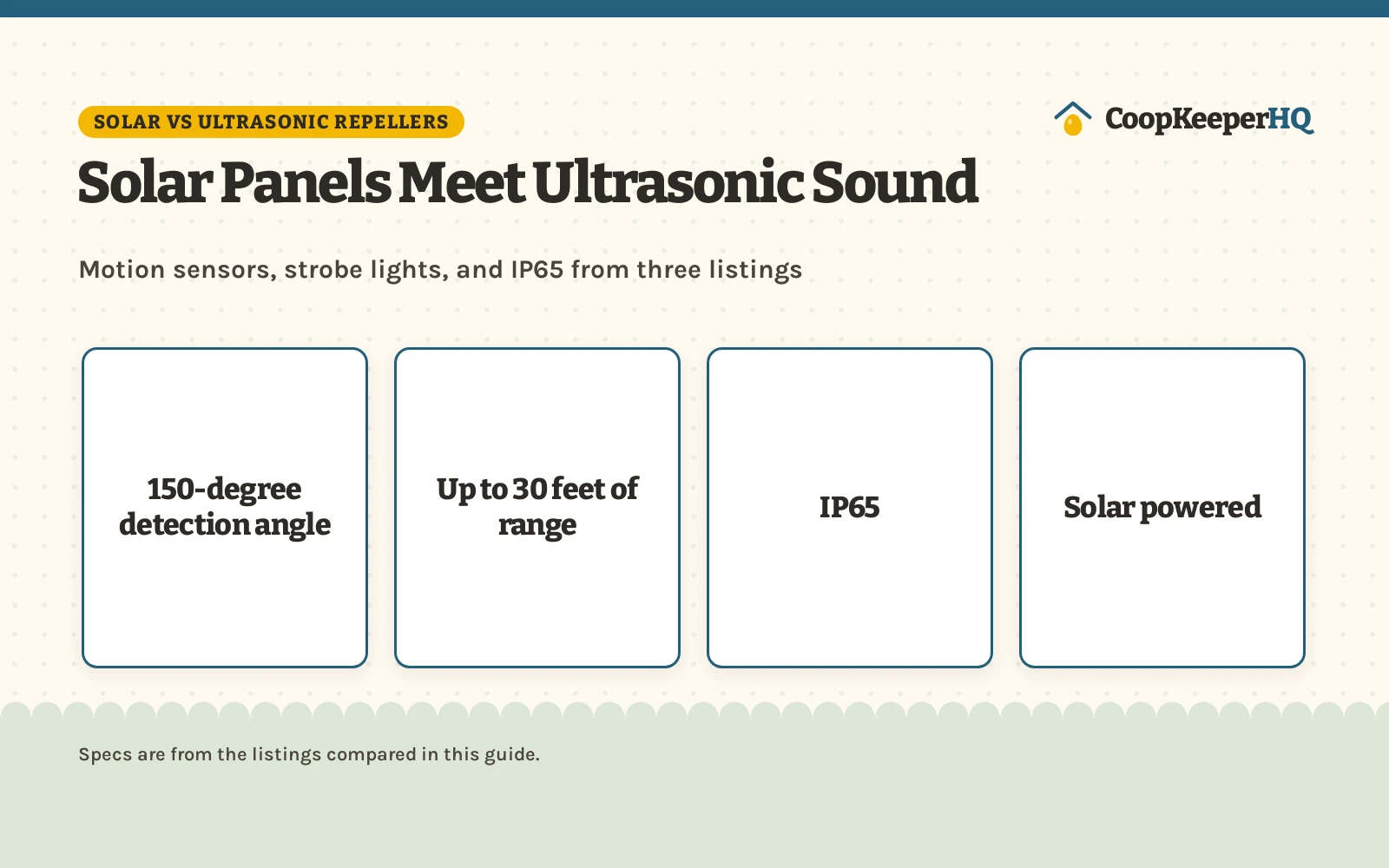
CKCOEO 2-pack. The top-ranked listing here is a 2-pack of solar ultrasonic repellers with an infrared detection angle of up to 150 degrees and a detection range of 25-30 feet. On motion, the units emit ultrasonic sound and flashing LED strobe lights, and the maker lists deer, cat, dog, squirrel, rabbit and raccoon among the target animals. The units are IP65 waterproof in durable ABS material, sit about 9-10 inches above the ground on a stake or hang from trees or fences through two hanging holes, and the first charge takes 2 days in direct sunlight. A blue light means charging and a red light means working, and each activation runs for 15s, with sound waves for 2.5s and LED flashing at the start. It suits a keeper covering two spots, or one spot plus a spare; a keeper who needs only one unit should look at the 1-pack version below.
Grrwz 1-pack. The second listing is a single solar ultrasonic repeller with a PIR motion sensor that detects visitors from up to 30 feet away across a 150 degree zone. On detection it pairs high-frequency ultrasonic sound with bright, flashing LED strobe lights, and the maker lists deer, raccoons, squirrels, skunks, cats, dogs and rabbits. The unit is solar powered with an IP65 weatherproof rating and rugged ABS construction, stakes into the ground about 9-10 inches high or hangs from fences or trees, and the maker describes round-the-clock protection. A blue light means charging, a red light means working, and activation runs a 15-second start-up sequence before standby. It suits a single garden, yard or orchard spot; a keeper covering two spots should look at the 2-pack above.
CKCOEO 1-pack. The third listing is the same device as the 2-pack above in a 1-pack: the same 150 degree angle, the same 25-30 feet detection range, the same ultrasonic sound and LED strobe lights, the same IP65 waterproof ABS build and the same 9-10 inch placement height. The listing text matches the 2-pack listing except for pack size, so the choice between them is pack size alone. It suits a keeper who needs one unit with these stated specs; a keeper who wants two units should buy the 2-pack instead.
AECITY mole stakes, 8-pack. The fourth listing is a different job from the three above: solar stakes that pulse underground for moles, gophers, snakes and voles, rather than PIR units for animals above ground. Each stake covers up to 7500 square feet, and the maker recommends one every 70 feet across the lawn. The stakes measure 12.0 inches by 3.0 inches by 8.0 inches, run from a solar rechargeable battery with 4 hours of charge in sunlight enough for 4 days of working, and emit pulses of 3-4 seconds every 20 seconds. They are rainproof but must not be soaked in water for a long time, need 2 days of sun charging before installation, and carry a 180 days warranty. They suit a lawn with burrowing pests; a keeper facing deer or raccoons above ground should look at the PIR units above instead.
Where a Motion Sprinkler Fits Instead
A motion sprinkler trades the repeller’s sound and light for water, so it fits where water is welcome and a hose is already in reach. A garden bed is the natural case: the burst waters plants while it startles animals, and sunlight is not needed. It does not fit where wet ground is a problem, such as a path, a doorway or a seating area, since the burst wets whatever crosses the sensor, not only animals. Note plainly that no motion sprinkler listing is featured in the gear section above; all four listings there are solar repellers, so compare sprinkler models on their own listings before buying.
Choosing Between Them
Start with what the spot already has. A repeller needs direct sunlight for charging: the CKCOEO listings ask for 2 days of direct sunlight for the first charge, and the AECITY stakes ask for 2 days of sun before installation, with 4 hours of charge enough for 4 days of working. A sprinkler needs a hose in reach and ground that can get wet, and needs no sun at all. Next, match the device to the animals: PIR units list deer, cats, dogs, squirrels, rabbits, raccoons and skunks above ground, while the AECITY stakes target moles, gophers, snakes and voles below ground. Finally, check placement: PIR units sit about 9-10 inches high on a stake or hang from a fence or tree, while mole stakes go into the lawn every 70 feet. A dry, sunny coop surround points to a repeller; a hosed garden bed points to a sprinkler.
Wash your hands after handling birds, eggs or equipment, supervise children around the flock, and check local rules on flock size and roosters before you buy. For sick birds, call a poultry veterinarian or your state extension office. See CDC backyard poultry guidance. Read our Safety Disclaimer.
FAQ for the flock
Do solar repellers work at night?
The PIR units in this guide run from a solar-charged battery and trigger on motion whenever it is detected, and the Grrwz listing describes round-the-clock protection, so darkness does not stop them. Sunlight matters for charging, not for each activation. The mole stakes work differently: they pulse every 20 seconds from their charged battery rather than waiting for motion.
How far away does a repeller detect motion?
The CKCOEO listings state a detection range of 25-30 feet with an angle of up to 150 degrees, and the Grrwz listing states up to 30 feet across a 150 degree zone. Place a PIR unit facing the space to protect, within that range. The mole stakes do not detect motion; the maker recommends one every 70 feet across the lawn.
Can a repeller protect a chicken coop?
Use one as a layer around the coop and run, not as the only protection. The listings target animals such as deer, cats, dogs, squirrels, rabbits and raccoons, and a fenced run still does the main work of keeping a flock safe.
What is the difference between the mole stakes and the PIR repellers?
The mole stakes pulse underground for burrowing pests such as moles, gophers, snakes and voles, while the PIR repellers use a motion sensor with ultrasonic sound and LED strobe lights for animals above ground. They solve different problems, so match the device to the pest.
Do I need a hose for a solar repeller?
No. The repeller listings state solar power with no wiring, and a hose is the sprinkler’s need, not the repeller’s. A repeller needs sun and a stake or hanging spot instead.
More coop guides
- Ultrasonic Repeller vs Owl Decoy: Which One Should You Buy?
- Predator Urine vs Motion Sprinkler: Which Suits a Backyard Coop?
- Best Poultry Netting for Predators (2026): 4 Picks Compared
- Dusk to Dawn vs Motion Sensor Coop Light: Which One Should You Buy?
- Poultry Netting vs Portable Fence: Which One Should You Buy?
See the predator protection guides.