Solar Animal Repeller vs Ultrasonic Repeller: Which One Should You Buy?
Solar panels, ultrasonic sound, and flashing lights in one motion-triggered unit: the choice is pack size, not solar against ultrasonic.

On this page
Top picks at a glance
As an Amazon Associate I earn from qualifying purchases.
- 1
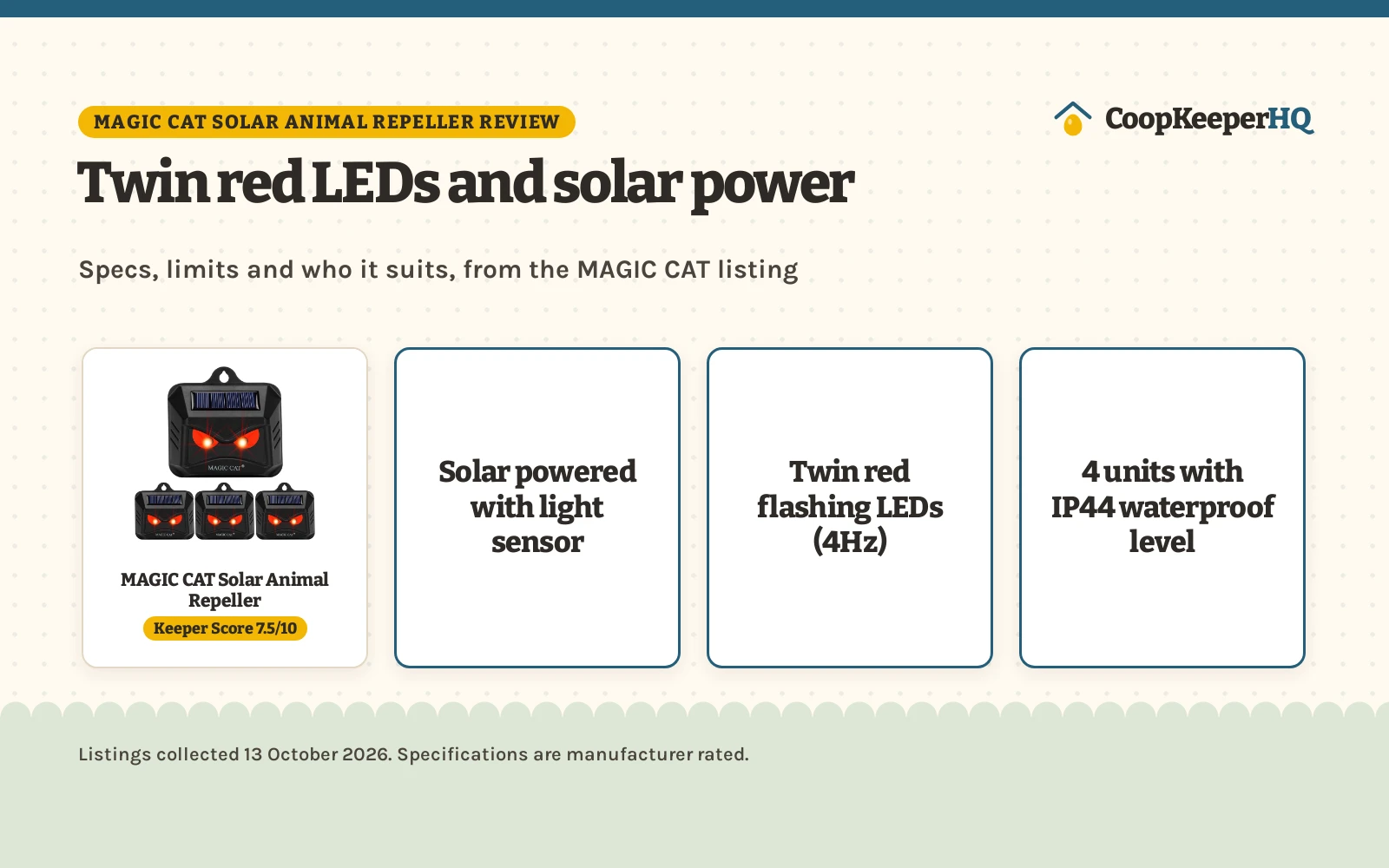
 MAGIC CAT Solar Animal Repeller Outdoor Predator Deterrent9.5/10View on Amazon
- 2
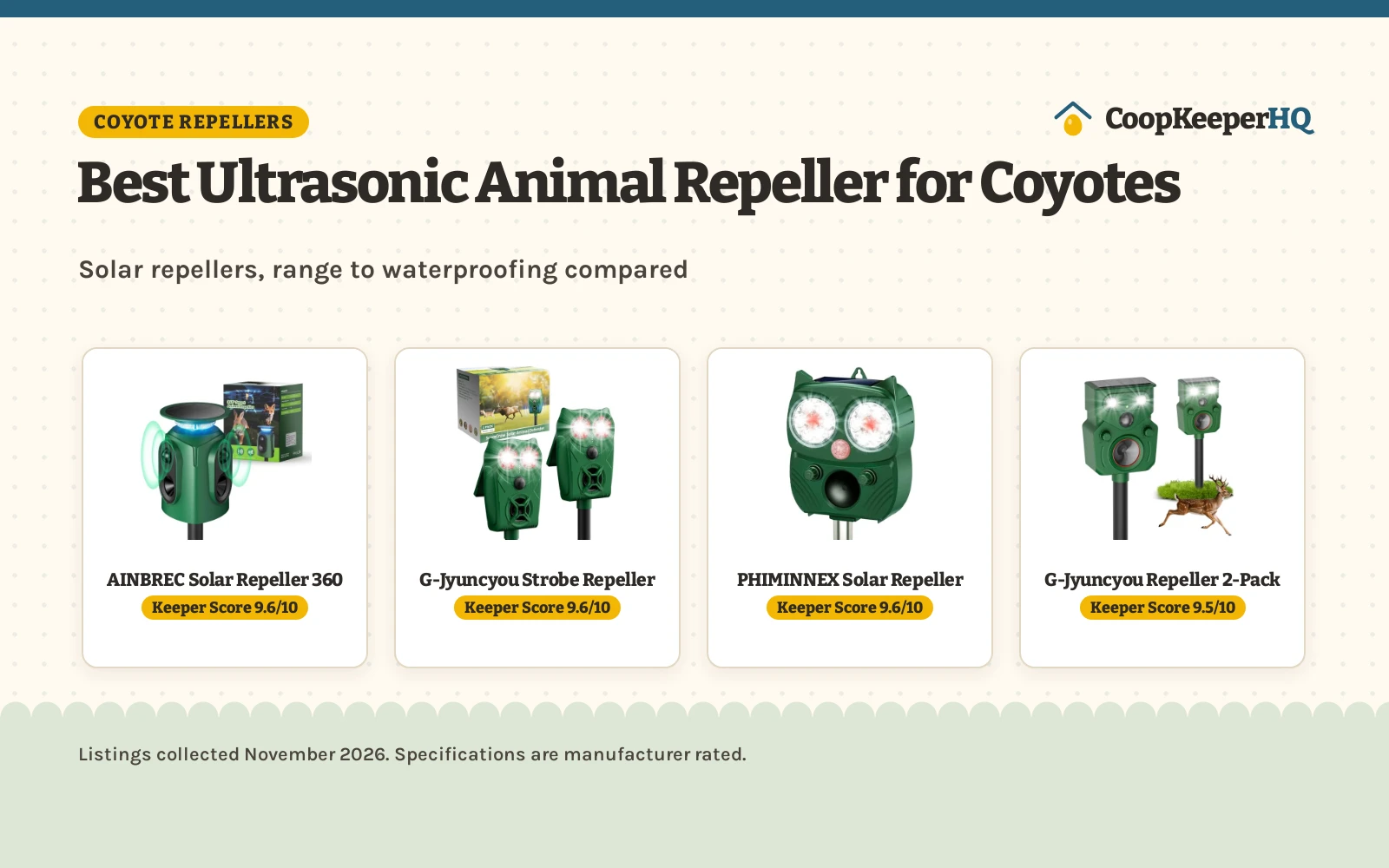
 G-Jyuncyou Solar Ultrasonic Animal Repeller with Strobe Lights9.6/10View on Amazon
- 3
 PHIMINNEX Solar Ultrasonic Animal Repeller9.6/10View on Amazon
- 4
 Motion Activated Animal Repeller with Water SprinklerView on Amazon
- 5
 G-Jyuncyou 2 Packs Solar Ultrasonic Animal Repeller OutdoorView on Amazon
- 6
 2026 Upgraded Solar Ultrasonic Animal Repeller OutdoorView on Amazon
- 7
 8 Pack Solar Nocturnal Animal Repeller Predator Eyes CoyoteView on Amazon
- 8
 Ultrasonic Animal Repeller OutdoorView on Amazon
- 9
 ASPECTEK Predator Eye PRO Solar Animal RepellerView on Amazon
A raccoon at the run fence after dark, deer nibbling the garden beds by the coop, a skunk wandering through the yard at dusk: most keepers meet the same visitors, and a repeller is one way to push them along without a fence rebuild. Solar animal repeller vs ultrasonic repeller sounds like a choice between two devices, but the listings compared here pair the two ideas in one unit: a solar panel powers a motion sensor that fires ultrasonic sound and flashing LED strobe lights. The real choice is between pack sizes, not between solar and ultrasonic.
Other options for the coop
 Motion Activated Animal Repeller with Water SprinklerCheck price on Amazon
 G-Jyuncyou 2 Packs Solar Ultrasonic Animal Repeller OutdoorCheck price on Amazon
 2026 Upgraded Solar Ultrasonic Animal Repeller OutdoorCheck price on Amazon
 8 Pack Solar Nocturnal Animal Repeller Predator Eyes CoyoteCheck price on Amazon
 Ultrasonic Animal Repeller OutdoorCheck price on Amazon
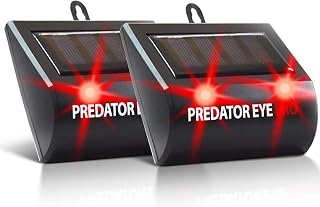 ASPECTEK Predator Eye PRO Solar Animal RepellerCheck price on Amazon
CoopKeeperHQ earns a commission if you buy through our links, at no added cost to you. Affiliate disclosure.
Solar animal repeller vs ultrasonic repeller: what each label means
Solar describes the power source. Each listing here runs on a solar panel, and the panel keeps the unit charged while it sits in the yard. Ultrasonic describes the deterrent: a high-frequency sound burst, paired with flashing LED strobe lights, that starts when the motion sensor sees an animal. Every one of the three listings pairs a solar panel with an ultrasonic emitter and a motion sensor, so buying a solar repeller and buying an ultrasonic repeller means buying the same kind of device in these listings.
That shared design shapes the whole comparison. A keeper shopping by label alone could buy two units that do the same job, so the useful differences sit in the pack size and the small details of the start-up sequence. Our predator urine vs ultrasonic repeller comparison covers a scent-based option for keepers who want something without sound or lights.
How the motion sensor and lights work
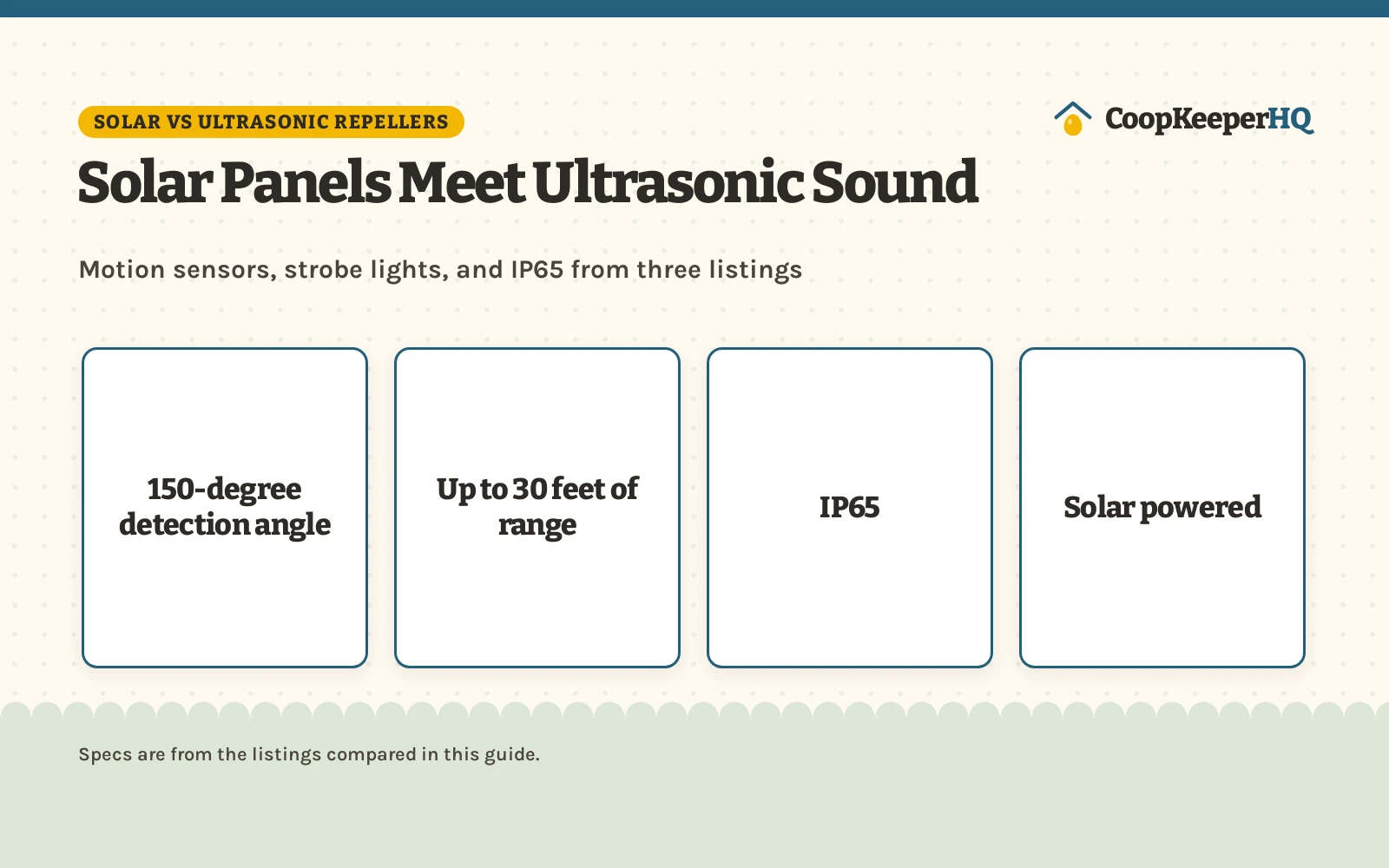
The motion sensor is the trigger. The CKCOEO listings state an infrared detection angle of up to 150 degrees and a detection range of 25-30 feet. The Grrwz listing states a PIR motion sensor that sees up to 30 feet away across a wide 150-degree zone. When an animal crosses that zone, the unit fires ultrasonic sound and flashing LED strobe lights, then drops back to standby until the sensor sees motion again.
The listings name deer, cat, dog, squirrel, rabbit, raccoon, and skunk among the animals they deter. The Grrwz listing describes the method as a physical, humane push rather than a trap or a chemical, and the CKCOEO listings call it a peaceful way to deter animals from the protected area. The lights tell the keeper what the unit is doing. A blue light means the solar panel is charging, and a red light means the unit is working. Once turned on, the CKCOEO listings state the red light and ultrasonic signal activate for 15 seconds, with sound waves for 2.5 seconds and LED light flashing at the beginning. The Grrwz listing describes a 15-second start-up sequence before standby.
Solar power and weather protection
All three listings charge from the sun, so placement matters twice: the panel needs direct sunlight, and the sensor needs to point toward the space to protect. The CKCOEO listings ask for a first charge of 2 days in direct sunlight before regular use. All three listings state IP65 and ABS construction, and the Grrwz listing adds that the build stands up to harsh sun, heavy rain, and snow.
Where to put one
Height and aim decide whether the sensor sees anything. The listings state a mounting height of about 9-10 inches above the ground, with hanging holes for mounting on trees or fences. Point the sensor toward the space to protect, and set the panel where it gets direct sunlight. The CKCOEO listings name farms, gardens, yards, orchards, lawns, and vegetable patches as places these units suit, and a spot near the run or the garden beds fits the same pattern.
The three listings side by side
The CKCOEO 2 Pack leads this small set. It states the same 150-degree angle, 25-30 foot range, IP65, and 15-second activation as its 1 Pack sibling, and the extra unit covers another spot, such as the run and the garden, without another purchase. The Grrwz 2 Pack sits next: it states a PIR sensor that sees up to 30 feet away across a 150-degree zone, the same IP65 and solar charging, and a 15-second start-up sequence, with hanging holes and a 9-10 inch mounting height like the others. The CKCOEO 1 Pack closes the set with the same stated specs as the 2 Pack, and it suits a keeper who needs one unit for one spot.
What these repellers do not do
None of the three listings states a warranty term, a battery size, or a weight, so those points stay open. The ultrasonic sound and flashing lights start only when the motion sensor sees an animal, so an animal outside the sensor zone sets nothing off. A repeller is one layer: a run with gaps or a coop door left open still needs fence and door work, and our guide to predator-proofing a chicken coop covers that layer.
A motion sprinkler is another motion-triggered option, and our solar repeller vs motion sprinkler comparison weighs the two.
Wash your hands after handling birds, eggs or equipment, supervise children around the flock, and check local rules on flock size and roosters before you buy. For sick birds, call a poultry veterinarian or your state extension office. See CDC backyard poultry guidance. Read our Safety Disclaimer.
FAQ for the flock
Is a solar animal repeller the same as an ultrasonic repeller?
In these listings, yes. Solar names the power source and ultrasonic names the deterrent, and each listing pairs a solar panel with an ultrasonic emitter and a motion sensor.
How far does the motion sensor reach?
The CKCOEO listings state a detection range of 25-30 feet with an infrared angle of up to 150 degrees. The Grrwz listing states a PIR sensor that sees up to 30 feet away across a 150-degree zone.
Where should a repeller sit?
About 9-10 inches above the ground, aimed at the space to protect, where the panel gets direct sunlight. Hanging holes allow mounting on trees or fences.
What do the blue and red lights mean?
A blue light means the solar panel is charging, and a red light means the unit is working. Once turned on, the unit activates for 15 seconds, then moves to standby until the sensor sees motion.
Do these repellers work in rain and snow?
The listings state IP65 and ABS construction. The Grrwz listing adds that the build stands up to harsh sun, heavy rain, and snow.
More coop guides
- Solar Animal Repeller vs Motion Sprinkler: Which One Should You Buy?
- Predator Urine vs Ultrasonic Repeller: Which One Should You Buy?
- Ultrasonic Repeller vs Owl Decoy: Which One Should You Buy?
- Motion Sprinkler vs Ultrasonic Animal Repellent: Which One Should You Buy?
- How to Predator Proof a Chicken Coop and Run
- Best Predator Proof Chicken Coop: Picks With Real Hardware
- Best Motion Activated Sprinkler: 5 Backyard Picks Compared (2026)
See the predator protection guides and the coop supply guides.