Solar vs Ac Electric Fence Charger: Which One Should You Buy?
Compare reliable AC mains power against portable solar fence chargers to keep poultry netting energized and protect your flock from predators.

On this page
Top picks at a glance
As an Amazon Associate I earn from qualifying purchases.
- 1
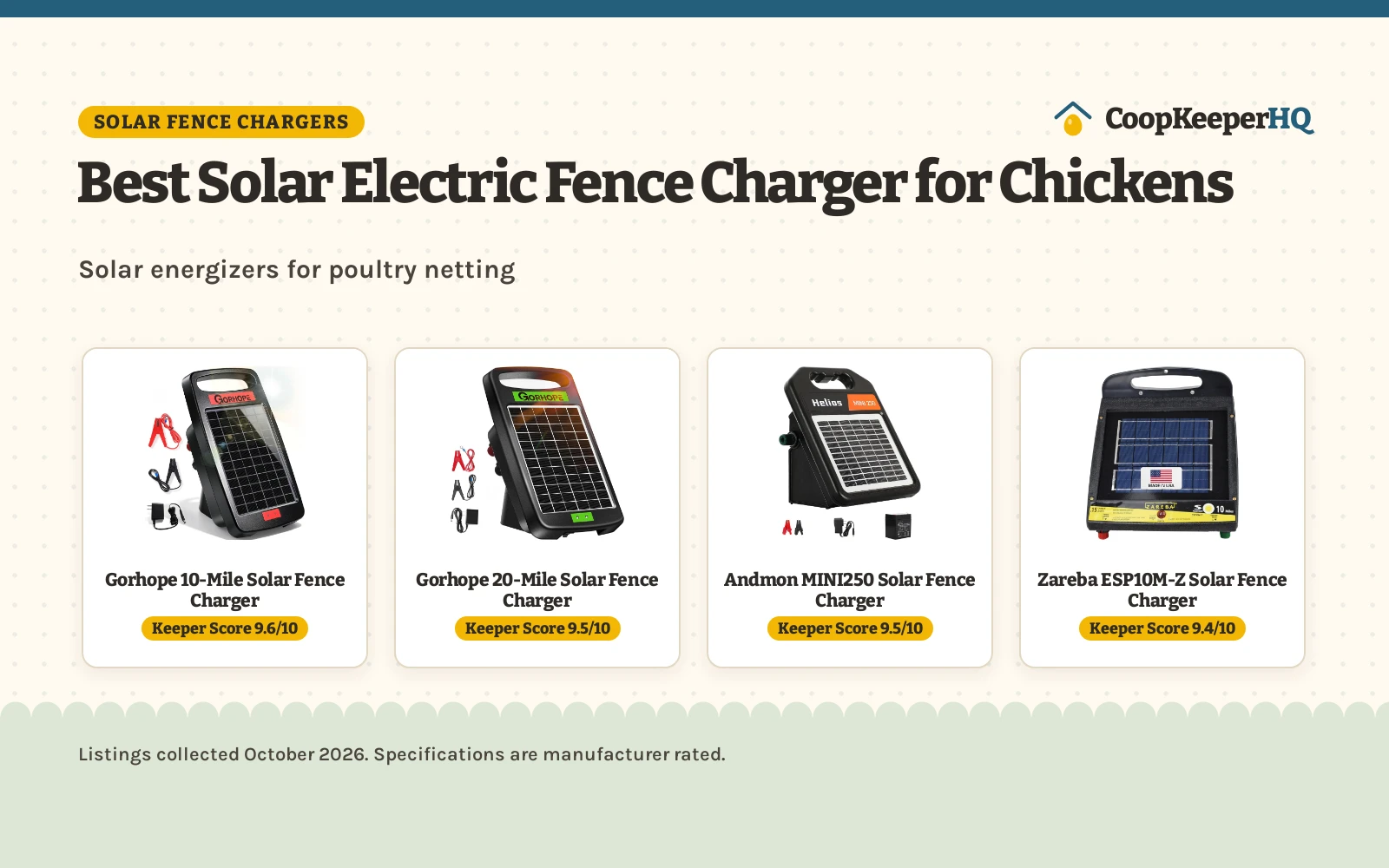
 Solar Electric Fence Charger9.6/10View on Amazon
- 2
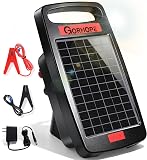 Gorhope 10-Mile Solar Electric Fence Charger with9.6/10View on Amazon
- 3
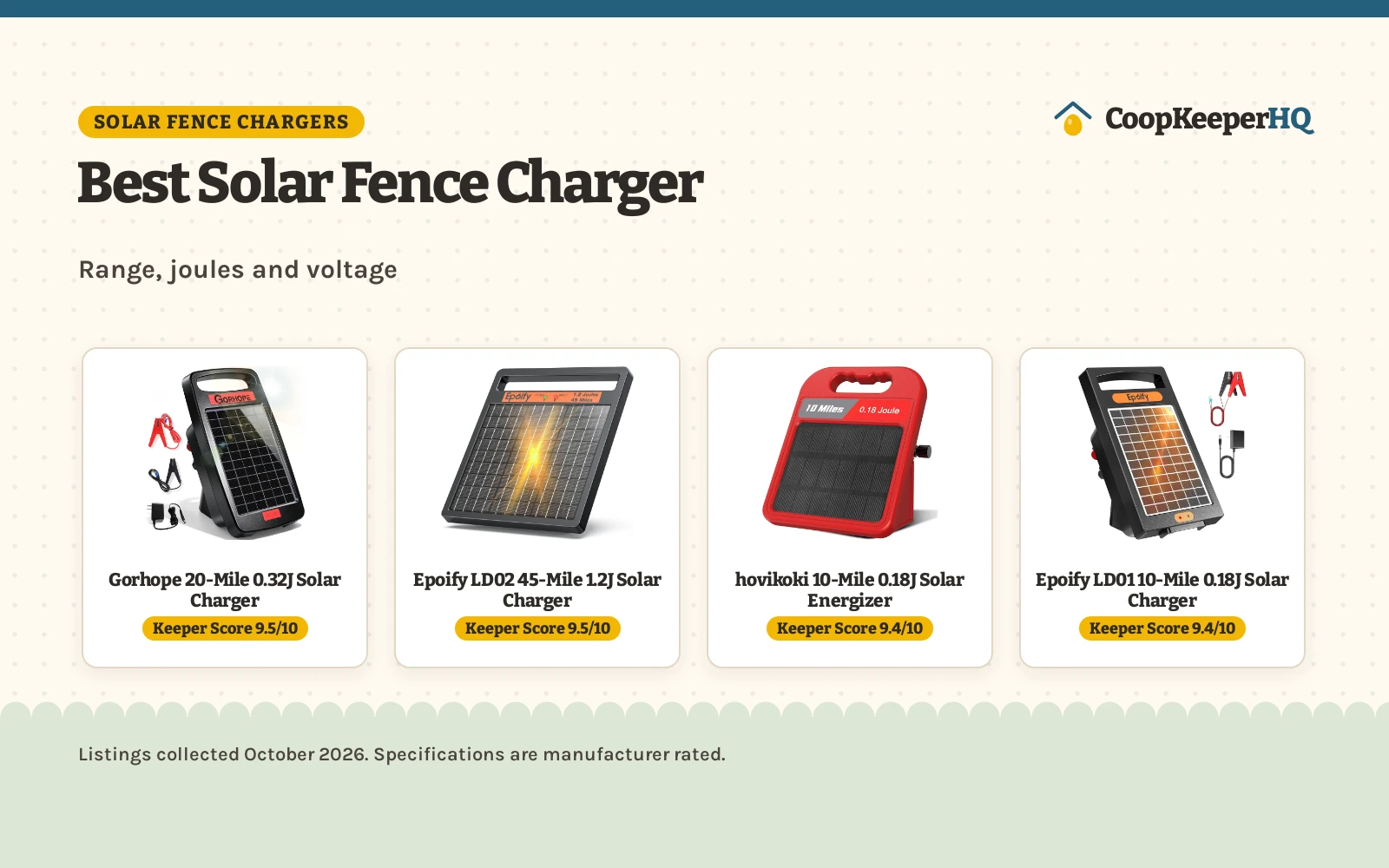
 Gorhope 20-Mile 0.32J Solar Electric Fence Charger with9.5/10View on Amazon
- 4
 Andmon MINI250 Solar Electric Fence Charger with Day or NightView on Amazon
- 5
 Solar Electric Fence ChargerView on Amazon
- 6
 Zareba ESP2M-Z Solar Powered Low Impedance Electric FenceView on Amazon
- 7
 24-Hour Solar Electric Fence ChargerView on Amazon
- 8
 MINI160 2 Miles Solar Fence ChargerView on Amazon
- 9
 Solar Fence ChargerView on Amazon
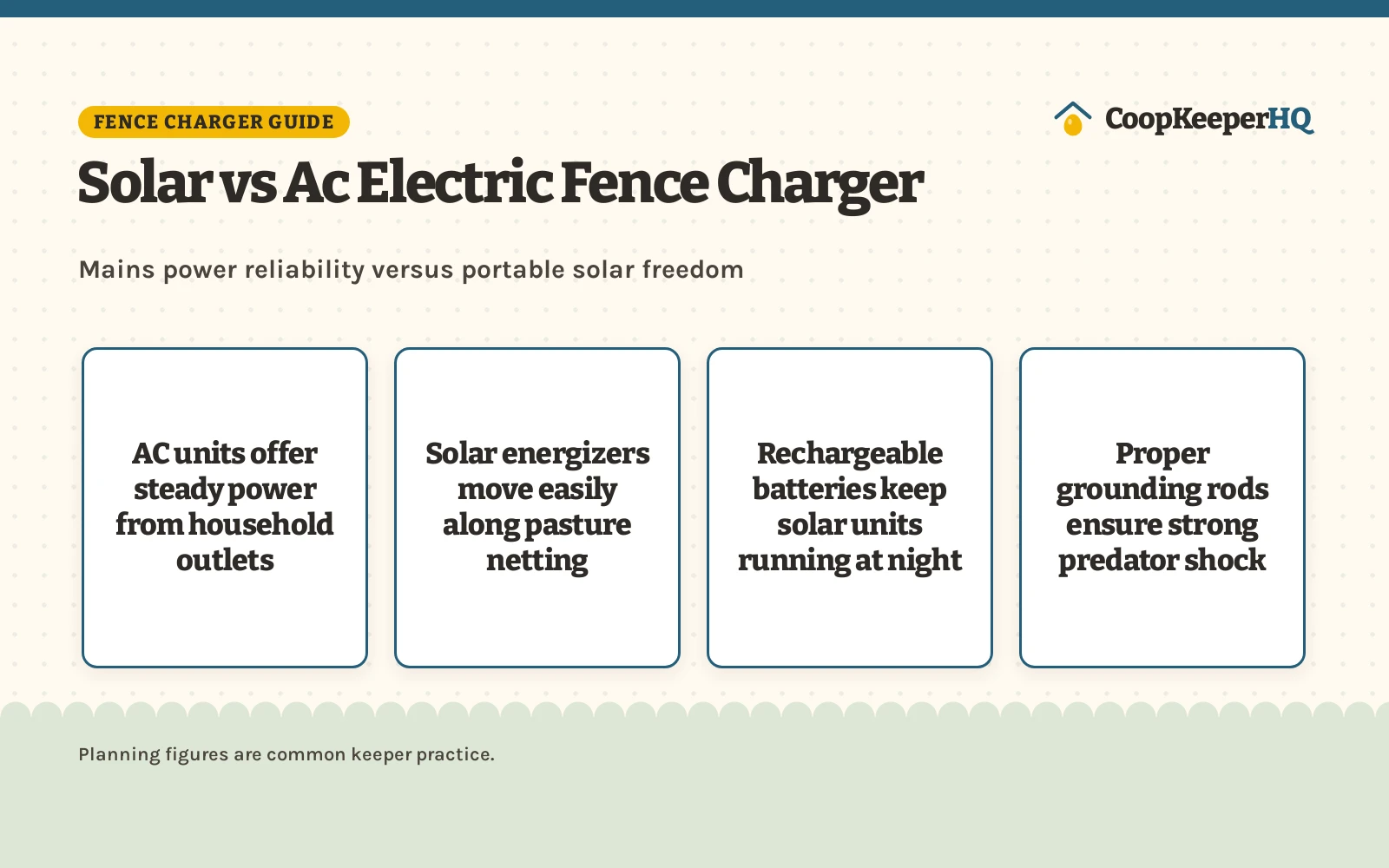
Walking out to the coop at dawn to let your flock into the run, the last thing you want to see is fresh predator tracks along the fence line. When deciding between a solar vs ac electric fence charger, an AC powered energizer is the better choice if your coop sits close to an electrical outlet, providing steady power without batteries to maintain. A solar electric fence charger is the right choice for distant pastures, mobile chicken tractors, or remote yards where running an extension cord is impractical or unsafe.
Other options for the coop
 Andmon MINI250 Solar Electric Fence Charger with Day or NightCheck price on Amazon
 Solar Electric Fence ChargerCheck price on Amazon
 Zareba ESP2M-Z Solar Powered Low Impedance Electric FenceCheck price on Amazon
 24-Hour Solar Electric Fence ChargerCheck price on Amazon
 MINI160 2 Miles Solar Fence ChargerCheck price on Amazon
 Solar Fence ChargerCheck price on Amazon
CoopKeeperHQ earns a commission if you buy through our links, at no added cost to you. Affiliate disclosure.
Solar vs ac electric fence charger: the core difference
The core distinction comes down to power source and mobility. An AC fence charger plugs directly into household mains power, drawing electricity from your home or outbuilding to send regular electrical pulses through your fence wire or poultry netting day and night. Because it connects straight to the grid, an AC energizer provides consistent power without relying on daylight or internal battery capacity.
A solar electric fence charger combines an energizer, a solar panel, and a rechargeable battery inside a self-contained housing. During daylight, the panel converts sunlight into power to run the fence and charge the internal battery. At night or during overcast weather, the battery keeps voltage pulsing through the line. This portable design lets you place chicken fencing anywhere your flock grazes, independent of wall outlets.
When an AC electric fence charger makes the most sense
If your coop or run sits within reach of an exterior electrical outlet, an AC energizer offers long-term simplicity. Without built-in solar panels or storage batteries, AC units are compact and provide high output for their equipment cost. You mount the charger in a sheltered spot, connect the fence leads, and plug it in without battery maintenance.
The main limitation is cord reach. Running extension cords across a yard creates tripping hazards, mower risks, and moisture problems. Outdoor electrical connections must always plug into a GFCI protected outlet. If your flock grazes far from buildings, trenching permanent AC wiring is rarely worth the extra expense compared to a portable unit.
When a solar electric fence charger is the better choice
Solar energizers excel when mobility and remote placement matter most. For rotational grazing, mobile chicken tractors, or distant pasture fencing, running mains electricity is impractical. A solar energizer mounts directly onto a post or grounding rod, creating an independent perimeter wherever the sun shines. When moving your flock to fresh ground, disconnect the leads and move the setup in minutes.
The trade-off is reliance on daylight. Solar units mounted in dense shade or against north-facing barn walls will struggle to charge. Internal batteries also have a finite lifespan and eventually need replacement. On open pasture with clear sun exposure, however, solar energizers provide reliable off-grid protection.
Understanding energizer output and joule ratings
Energizers are rated in joules, representing the energy delivered per pulse. Higher joules push voltage through longer fence perimeters and maintain shock strength through weed contact along lower netting strands.
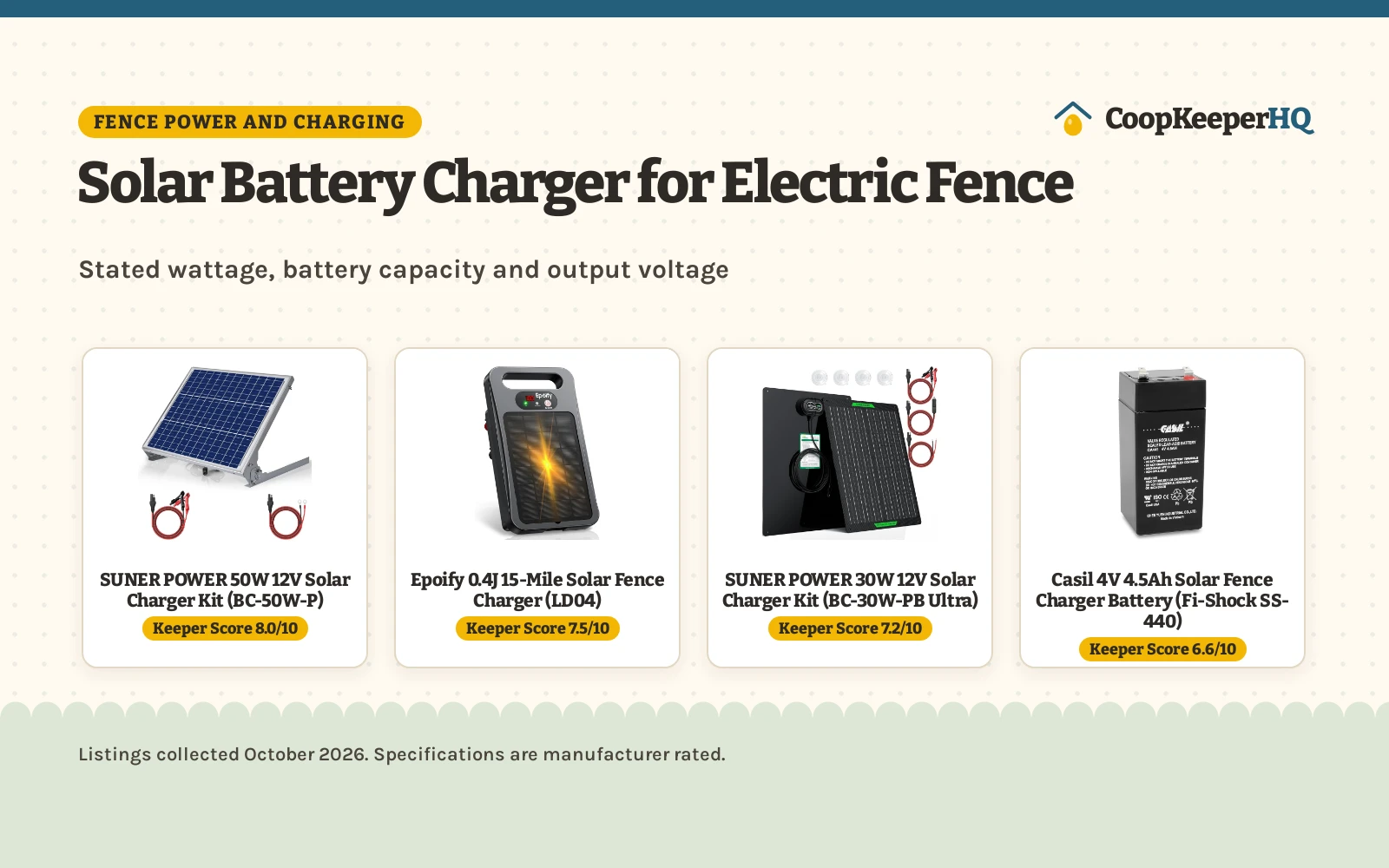
Manufacturer listings publish a broad range of capacities. For small enclosures, the Gallagher S6 listing states an output of 0.06 joules (0.08 joules stored) rated for 0.74 miles or 0.7 acres. For medium pastures, the Zareba ESP10M-Z listing delivers 0.15 joules for up to 10 miles of clean fence or 5 miles in light weeds. The ANDMON MINI250 listing states an output of 0.18 joules (0.25 joules stored) across 12 miles. Gorhope listings specify outputs of 0.11 joules, 0.18 joules, and 0.32 joules for 5, 10, and 20 miles. For large perimeter setups, the Parmak DF-SP-LI listing delivers 1.6 joules for up to 25 miles with a sealed 6 volt battery, while the Epoify LD02P listing publishes 1.6 joules across 55 miles using an 8 watt panel. Compare more models in our solar fence charger guide.
Battery reserves and weather reliability
Solar energizers carry internal batteries engineered to maintain fence pulses through overcast spells and short winter days. Stated reserve duration indicates how well a unit withstands dark weather.
Listings highlight substantial reserves. The Zareba ESP10M-Z listing states it operates for up to 2 weeks without sunlight, while Gorhope listings state up to 14 days without sunlight, with an internal battery maintaining 10 days. The Gallagher S6 listing states its lithium battery provides up to 3 weeks without sunlight, backed by a 3-year manufacturer warranty. The Parmak DF-SP-LI listing specifies operation for up to 21 days in total darkness. In contrast, an AC charger draws constant grid power regardless of cloud cover.
Grounding requirements for chicken runs
An electric fence requires an effective earth ground to shock predators. When an animal touches an energized strand, electricity flows through its body into the soil, travels to the grounding rod, and returns to the energizer. Poor soil contact weakens the deterrent shock.
Adequate rod depth is essential in dry or sandy ground. The Gallagher S6 listing specifies mounting onto an unpainted rod up to 0.5 inches in diameter and driving it at least 18 inches into the soil. In dry summer soils, driving rods deeper or watering the area improves conductivity. See our guide to electric netting for chickens for perimeter tips.
Vegetation load and fence maintenance
Weeds and damp grass touching lower fence strands bleed voltage directly into the ground, reducing shock strength. Charger listings reflect this power loss: the Zareba ESP10M-Z listing notes coverage drops from 10 miles in ideal conditions to 5 miles in light weeds.
Because AC energizers often provide higher energy ratings for the price, they maintain effective voltage through moderate weed contact better than low-output units. Trimming vegetation along the fence line keeps voltage high. Our poultry netting and charger guide explains how to maintain clean netting.
Predator protection around coop perimeters
Predators like raccoons, foxes, and coyotes have thick coats that insulate against mild shocks. Energizers must produce sharp, high-voltage pulses to penetrate fur and deter digging or climbing.
Listings demonstrate strong deterrent ratings. Gorhope listings state output voltages from 5700 to 10200 volts to deter predators up to wolves. The Epoify LD02P listing publishes an 11 kilovolt output alongside a 1.6 joule rating. Fault alarms also help: Gorhope includes a short-circuit buzzer, while Epoify features early fault detection to spot line interruptions before predators breach the fence. For pasture security, see our solar fence charger with remote guide.
Installation, safety, and daily coop routine
Make fence inspection part of your daily coop routine. Check the pulse indicator light each morning when letting birds out, and look for fallen twigs or sagging netting. Connect outdoor AC chargers to a weatherproof GFCI outlet, and switch solar units off before handling fence clips to prevent accidental shocks. If local predator pressure increases, consult your state extension office for regional guidance.
A simple fence charger checklist
Keep these practical steps in mind when setting up your perimeter:
- Choose an AC energizer if an electrical outlet sits near your run
- Choose a solar energizer for mobile tractors or remote pastures
- Install grounding rods in moist soil according to stated requirements
- Keep grass and weeds trimmed clear of lower netting strands
- Ensure solar panels receive unobstructed southern daylight
- Always connect outdoor AC chargers to a dedicated GFCI outlet
Birds, breed size, run time and climate in; coop floor, run space, roost length and nesting boxes out.
Use a charger rated for the length of netting you run, ground it as the manual describes and post warning signs where neighbors or children can reach the fence. Keep grass and weeds off the bottom strands, and never leave netting unpowered, because birds and wildlife can tangle in it. Read our Safety Disclaimer.
FAQ for the flock
Can a solar fence charger power electric poultry netting?
Yes, solar chargers power electric poultry netting effectively. Compact units like the Gallagher S6 (0.06 joules) suit small garden runs, while units like the Parmak DF-SP-LI (1.6 joules) power larger pasture perimeters with heavier weed contact.
Does a solar electric fence charger work on cloudy days?
Yes, rechargeable batteries maintain power during overcast weather. For example, the Zareba ESP10M-Z listing states 2 weeks of operation without sunlight, while the Parmak DF-SP-LI listing specifies 21 days in total darkness.
Do AC electric fence chargers use a lot of electricity?
No. AC energizers emit brief, intermittent pulses rather than continuous current, drawing very little power from household outlets while operating reliably through all seasons.
How deep should a fence charger grounding rod go?
Depth depends on energizer size and soil moisture. For compact models, the Gallagher S6 listing specifies driving its rod at least 18 inches into the ground, while larger units require deeper or multiple rods.
What voltage is needed to deter predators from chicken runs?
Deterring foxes, raccoons, and dogs requires several thousand volts. For example, Gorhope listings state output voltages from 5700 to 10200 volts to deliver a reliable deterrent shock through thick fur.
More coop guides
- Best Solar Fence Charger: 5 Energizers for Pastures and Runs
- Electric Netting for Chickens: 5 Portable Fences Compared (2026)
- Best Poultry Netting and Charger: Electric Fence Kits Compared
See the chicken runs and fencing picks and the predator protection guides.