What Is the Best Bedding for Ducks? Materials Compared
Straw on top of pine shavings, sand or hemp where the ground stays wet, and a dry nest pad where the ducks lay, with tips on laying it and keeping it dry.

On this page
Top picks at a glance
As an Amazon Associate I earn from qualifying purchases.
- 1
 Feelyou Kids Mallard Duck Bedding Set Full Size Hunting9.2/10View on Amazon
- 2
 9.5/10View on Amazon
- 3
 9.4/10View on Amazon
Morning chores in the duck house start with wet bedding under the water bowl, and what is the best bedding for ducks is the question that decides how often you haul it out: straw on top of pine shavings, with sand or hemp where the ground stays wet, and a dry nest pad where the ducks lay. This guide compares the materials, shows how to lay them, and explains what to watch as the bedding wears.
CoopKeeperHQ earns a commission if you buy through our links, at no added cost to you. Affiliate disclosure.
What is the best bedding for ducks?
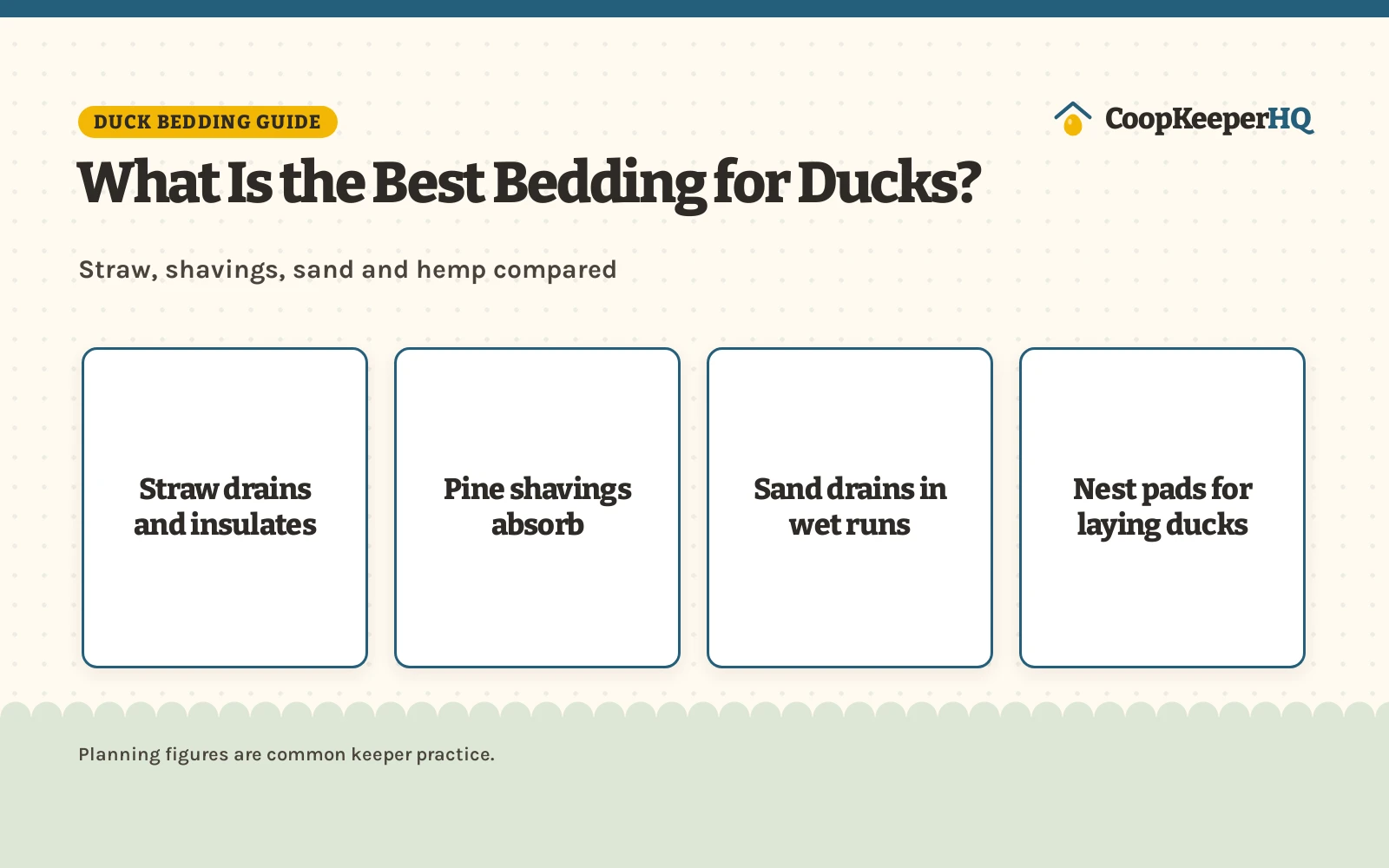
Ducks are messier than chickens because they carry water to the bedding on their bills and feet, so the best bedding for ducks is the one that drains fast, stays dry on top, and is easy to haul out when it gets wet. Straw fits that job in most duck houses because it drains and insulates, while pine shavings absorb well and sand drains well in runs. There is no one material that wins in every house, so pick by where the bedding sits: dry floor, wet run, or nest box. A duck house with a wet floor needs bedding that drains, while a dry house needs bedding that absorbs and stays soft underfoot.
Straw: the usual pick for ducks
Straw is hollow, so it drains water down and away from the surface while trapping air for warmth. Lay it thick on the house floor, and top it up where the ducks sleep and lay. Straw also works in the nest boxes, where the ducks can shape it into a nest. Straw gets heavy when it soaks through, so haul out the soaked patches and add dry straw on top. Straw bales also feed the compost pile when the bedding comes out, and the straw bale bedding guide compares bales for the run.
Pine shavings: absorbent and easy to spread
Pine shavings soak up water and are easy to spread in an even layer. They suit the house floor and the nest boxes, and they mix well with straw when you want a drier top. Shavings pack down when they get wet, so fluff them up and add fresh material where the floor looks damp. A mix of shavings below and straw on top gives you absorption under a dry surface. See the nesting pads vs pine shavings comparison for the nest box choice.
Sand and hemp for wet runs
Sand drains fast and dries fast, so it suits the run where ducks splash and the ground stays wet. Scoop the droppings out and rake the sand level again, and add fresh sand where it thins out. Hemp bedding absorbs well and stays fluffy longer than shavings, and it composts when it comes out. Hemp suits the house floor where you want absorption without the weight of wet straw. The hemp bedding guide compares hemp picks for the coop.
Nest pads and extras for laying ducks
Ducks lay where the bedding is dry and soft, so the nest box gets its own material. UtySty nest pads (on Amazon) measure 12 by 12 inches and are made of coconut palm fiber, so they sit flat in the nest box and can be cut to fit. Sukh kapok nesting fiber (on Amazon) comes in a 3.5 oz pack and suits nesting boxes for ducks and chickens. Pampered Chicken Mama nesting herbs (on Amazon) come in an 8 pound pack to scatter among the bedding. Keep the nest boxes lined, and see the chicken vs duck nesting box comparison if you are choosing a box.
How to lay duck bedding, step by step
Start with a clean, dry floor. Clear out the old bedding, sweep the floor, and let it dry before you spread the new layer. Spread a base layer across the floor, then add a thicker layer where the ducks sleep and lay. Set the nest pads or nesting fiber in the nest boxes last, so they stay clean. Top up the wet spots each morning and haul out the soaked patches before they smell.
A simple bedding routine
- Water bowl sits where splashes land on bedding you can change fast
- House floor has a dry layer, with extra bedding where the ducks sleep
- Nest boxes stay lined with a pad or soft fiber
- Wet spots get topped up each morning
- Soaked patches come out before they smell
- Old bedding goes to the compost pile
Birds, breed size, run time and climate in; coop floor, run space, roost length and nesting boxes out.
Wash your hands after handling birds, eggs or equipment, supervise children around the flock, and check local rules on flock size and roosters before you buy. For sick birds, call a poultry veterinarian or your state extension office. See CDC backyard poultry guidance. Read our Safety Disclaimer.
FAQ for the flock
What bedding stays driest for ducks?
Straw on the house floor and sand in the run stay driest, because straw drains and sand dries fast. Top up the wet spots and haul out the soaked patches.
Can I use pine shavings for ducks?
Yes. Pine shavings absorb well and spread easily on the house floor and in nest boxes. Fluff them up when they pack down and add fresh material where the floor looks damp.
How often should I change duck bedding?
Change it when it smells damp, looks matted, or stays wet underfoot. Top up the wet spots each morning and haul out the soaked patches before they smell.
What do I put in a duck nest box?
Use a nest pad or soft nesting fiber. UtySty nest pads measure 12 by 12 inches, and Sukh kapok nesting fiber comes in a 3.5 oz pack.
Can ducks sleep without bedding?
Ducks need dry bedding for warmth and footing. A bare floor gets cold and slippery, so keep a dry layer down where the ducks sleep.
More coop guides
- Best Straw Bale Bedding for Chicken Run (2026): 5 Picks Compared
- Best Hemp Bedding for Chicken Coop (2026): 5 Picks Compared
- Nesting Pads vs Pine Shavings: Which One Should You Buy?
- Duckling Brooder Setup: Heat, Bedding and Supplies
- Best Chicken Bedding for Composting (2026): 5 Picks Compared
See the ducks, quail and turkeys guides and the coop supply guides.