Duckling Brooder Setup: Heat, Bedding and Supplies
A warm pen, a heat plate, dry bedding and clean water: the duckling brooder setup that keeps a new batch comfortable from the start.

On this page
Morning chores start with a peep from the brooder corner, and a batch of damp ducklings waiting for fresh water and a warm place to rest. A duckling brooder setup is a warm, dry pen with a heat source, bedding that stays dry, and a feeder and waterer the birds can find without a fuss. Get those parts right and the daily routine stays short and calm.
As an Amazon Associate I earn from qualifying purchases. CoopKeeperHQ earns a commission if you buy through our links, at no added cost to you. Affiliate disclosure.
Duckling brooder setup: start with a warm, dry pen
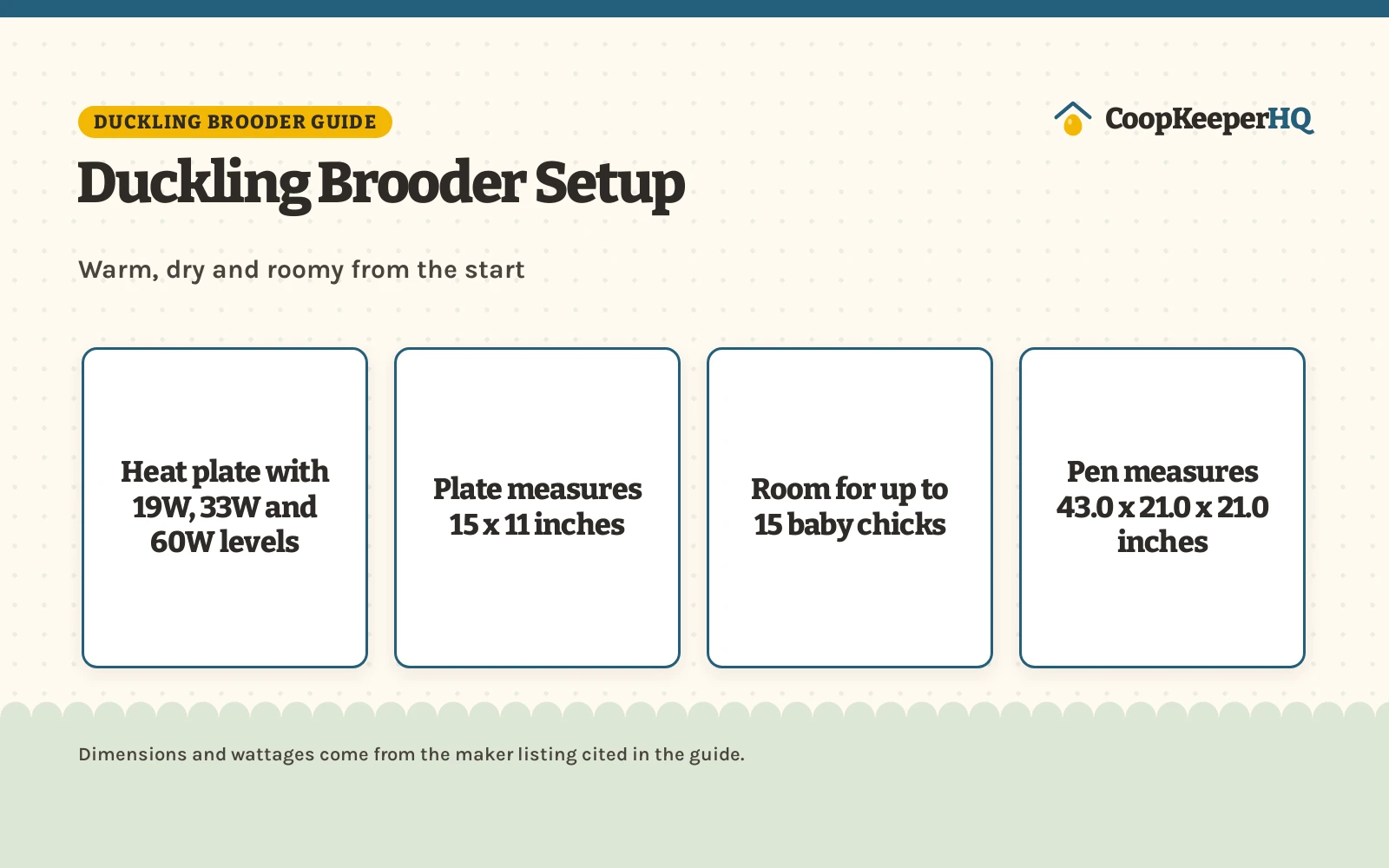
A good brooder is a pen the ducklings can move around in, with a warm spot at one end and cooler space at the other so they can choose where to rest. The PETTEN starter kit (on Amazon) named in this guide pairs a pop-up pen with a heating plate, a feeder and waterer, a perch and a nesting pad, so the main parts arrive as a set. The pen measures 43.0 x 21.0 x 21.0 inches, and the maker lists room for up to 15 baby chicks, with ducklings and quail named as fits too.
Set the pen where the floor stays dry and out of drafts, on a surface you can wipe down. The kit folds into a storage bag when the brooding weeks end, and the pop-up tent and frame unfold in seconds, so moving the pen for cleaning is a small job. The brooder box vs chicken coop guide explains when a brooder box is the right home and when the birds belong in a coop instead.
Pick the heat source first
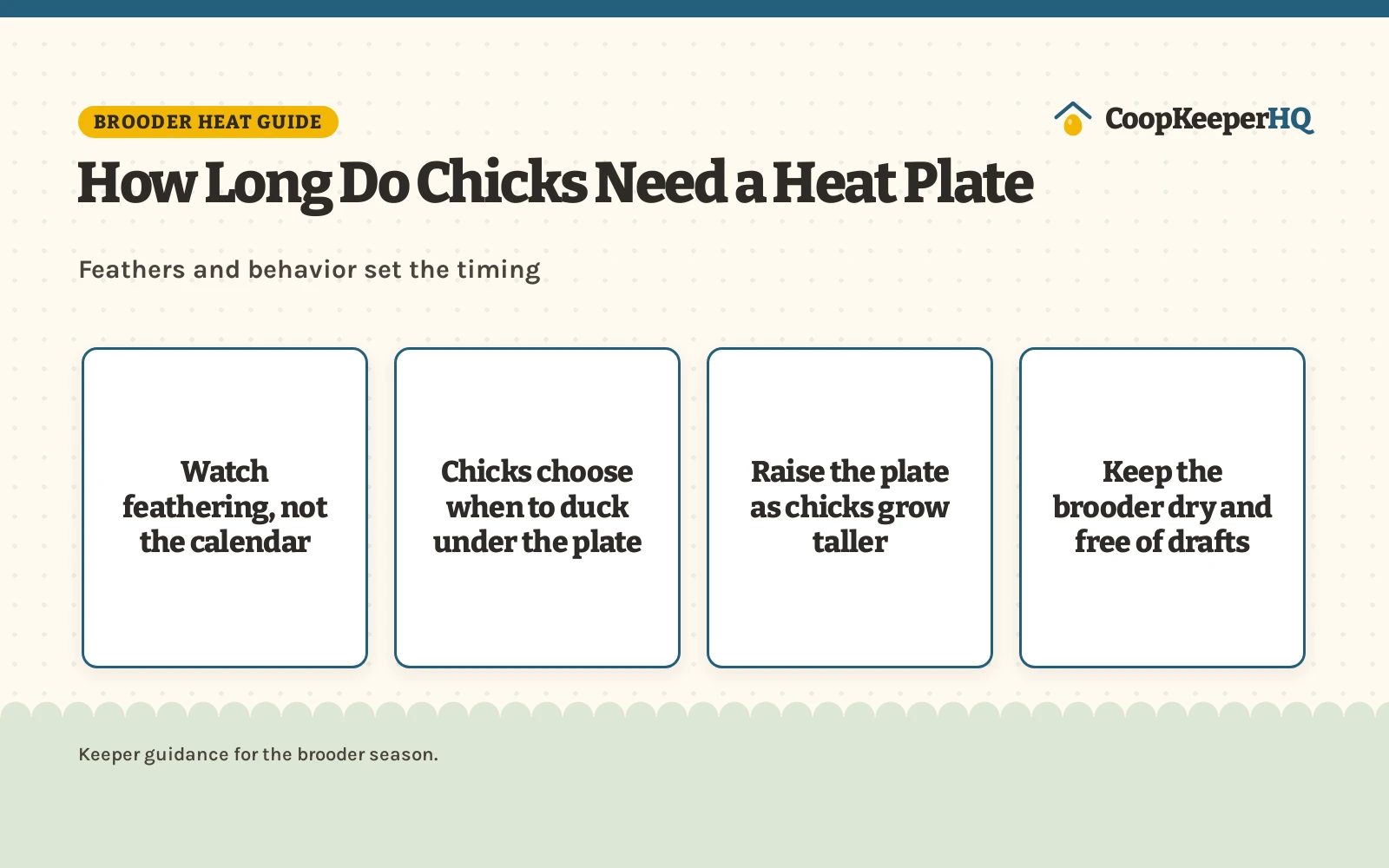
Ducklings need a warm spot to rest under, and a heat plate is the safer choice over a heat lamp. Heat lamps are a known fire risk in a pen full of dry bedding, so a flat plate is the better pick. The heating plate in the kit measures 15 x 11 inches and runs at 19W, 33W or 60W across three adjustable levels, with 60W as the top level. Place the plate where ducklings can rest under it, and watch where they rest: birds piled under the plate want more warmth, while birds spread far from it want less. The brooder heat plate guide compares plates, and the heat plate vs heat lamp comparison explains the fire risk in more detail. The chick brooder temperature guide covers how to read the birds and set the heat.
Bedding that stays dry
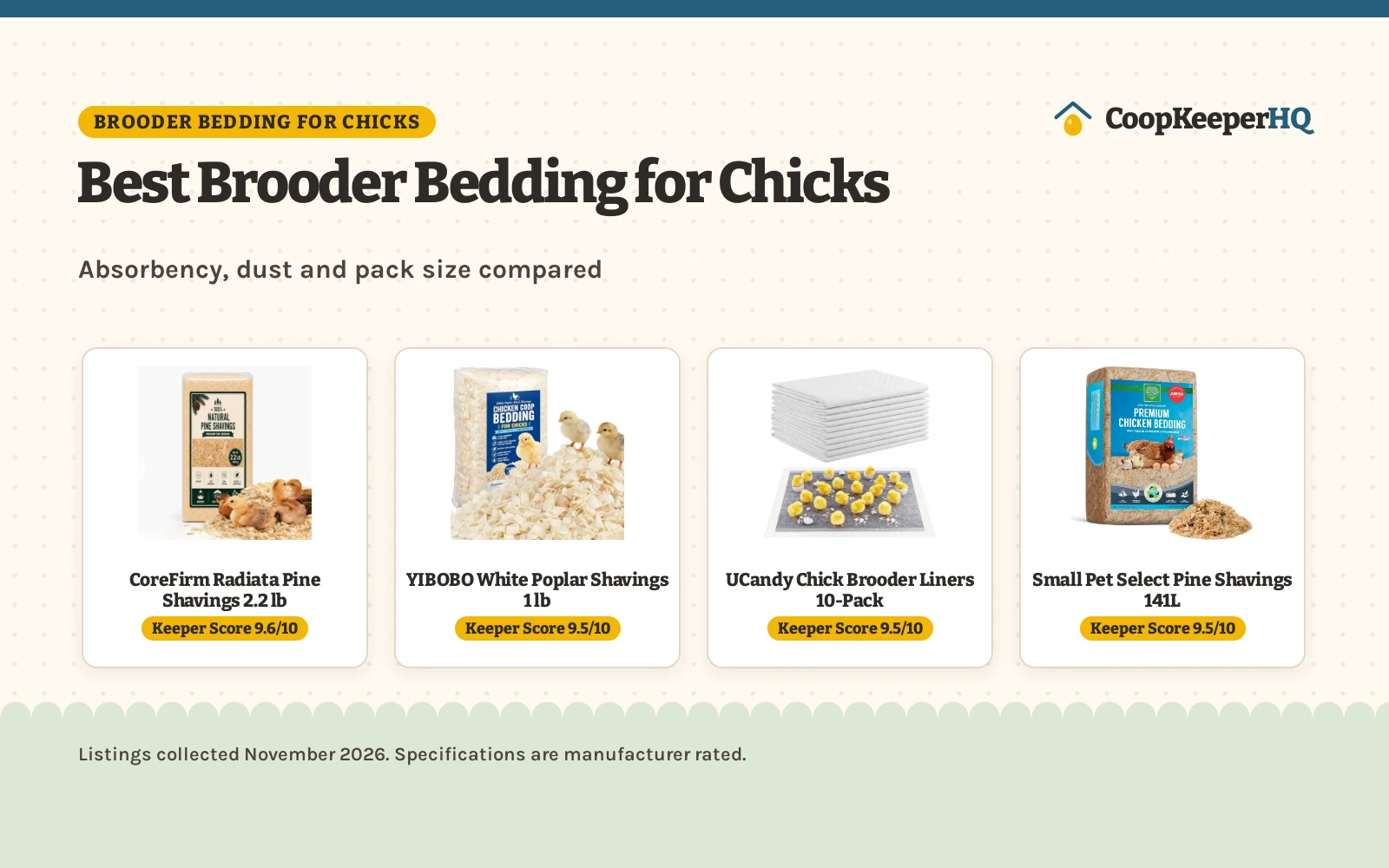
Ducklings splash, so bedding gets wet sooner than in a chick brooder. Start with a layer of dry bedding over the floor pad, and add fresh material when the surface looks damp. The kit includes a pull-out floor pad that can be rinsed with water, and the pen fabric is washable, so a full clean-out is a quick rinse and a fresh layer of bedding. The chicken coop bedding guide compares shavings, hemp and sand for the coop, and the same dry-bedding habit applies in the brooder.
Feeder and waterer placement
Put the feeder and waterer at the opposite end of the pen from the heat plate, so ducklings move between warmth and food and the water stays clear of the warmest spot. The kit includes a feeder and waterer, plus a perch and a nesting pad. Keep the water shallow enough for ducklings to dip their bills without climbing in, and change it when it looks dirty, since ducklings foul water fast. The guide to feeding starter covers feed, water and brooder setup for young birds, and the duck feed for ducklings guide compares starter and grower feeds. The chick waterer guide has more on waterers that stay clean.
A daily routine for the brooder
A short daily routine keeps a duckling brooder in good shape. Change the water, top up the feed, scoop out wet bedding and add a dry layer, then check that the heat plate is warm and the pen fabric is dry. Three ground stakes come with the kit for outdoor use, so the pen can sit outside on a calm day when the birds are ready for fresh air, with the stakes holding it in place. Check cords and the plate each day, and run outdoor electrical gear from a GFCI outlet. If a duckling behaves differently from the rest, ask a poultry vet or your state extension office rather than guessing.
From brooder to duck house
Ducklings outgrow the brooder sooner than chicks, and the pen starts to look small when the birds crowd the feeder and splash the bedding. A duck house with a run gives them room to move, a dry place to rest and a ramp they can climb without a fuss. The duck house guide compares houses for backyard ducks, and the duck house for a sloped yard guide covers uneven ground. Keep the heat plate in place until the birds spend their days away from it, and move the feeder and waterer with them so the routine stays familiar.
A simple duckling brooder checklist
- Pen sits on a dry surface, out of drafts
- Heat plate is warm and ducklings can rest under it
- Bedding is dry, with a fresh layer on top
- Feeder is full and water is clean
- Floor pad is rinsed and the pen fabric is dry
- Outdoor electrical gear is on a GFCI outlet with protected cords
For the next step after brooding, see the duck house guide and the chick brooders for backyard comparison, and browse the brooders category for more starter kits.
Birds, breed size, run time and climate in; coop floor, run space, roost length and nesting boxes out.
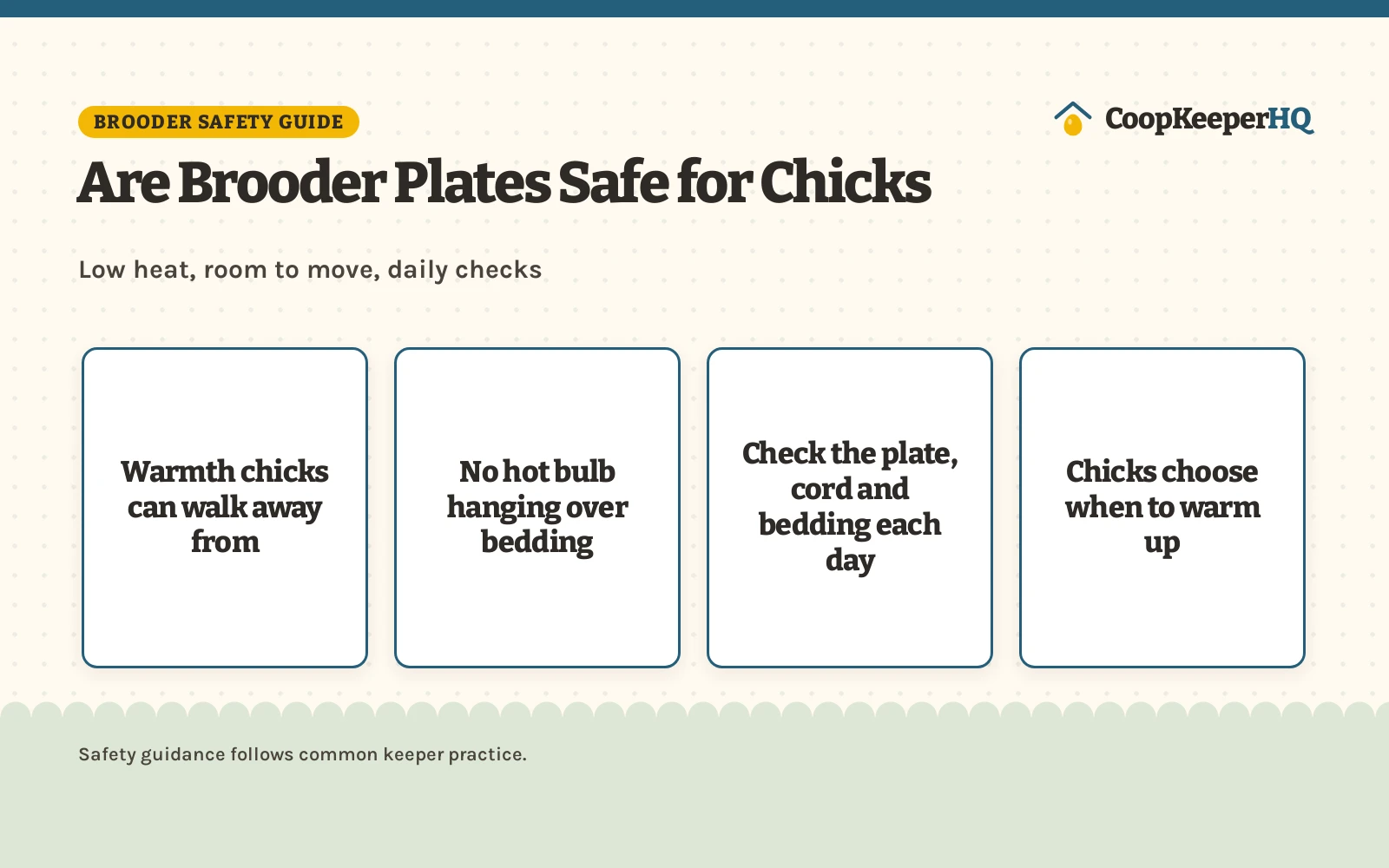
Heat lamps are a common cause of coop and barn fires. If you use one, secure it with more than the clamp (a chain or wire to a fixed point), keep it well away from bedding, walls and cardboard, and plug it into an outlet or a cord rated for the load. Radiant heat plates run cooler and remove most of that risk. Check chicks often in the first days: huddling under the heat means too cold, spreading to the edges means too warm. Read our Safety Disclaimer.
FAQ for the flock
How much space does a duckling brooder need?
The starter kit named in this guide measures 43.0 x 21.0 x 21.0 inches and the maker lists room for up to 15 baby chicks, with ducklings and quail named as fits. Give the birds room to move away from the heat plate, and move them on when the pen looks crowded.
What heat setting should a duckling brooder plate use?
The plate in the kit has three adjustable levels at 19W, 33W and 60W, with 60W as the top level. Start at the level that keeps the birds resting calmly under the plate, and step down when they spend more time away from it.
Do ducklings need a heat lamp?
No. A heat lamp is a known fire risk in a pen full of dry bedding, so a flat heat plate is the safer choice. The plate in this guide measures 15 x 11 inches and runs at 19W, 33W or 60W.
How do I keep duckling bedding dry?
Change the water often, add a fresh layer of dry bedding when the surface looks damp, and rinse the pull-out floor pad with water at clean-out time. The pen fabric is washable, so the whole pen can be cleaned and dried between batches.
When do ducklings move out of the brooder?
Move them to a larger sheltered space when the pen looks crowded and they spend most of their time away from the heat plate. A duck house with a run gives them room to move and a dry place to rest.
More coop guides
- Chick Brooder Temperature: How to Set It and Read the Chicks
- Brooder Box vs Chicken Coop: Which One Should You Buy?
- Best Brooder Heat Plate: Safer Heat for Chicks
- Heat Plate vs Heat Lamp for Chicks: Which Is Safer?
- Best Duck Feed for Ducklings (2026): 5 Starter and Grower Picks
- How to Feed Starter to Chicks: Feed, Water and Brooder Setup
- Best Chick Waterer for Shipped Chicks (2026)
- Chick Brooders for Backyard: 5 Starter Kits Compared (2026)
- Best Duck House: Picks for Backyard Ducks
- Best Chicken Coop Bedding: Shavings, Hemp and Sand
See the brooder picks and the ducks, quail and turkeys guides.