4×4 vs 4×6 Chicken Run: Which One Should You Buy?
A small-flock guide to picking between a 4x4 and a 4x6 chicken run, with four runs compared by size, mesh, cover and stated hen count.

On this page
Top picks at a glance
As an Amazon Associate I earn from qualifying purchases.
- 1
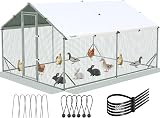 Quictent Large Metal Chicken Coop Run for 20+ Poultry w/Side9.7/10View on Amazon
- 2
 Quictent 18x9x6.6ft Large Metal Chicken Coop Run With9.7/10View on Amazon
- 3
 Sino Luban Walk-in Chicken Run9.7/10View on Amazon
- 4
 GOJOOASIS 40" Wooden Chicken Run Coop Outdoor Hen HouseView on Amazon
- 5
 GUTINNEEN Chicken Coop Extension Chicken Run 20.73 ft²LargeView on Amazon
- 6
 Petsfit Outdoor Chicken Coop with Run for 4-6 ChickensView on Amazon
- 7
 55ft² Extra Large Chicken Coop with RunView on Amazon
- 8
 Trixie Natura Chicken Outdoor Run with Mesh-Covered TopView on Amazon
- 9
 GUTINNEEN Large Chicken Coop with Run with All-Arounded IronView on Amazon
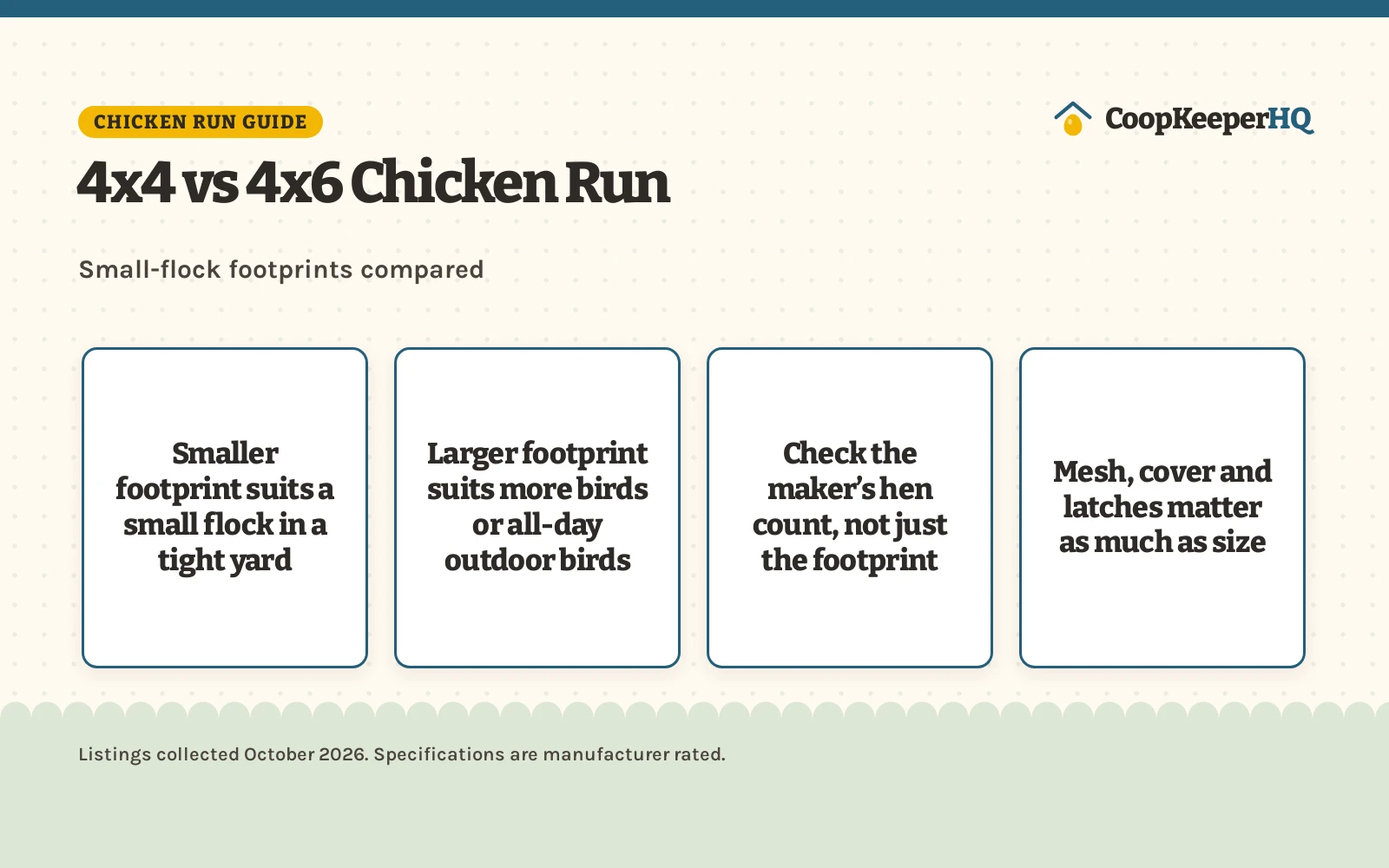
A flock that has outgrown its run paces the fence, crowds the feeder and turns the ground to dust, and the fix is more ground, not a taller fence. The 4×4 vs 4×6 chicken run question comes down to flock size and yard space: the smaller footprint suits a small flock in a tight yard, while the larger one suits a bigger flock or birds that spend the whole day outside.
Other options for the coop
 GOJOOASIS 40" Wooden Chicken Run Coop Outdoor Hen HouseCheck price on Amazon
 GUTINNEEN Chicken Coop Extension Chicken Run 20.73 ft²LargeCheck price on Amazon
 Petsfit Outdoor Chicken Coop with Run for 4-6 ChickensCheck price on Amazon
 55ft² Extra Large Chicken Coop with RunCheck price on Amazon
 Trixie Natura Chicken Outdoor Run with Mesh-Covered TopCheck price on Amazon
 GUTINNEEN Large Chicken Coop with Run with All-Arounded IronCheck price on Amazon
CoopKeeperHQ earns a commission if you buy through our links, at no added cost to you. Affiliate disclosure.
4×4 vs 4×6 chicken run: what the extra ground buys
The difference is length, not a different kind of run. A longer footprint gives the flock more ground to forage, more room to spread out at the feeder, and more space to get out of each other’s way. That matters most for birds that stay in the run all day rather than ranging the yard. If the flock ranges freely for most of the day and only uses the run for part of it, the smaller footprint is easier to fit and easier to walk around. Measure the yard first: a run that leaves no room to walk around it is hard to clean, whatever its footprint.
Match the run to the flock
Maker hen counts are the honest starting point. The GOJOOASIS listing states its run holds 2 to 4 chickens, and the GUTINNEEN listing states 4 to 6 chickens. The BOSSIN and ACEPIC listings state no hen count, so judge them by their stated dimensions and by how the flock will use them. A small flock in a small yard is the case for the smaller end of this group, and our best chicken run for small yard guide covers that fit in more detail. If the flock is still growing, a larger footprint now can save adding a second run later.
The gear section: four runs, ranked
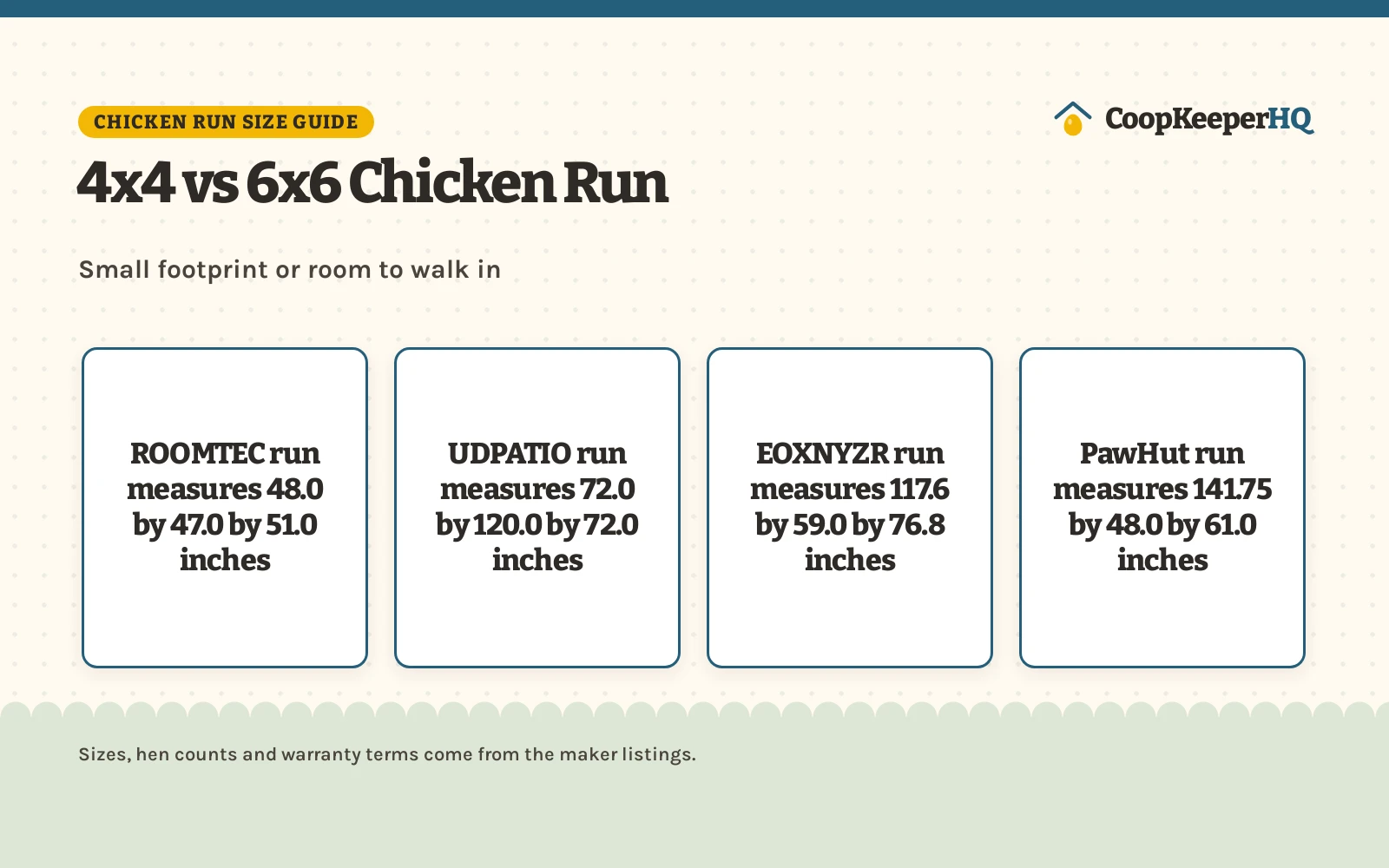
First, the GUTINNEEN AIR60-G extension run. The listing states a 79 x 37.8 x 26.8 in size, a fir wood frame, metal wire with a 1/2 in opening, and room for 4 to 6 chickens. It connects with AIR59 and AIR67 coops, and the listing states it assembles within half an hour with simple tools. It also states a 6-month warranty, the only warranty term in this group. Two cautions from the listing itself: the title and the bullets give different floor areas, and the spec table’s Overall Dimension field lists a much smaller size, so trust the bullets and the stated hen count over the spec table.
Second, the ACEPIC walk-in run. The listing states a 118.11 x 78.74 x 78.74 in size and a 65 sq ft area, galvanized steel pipes, a PE top of 60% HDPE and 40% LDPE, built-in roosting perches and a secure latching door. The walk-in height lets a keeper enter for feeding and cleaning without bending over, per the listing. No hen count and no warranty term are stated, and the listing recommends reinforcing the bottom with galvanized wire mesh, wood or stones for protection against wild animals such as raccoons.
Third, the BOSSIN spire-shaped walk-in run. The listing states a 118 x 39.5 x 59 in size, a steel pipe frame with a 1 in pipe diameter, galvanized technology, PVC-coated hexagonal wire mesh and a lockable galvanized door. The cover is stated as waterproof and anti-UV. No hen count and no warranty term are stated, and the listing leans on its reinforced design for wind and heavy rain.
Fourth, the GOJOOASIS wooden run. The listing states a 41 x 22 x 27.2 in size, a fir wood build, galvanized wire fence, a lockable entrance and room for 2 to 4 chickens, at 13 lb. It attaches to a main coop to give the flock extra outdoor room. One caution: the spec table’s Size field lists a larger size and a 2 to 3 capacity, while the title and bullets state the smaller size and 2 to 4 chickens, so trust the title and bullets.
Covers, mesh and latches
Mesh and cover decide whether a run lasts outdoors. Galvanized metal appears on the GOJOOASIS, BOSSIN and ACEPIC listings: the GOJOOASIS fence is galvanized wire, the ACEPIC frame is galvanized steel pipe, and the BOSSIN frame and door use galvanized technology. The BOSSIN mesh is PVC-coated hexagonal wire, and the GUTINNEEN wire opening is stated at 1/2 in. Covers differ too: the BOSSIN cover is stated as waterproof and anti-UV and the ACEPIC top is a PE cover. The GOJOOASIS listing states rainproof and UV-resistant wood, not a cover. Latches matter as much as mesh: the GOJOOASIS entrance locks, the BOSSIN door is a lockable galvanized door, and the ACEPIC door uses a secure latching system. For mesh choices in more detail, see our hardware cloth for chicken run guide.
Fitting a run to your yard
A run is used in every season, so pick a cover and mesh that suit rain, sun, snow and wind alike. The ACEPIC listing states its four corners are designed to improve wind resistance, and the BOSSIN listing states a reinforced design for wind and heavy rain. Leave walking room on at least one side for cleaning, and put the door where feed and water can be carried in without a squeeze. The chicken run size calculator helps compare footprints before buying. If local rules limit flock size or roosters, check local, HOA and state rules before sizing up.
Birds, breed size, run time and climate in; coop floor, run space, roost length and nesting boxes out.
Chicken wire keeps chickens in but does not keep raccoons, dogs or foxes out. Use 1/2 inch hardware cloth on openings, bury or apron it at the base, close the coop at dusk and use two-step latches that raccoons cannot open. Read our Safety Disclaimer.
FAQ for the flock
Is a 4×4 run big enough for 4 chickens?
It depends on the run, not the label alone. The GOJOOASIS listing states its run holds 2 to 4 chickens, while the GUTINNEEN listing states 4 to 6. Check the maker’s stated count for the exact run before buying.
What is the difference between a 4×4 and a 4×6 chicken run?
The larger footprint is longer, so the flock gets more ground to forage and more room to spread out. Mesh, cover, doors and frame matter as much as the footprint, so compare those too.
Do I need a cover on a chicken run?
A cover keeps rain and sun off the flock: the BOSSIN cover is stated as waterproof and anti-UV and the ACEPIC top is a PE cover. The GOJOOASIS listing states rainproof and UV-resistant wood rather than a cover, and the GUTINNEEN listing states no cover. An uncovered run leaves feed and birds exposed to weather.
How do I keep predators out of a run?
Use a run with galvanized wire, small mesh openings and lockable doors: the GUTINNEEN wire opening is stated at 1/2 in, and the GOJOOASIS, BOSSIN and ACEPIC listings state lockable or latching doors. The GUTINNEEN listing states doors but no lock. The ACEPIC listing also recommends reinforcing the bottom against wild animals such as raccoons.
Can a run attach to my existing coop?
Some can: the GOJOOASIS run attaches to a main coop, and the GUTINNEEN extension run connects with AIR59 and AIR67 coops. Check the listing for the matching coop before ordering, since not every run is made to attach.
More coop guides
- Attached Run vs Separate Chicken Run: Which One Should You Buy?
- Wooden vs Metal Chicken Run: What the Listings Actually Sell
- Best Chicken Run Cover: Tarps and Roofs That Fit
- Chicken Coop vs Chicken Run: What Each One Does
- Chicken Run Size Calculator: How Much Space Do Chickens Need?
See the chicken runs and fencing guides and the chicken coop guides.