Chicken Coop vs Chicken Run: What Each One Does
The key differences between a chicken coop and a chicken run, how each protects your flock, and how to combine them for safe roosting and outdoor scratching.

On this page
Top picks at a glance
As an Amazon Associate I earn from qualifying purchases.
- 1
 VEVOR Large Metal Chicken Coop with Run9.7/10View on Amazon
- 2
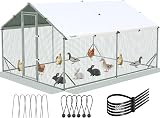 Quictent Large Metal Chicken Coop Run for 20+ Poultry w/Side9.7/10View on Amazon
- 3
 GOJOOASIS Chicken Coop for 15-20 Chickens Large Run Walk-in9.5/10View on Amazon
- 4
 Petsfit Outdoor Chicken Coop with Run for 4-6 ChickensView on Amazon
- 5
 Aivituvin Extra Large Chicken Coop 137" L Hen House Duck CageView on Amazon
- 6
 GOJOOASIS 40" Wooden Chicken Run Coop Outdoor Hen HouseView on Amazon
- 7
 55ft² Extra Large Chicken Coop with RunView on Amazon
- 8
 Extra Large Wooden Chicken Coop for 8-10 ChickensView on Amazon
- 9
 Aivituvin Extra Large Chicken Coop for 10-15 ChickensView on Amazon
Every morning starts with the same familiar sound: hens stirring on their perches, waiting for the pop door to open. When you step outside with feed and open the door, your birds rush into the run to stretch their wings, scratch the soil, and hunt for morning bugs. Understanding the difference between a chicken coop vs chicken run comes down to shelter versus space. A chicken coop is the enclosed, weatherproof building where chickens sleep at night, stay sheltered from drafts, and lay eggs in nesting boxes. A chicken run is the fenced outdoor enclosure where poultry spend daylight hours foraging, exercising, and dust bathing under secure wire mesh.
Other options for the coop
 Petsfit Outdoor Chicken Coop with Run for 4-6 ChickensCheck price on Amazon
 Aivituvin Extra Large Chicken Coop 137" L Hen House Duck CageCheck price on Amazon
 GOJOOASIS 40" Wooden Chicken Run Coop Outdoor Hen HouseCheck price on Amazon
 55ft² Extra Large Chicken Coop with RunCheck price on Amazon
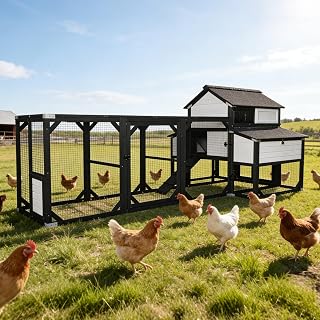 Extra Large Wooden Chicken Coop for 8-10 ChickensCheck price on Amazon
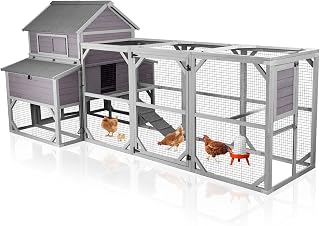 Aivituvin Extra Large Chicken Coop for 10-15 ChickensCheck price on Amazon
CoopKeeperHQ earns a commission if you buy through our links, at no added cost to you. Affiliate disclosure.
Chicken coop vs chicken run: what each structure does
Backyard chickens require separate environments to thrive: an indoor haven and an outdoor yard. The coop functions as your flock’s secure bedroom and laying quarters, offering elevated roosts, dark nesting boxes, and solid walls to block wind, rain, and night predators. The run serves as an activity yard, providing open ground under protective wire mesh where birds forage, exercise, and dust bathe in sunlight and fresh air without wandering into danger.
What is a chicken coop? Indoor shelter, roosting and laying
A chicken coop is an enclosed building designed for nightly rest, egg laying, and weather protection. Key features include elevated wooden roosting bars positioned above nest boxes, dark nesting compartments lined with dry bedding, high-wall ventilation to exhaust humid air without creating drafts at roost height, and a lockable pop door. When planning dimensions, keepers aim for a baseline of 4 square feet of floor space per standard hen when birds have daytime run access, as detailed in our guide on how big a chicken coop should be.
What is a chicken run? Outdoor space, exercise and safety
A chicken run is an exterior wire enclosure that gives poultry secure outdoor access throughout the day. It allows birds to express natural scratching and dust bathing behaviors, provides healthy sunlight, and prevents respiratory irritation caused by indoor dust. Strong perimeter wire mesh walls deter ground predators like dogs and foxes, while overhead covers protect foraging hens from birds of prey.
Do chickens need a run? Space, safety and flock routine
Nearly every backyard flock benefits from a dedicated run. Confining chickens indoors full-time leads to damp litter, ammonia buildup, feather pecking, and stress. Conversely, unfenced free ranging leaves birds vulnerable to neighborhood dogs, coyotes, and hawks. A fenced run provides safe outdoor ground, giving birds freedom to forage while keeping them protected from daytime predators.
Sizing differences and reference dimensions
Coops require compact floor space for sleeping and laying, whereas runs demand substantial ground area for daytime activity. Commercial listings illustrate how manufacturers scale these enclosures:
- Wooden walk-in run units: The TRYKERPET listing details a wooden run measuring 96.1 x 71 x 71 inches covering 47.3 square feet, with 6 nesting compartments, a maker-rated capacity of 8 to 12 chickens (also listed as 10 to 12 chickens), and a weight of 37.1 pounds.
- Walk-in metal runs: In the Amopatio listing, a 10×13-foot walk-in enclosure covers 87 square feet with galvanized steel tubing and wire mesh. The maker rates its enclosures across 3 sizes: small for 6 to 8 chickens, medium for 10 to 20 chickens, and large for 20 to 30 chickens.
- Large metal run designs: The Quictent listing specifies an 18x9x6.6-foot run covering 162 square feet with 1-inch diameter rust-resistant poles, 8 support bars, 20 gauge welded hardware cloth with 1×1-inch openings, a capacity of 20 to 30 poultry (with models for 30+ poultry), and a weight of 117.5 pounds.
- Extended-length metal runs: The Aoxun listing describes a 10x20x6.4-foot run (240 x 120 x 76.8 inches) with 1-inch diameter galvanized steel tubing and a 60-pound weight. Sannwsg provides walk-in pens in 10×13-foot and 10×26-foot layouts featuring 55 x 40-inch perches and 3 reinforced locks.
Predator protection: securing both environments
The coop defends against nocturnal hunters such as raccoons, opossums, and owls. It requires solid doors with predator-proof latches, like carabiner locks or barrel bolts, and vents covered in heavy wire mesh. The run protects against daytime raptors, coyotes, and dogs using sturdy welded wire mesh or hardware cloth, as explained in our guide to the best hardware cloth for chicken coops. Ground skirts, like the extended mesh skirts on Quictent models, deter burrowing predators. An automatic chicken coop door safely secures birds inside the coop at dusk.
Integrated combos vs detached layouts
Backyard setups use either an all-in-one combination or a detached coop paired with an independent walk-in run. Integrated combos house an elevated roost box directly over an attached pen under one frame, ideal for small yards; explore top models in our review of the best chicken coop with run. Mobile variations on wheels, called chicken tractors, move across fresh pasture regularly; see what a chicken tractor is. Detached setups place a standalone coop inside or beside a large walk-in metal run, offering superior head clearance and room to expand.
Weather management across seasons
In winter, solid coop walls and high vents keep sleeping birds dry and draft-free while exhausting humidity. In the run, weather care focuses on keeping ground dry and providing shade. Uncovered dirt runs turn into mud during rain. Adding waterproof covers keeps the ground usable: Aoxun includes a 420D Oxford fabric cover, Quictent uses a 180g/sqm UV-resistant cover, and Sannwsg uses removable PE covers with gabled roofs to shed precipitation. Find shelter layouts in our guide to covered chicken run ideas.
Daily flock management routine
Open the coop pop door at dawn to let birds into the run, checking that waterers and feeders are full. Collect eggs from clean nesting boxes during the day. At dusk, chickens naturally return to coop roosts; count heads and latch the pop door. Placing feed and water inside the run keeps coop bedding dry and deters rodents from nesting in sleeping quarters. For perimeter security steps, read how to predator proof a chicken coop.
Birds, breed size, run time and climate in; coop floor, run space, roost length and nesting boxes out.
Wash your hands after handling birds, eggs or equipment, supervise children around the flock, and check local rules on flock size and roosters before you buy. For sick birds, call a poultry veterinarian or your state extension office. See CDC backyard poultry guidance. Read our Safety Disclaimer.
FAQ for the flock
Do chickens sleep in the coop or in the run?
Chickens sleep inside the coop on elevated perches. Their natural instinct is to roost off the ground in a dark, draft-free enclosure safe from nighttime predators. The run is for daytime foraging and exercise.
Can chickens stay inside the run overnight?
No, chickens should not stay in an open run overnight. An outdoor run does not protect roosting birds from freezing wind, rain, or predator harassment. Chickens need the secure, solid walls of a coop each night.
Do I need a chicken run if my flock free ranges?
Yes, a secure run provides an essential safe space during bad weather, when predators are active, or when you cannot supervise the flock. It gives birds outdoor room without risk of predation.
Should feeders and waterers stay in the coop or in the run?
Placing feed and water in the run is best practice. It eliminates water spills and damp bedding inside the coop, and keeps bulk feed away from the flock’s sleeping area to discourage rodents.
How much outdoor run space does a flock need?
Run dimensions should prioritize ample room for natural scratching and foraging. Commercial walk-in models, such as Amopatio’s 87-square-foot and Quictent’s 162-square-foot enclosures, offer generous space to match outdoor territory to flock size.
More coop guides
- Best Chicken Coop With Run: Combos With Room to Scratch
- How to Predator Proof a Chicken Coop and Run
- Best Hardware Cloth for Chicken Coop Runs and Aprons
Explore our complete chicken runs and fencing resources and chicken coop guides to build the right setup for your flock.