Wooden vs Metal Chicken Run: What the Listings Actually Sell
Wooden vs metal chicken run compared: wooden frames with metal wire do the work in these listings, with sizes, capacities and listing quirks flagged.

On this page
Top picks at a glance
As an Amazon Associate I earn from qualifying purchases.
- 1
 Metal Chicken Coop 83"x38" Chicken Run Pen with Cover9.5/10View on Amazon
- 2
 PawHut 55" Wooden Chicken Coop Add-on ExpansionView on Amazon
- 3
 PawHut Chicken RunView on Amazon
- 4
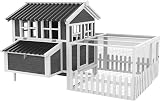 PawHut Wooden Chicken Coop with Run for 1-2 Chickens 68" xView on Amazon
- 5
 Extra Large Wooden Chicken Coop for 8-10 ChickensView on Amazon
- 6
 80" Chicken Coop with RunView on Amazon
Morning rounds with the feed bucket are when a run shows its age: a sagging corner, a wire panel that has come loose, the frame wobbling where the weather got in. That is the moment most keepers start wondering about wooden vs metal chicken run construction, and which one holds up to daily chores. The short answer: the listings we looked at are all wooden frames with metal wire, and the wire does as much of the work as the wood.
Other options for the coop
 PawHut 55" Wooden Chicken Coop Add-on ExpansionCheck price on Amazon
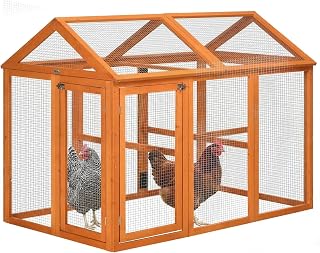 PawHut Chicken RunCheck price on Amazon
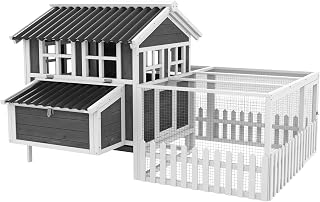 PawHut Wooden Chicken Coop with Run for 1-2 Chickens 68" xCheck price on Amazon
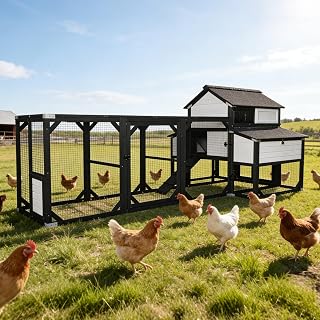 Extra Large Wooden Chicken Coop for 8-10 ChickensCheck price on Amazon
 80" Chicken Coop with RunCheck price on Amazon
CoopKeeperHQ earns a commission if you buy through our links, at no added cost to you. Affiliate disclosure.
Wooden vs metal chicken run: the short answer
A wooden run uses a timber frame, usually fir or pine in these listings, lined with metal wire mesh. The wood gives the run its shape and a place to hang doors, roofs and covers; the wire gives the ventilation and the predator barrier. None of the reference listings is a full-metal run, so this guide compares what the listings actually sell: wooden frames with steel wire, galvanized mesh or alloy steel panels, and where each material earns its keep.
What the wooden listings show
Every listing names wood for the frame. PawHut lists pine wood on the 65-inch coop with detachable run and fir on its walk-in runs; COZIWOW and TANGJEAMER list fir and natural wood; TRYKERPET lists a sturdy fir frame. Sizes run from the COZIWOW folding run at 43.3 by 37.1 by 21.26 inches and 17.6 pounds, through the PawHut 65-inch at 65.25 by 48.75 by 44 inches and 49.1 pounds, up to the PawHut 110.2-inch walk-in at 110.2 by 73 by 74 inches and 112 pounds. Wooden features repeat across listings: nesting boxes, roosting bars, ramps, sliding trays and lockable doors. The 83-inch PawHut walk-ins stand 73 inches tall with a 21.3 by 60.2 inch door you can walk through, which makes cleaning a different job from crouching at a 21-inch-tall run. For sizing help, see the chicken run size calculator and the chicken run and fencing guides.
Where the metal is
The metal in these runs is the wire. PawHut lists steel wire on the 65-inch coop; TANGJEAMER lists galvanized wire fencing; TRYKERPET lists galvanized wire mesh with locks on every door; COZIWOW lists heavy-duty metal mesh with locking mechanisms; the 55-inch PawHut add-on’s spec table carries a mismatched alloy steel row next to the 9.8-foot dimensions, contradicted by the wooden title and the fir and metal material row. The wire is what keeps predators out while letting air through, and every listing pairs it with the wooden frame. One practical note: the listings call out wire type but not wire gauge, so two runs that both say “metal mesh” may not be equally strong. Our hardware cloth vs chicken wire guide explains the difference in mesh types.
Weather and upkeep
Wood needs weather help and the listings show it. The PawHut 65-inch lists water-resistant painting; the walk-in runs list waterproof Oxford covers that block sun and rain; TRYKERPET lists a removable UV-proof and waterproof oxford cloth with a peaked roof that sheds water; COZIWOW lists UV-resistant and waterproof panels plus 4 garden stakes against wind. The upkeep pattern is clear: the wood frame needs its coating or cover maintained, while the wire needs its fastenings checked. A wooden run that loses its weather protection goes downhill faster than a metal one, so the covers and panels in these listings are not extras, they are part of the design.
Sizing the run to the flock
Maker capacities in the listings: the PawHut 65-inch is listed for 1 to 2 chickens depending on which row you read; the COZIWOW and the 55-inch PawHut add-on are listed for 2 to 4; the TANGJEAMER for 2 to 8; the 83-inch PawHut walk-ins for 8 to 10 with nearly 43 square feet; the TRYKERPET for 8 to 12 with 47.3 square feet; the 110.2-inch PawHut for 8 to 12 with nearly 56 square feet. The COZIWOW also lists 10 to 20 baby chicks. When a listing gives both a head count and an area, the area is the figure to plan from.
Listing quirks to check before you buy
Several listings contradict themselves. The PawHut 65-inch bullets say the run suits 1 chicken while the spec table says chicken capacity 2. The TRYKERPET title says 10 to 12 chickens while the bullets say 8 to 12. The 55-inch PawHut add-on lists a total area of 64.7 square feet against dimensions of 55 by 24.25 inches, and its spec table says spliceable no while the bullets say you can add space limitlessly. The 83-inch light brown walk-in lists 13 square feet in the spec table against nearly 43 square feet in the bullets, with a second dimensions row of 55.1 by 34.8 by 41.7 inches against the title’s 83.1 by 73.4 by 73. The 83-inch dark brown has the same copied rows: 1332.4 square inches and 55 by 24.25 by 25 inches. Trust the titles and bullets over the spec tables, and check dimensions before planning a spot in the yard.
Chicken wire keeps chickens in but does not keep raccoons, dogs or foxes out. Use 1/2 inch hardware cloth on openings, bury or apron it at the base, close the coop at dusk and use two-step latches that raccoons cannot open. Read our Safety Disclaimer.
FAQ for the flock
Is wood or metal better against predators?
The listings pair wooden frames with metal wire, and the wire is the predator barrier: galvanized wire fencing on the TANGJEAMER, galvanized wire mesh with locked doors on the TRYKERPET, and heavy-duty metal mesh with locking mechanisms on the COZIWOW. A wooden run is only as predator-resistant as its wire and its locks, so check both in the listing.
Do wooden runs need a cover?
The listings suggest yes. The walk-in runs ship with waterproof Oxford covers, the TRYKERPET has a removable UV-proof oxford cloth, the COZIWOW has UV-resistant panels, and the 65-inch PawHut lists water-resistant painting. The cover is part of the weather plan, not an add-on.
How many chickens fit in a run?
Maker figures in the listings range from 1 to 2 in the smallest to 8 to 12 in the largest, with 43, 47.3 and 56 square feet stated for the big walk-ins. When a listing contradicts itself on head count, plan from the square footage.
Are these runs portable?
One is built for it: the COZIWOW weighs 17.6 pounds and folds to 43.3 by 21.3 by 5.3 inches. The rest range from 21.3 to 112 pounds and are meant to stay put, with the COZIWOW also including 4 garden stakes for wind.
What wire gap should the mesh have?
The listings are not consistent here: the 110.2-inch PawHut lists a 0.5 inch gap size, and most listings state no gap at all. Where the listing does not state the mesh opening, assume you will need to check it on arrival.
More coop guides
- Hardware Cloth vs Chicken Wire: Which Keeps Predators Out?
- How to Predator Proof a Chicken Coop and Run
- Cheap Predator Proof Chicken Run: 5 Budget Backyard Picks (2026)
- Chicken Run Size Calculator: How Much Space Do Chickens Need?
See the chicken run and fencing picks and the predator proofing guide.