Best Flooring for Chick Brooder (2026)
Traction mats, paper towels, absorbent pine shavings and dry litter routines for keeping backyard chicks clean, stable and comfortable in the brooder.

On this page
Top picks at a glance
As an Amazon Associate I earn from qualifying purchases.
- 1
 Brinsea Ecoglow Safety 600 Chick or Duckling Brooder9.7/10View on Amazon
- 2
 Tetuga Brooder Box for Chick Starter Kit with 10x 12” Brooder9.6/10View on Amazon
- 3
 RentACoop Big Red Barn Chick Brooder Set with Heating Plate9.6/10View on Amazon
Setting up a brooder box before baby chicks arrive is an exciting chore for backyard keepers, but getting the floor right is essential for early flock safety. The best flooring for chick brooder setups begins with traction and dry absorbency: textured rubber shelf liner or unprinted paper towels laid down during early brooding, followed by absorbent pine shavings or chopped hemp bedding as chicks grow. Young chicks need firm grip underfoot to prevent slipping, followed by absorbent bedding to soak up moisture and keep droppings away from delicate down.
CoopKeeperHQ earns a commission if you buy through our links, at no added cost to you. Affiliate disclosure.
Best flooring for chick brooder: start with traction and absorbency
A brooder floor has to handle distinct jobs over the brooding cycle. Newly hatched chicks arrive with soft feet and developing balance, needing reliable grip so their legs stay firmly beneath them. Slipping on slick bottoms makes walking difficult and strains young joints. As chicks settle in, sanitation becomes just as critical. Chicks drink constantly, scatter water, and produce droppings that quickly turn a smooth floor into a wet, slippery mess.
Balancing these demands means matching the surface to the age of your birds. During early brooding, prioritize traction so chicks move confidently between warmth and feed. Once birds are steady on their feet and recognize starter feed, deep absorbent bedding takes over to manage moisture and odor. If you are still assembling your setup, our guide on what is a brooder box walks through container styles and basics.
The early brooding period: why traction matters most
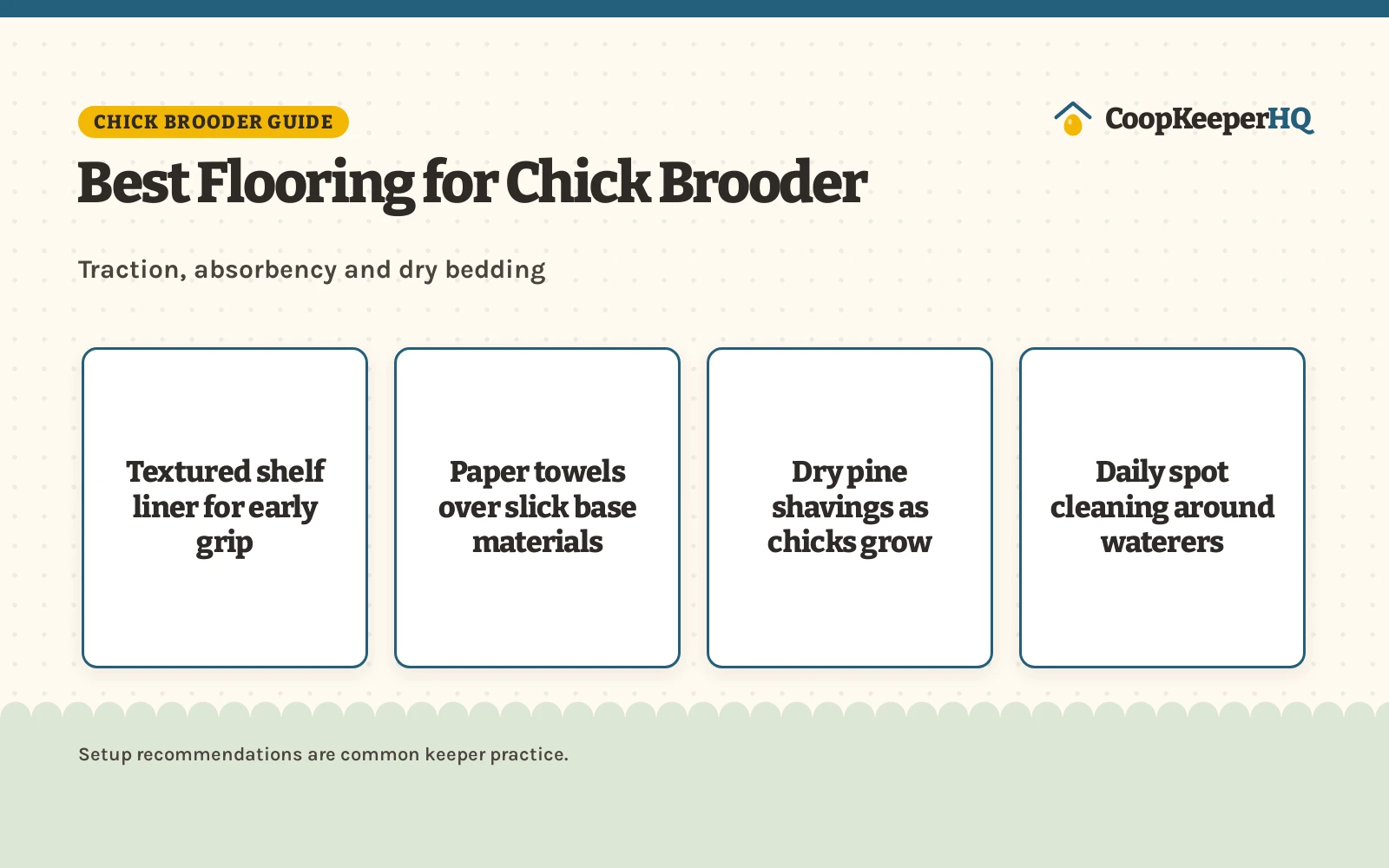
When chicks leave the incubator, their legs are still adjusting to supporting their body weight. Placing chicks directly onto slick plastic tote bottoms, smooth cardboard, or printed newspaper creates a hazard where feet slide outward, making it difficult to stand or reach warmth. Textured surfaces give tiny claws purchase so birds move without sliding.
Backyard keepers rely on proven materials to provide grip during this starting window:
- Textured shelf liner: Non-adhesive, rubberized shelf liner is an outstanding choice. It provides dependable grip, cushions the floor, stays flat without bunching, and rinses clean with warm water for reuse.
- Unprinted paper towels: Laying sheets of plain, embossed paper towels over the brooder base creates a clean, non-slip surface. The textured surface offers good footing, and soiled sheets roll up easily for disposal.
Avoid using terrycloth towels or fraying fabrics, as loose threads can wrap around small toes. If you notice a chick having trouble standing or walking, contact a poultry vet or your state extension office for guidance rather than guessing.
Switching to absorbent bedding as chicks grow
Chicks grow rapidly and become far more active after their initial days. They produce more waste, scratch constantly, and quickly soil flat liners. When chicks walk with steady balance and reliably peck at feed dishes instead of the floor, transition them to a deep layer of absorbent bedding.
Dry, loose bedding absorbs moisture from droppings and waterer drips, traps odors, and insulates against cold drafts. Common reliable bedding materials include:
- Kiln-dried pine shavings: Large-flake or medium-flake pine shavings remain the backyard standard. Kiln drying removes excess moisture and reduces natural resins, leaving soft flakes that cushion the floor. Avoid fine pine sawdust, which chicks may ingest.
- Chopped hemp bedding: Hemp is an absorbent brooder litter with very low dust. It holds moisture without caking and composts quickly after use.
- Aspen shavings: Aspen is a safe hardwood alternative to pine. It produces minimal scent, absorbs well, and is free of aromatic resins.
Our guide to the best chicken coop bedding compares pine shavings, hemp, and other flock litters in detail.
Flooring materials you should avoid in a brooder
Certain common household supplies create hazards when placed on a brooder floor. Avoiding these materials keeps your flock safe:
- Plain newspaper: Newspaper is slick and slippery, offering zero traction for small feet. It also absorbs poorly, leaving droppings on the surface to soil chick down. Similarly, bare slick cardboard without textured lining causes slipping.
- Cedar shavings: Never use cedar shavings or chips in a brooder. Cedar contains potent aromatic oils that release strong fumes in warm enclosures, irritating chick airways and eyes. Stick to kiln-dried pine or aspen.
- Fine sawdust: Fine wood dust can be ingested by chicks mistaking it for starter feed, causing digestive blockages. Dust also hangs in the air, irritating sensitive breathing passages.
- Uncovered wire mesh: Bare wire mesh can pinch small toes and strain developing joints while allowing cold drafts up from below. When using wire-bottom cages, cover the mesh with solid cardboard and a textured liner during early brooding.
Keeping brooder flooring dry around waterers
Dampness is a major threat to brooder bedding. Warmth combined with wet litter creates ammonia fumes and chills chicks that sit on damp spots. Because chicks paddle and scratch, the water area requires careful management.
Simple adjustments keep your brooder floor dry and reduce cleanup:
- Elevate the drinker slightly: Set your waterer on a low, stable platform like a wooden block or paver. Setting the rim slightly above litter height stops chicks from kicking shavings into the trough while keeping water within easy reach.
- Use a dedicated drip catcher: Placing a shallow plastic tray under the waterer catches overflow before moisture soaks into the bedding. Empty it during morning chores.
- Choose clean drinker designs: Traditional open founts spill easily when bumped. Upgrading to a chick nipple drinker or narrow fount cuts spills significantly. Our water feeder for chicks guide reviews clean drinker options.
- Separate feed and water: Keep feed across the brooder from the waterer. Using your drinker alongside a dispenser from our chicken feeder for chicks guide keeps feed dry and bedding clean.
Brooder base materials and heat safety
Whether you build a wooden box, repurpose a galvanized stock tank, or use a plastic tote, the brooder base must support bedding while providing a safe foundation for heating equipment.
Cardboard and plastic tubs work well, but require caution around heat sources. Traditional heat lamps with glass bulbs carry severe fire risks if knocked into dry pine shavings. Clamp fixtures can slip, fall, and ignite bedding quickly.
Radiant heat plates offer a far safer alternative. A heat plate warms chicks beneath an insulated panel, mimicking a mother hen. Operating at controlled temperatures without glowing bulbs, plates avoid high surface heat and reduce fire risks around dry bedding. Our best brooder heat plate guide reviews radiant warmers, while our heat plate vs heat lamp comparison details why radiant heat is safer for brooder litter.
Managing droppings and daily cleanup routines
Maintaining clean brooder flooring fits easily into a daily backyard rhythm with a morning check and an evening look.
- Daily spot cleaning: Check around the heat plate and waterer each morning. Scoop out wet clusters of shavings and soiled droppings with a garden trowel, replacing them with dry bedding.
- Adding fresh dry bedding: After removing damp spots, scatter a light layer of clean shavings. This keeps the surface dry and provides a clean layer underfoot.
- Refreshing paper liners: During the starting days on paper towels, roll up soiled sheets and replace them throughout the day. Reusable textured liners should be swapped out, rinsed with warm water, and dried before reuse.
- Full bedding cleanouts: When bedding feels damp or smells musty, shovel all shavings into compost, wipe the floor clean, and lay down fresh shavings.
A simple brooder flooring checklist
Before introducing your new flock to their nursery pen, verify your floor setup against this essential checklist:
- The brooder base is solid, sturdy, and protected against floor drafts
- Textured shelf liner or embossed paper towels are laid down for initial traction
- Slick newspaper, cedar shavings, and fine sawdust are kept out of the brooder
- Loose bedding like kiln-dried pine shavings or hemp is added once chicks recognize feed
- The waterer is elevated on a stable block to stop splashes from soaking into shavings
- A radiant heat plate is installed firmly without fire hazard above dry litter
- Damp bedding spots are scooped out daily and replaced with dry flakes
Birds, breed size, run time and climate in; coop floor, run space, roost length and nesting boxes out.
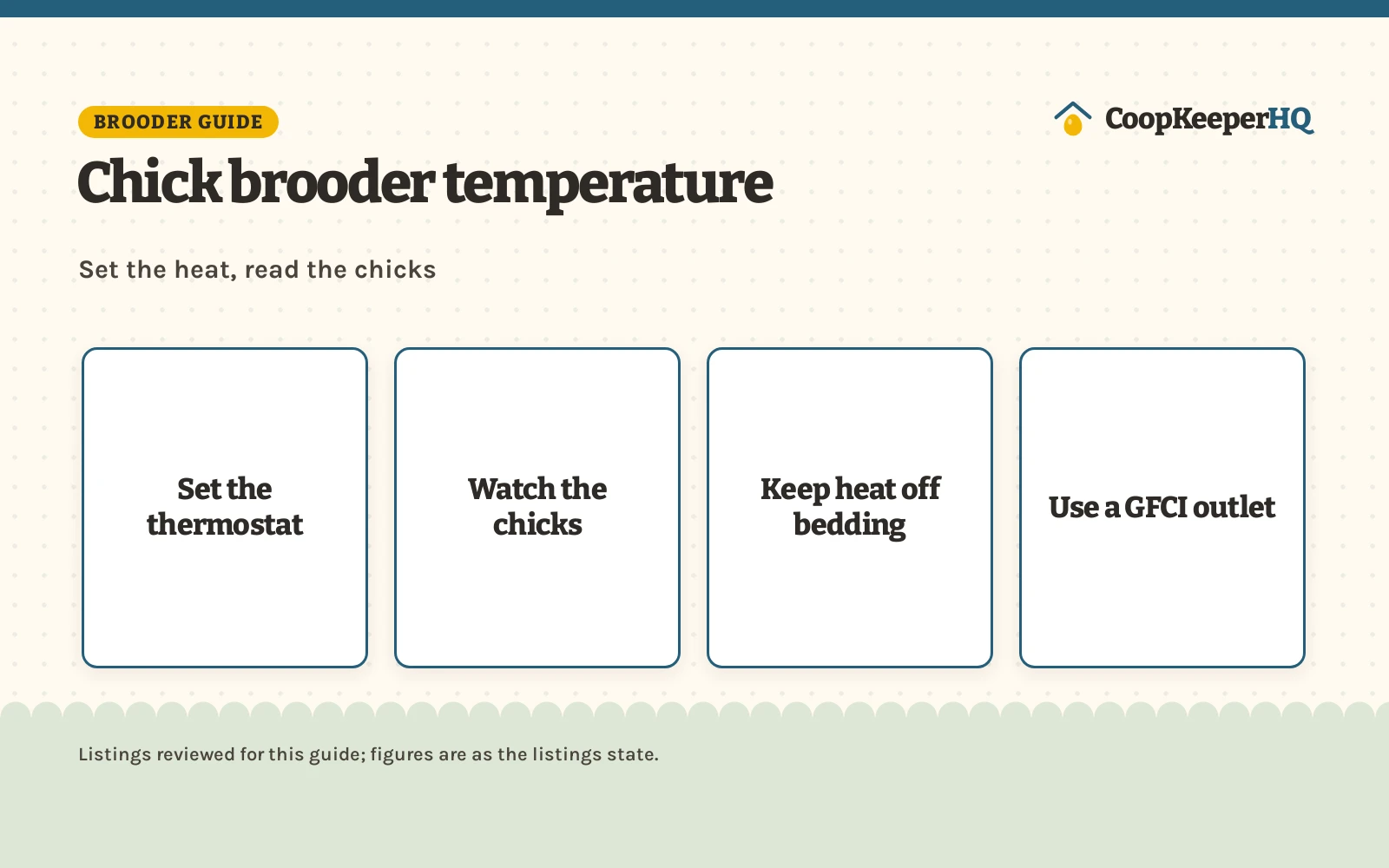
Heat lamps are a common cause of coop and barn fires. If you use one, secure it with more than the clamp (a chain or wire to a fixed point), keep it well away from bedding, walls and cardboard, and plug it into an outlet or a cord rated for the load. Radiant heat plates run cooler and remove most of that risk. Check chicks often in the first days: huddling under the heat means too cold, spreading to the edges means too warm. Read our Safety Disclaimer.
FAQ for the flock
What is the best flooring for baby chicks during their early days?
Textured rubber shelf liner or unprinted embossed paper towels provide the best starting floor. These materials offer dependable traction so newly hatched chicks walk without slipping, helping them reach warmth and feed safely.
Can you use newspaper as chick brooder flooring?
Avoid plain newspaper. Its glossy surface offers no traction, leading to slipping and joint strain. Wet newspaper also holds moisture against chick down rather than absorbing it.
Are pine shavings safe for chick brooder bedding?
Kiln-dried pine shavings are safe once chicks recognize starter feed. Kiln drying removes moisture and reduces natural resins. Choose large or medium flakes rather than fine sawdust.
Why should cedar shavings never be used in a brooder?
Cedar releases strong aromatic oils that irritate sensitive poultry airways and eyes in warm enclosures. Always choose kiln-dried pine, aspen, or chopped hemp instead.
How often should you clean the bedding in a chick brooder?
Spot clean wet bedding around the waterer daily, removing damp clumps and adding dry flakes. Change all bedding whenever litter feels damp or smells musty.
More coop guides
- What Is a Brooder Box?
- Best Brooder Heat Plate: Safer Heat for Chicks
- Best Chicken Coop Bedding: Shavings, Hemp and Sand
See the brooder picks and the coop supply guides.