What Is a Brooder Box?
A complete guide to what a brooder box is, how it protects baby chicks, essential heating and bedding setups, and when birds can move to the coop.

On this page
Top picks at a glance
As an Amazon Associate I earn from qualifying purchases.
- 1
 Proshine Chicken and Quail Brooder Box with 50W Heating Lamp9.6/10View on Amazon
- 2
 PETTEN Brooder Box for Chicks Starter Kit with 15 x 11 Inch9.6/10View on Amazon
- 3
 Nalwort 21-Piece Large Chicken Brooder Box 32 in9.5/10View on Amazon
- 4
 Wooden Chick Brooder Box with Heat Lamp and ThermometerView on Amazon
- 5
 15.74 x 11.81 x 11.81” Chick Brooder Box with Heating LampView on Amazon
- 6
 Brooder Box for Chicks,Indoor Smart Wooden Poultry BrooderView on Amazon
- 7
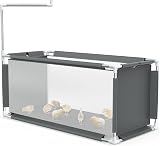 Chicken Brooder Box 10.6 cu ftView on Amazon
- 8
 Brooder Box for ChicksView on Amazon
- 9
 Large Chick Brooder Heating Plate Chick Brooder Box 21.6"View on Amazon
A brooder box is a heated, secure enclosure designed to shelter and raise baby chicks safely until they develop mature juvenile feathers. Newly hatched chicks lack the ability to regulate their body temperature, so the enclosure replaces the maternal warmth of a broody hen with a controlled artificial heat source. Setting up a dedicated brooder provides growing poultry with draft-free housing, clean bedding, steady warmth, fresh water and chick starter feed.
Other options for the coop
 Wooden Chick Brooder Box with Heat Lamp and ThermometerCheck price on Amazon
 15.74 x 11.81 x 11.81” Chick Brooder Box with Heating LampCheck price on Amazon
 Brooder Box for Chicks,Indoor Smart Wooden Poultry BrooderCheck price on Amazon
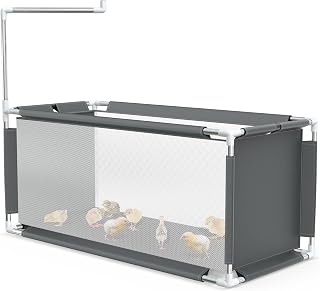 Chicken Brooder Box 10.6 cu ftCheck price on Amazon
 Brooder Box for ChicksCheck price on Amazon
 Large Chick Brooder Heating Plate Chick Brooder Box 21.6"Check price on Amazon
CoopKeeperHQ earns a commission if you buy through our links, at no added cost to you. Affiliate disclosure.
What is a brooder box and why baby chicks need one
In natural conditions, a mother hen broods her chicks under her down, shielding them from wind and providing continuous body heat. In backyard poultry keeping, keepers raise chicks hatched in an incubator or ordered from a hatchery, which means the keeper must supply that maternal warmth artificially. A brooder box acts as that surrogate nest, confining the birds to a manageable area where they cannot wander away into cold drafts or become lost.
Beyond warmth, the enclosure protects fragile birds from household pets, curious children and sudden temperature swings. It also concentrates their feed and water in an accessible location so young birds do not waste vital energy searching for nourishment during their critical early growth stages.
Core components of a safe chick brooder
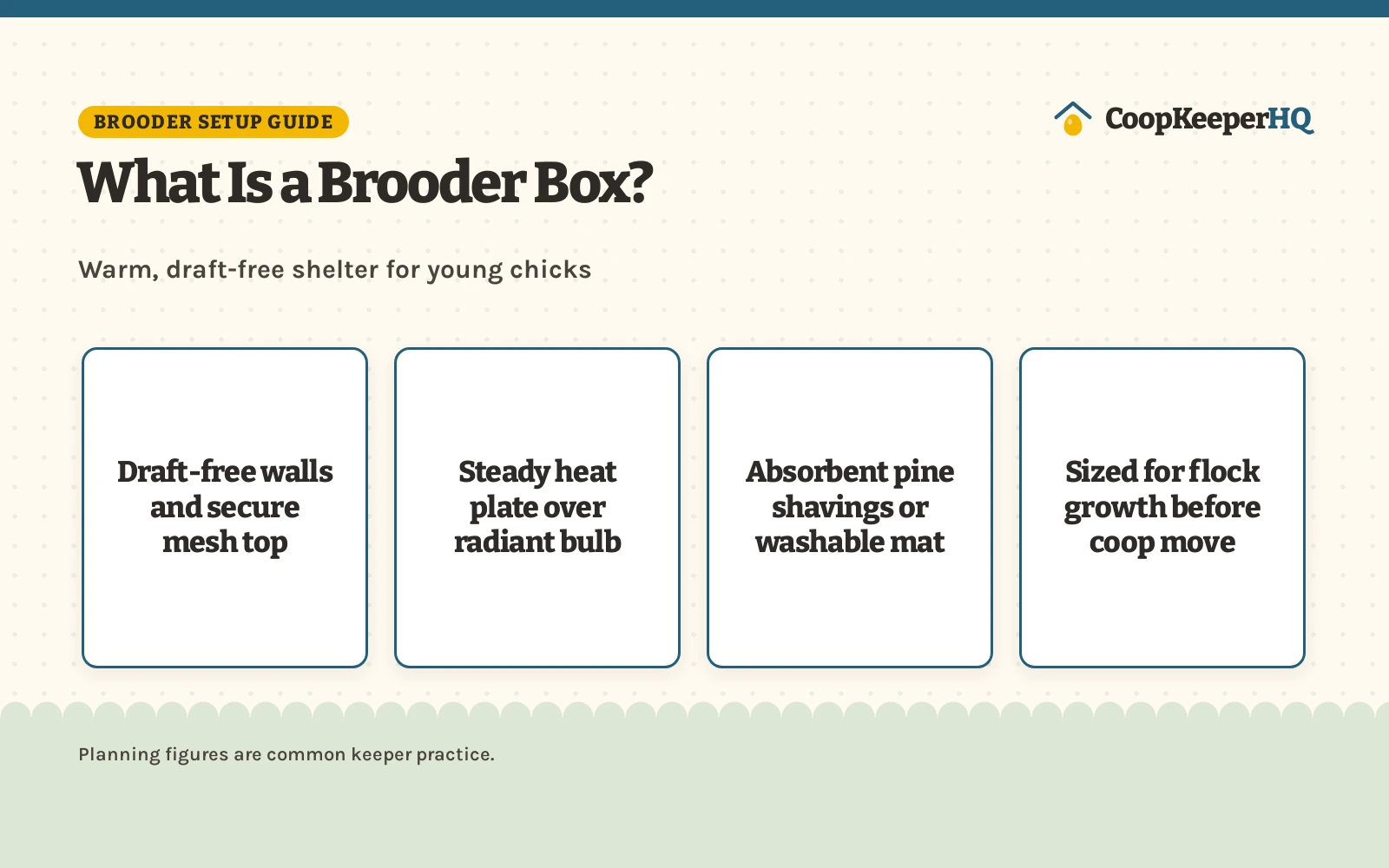
A functional brooder requires several coordinated components working together: solid or mesh walls to block ground-level drafts, an overhead heat source, absorbent bedding, a chick feeder and a dependable drinker. Adequate wall height prevents active chicks from fluttering over the rim as their wing feathers develop. A secure top cover made of breathable wire or mesh is essential to keep birds contained and stop curious house pets from reaching inside.
Ventilation is equally critical. While the perimeter must stop drafts at floor level, the top must remain open to let moisture, ammonia fumes and excess heat escape freely. Proper airflow prevents condensation from wetting the litter, protecting young respiratory systems from damp air.
Choose the right heat source
Supplying warmth is the primary duty of any brooder, and keepers have several heating styles to evaluate. Traditional hanging heat lamps use radiant bulbs, but they introduce severe fire hazards if bumped into dry bedding. We recommend radiant heat plates instead, which radiate gentle warmth from an insulated panel that chicks huddle beneath like a mother hen. Our brooder heat plate guide compares popular panels, and our heat plate vs heat lamp comparison details the fire hazards of exposed bulbs.
Commercial brooder listings publish various heating configurations. For example, Magicfly includes a 15 x 11 inch heating plate rated at 200W with its enclosure starter kit. In wooden brooder kits, ATHCOHT includes two 50W heating bulbs with its compact starter box, while its larger cabinet model includes 2 ceramic heat lamps. When using any electrical heating device, plug the equipment into a GFCI outlet and keep electrical cords secured away from curious beaks.
Brooder bedding and floor care
Chicks spend their days walking directly on the brooder floor, so the bedding material must absorb droppings while offering secure footing. Clean pine shavings represent the standard choice for home brooders because they absorb moisture effectively and allow chicks to scratch naturally. Avoid slippery surfaces such as smooth cardboard or newspaper, which cause young chicks to slip and develop crippling leg splay. Our chicken coop bedding guide reviews suitable wood and plant shavings.
Certain fabric enclosures feature integrated washable linings to protect household flooring. For example, ComfyKit and LavviTech manufacture pop-up brooders using 420D Oxford fabric paired with a removable waterproof floor pad that rinses clean. Similarly, VISCOO provides a coated 600D Oxford cloth floor mat with a 4.7 inch raised perimeter inside its metal panel playpen. In wooden or plastic enclosures, add dry shavings regularly, spot clean wet areas around drinkers, and replace damp bedding whenever the surface feels moist.
Water and feeder setup
Hydration and nutrition require thoughtful placement inside the brooder box. Baby chicks can easily drown in deep bowls, so water must be offered through dedicated chick waterers featuring narrow circular drinking troughs or clean drip nipples. Our chick waterer guide compares beginner-friendly designs. Elevate the waterer on a stable wooden block so scratching chicks do not kick litter into the reservoir.
Keepers should position feed troughs and water fonts on the opposite side of the brooder from the heater. This arrangement forces chicks to venture out from the warmth to eat and drink, encouraging exercise and helping them adapt to varying temperatures. Refill feed daily to prevent mash from souring, and empty and rinse drinkers whenever droppings or shavings contaminate the water.
Ventilation and predator security
Even though young chicks require reliable warmth, an airtight brooder is unhealthy. Accumulating moisture from droppings and breath creates stale, humid air that fosters respiratory problems and bacterial growth. Brooder boxes require continuous passive ventilation through mesh ceiling panels or upper wall vents, ensuring moist air rises and vents out while the floor zone remains calm and draft free.
Security is equally important, particularly when operating a brooder in a garage, barn or home with household pets. Cats, dogs and rodents can quickly harm young birds if the brooder lacks a sturdy top. Covering your enclosure with welded wire or hardware cloth stops curious paws from reaching through. Our hardware cloth guide explains mesh sizing and wire durability for poultry enclosures.
Enclosure styles: pop-up pens, wooden boxes and modular panels
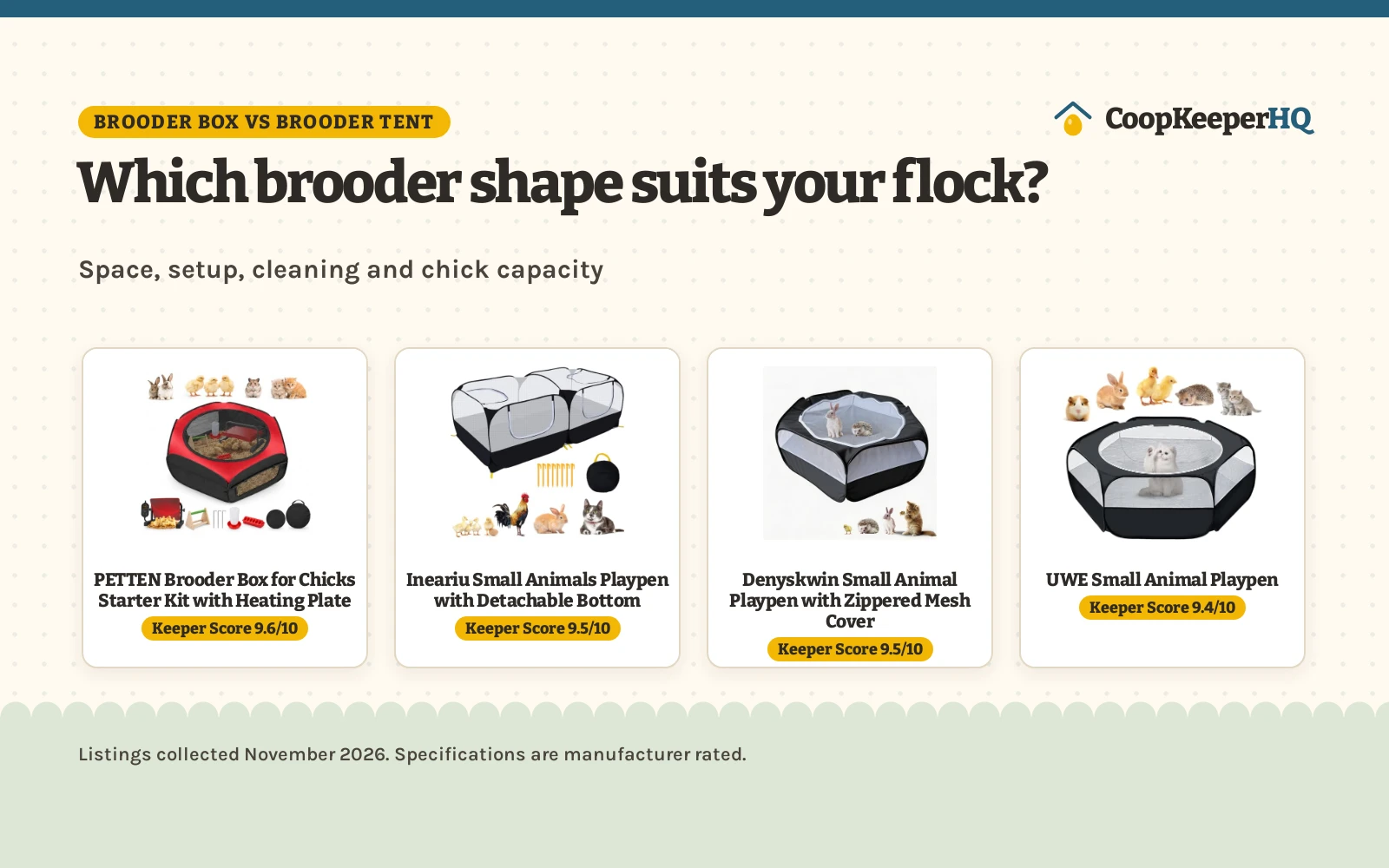
Backyard poultry keepers choose from several enclosure designs depending on available space, flock numbers and storage preferences. Commercial brooder listings illustrate the wide range of available configurations and dimensions:
- Pop-up fabric playpens: Lightweight fabric enclosures fold down into compact storage bags and set up without tools. ComfyKit lists a pop-up brooder measuring 45 x 23 x 20.5 inches rated for up to 15 chicks with 2 doors. LavviTech publishes a round pop-up model measuring 45 x 45 x 20.5 inches rated for up to 20 chicks. For very small batches or temporary isolation, Siedihit lists an octagonal 600D polyester Oxford pen measuring 25 x 25 x 17 inches with 8 mesh side panels, and MZNZ lists a matching 25 x 25 x 17 inch pop-up pen in 600D fabric with 8 mesh sides.
- Solid wooden cabinets: Rigid wooden units offer excellent insulation and draft blocking. ATHCOHT lists a compact wooden brooder measuring 15.7 x 12 x 12 inches for small clutches, as well as a larger wooden cabinet measuring 31.5 x 15.75 x 18.1 inches with acrylic viewing windows. CroBlissful lists an elevated wooden brooder measuring 40 x 16 x 16 inches with removable table legs and 2 automatic water feeders.
- Modular panel systems: Interlocking wire or plastic grids allow keepers to expand brooder floor space as birds grow. VISCOO lists a 12-panel coated iron wire enclosure measuring 48 x 24 x 16 inches with 0.5-inch mesh spacing, as well as a 24-panel semi-transparent plastic enclosure measuring 48 x 24 x 28 inches.
Managing warmth by watching chick behavior
Rather than obsessing over rigid numerical formulas, observant keepers gauge brooder comfort by watching how their chicks behave. Chick body language and vocalizations offer clear, real-time indicators of whether the heat source is positioned correctly.
When the temperature is balanced, chicks scatter evenly across the bedding, alternating between napping comfortably under the heater and exploring the cooler zone to feed and drink. If chicks cluster tightly directly beneath the heat plate or bulb, piling atop one another while peeping loudly, they are chilled. In that situation, lower the radiant plate closer to their backs or adjust your heater. Conversely, if chicks retreat to the outer perimeter, panting with open beaks and outstretched wings, the brooder is overheating and the heat source must be raised or turned down immediately.
Daily brooder maintenance routine
Raising chicks successfully relies on a consistent daily maintenance routine. Young birds grow rapidly, which means their feed consumption, water usage and manure production increase with each passing day. A dependable morning and evening check keeps the environment sanitary and dry.
Begin each visit by checking the waterer. Empty out dirty water, rinse away accumulated shavings and refill with fresh water. Inspect the feeder to ensure chicks have not emptied the hopper or soiled the feed. Scoop out wet bedding around the drinking station, scatter clean dry shavings over damp patches, and verify that the heating plate or element is functioning correctly. If you notice an individual bird acting listless, standing hunched away from the flock or showing signs of distress, consult a qualified poultry vet or your local university extension office for professional guidance.
A simple brooder setup checklist
- Enclosure features solid or draft-blocking perimeter walls
- Breathable wire mesh top cover protects chicks from predators and pets
- Safe radiant heat plate installed with adjustable height
- Dry pine shavings or non-slip washable mat covering the entire floor
- Shallow chick fount or nipple drinker elevated slightly above litter level
- Dedicated chick starter feeder placed away from the heating element
- Electrical cords connected to a GFCI protected outlet
As your birds mature, plan ahead for their eventual transition to outdoor housing. Learn about space requirements and coop dimensions in our how big should a chicken coop be guide.
Birds, breed size, run time and climate in; coop floor, run space, roost length and nesting boxes out.
Heat lamps are a common cause of coop and barn fires. If you use one, secure it with more than the clamp (a chain or wire to a fixed point), keep it well away from bedding, walls and cardboard, and plug it into an outlet or a cord rated for the load. Radiant heat plates run cooler and remove most of that risk. Check chicks often in the first days: huddling under the heat means too cold, spreading to the edges means too warm. Read our Safety Disclaimer.
FAQ for the flock
What is a brooder box?
A brooder box is a secure, draft-free enclosure equipped with a dedicated heat source, bedding, feed and water. It shelters newly hatched poultry until they grow insulating feathers and can regulate their own body temperature.
How long do chicks stay in a brooder box?
Chicks remain in the brooder until they have shed their down and developed full juvenile plumage. Once fully feathered and acclimated to ambient temperatures, they can safely move into a secure outdoor chicken coop.
Can you use a cardboard box as a brooder?
Keepers sometimes use heavy cardboard boxes for initial brooding because cardboard blocks drafts and is disposable. However, cardboard absorbs moisture, degrades when wet, cannot be sanitized and poses a fire hazard if paired with heat bulbs. Sturdy plastic, wood or fabric playpens provide longer lasting, safer housing.
What is the safest way to heat a chick brooder?
Radiant brooder heat plates are the safest choice for heating a brooder box. Unlike traditional heat lamps with fragile glass bulbs that can shatter or ignite dry bedding, heat plates operate at lower surface temperatures and mimic the warmth of a mother hen.
Where should you set up a brooder box?
Place the brooder in a dry, draft-free indoor location protected from outdoor weather, wild rodents and domestic pets. Common locations include a spare room, basement, enclosed porch or secure outbuilding equipped with a GFCI electrical outlet.
More coop guides
- Best Brooder Heat Plate: Safer Heat for Chicks
- Heat Plate vs Heat Lamp for Chicks: Which Is Safer?
- Best Waterer for Baby Chicks (2026): 5 Top Picks Compared
See the brooder picks and the chicken coop guides.