Best Worms for Composting (2026)
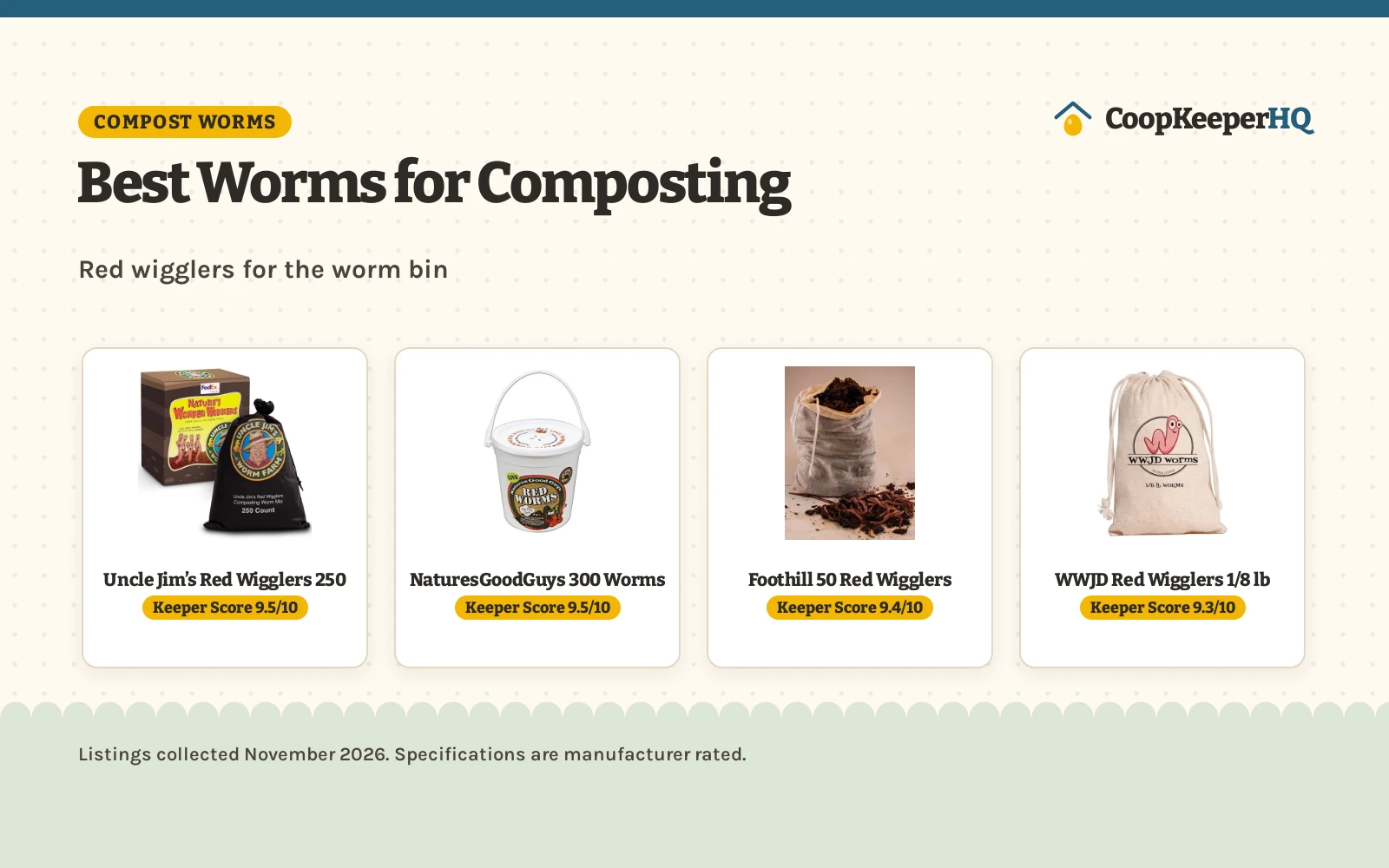
Four red wiggler packs for the worm bin compared by count, pack size, species and castings.

On this page
Top picks at a glance
As an Amazon Associate I earn from qualifying purchases.
- 1
 Best OverallUncle Jim’s Red Wigglers 2509.5/10View on Amazon
- 2
 Most WormsNaturesGoodGuys 300 Worms9.5/10View on Amazon
- 3
 Best Pure StrainFoothill 50 Red Wigglers9.4/10View on Amazon
- 4
 Smallest StarterWWJD Red Wigglers 1/8 lb9.3/10View on Amazon
The coop clean-out leaves a pile of bedding and droppings, and the kitchen sends out scraps every day. The best worms for composting are red wigglers sold by count or by weight, and the right pack depends on the size of the bin and the scraps on hand.
CoopKeeperHQ earns a commission if you buy through our links, at no added cost to you. Affiliate disclosure.
Quick picks
- Best Overall Uncle Jim’s Red Wigglers 250: 250 worms, castings the maker says are richer in phosphates, nitrogen and potash, from beds decades old Check price on Amazon
- Most Worms NaturesGoodGuys 300 Worms: 300 red wigglers with a 2 to 3 per sq ft release rate and a 24 hour feeding claim Check price on Amazon
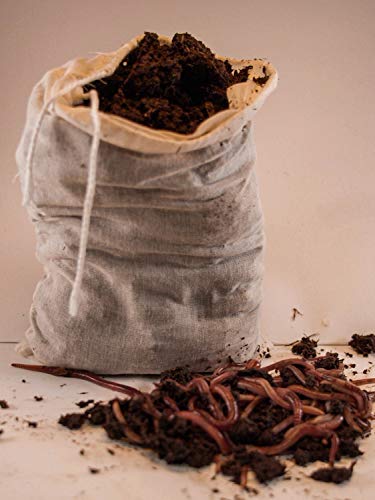
- Best Pure Strain Foothill 50 Red Wigglers: Pure Eisenia Fetida, hand-selected, packed fresh in a breathable bag Check price on Amazon
- Smallest Starter WWJD Red Wigglers 1/8 lb: A 1/8 lb pack for a first bin or a small raised bed Check price on Amazon
Picks for the flock
Uncle Jim’s Worm Farm Red Wiggler Composting
A 250 count starter pack of red wiggler composting worms from beds the maker says are decades old, with castings the maker says are richer in phosphates, nitrogen and potash than average lawn soil.
Who it's for: a keeper starting a first worm bin who wants a large count.
Who should skip it: a keeper who wants a pure single-species pack.
Uncle Jim’s Worm Farm sends 250 red wiggler composting worms as a starter pack, and the maker says the worms come from beds that are decades old. The maker also says the castings are 7 times richer in phosphates, 5 times richer in nitrogen and 11 times richer in potash than average lawn soil, and that the farm has run for over 50 years on over 40 acres. The worms are raised in the USA.
Pros
- 250 worms in one starter pack, a larger count than the 50 count starter here
- Castings the maker says are 7 times richer in phosphates, 5 times richer in nitrogen and 11 times richer in potash than average lawn soil
- A mix the maker says works all layers of the compost, not just the top few inches
- Maker in business for over 50 years on over 40 acres
Cons
- A mix that may hold different earthworm species, not a pure single-species pack
- No warranty term is stated
- Sold as worms only, with no bin or bedding included
- A keeper stocking a large bed may want the 300 count pack instead
NaturesGoodGuys Live Redworms Composting Red
A 300 count pack of live redworms raised for composting, with a stated release rate of 2 to 3 worms per sq ft and a maker claim that the worms eat their weight in organic matter every 24 hours.
Who it's for: a keeper stocking a bed or a larger bin.
Who should skip it: a keeper starting a small first bin, or one who wants the species named.
NaturesGoodGuys sends 300 live redworms raised for composting, the largest count in this group. The maker gives a release rate of 2 to 3 worms per sq ft, says the worms eat their weight in organic matter every 24 hours, and names fruits, veggies, coffee grounds and eggshell as food they consume. The castings the worms produce are the payoff for the bin.
Pros
- 300 worms, the largest count here
- A stated release rate of 2 to 3 worms per sq ft
- The maker says the worms eat their weight in organic matter every 24 hours
- The maker names fruits, veggies, coffee grounds and eggshell as food the worms consume
Cons
- No warranty term is stated
- A keeper who wants Eisenia Fetida named on the pack should pick the pure 50 count pack instead
- Sold as worms only, with no bin or bedding included
- A keeper with a small first bin may find 300 worms more than the setup needs
FoothillSierraGarden 50-Count Pure Red Wiggler
A 50 count pack of pure Eisenia Fetida red wigglers, hand-selected and packed fresh, with handling instructions and a breathable cotton bag.
Who it's for: a keeper who wants one pure species and a small starter.
Who should skip it: a keeper who wants a large count on day one.
FoothillSierraGarden sends 50 pure Eisenia Fetida red wigglers, hand-selected and packed fresh, and the maker says the worms come direct from the farm right after a daily harvest. The pack comes in a premium cotton breathable bag that measures 7 in x 8 in x 2 in, with handling instructions included. The maker says the colony can double in 3 months, and the worms can live in any composter or compost bin.
Pros
- Pure Eisenia Fetida, not a mix
- Hand-selected and packed fresh, direct from the farm after a daily harvest
- Handling instructions included, with a premium cotton breathable bag
- The maker says the colony can double in 3 months
Cons
- Only 50 worms, the smallest count here
- Named as a colony starter, so it suits starting a colony more than stocking a large bed at once
- Ships fresh from a daily harvest, so the bin and bedding should be ready when the pack arrives
- A keeper who wants 250 or 300 worms needs more than one pack
WWJD Worms Red Wigglers Composting Worms
A 1/8 lb pack of red wiggler composting worms for gardens, raised beds and worm bins, with a low-maintenance setup the maker says suits home composting.
Who it's for: a keeper who wants a small start for a first bin or a raised bed.
Who should skip it: a keeper who shops by count or wants a named species.
WWJD Worms sends red wigglers by weight at 1/8 lb, with no count stated. The maker says the worms turn food scraps and other suitable organic waste into compost, and that the castings can enrich garden soil and support healthy growth. The maker describes the worms as easy to maintain for home composting and gardening.
Pros
- A small 1/8 lb pack for a first bin or a small raised bed
- The maker describes the worms as easy to maintain for home composting
- Suits raised beds, a worm bin and indoor plant soil, by the maker’s account
- The worms turn food scraps and organic waste into castings the maker says enrich garden soil
Cons
- Sold by weight at 1/8 lb, with no count to compare against the counted packs
- A keeper who wants Eisenia Fetida named on the pack should pick the pure 50 count pack instead
- No bin or bedding is included
- The smallest pack here, so it suits a trial more than a full bin
Other options for the coop
 Uncle Jim's Worm Farm Super Red European Nightcrawlers forCheck price on Amazon
 Uncle Jim's Worm Farm 1000 Count Red Wiggler Composting WormsCheck price on Amazon
Specs at a glance
| Model | Keeper Score | Count | Type | Use | Warranty |
|---|---|---|---|---|---|
| Uncle Jim’s Red Wigglers 250 | 9.5/10 | 250 count | Red wiggler mix | Garden soil or fishing | Not stated |
| NaturesGoodGuys 300 Worms | 9.5/10 | 300 count | Red worms | Composting | Not stated |
| Foothill 50 Red Wigglers | 9.4/10 | 50 count | Pure Eisenia Fetida | Composting, fishing bait, reptile and chicken food | Not stated |
| WWJD Red Wigglers 1/8 lb | 9.3/10 | Not stated | Red wigglers | Gardens, raised beds, worm bins | Not stated |
These figures are the coop makers’ own ratings, read from each listing on 19 November 2026.
Flock fit
Uncle Jim’s Red Wigglers 250
NaturesGoodGuys 300 Worms
Foothill 50 Red Wigglers
WWJD Red Wigglers 1/8 lb
Buying guide: choosing the best worms for composting
Red wigglers or a mix?
Red wigglers are the usual worm for a compost bin, and a pure Eisenia Fetida pack names the species on the pack. Uncle Jim’s sends a mix from beds that are decades old, with different earthworm species working all layers of the compost rather than just the top few inches. A keeper who wants one species named should pick the pure pack, while a keeper who wants the mix should pick the 250 count starter.
How many worms do you need?
Counts here run from 50 to 300, with one pack sold by weight at 1/8 lb and no count. A 50 count pack is a colony starter, and the maker says the colony can double in 3 months. A 300 count pack suits a larger bin or a bed, and the maker gives a release rate of 2 to 3 worms per sq ft for it. Match the count to the bin and the scraps on hand. The compost bin ideas guide covers bin choices, and how to compost chicken poop at home covers the coop side of the pile.
What can composting worms eat?
The NaturesGoodGuys listing names fruits, veggies, coffee grounds and eggshell, and says the worms eat their weight in organic matter every 24 hours. The WWJD listing names food scraps and other suitable organic waste, and says the worms turn it into compost that can enrich garden soil.
What do the castings numbers mean?
Uncle Jim’s says its castings are 7 times richer in phosphates, 5 times richer in nitrogen and 11 times richer in potash than average lawn soil. Those are the maker’s own figures, and they compare castings with lawn soil rather than with other compost. Use castings as a soil conditioner for the garden.
Wash your hands after handling birds, eggs or equipment, supervise children around the flock, and check local rules on flock size and roosters before you buy. For sick birds, call a poultry veterinarian or your state extension office. See CDC backyard poultry guidance. Read our Safety Disclaimer.
Fitting It to Your Flock
- A 50 count starter suits a first bin, while a 300 count pack suits a larger bin or a bed.
- A 1/8 lb pack suits a trial or a small raised bed, while a 250 count pack suits a first bin.
- A pure Eisenia Fetida pack suits a keeper who wants one species named, while a mix suits a keeper who wants worms working more than one layer.
- Keep the bin on the daily round, near the coop or the kitchen door.
- Check the pack size before ordering, since one pack is sold by weight and the rest by count.
FAQ for the flock
What worms are best for composting?
Red wigglers are the usual pick, and the packs here are red wigglers sold by count or by weight. A pure Eisenia Fetida pack names the species, while a mix may hold different earthworm species.
How many worms do I need for a worm bin?
Counts here run from 50 to 300, with one pack sold by weight at 1/8 lb. A 50 count pack is a colony starter that the maker says can double in 3 months, while a 300 count pack suits a larger bin or a bed at a release rate of 2 to 3 worms per sq ft.
What can I feed composting worms?
The listings name fruits, veggies, coffee grounds, eggshell and food scraps. The maker of the 300 count pack says the worms eat their weight in organic matter every 24 hours.
How fast do red wigglers make castings?
No listing here gives a time from scraps to castings. The Foothill listing says a colony can double in 3 months, and the NaturesGoodGuys listing says the worms eat their weight every 24 hours.
Can I use composting worms in a raised bed?
Yes, by the listings. The WWJD listing names raised beds and a worm bin as uses for its red wigglers, and the Uncle Jim’s listing names garden soil as a use for its 250 count pack.
How the Coop Score came out
The Keeper Score weighs performance, build, value, safety and warranty, with performance counting most. No worm listing here states a safety certification or a warranty term, so safety and warranty scores are zero across the group.
| Product | Keeper Score | Perf. /35 | Build /25 | Value /25 | Safety /10 | Warranty /5 |
|---|---|---|---|---|---|---|
| Uncle Jim’s Red Wigglers 250 | 9.5 | 32 | 21 | 21 | 0 | 0 |
| NaturesGoodGuys 300 Worms | 9.5 | 30 | 19 | 22 | 0 | 0 |
| Foothill 50 Red Wigglers | 9.4 | 28 | 20 | 18 | 0 | 0 |
| WWJD Red Wigglers 1/8 lb | 9.3 | 26 | 18 | 16 | 0 | 0 |
Lower point totals read near 9.2 and the strongest near 9.8; because the conversion is proportional, rank by points equals rank by score.
More coop guides
- Compost Bin Ideas for Coop Waste
- Compost Bin for Beginners: What to Buy
- Best Chicken Bedding for Composting (2026): 5 Picks Compared
- How to Compost Chicken Poop at Home
- Compost Tumbler vs Worm Farm: Which One Should You Buy?
- How to Clean a Chicken Coop
- Best Poop Scoop for Deep Litter (2026): 5 Picks Compared
- Best Diatomaceous Earth for Dry Coop Floor (2026)
See every coop cleaning and compost guide.