Compostable Bags vs Plastic Bags for Composting: Which One Should You Buy?
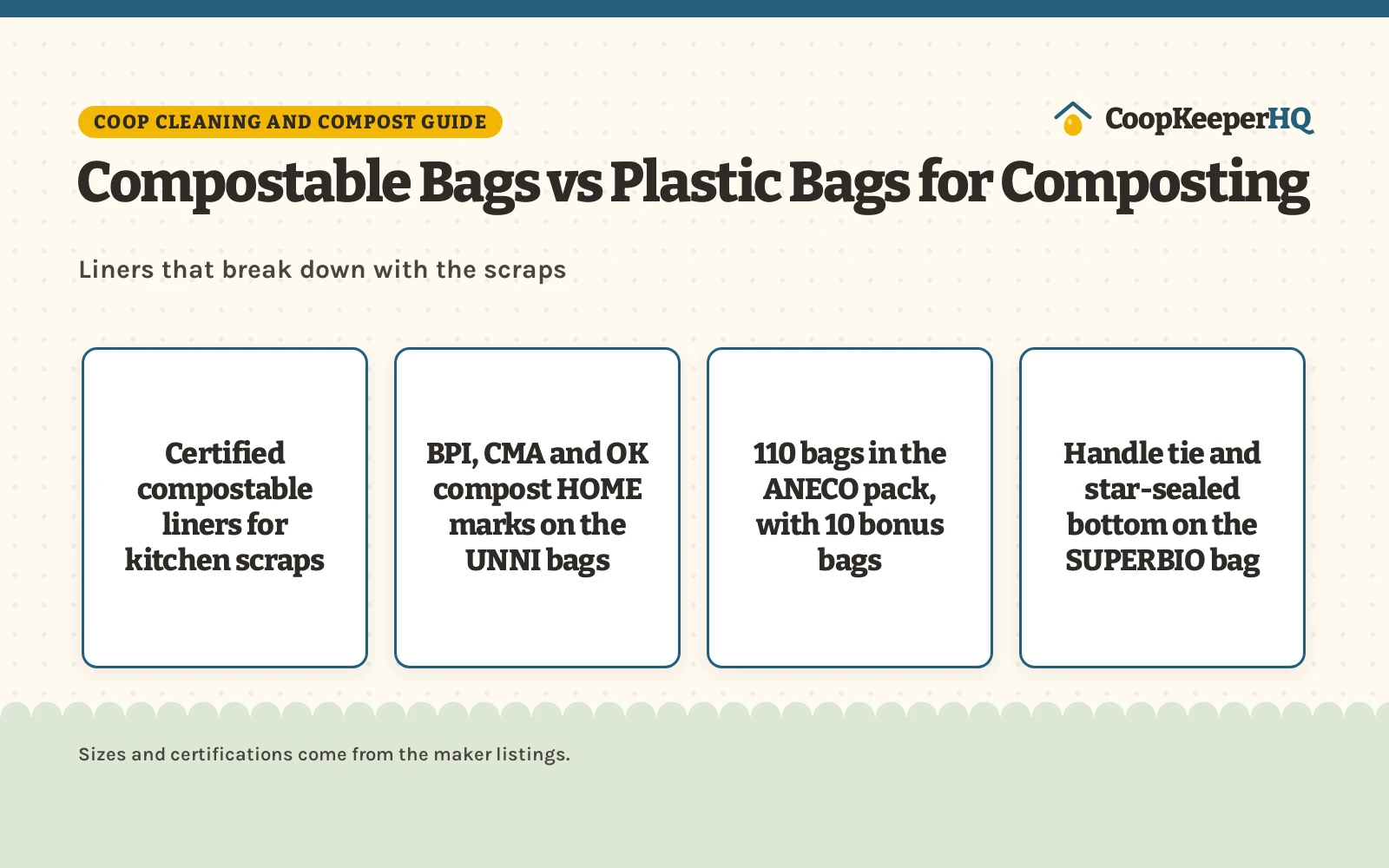
Certified compostable liners break down with kitchen scraps, while plastic bags stay out of the compost, and this guide compares four liners by size, thickness and certification.

On this page
Top picks at a glance
As an Amazon Associate I earn from qualifying purchases.
- 1
 View on Amazon
- 2
 GreFusion Compostable Bags 1.2 GallonView on Amazon
- 3
 Compostic Compostable 3 Gallon Bathroom Trash BagsView on Amazon
- 4
 13 Gallon 100 Count Compostable Trash Bags with HomeView on Amazon
- 5
 Repurpose 3 Gallon Compostable Kitchen Trash BagsView on Amazon
- 6
 Reli. Compostable 33 Gallon Trash BagsView on Amazon
Scraps pile up fast by the sink, and the countertop bin needs a liner that can go straight into the compost with the peels and coffee grounds. Compostable bags vs plastic bags for composting comes down to what happens after the bag leaves the kitchen: a compostable bag is made to break down with the scraps, while a plastic bag is not made to break down with them. None of the bags in this guide is a plastic bag, so this guide compares certified compostable liners and explains what sets them apart from plastic.
Other options for the coop
 GreFusion Compostable Bags 1.2 GallonCheck price on Amazon
 Compostic Compostable 3 Gallon Bathroom Trash BagsCheck price on Amazon
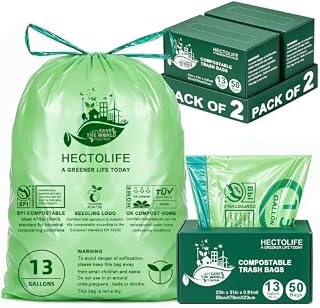 13 Gallon 100 Count Compostable Trash Bags with HomeCheck price on Amazon
 Repurpose 3 Gallon Compostable Kitchen Trash BagsCheck price on Amazon
 Reli. Compostable 33 Gallon Trash BagsCheck price on Amazon
CoopKeeperHQ earns a commission if you buy through our links, at no added cost to you. Affiliate disclosure.
The short answer: compostable bags vs plastic bags for composting
Choose a compostable bag for the compost bin and keep plastic bags out of it. A compostable liner is made to break down with the kitchen scraps it holds, and the bags in this guide carry compostability certifications: BPI and OK compost HOME on all four, and CMA on the two UNNI bags. A plastic bag is the conventional bag, and it does not break down with the scraps. Commercial composting may not be available in all areas, so check local availability.
What a compostable bag is made to do
A compostable bag holds kitchen scraps in the countertop bin, then breaks down with them in the compost. The UNNI bags are made with plant-based materials, and the ANECO bag is made from corn starch and plant-based materials. The ANECO bag decomposes fully into CO2, water and organic biomass after 6-12 months, leaving no traces of plastic in the environment. BPI certifies to ASTM D6400, CMA covers bags used in operating facilities, and OK compost HOME covers home and backyard composting.
Why plastic bags do not belong in the compost
A plastic bag is made to hold waste and keep it contained, not to break down with it. The ANECO bag is made to replace traditional plastic bags, and the UNNI bags help reduce reliance on conventional plastics. A liner that stays intact in the compost leaves plastic behind, while a certified compostable liner is made to break down with the scraps.
The four compostable bags in this guide
The bags below are listed in rank order. Each one is a certified compostable liner for a countertop bin, and the differences are size, thickness, count and certification.
UNNI 3 Gallon Compost Bags
The largest bag in the guide at 3 gallons, sized 16.9 in x 17.7 in with a thickness of 0.71 mil, and the pack holds 100 bags. It carries three certifications: BPI to ASTM D6400, CMA covers bags used in operating facilities, and OK compost HOME for home and backyard composting. The liner is made with plant-based materials for a compact kitchen compost bin. Store it in a cool, dry place and use it within 9 months for best performance.
ANECO 2.6 Gallon Compostable Waste Bags
This pack holds 110 bags, 100 plus 10 extra, and each bag measures 16.5 in x 16.3 in for a 2.6 gallon countertop bin. It meets ASTM D6400 and carries OK Compost Home for home composting, and BPI and Seedling for industrial composting. The bag is made from corn starch and plant-based materials and decomposes fully into CO2, water and organic biomass after 6-12 months. It is made to replace traditional plastic bags and fits most types of 2.6 gallon countertop containers.
UNNI 2.6 Gallon Compostable Bags
The same certified liner as the 3 gallon UNNI bag in a smaller size: 2.6 gallons, sized 16.3 in x 16.5 in with a thickness of 0.71 mil, and the pack holds 100 bags. It carries the same three certifications, BPI to ASTM D6400, CMA covers bags used in operating facilities, and OK compost HOME for home and backyard composting. It is made with plant-based materials for a compact kitchen compost bin. Store it in a cool, dry place and use it within 9 months for best performance.
SUPERBIO 1.6 Gallon Compostable Food Scrap Bags
The smallest bag in the guide at 1.6 gallons, sized 16.1 in x 19.3 in with a thickness of 0.63 mil, and the pack holds 50 bags. A handle tie and a star sealed reinforced bottom help it hold a heavy load, and the BPI certification here is for commercial composting only, and the bags also carry OK compost HOME and SEEDLING marks, meeting ASTM D6400 and EN 13432. The shelf life is about 1 year in a cool, dry place, and the maker says to dispose of a bag within 3 days when it holds organic waste.
How to pick a bag for your countertop bin
Match the gallons to the bin: the guide covers 3 gallon, 2.6 gallon and 1.6 gallon bags. The UNNI 3 gallon bag measures 16.9 in x 17.7 in, the UNNI 2.6 gallon bag measures 16.3 in x 16.5 in, the ANECO bag measures 16.5 in x 16.3 in, and the SUPERBIO bag measures 16.1 in x 19.3 in. Thickness runs 0.71 mil on the UNNI bags and 0.63 mil on the SUPERBIO bag, and count runs 100 bags on the UNNI packs, 110 on the ANECO pack and 50 on the SUPERBIO pack. The SUPERBIO bag adds a handle tie to close a full bag, and its star sealed bottom helps hold a heavy load. For the bin itself, see how to use a compost bin for coop waste.
How to use a compostable liner day to day
Line the countertop bin, drop in kitchen scraps, and carry the full bag to the compost. The ANECO bag can go straight into the compost dumpster, or be buried and turned into compost. The SUPERBIO bag should be disposed of within 3 days when it holds organic waste, so do not let a full bag sit. Store spare bags in a cool, dry place, as the UNNI and SUPERBIO listings direct: the UNNI bags are best used within 9 months, and the SUPERBIO bags carry a shelf life of about 1 year. Keep the SUPERBIO bags away from heat.
Where compostable bags break down
Certification marks state where a bag is made to break down. OK compost HOME covers home and backyard composting, and all four bags in this guide carry it. BPI certifies to ASTM D6400, and the SUPERBIO BPI mark is for commercial composting only. CMA covers bags used in operating facilities, and the SEEDLING mark meets EN 13432. Commercial composting may not be available in all areas, so check local availability before counting on it. For the bin side of the job, the hot vs cold compost bin comparison covers the two bin types.
Wash your hands after handling birds, eggs or equipment, supervise children around the flock, and check local rules on flock size and roosters before you buy. For sick birds, call a poultry veterinarian or your state extension office. See CDC backyard poultry guidance. Read our Safety Disclaimer.
FAQ for the flock
Can compostable bags go in home compost?
Yes, if the bag carries a home composting mark. The UNNI bags carry OK compost HOME for home and backyard composting, and the ANECO bag carries OK Compost Home and is made to break down in a home system as well as in industrial facilities. The SUPERBIO bag carries OK compost HOME too.
How long does a compostable bag take to break down?
The ANECO bag decomposes fully into CO2, water and organic biomass after 6-12 months. No breakdown time is stated for the other bags, so follow the certification marks and the maker guidance instead of a number. Storage matters too: the UNNI bags are best used within 9 months, and the SUPERBIO bags carry a shelf life of about 1 year.
Can a plastic bag work as a compost bin liner?
A plastic bag holds scraps and keeps the bin clean, but it is not made to break down with them, so it does not belong in the compost. Use a certified compostable liner instead, and put the liner straight into the compost with the scraps. The ANECO bag is made to replace traditional plastic bags.
What size compostable bag fits a countertop bin?
Match the gallons to the bin. The guide covers 3 gallon, 2.6 gallon and 1.6 gallon bags, and the bag sizes run 16.9 in x 17.7 in, 16.3 in x 16.5 in, 16.5 in x 16.3 in and 16.1 in x 19.3 in. Check the size against the bin before ordering, since a bag that is too small will not line the bin.
How should compostable bags be stored?
Store them in a cool, dry place; the SUPERBIO listing also says to keep its bags away from heat. The UNNI bags are best used within 9 months, and the SUPERBIO bags carry a shelf life of about 1 year. A bag that has sat too long may not perform as the maker intends, so rotate the stock and use the oldest pack first.
More coop guides
- How to Use Compost Bin for Coop Waste
- Best Hot Compost Bin (2026): 5 Bins Compared by Spec
- Hot vs Cold Compost Bin: Which One Should You Buy?
- Best Compost Thermometer (2026): 5 Compared
- Best Compost Tumblers (2026): 5 Dual Chamber Picks for the Coop
- Best Large Compost Tumbler (2026)
- Compost Tumbler vs Worm Farm: Which One Should You Buy?
- Worm Farm vs Compost Bin: Which One Should You Buy?
- Black Soldier Fly Bin vs Compost Bin: Which One Should You Buy?
See the coop cleaning and compost guides.