Chicken Feeder Ideas: Setups and Designs for Backyard Flocks
Practical chicken feeder ideas covering gravity ports, hanging hoppers, wall mounts and weather-shielded bins to keep flock feed clean, dry and spill-free.

On this page
Top picks at a glance
As an Amazon Associate I earn from qualifying purchases.
- 1
 Flapiki 5 Gallon Heated Chicken Waterer9.7/10View on Amazon
- 2
 Flapiki 3 Gallon Heated Chicken Waterer9.6/10View on Amazon
- 3
 GIFANK 3 Gallon Heated Chicken Waterer with Heater9.6/10View on Amazon
Every backyard chicken keeper knows the frustration of watching fresh pellets get raked straight into the coop shavings. Hens naturally scratch and flick their beaks while searching for favorite morsels, tossing feed across the floor where it gets soiled or trampled into damp litter. Sorting through practical chicken feeder ideas helps you solve that daily chore problem by keeping rations clean, dry and protected from waste. Practical setups commonly rely on gravity flow, covered feeding ports, hanging hoppers or elevated stands to ensure your flock eats well without scattering feed onto the coop floor.
CoopKeeperHQ earns a commission if you buy through our links, at no added cost to you. Affiliate disclosure.
Chicken feeder ideas: start with a waste-free gravity design
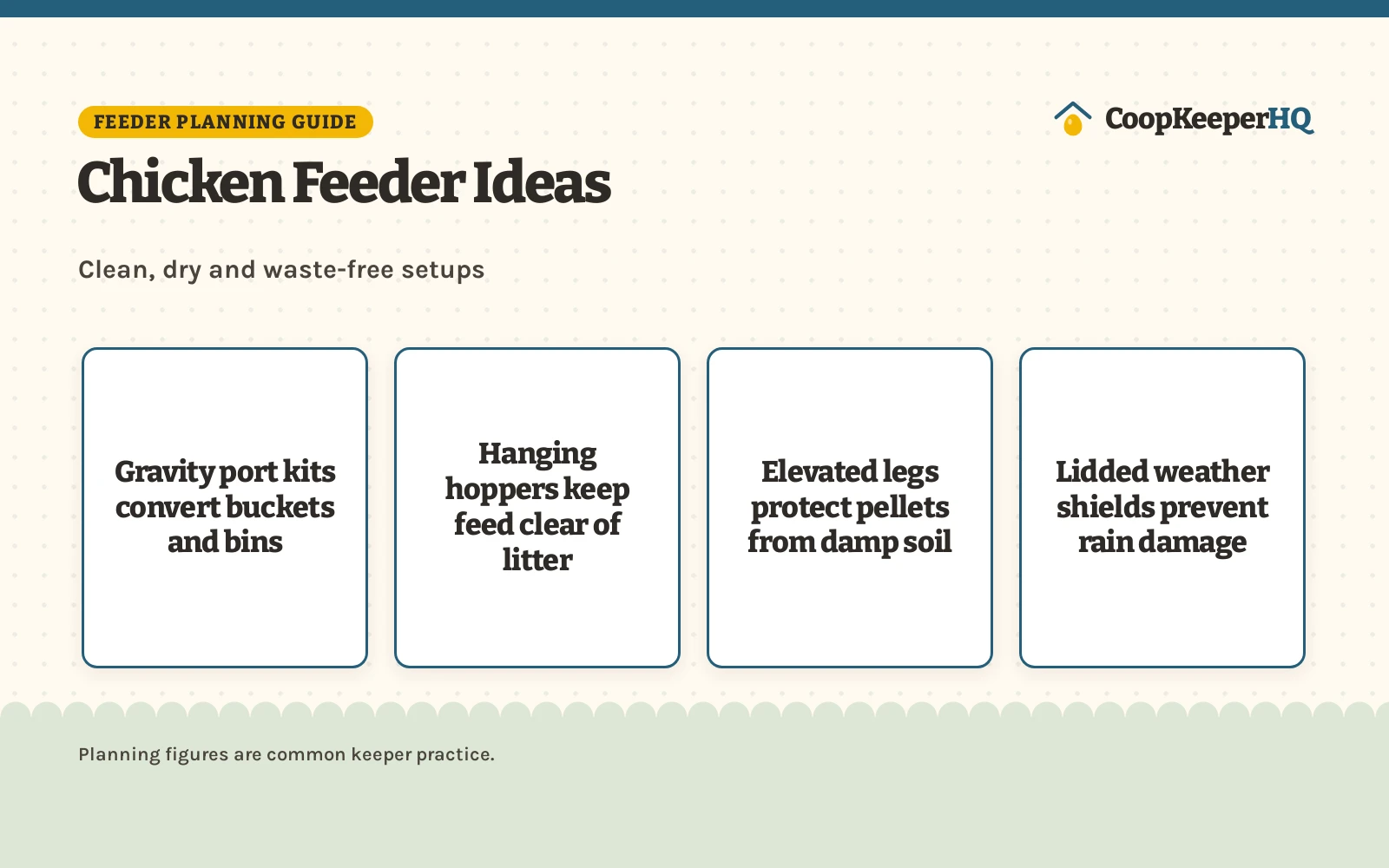
When planning your coop setup, a major priority for many keepers is reducing feed loss. Chickens eat by pecking downward, but when facing an open trough or wide pan, they sweep their beaks from side to side. This habit, known as billing out, scatters feed into the bedding or run where wild birds and rodents quickly find it. A gravity-fed design solves this problem by holding the bulk feed supply inside an enclosed reservoir while presenting pellets through a restricted opening.
As the birds eat from the bottom opening, fresh pellets slide downward automatically. Because the opening is recessed or curved, the hen reaches her head inside to eat, making side-to-side sweeping physically difficult. Setting up a dedicated no-waste chicken feeder preserves feed and cuts coop cleaning chores significantly. To explore different styles before building or buying, see our overview of types of chicken feeders.
Build DIY port feeders from clean buckets and bins
A favorite approach among backyard keepers is converting an everyday plastic container into an automatic feeding station using DIY port kits. Rather than buying a specialized unit, keepers drill holes near the bottom of a food-grade bucket or plastic tote and insert curved elbow ports with rubber weather seals.
The maker ZenxyHoC lists a kit with 6 feeder ports, 6 rubber rings and a 3.15 inch hole saw designed for mounting into unused buckets, barrels, bins or troughs. The maker claims this port design reduces feed waste by 15 to 32 percent compared to open feeding, with port covers that keep feed dry during rain and save another 5 to 12 percent of feed. ZenxyHoC recommends placing the container 6 to 12 inches above the ground so chickens can comfortably reach inside without kicking debris into the feed.
Similarly, Essilnn lists a DIY conversion kit featuring 6 feeder ports and 6 watering cups suitable for 3 gallon or 5 gallon buckets or larger bins. The maker claims its port design cuts waste by 5 to 30 percent while offering 1/8 inch NPT threaded drinker cups to build a matching watering system. Check our guide to chicken feeder ports and our step-by-step DIY no-waste chicken feeder walkthrough.
Hang metal hoppers to save coop floor space
Floor space inside a coop or enclosed run is precious real estate. Feeders sitting directly on the ground take away scratching area and gather kicked shavings every time a hen dust bathes nearby. Suspending your feeder from overhead rafters or run framing keeps the floor completely clear and simplifies daily sweeping.
The brand KOL lists a hanging metal feeder holding 20 pounds of feed with 12 feeding ports. The maker highlights that the suspended structure keeps feed elevated off the floor to simplify coop cleaning and discourage unwanted ground access, with an adjustable hanging handle to suit different flock heights. For larger flocks, KOL also lists a 50 pound metal feeder with 16 feeding ports, powder-coated steel construction and an oversized roof with locking clasps. The maker notes that tool-free assembly takes under 30 minutes for 1 person using pre-drilled hardware. Our review of the hanging chicken feeder category compares several sturdy suspended models.
Elevate trough and bin feeders with sturdy legs
If your coop lacks sturdy rafters or if you keep your flock in a mobile tractor, an elevated feeder on legs provides excellent stability. Lifting the feeding ports off the ground creates an immediate physical barrier against damp soil, crawling insects and bedding kicked up during scratching.
The manufacturer GADFISH lists a 55 pound metal automatic feeder featuring 8 feeding ports and height-adjustable support legs. The legs rotate to adjust height for different bird sizes without requiring tools, while broad foot pads prevent the feeder from sinking into soft turf or mud. A further high-capacity option comes from Jasdego, which lists an 85 pound metal gravity feeder with 6 ports intended for 6 adult chickens to feed for about 50 days. However, the Jasdego listing shows a contradiction between its product title claiming an 85 pound capacity and its specification table listing 25 pounds, which keepers should note when planning storage volume.
For keepers wanting a combined feeding and watering station, ZINZINULER lists a 50 pound feeder with 8 ports elevated on sturdy leg supports, paired with a 9 gallon waterer equipped with 5 watering cups and 5 drinking nipples. Explore more freestanding options in our guide to the chicken feeder with legs and our roundup of large chicken feeder models.
Mount slim feeders directly to coop walls
Wall-mounted feeders are an outstanding solution for narrow coop layouts, walk-in runs or converted sheds where floor clearance is tight. Fastening a feeder against a wall stud or wire mesh prevents busy hens from bumping the container, knocking it off balance or spilling grain across the bedding.
The brand Tgeyd lists a wall-mountable design with a capacity of 21 pounds of feed and 4.2 gallons of water. The unit includes brackets that fasten directly to wire mesh fencing or solid wooden coop walls, keeping feed and water elevated away from ground dirt while preventing tipping when chickens bump it. Fastening the unit against a wall keeps the feeding station stable and easy to inspect during morning chores. See our top picks in the wall-mounted chicken feeder guide.
Protect outdoor feeding stations from weather
Keeping feed in an open outdoor run requires serious weather protection. Rain and damp morning fog can quickly turn dry mash or pellets into soggy, sour paste that ferments and molds. Wet feed ruins flock nutrition, clogs gravity ports and creates stubborn cleaning headaches for keepers.
Look for feeding designs with broad overhanging eaves, sloped roofs or deep hooded ports. The maker Sprigrown lists a 40 pound galvanized steel feeder measuring 17 by 9.75 by 19 inches with a latching lid and port caps that block rain and rodents. The Sprigrown model also incorporates a clear feed window along the front panel, allowing keepers to check remaining pellet levels without opening the top lid during wet weather. For damp outdoor climates, see our recommendations in the weatherproof chicken feeder guide.
Deter rodents and wild birds from flock feed
Unprotected chicken feed is an open invitation for mice, rats, squirrels and wild birds. Aside from stealing feed, wild visitors spread dirt and leave droppings in the feeding area. Choosing the right feeder design is your main line of defense.
Port-style feeders with removable stoppers allow keepers to seal feeding ports in the evening. High-capacity metal hoppers with latching clasps prevent raccoons or squirrels from lifting the top cover. Many keepers also choose treadle feeders, where the feeding trough remains closed behind a weighted metal door that only opens when a chicken steps onto the foot pedal. Because small rodents lack the body weight to activate the pedal, feed remains inaccessible to pests.
Match feeder capacity to your daily routine
How often you need to refill feed depends on your flock size and daily chore routine. For keepers who prefer fewer refills, large metal hoppers hold substantial capacity; for instance, Sprigrown lists a 40 pound feeder, KOL lists a 50 pound model, and GADFISH lists a 55 pound hopper. For smaller setups, KOL lists a hanging hopper holding 20 pounds, while port kits like Essilnn can adapt a 3 gallon or 5 gallon bucket.
Keep in mind that young chicks in a brooder require different setups than adult hens. Standard adult feeding ports are too tall and deep for small chicks, requiring shallow starter troughs or specialized chick feeders. When brooding young stock, review our dedicated guide to the chicken feeder for chicks to choose safe, age-appropriate equipment.
Daily rhythm for clean coop feeding
A consistent daily chore routine keeps your feeding area clean and prevents small issues from turning into big messes. In the morning, check feed levels inside the hopper and take a quick look at the ports to ensure pellets are flowing freely without bridging or clumping. Brush away any loose bedding or dust that settled near the openings.
Check your flock drinking water alongside feed chores, ensuring drinkers are clean and filled. In the evening, check the feeding station while locking up the coop. Plugging feeder ports with stoppers, closing treadle doors or removing open feed containers overnight stops nocturnal rodents from finding an easy meal while your flock roosts. Storing bulk feed bags inside metal galvanized trash cans with tight lids keeps your main reserve safe from moisture and mice. If you ever notice individual birds losing appetite or behaving unusually, reach out to your state agricultural extension office or a local poultry vet for guidance.
A simple chicken feeder checklist
- Feeding openings adjusted to comfortable eating height for your flock
- Overhanging roof or rain hoods to keep pellets dry during storms
- Elevated legs or hanging wire to keep feed clear of kicked bedding
- Latching lid to stop nocturnal visitors from prying open the top
- Smooth interior walls to prevent gravity-fed pellets from bridging
- Port stoppers or treadle pedals to close access at night
- Bulk feed stored nearby in sealed, rodent-proof metal containers
How much feed your flock eats a day and a month, how long a bag lasts, and what it costs.
Wash your hands after handling birds, eggs or equipment, supervise children around the flock, and check local rules on flock size and roosters before you buy. For sick birds, call a poultry veterinarian or your state extension office. See CDC backyard poultry guidance. Read our Safety Disclaimer.
FAQ for the flock
How do I stop chickens from wasting feed?
Chickens naturally scratch and sweep their beaks while searching for favorite grains, tossing pellets into coop shavings. Using gravity port feeders with recessed openings prevents side-to-side billing out. Elevating the feeder opening off the ground also prevents birds from scratching feed onto the floor.
Can chicken feeders stay outside in the run?
Feeders placed in an outdoor run require weather protection, such as an overhanging canopy, sloped metal roof or recessed ports with rain hoods. Moisture turns dry poultry pellets into spoiled, clumping mush. If your run is open to the sky, choose a weatherproof metal or heavy plastic hopper designed to keep rain out of the feeding bay.
How high off the ground should a chicken feeder be?
Feeder height depends on the design and the size of your birds. For DIY bucket port kits, ZenxyHoC recommends placing the container 6 to 12 inches above the ground so adult hens can reach inside comfortably without kicking debris into the feed. For hanging models and feeders with legs, makers like KOL and GADFISH provide adjustable heights so you can set the feeding openings to match the size of your flock.
What container works best for a DIY chicken feeder?
Clean food-grade plastic buckets, heavy storage totes and barrels work very well. Essilnn notes that DIY port kits mount easily into 3 gallon and 5 gallon buckets as well as larger containers. Smooth plastic walls allow pellets to slide downward naturally toward the ports without bridging.
Should feed stay inside the coop overnight?
Leaving open feed accessible overnight attracts mice, rats and other nocturnal pests, while roosting chickens do not eat in the dark. Closing feeder ports with stoppers, using treadle feeders that stay shut without a hen on the pedal, or storing open containers away overnight keeps feed clean and prevents pest problems.
More coop guides
- Best Chicken Feeder No Waste: Picks That Save Feed
- Best Hanging Chicken Feeder (2026): 5 Top Picks Compared
- DIY No Waste Chicken Feeder: Step-by-Step Build and Setup Guide
See our feeders and waterers category and our companion guide to chicken waterer ideas.