Hardware Cloth vs Welded Wire: Which One Should You Buy?
Hardware cloth protects coop openings and run perimeters against small predators, while welded wire encloses large runs against dogs and coyotes at lower weight.

On this page
Top picks at a glance
As an Amazon Associate I earn from qualifying purchases.
- 1
 TUOKS Black PVC Coated Hardware Cloth9.8/10View on Amazon
- 2
 Land guard 19 Gauge Hardware Cloth9.4/10View on Amazon
- 3
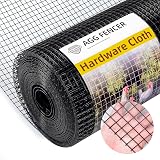 AggFencer 16in x 10ft Black Hardware Cloth 1/2 inch 19Ga PVCView on Amazon
- 4
 FORIMO 24'' x 50' 1/4inch Hardware Cloth 19 Gauge Black VinylView on Amazon
- 5
 Hardware Cloth 1/2 in 48 in x 100 ft 19 Gauge Wire Mesh LongView on Amazon
- 6
 Hardware Cloth 1/2 inch 48" x 100 ft 19Ga Black PVC CoatedView on Amazon
- 7
 19 Gauge Black Hardware Cloth 1/2 inch 4 ft x 100 ft ChickenView on Amazon
- 8
 Black Hardware Cloth 1/2 in 48 x 50 ft 19 Ga Welded MeshView on Amazon
Hardware cloth is the right choice for chicken coop openings, windows and lower run perimeters because its tight mesh stops raccoons, weasels, rats and snakes. Welded wire fencing, with wider grid openings, works well for upper walls and roof panels where keepers need a physical barrier against dogs, foxes and coyotes at lower weight. Practical setups combine both: hardware cloth on vulnerable lower zones, and welded wire across higher fence lines.
Other options for the coop
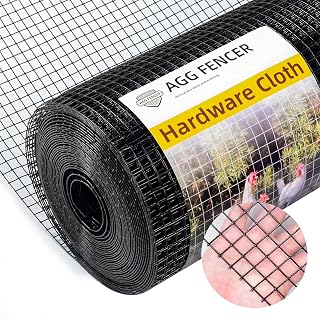 AggFencer 16in x 10ft Black Hardware Cloth 1/2 inch 19Ga PVCCheck price on Amazon
 FORIMO 24'' x 50' 1/4inch Hardware Cloth 19 Gauge Black VinylCheck price on Amazon
 Hardware Cloth 1/2 in 48 in x 100 ft 19 Gauge Wire Mesh LongCheck price on Amazon
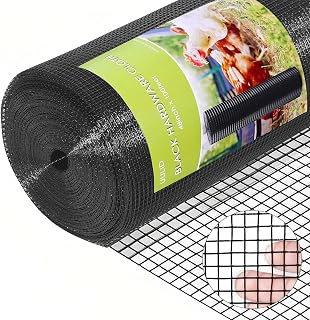 Hardware Cloth 1/2 inch 48" x 100 ft 19Ga Black PVC CoatedCheck price on Amazon
 19 Gauge Black Hardware Cloth 1/2 inch 4 ft x 100 ft ChickenCheck price on Amazon
 Black Hardware Cloth 1/2 in 48 x 50 ft 19 Ga Welded MeshCheck price on Amazon
CoopKeeperHQ earns a commission if you buy through our links, at no added cost to you. Affiliate disclosure.
Hardware cloth vs welded wire: the key differences
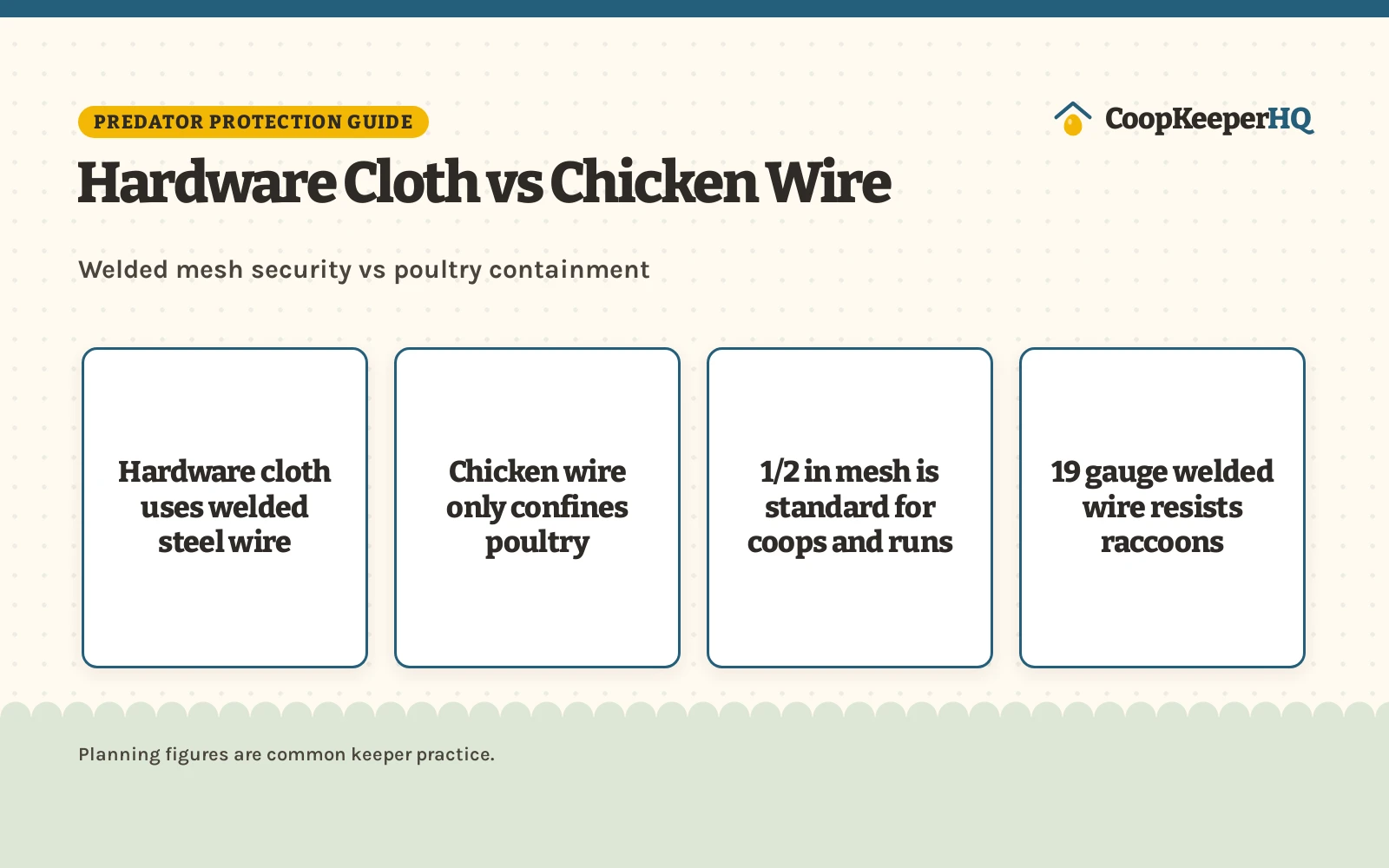
The main difference between hardware cloth and standard welded wire fencing comes down to mesh opening size and wire gauge. Hardware cloth is welded wire mesh manufactured with narrow square grids, typically 1/2 inch or 1/4 inch. Each wire intersection is welded before or after galvanizing, creating a rigid barrier. Standard welded wire fencing features wider grid openings, making it lighter across long spans but vulnerable to reach-through attacks.
Raccoons easily reach through wide wire gaps to grab poultry, and pests like weasels squeeze through openings larger than 1/2 inch. Hardware cloth serves as an exclusion barrier that stops small predators. Standard welded wire fencing acts as a boundary fence against dogs, coyotes and foxes. Combining them provides predator security without unnecessary expense.
Mesh opening sizes and predator protection
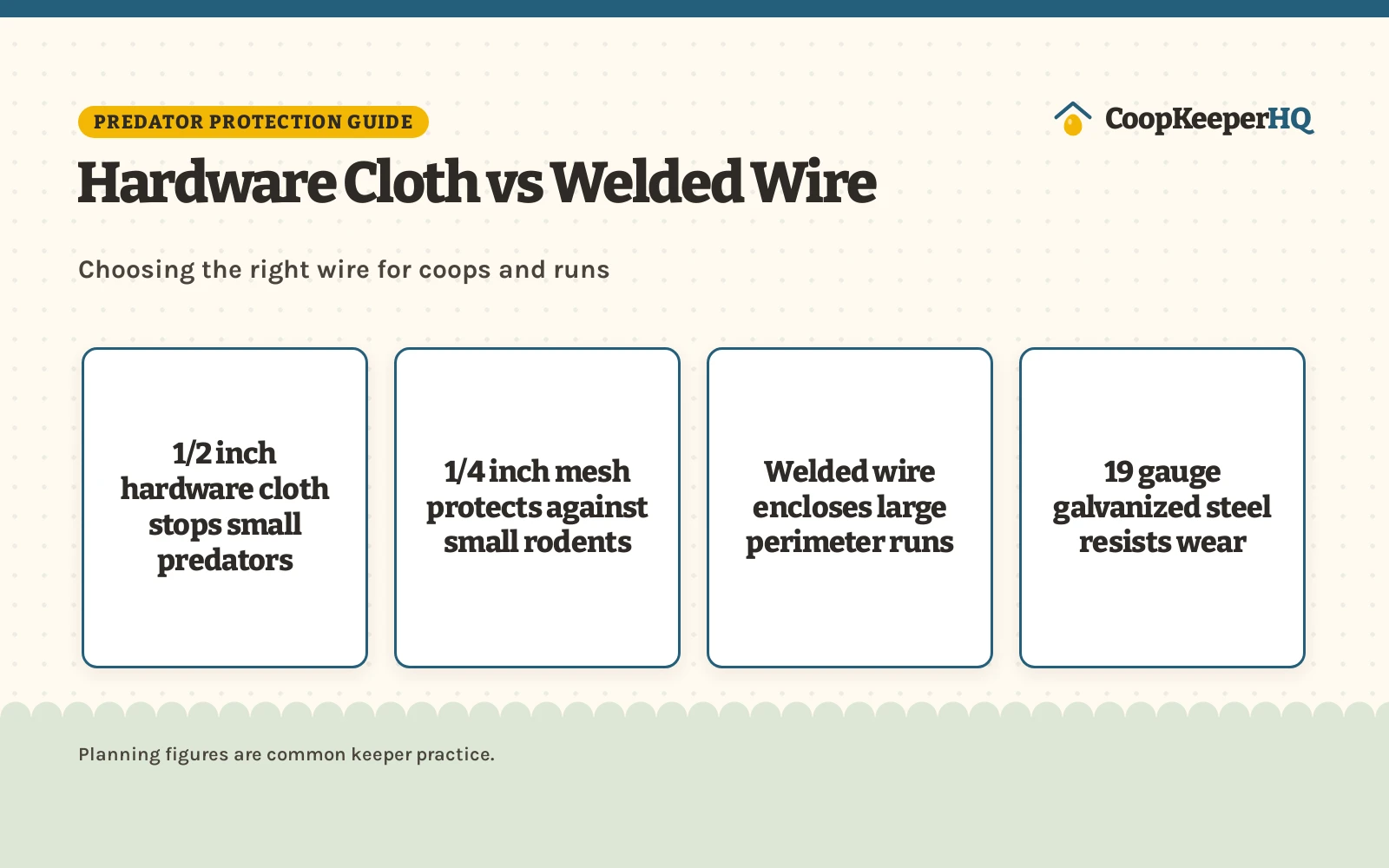
Hardware cloth with 1/2 inch mesh is the standard choice for coop vents and run walls. Land Guard lists a 19 gauge roll with 1/2 inch mesh, and SEBOSS lists a 19 gauge roll with 1/2 inch mesh. This size stops raccoon paws, prevents opossums from reaching inside and blocks raptors, while permitting airflow that reduces coop moisture.
For chick brooders or feed storage, narrower 1/4 inch mesh provides tighter exclusion. AggFencer lists an 8 inches by 25 ft roll in 23 gauge with 1/4 inch mesh, and LAN JIA lists a 48 inch by 100 ft roll in 23 gauge with 1/4 inch mesh. These openings stop mice, juvenile rats and small snakes. Standard welded wire with wide openings should never cover coop windows because raccoons reach through the spacing.
Wire gauge and material strength
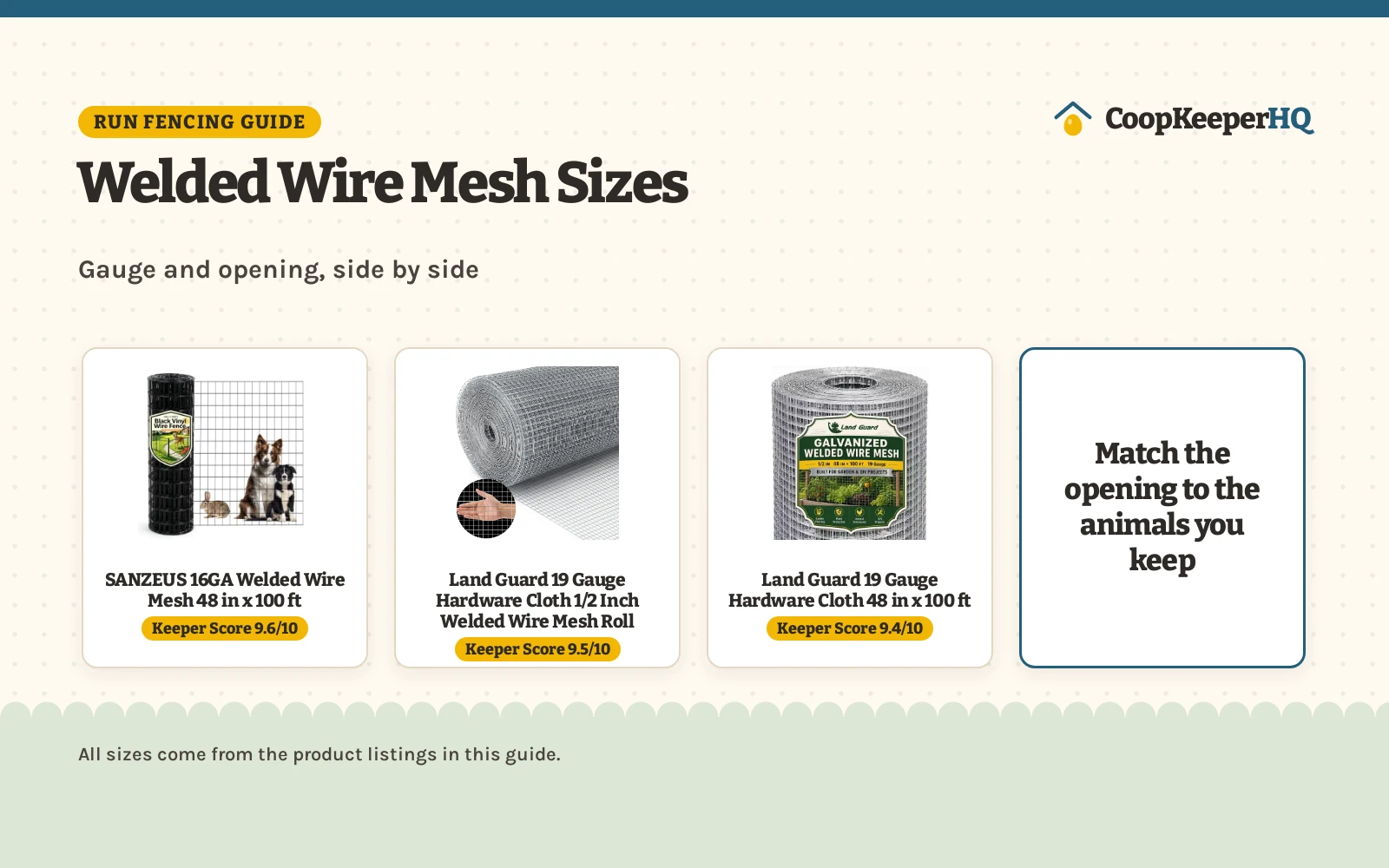
Lower gauge numbers indicate thicker steel wire. For chicken enclosures, 19 gauge steel offers balanced strength and flexibility, bending around corner framing without snapping welds. SANZEUS lists a 48 inch by 100 ft roll in 19 gauge steel, and VEVOR lists a 24 inch by 100 ft roll in 19 gauge wire. This thickness resists rodent chewing and holds firm when predators push against the perimeter.
Finer meshes use lighter wire to remain workable. For example, 1/4 inch hardware cloth listings from VEVOR, AggFencer and LAN JIA use 23 gauge wire. While 23 gauge wire is thinner than 19 gauge wire, the dense grid resists tearing. Standard welded wire fencing uses thicker wire across wider openings to maintain panel stiffness across posts.
Galvanizing methods and weather protection
Because coop wire remains outdoors through rain and snow, rust protection determines longevity. Hot-dip galvanizing after welding coats every weld point in molten zinc to prevent corrosion. HANWRAPS lists a 15.7in by 10ft roll with hot-dip galvanization after welding, and SANZEUS lists double galvanizing after welding across its 19 gauge rolls.
Vinyl coatings add extra corrosion defense in damp ground. SEBOSS lists a 19 gauge roll with a galvanized core and black vinyl coating, covering 400 sq.ft across a 48 inch by 100 ft roll weighing 46.1 pounds. VEVOR lists a 19 gauge roll with double-layer ethylene coating over galvanized wire, weighing 24.9 pounds for a 24 inch by 100 ft roll. Black coatings also reduce glare into the run.
Where to install hardware cloth on the coop
Hardware cloth belongs on every coop window, eave gap, vent and cleanout door. Fasten 1/2 inch hardware cloth across framing using heavy screws and washers or fencing staples. Screwing flat wooden battens over wire edges prevents predators from prying mesh loose. For latch options, see our guide to locks for chicken coops.
Pop doors and run connections also demand security. An automatic chicken coop door ensures the pop door closes at dusk even when you are away. Fasten hardware cloth along connecting walls so no gaps remain around the door frame.
Where welded wire fits in your run setup
Covering an entire large run exclusively in small-grid hardware cloth can become heavy and costly. Welded wire fencing with wider openings provides an economical solution for upper walls and roof panels, stopping dogs and coyotes while blocking raptors overhead.
Install hardware cloth across lower run walls where birds scratch along the perimeter, and use welded wire above it. Because raccoons climb wire, place perches toward the center of the run rather than along exterior walls. Overhead, welded wire handles snow loads without catching leaves like fine mesh. If building on a budget, our guide to a cheap predator proof chicken run explains how to combine materials.
Preventing diggers with an apron barrier
Foxes, coyotes, dogs and skunks often attempt to dig beneath run walls. Installing an outward-facing wire apron around the perimeter stops them immediately. Keepers lay hardware cloth flat on the ground around the run, pinned with landscape staples, allowing grass to grow through the mesh.
When an animal attempts to dig, it stands on the wire and cannot dig through. While Land Guard mentions installing fence wire 2 to 3 feet deep in the ground for burrowing pests, a surface apron avoids heavy digging while stopping predators reliably. Combining a 1/2 inch hardware cloth skirt with sturdy framing creates a secure perimeter. For build details, see our hardware cloth guide.
Roll sizes and planning your build
Planning dimensions in advance minimizes waste. Hardware cloth comes in widths of 16 inch, 24 inch, 48 inch, 8 inches repair strips, and 3 ft or 6 ft options. Lengths range from 10 ft and 25 ft patches up to 50 ft and 100 ft rolls. VEVOR lists a 24 inch by 100 ft roll, LAN JIA lists a 48 inch by 100 ft roll weighing 53 pounds, and SANZEUS lists a 48 inch by 100 ft roll weighing 48 pounds.
A 48 inch width covers vertical run walls with fewer seams, while 24 inch or 16 inch rolls suit aprons and vents. Note that 100 ft rolls are heavy: SANZEUS lists a 19 gauge roll at 48 pounds, SEBOSS lists a 19 gauge roll at 46.1 pounds, and LAN JIA lists a 23 gauge roll at 53 pounds. Wear gloves and use proper form when handling them.
Cutting, fastening and framing techniques
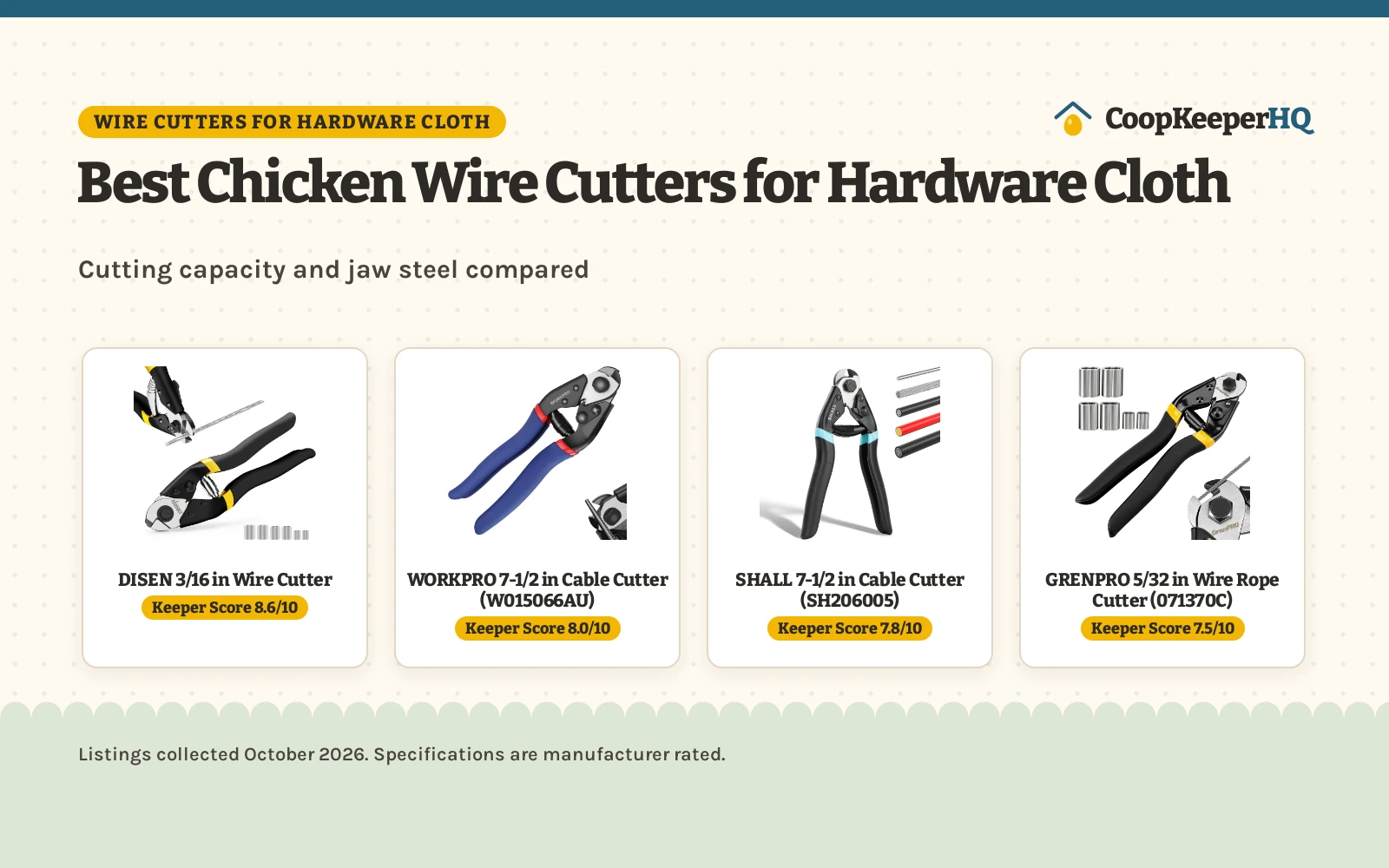
Wire ends are sharp, so wear leather gloves and eye protection when unrolling and trimming mesh. Aviation snips or dedicated wire cutters provide clean cuts through 19 gauge and 23 gauge wire. For tool picks, see our guide to the best chicken wire cutters.
Attach hardware cloth to framing using galvanized screws with fender washers, or heavy fencing staples. Avoid light staples that predators can yank free. Sandwiching wire between wooden battens creates a strong installation, clamping the mesh while covering sharp ends.
Predator defense checklist
- Install 1/2 inch hardware cloth across all coop windows, eaves and ventilation gaps
- Use 19 gauge galvanized steel wire for lower run walls and anti-dig skirts
- Extend a hardware cloth apron outward around the run perimeter to stop digging predators
- Secure wire edges with heavy screws and washers or sandwich them between framing boards
- Use welded wire fencing across upper run sections and flight pen roofs
- Inspect all wire seams, fasteners and latch points regularly for signs of wear
For broader coop security planning and enclosure ideas, read our guide on the safest chicken coop for backyard flocks.
Birds, breed size, run time and climate in; coop floor, run space, roost length and nesting boxes out.
Wash your hands after handling birds, eggs or equipment, supervise children around the flock, and check local rules on flock size and roosters before you buy. For sick birds, call a poultry veterinarian or your state extension office. See CDC backyard poultry guidance. Read our Safety Disclaimer.
FAQ for the flock
What is the difference between hardware cloth and welded wire?
Hardware cloth is welded wire with narrow square openings, usually 1/2 inch or 1/4 inch, made from wire like 19 gauge or 23 gauge. Standard welded wire fencing has wider openings. Hardware cloth stops small pests like weasels, rats and snakes from entering and prevents raccoons from reaching inside, while welded wire provides boundary containment against dogs and coyotes.
What size hardware cloth is best for a chicken run?
A 1/2 inch mesh in 19 gauge galvanized steel is the standard choice for runs. It stops raccoon paws, keeps rodents out and allows airflow. For brooders or feed storage where small mice are a concern, 1/4 inch mesh in 23 gauge provides tighter exclusion.
Can hardware cloth be welded at home?
Hardware cloth joints are welded during factory manufacturing. Welding it at home is unfeasible because thin wire burns through quickly and heating galvanized steel produces toxic zinc fumes. Keepers join rolls using mechanical fasteners, wire ties, cage clips or framing screws instead.
How long does galvanized hardware cloth last outdoors?
Hot-dip galvanized hardware cloth lasts outdoors for years because the zinc coating protects steel and weld joints from moisture. Vinyl coatings add extra protection in damp soils. Above-ground wire lasts longer than wire exposed to standing moisture.
Can raccoons reach through welded wire fencing?
Yes. Standard welded wire with wide openings allows raccoons to reach through the fence. To prevent reach-through attacks, install 1/2 inch hardware cloth on lower run walls where birds forage, position perches away from exterior walls, and lock the flock in a secure coop at night.
More coop guides
- Best Hardware Cloth for Chicken Coop Runs and Aprons
- Cheap Predator Proof Chicken Run: 5 Budget Backyard Picks (2026)
- Best Chicken Wire Cutters (2026)
See our predator protection section and our chicken runs and fencing guide collection.