Hardware Cloth vs Chicken Wire: Which Keeps Predators Out?
Learn why welded hardware cloth stops predators while chicken wire only confines poultry, and how to choose the right mesh size and gauge for your coop.

On this page
Top picks at a glance
As an Amazon Associate I earn from qualifying purchases.
- 1
 TUOKS Black PVC Coated Hardware Cloth9.8/10View on Amazon
- 2
 TONGMO 24 in x 100 ft Black Chicken Wire Fence9.5/10View on Amazon
- 3
 Land guard 19 Gauge Hardware Cloth9.4/10View on Amazon
- 4
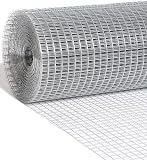 Hardware Cloth 1/2'' Chicken Wire Fencing 48'' x 100'View on Amazon
- 5
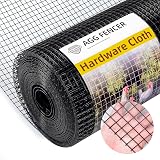 AggFencer 16in x 10ft Black Hardware Cloth 1/2 inch 19Ga PVCView on Amazon
- 6
 FORIMO 24'' x 50' 1/4inch Hardware Cloth 19 Gauge Black VinylView on Amazon
- 7
 Hardware Cloth 1/2 in 48 in x 100 ft 19 Gauge Wire Mesh LongView on Amazon
- 8
 Hardware Cloth 1/2 inch 48" x 100 ft 19Ga Black PVC CoatedView on Amazon
- 9
 19 Gauge Black Hardware Cloth 1/2 inch 4 ft x 100 ft ChickenView on Amazon
Heading out to the coop at sunrise with scratch grains is a favorite part of keeping a flock, but spotting fresh predator tracks along the fence line quickly ruins the morning. When securing a coop and run, keepers constantly compare hardware cloth vs chicken wire to protect their birds. The direct answer is simple: hardware cloth keeps predators out, while chicken wire only keeps chickens in. Chicken wire lacks the strength to stop determined raccoons, foxes or neighborhood dogs, making welded wire mesh the essential choice for genuine flock protection.
Other options for the coop
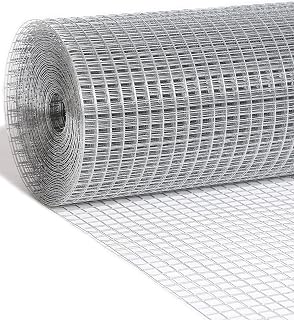 Hardware Cloth 1/2'' Chicken Wire Fencing 48'' x 100'Check price on Amazon
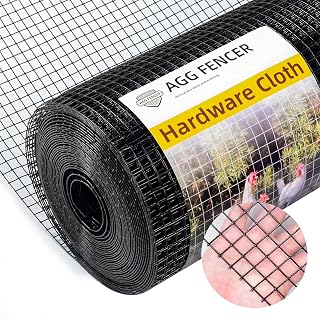 AggFencer 16in x 10ft Black Hardware Cloth 1/2 inch 19Ga PVCCheck price on Amazon
 FORIMO 24'' x 50' 1/4inch Hardware Cloth 19 Gauge Black VinylCheck price on Amazon
 Hardware Cloth 1/2 in 48 in x 100 ft 19 Gauge Wire Mesh LongCheck price on Amazon
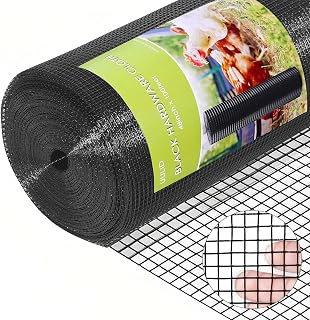 Hardware Cloth 1/2 inch 48" x 100 ft 19Ga Black PVC CoatedCheck price on Amazon
 19 Gauge Black Hardware Cloth 1/2 inch 4 ft x 100 ft ChickenCheck price on Amazon
CoopKeeperHQ earns a commission if you buy through our links, at no added cost to you. Affiliate disclosure.
Hardware cloth vs chicken wire: which keeps predators out?
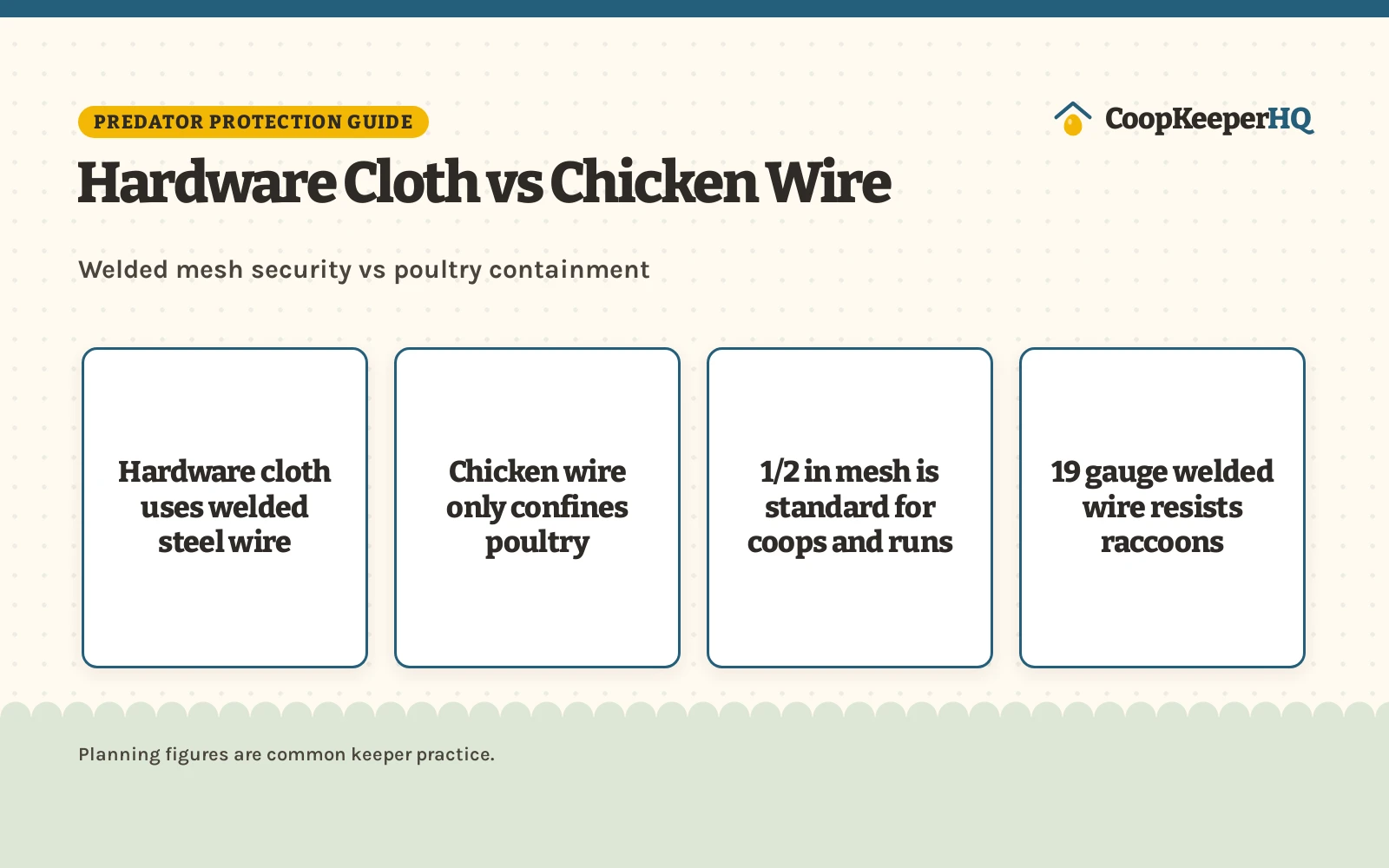
Backyard keepers often assume any metal fencing will safeguard their flock, but the difference between hardware cloth and chicken wire is the difference between an intact flock and an empty roost. Chicken wire is a thin galvanized wire loosely woven into flexible hexagonal patterns. It was designed for poultry containment: keeping docile hens inside a grazing run or out of garden beds. It was never built to withstand a hungry predator. Hardware cloth is a heavy-duty steel wire mesh welded at every joint into square grids, then hot-dip galvanized. This rigid welded structure creates a barrier that predators cannot tear, chew through or bend. If keeping raccoons, foxes, coyotes, weasels and dogs away from your chickens is your goal, hardware cloth is the only reliable choice. Our hardware cloth for chicken coop guide compares top-rated rolls.
Is chicken wire predator proof?
The short answer is no: chicken wire is not predator proof. While poultry netting keeps hens from wandering, it offers little defense against predators. The thin gauge and loose twisted weave fail under common predator attacks. Larger animals like dogs, coyotes and foxes can chew through the thin wire or rip it open using body weight. The twists separate under pressure, opening a hole large enough for an animal to enter. Furthermore, raccoons reach straight through the wide hexagonal openings to grab chickens on the roost, while slender predators like weasels and snakes slip right through. Relying on chicken wire for nighttime security leaves your flock vulnerable.
Welded wire vs chicken wire: construction differences
Looking at how each wire is made explains why they perform differently under stress. Chicken wire uses a reverse-twist weave where pairs of thin wires wrap around each other to form hexagonal openings. Because the joints are twisted rather than fused, pressure applied to a spot stretches and distorts adjacent openings. Once a wire twist breaks, the mesh unzips quickly. In contrast, welded wire hardware cloth features horizontal and vertical steel wires arranged at right angles. Every intersection is fused with electrical resistance welds. Even if a wire breaks, surrounding welds hold firm. Quality hardware cloth undergoes galvanization to coat the weld points with zinc, preventing rust from weakening the joints over wet seasons.
Mesh openings and wire gauges compared
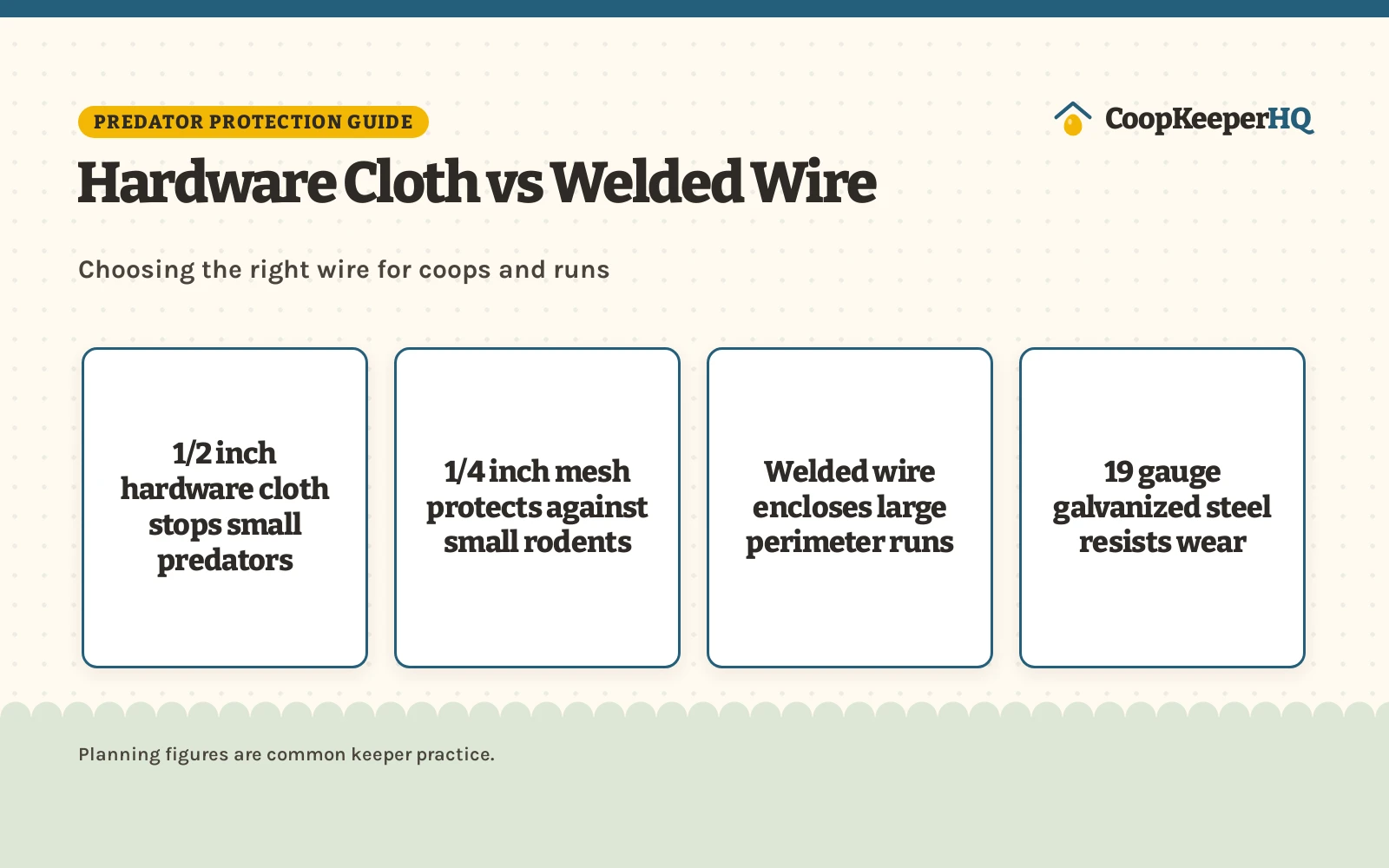
When selecting wire mesh, opening size and wire gauge determine security. Mesh opening refers to the grid spacing, while wire gauge indicates thickness: smaller gauge numbers mean thicker steel wire.
Standard hardware cloth comes in 1/2 inch or 1/4 inch square openings. A 1/2 inch mesh is the standard choice for chicken coops and runs. Land Guard, Nueve Deer, SANZEUS, SEBOSS and VEVOR list 19 gauge wire rolls with 1/2 inch openings, providing dependable strength against chewing predators while blocking raccoon paws. AggFencer also lists 19 gauge wire with 1/2 inch mesh, while HANWRAPS lists a 1/2 inch mesh roll.
For smaller pests, 1/4 inch hardware cloth provides a tighter barrier. VEVOR and LAN JIA list 1/4 inch mesh rolls made with 23 gauge steel wire, which blocks mice, small rats and juvenile snakes around feed bins or brooder quarters. When you need both small openings and thicker wire, forimo lists a 19 gauge mesh with 1/4 inch openings.
Chicken wire, by comparison, uses thin wire with wide hexagonal openings that allow pests and paws to pass through.
Predators that breach chicken wire
Different backyard predators exploit the structural weaknesses of chicken wire in distinct ways:
Raccoons reach their dexterous paws through wide hexagonal openings to grab roosting birds, or pull at wire twists until seams pull apart.
Domestic dogs and wild canines use jaw strength and weight to bite, stretch and tear thin wire from wooden posts.
Weasels and minks possess flexible bodies that squeeze through hexagonal netting openings, attacking birds inside the coop.
Rats chew through lightweight wire to reach feed troughs, while snakes glide through hexagonal netting to take eggs and young chicks.
Where chicken wire works on the homestead
While unsuitable for predator protection, chicken wire remains useful for lighter homestead tasks:
Daytime grazing runs: Chicken wire keeps hens contained in a yard while you are outside supervising your flock.
Overhead containment: Fastening chicken wire over the top of a run keeps hens from flying out and discourages daytime hawks while you are nearby. Because climbing predators like raccoons easily tear through chicken wire, any run roof must use heavy hardware cloth if birds remain in the run unattended or overnight.
Internal coop dividers: Poultry netting separates a broody hen or growing pullets inside an already secure coop.
Garden fencing: A light chicken wire border protects garden vegetables from free-ranging hens scratching in soil.
Installing hardware cloth and predator aprons
Proper installation ensures hardware cloth performs as intended. Fasten the mesh to the outside of wooden framing using heavy galvanized staples, or wood screws paired with galvanized fender washers. Washers clamp the wire flat, preventing predators from prying it loose.
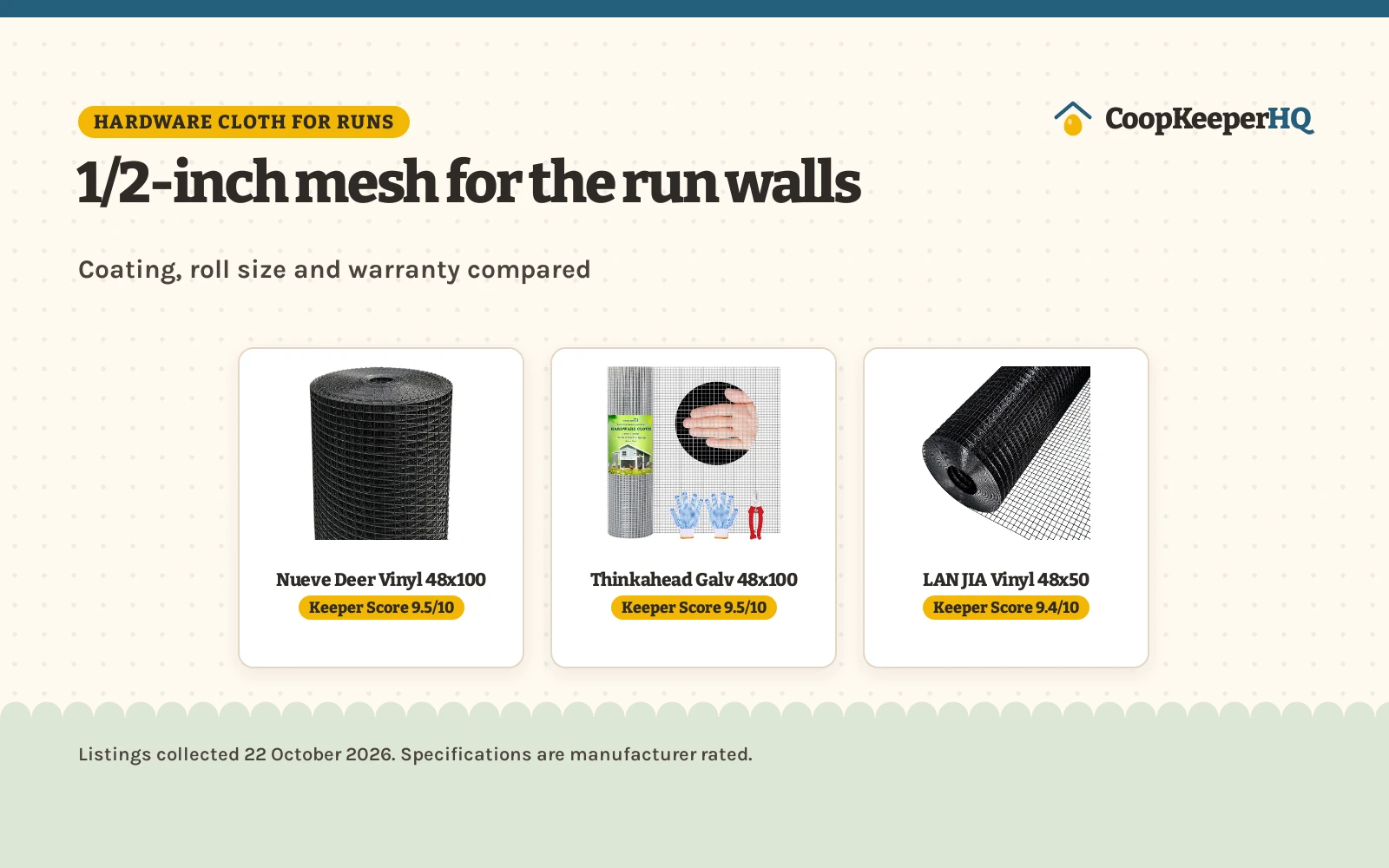
Select roll dimensions to match your framing and minimize seams. For narrower sections and skirting, Land Guard lists a 16 inch by 50 foot roll, while AggFencer and HANWRAPS list 10 foot rolls in 16 inch widths. For mid-height coverage, VEVOR lists a 24 inch by 100 foot roll and forimo lists a 24 inch by 50 foot roll. For covering full coop walls and tall run fencing, SANZEUS, Nueve Deer, SEBOSS and LAN JIA list wide 48 inch rolls in 100 foot lengths. Using wider 48 inch rolls allows you to cover expansive walls with fewer cuts and joined seams.
To prevent digging predators like foxes and dogs from tunneling into the run, secure the bottom perimeter. Keepers bury hardware cloth in a perimeter trench or bend the wire into a horizontal apron that extends outward along the ground surface. Digging predators instinctively scratch right at the base of the wall, so an apron stops them from tunneling underneath.
Securing coop vents, windows, and doors
Securing the run is only part of the job; the coop shelter must be predator-proof before nightfall. Chickens produce moisture, so high ventilation openings must stay open in all seasons. Cover all vents, eaves and windows with 1/2 inch hardware cloth secured with screws and fender washers to maintain airflow while blocking raccoons, owls and weasels. Never rely on insect screening or chicken wire alone. Make sure pop doors close tightly each evening. Explore our automatic coop door for predators guide for options that shut automatically at dusk. Use locking latches or carabiners on all doors, as raccoons quickly open simple hook-and-eye latches.
A simple predator-proofing checklist
- All coop windows, vents and eaves are covered with welded hardware cloth
- Hardware cloth is fastened with screws and fender washers rather than light staples
- Run perimeter features an apron or buried barrier to stop digging predators
- Coop doors use predator-proof locking latches
- Chicken wire is reserved strictly for daytime flock containment and internal dividers
- Fencing and latches are inspected regularly for loose joints or wear
For more strategies on securing your coop perimeter and eliminating vulnerabilities, read our complete guide on how to predator proof a chicken coop.
Birds, breed size, run time and climate in; coop floor, run space, roost length and nesting boxes out.
Wash your hands after handling birds, eggs or equipment, supervise children around the flock, and check local rules on flock size and roosters before you buy. For sick birds, call a poultry veterinarian or your state extension office. See CDC backyard poultry guidance. Read our Safety Disclaimer.
FAQ for the flock
Is chicken wire predator proof?
No, chicken wire is not predator proof. The thin wire and loose hexagonal twists can be chewed through by dogs and coyotes, pulled apart by raccoons, and penetrated by weasels and snakes. Chicken wire is designed only to keep chickens confined, not to keep hungry predators out.
Can raccoons reach through chicken wire?
Yes, raccoons easily reach their paws through standard chicken wire openings. When chickens roost near the wire at night, raccoons can grab them directly through the fencing. Welded hardware cloth with 1/2 inch or 1/4 inch openings keeps raccoon paws outside the enclosure.
What size hardware cloth is best for a chicken coop?
A 1/2 inch welded mesh made from 19 gauge steel wire is the standard recommendation for chicken coops and runs. It stops raccoons, foxes and dogs while allowing good airflow. For brooders or areas with persistent small rodent problems, a 1/4 inch mesh provides extra defense.
Can mice and rats get through hardware cloth?
Adult rats cannot squeeze through 1/2 inch welded hardware cloth, but mice and juvenile rats can sometimes slip through 1/2 inch openings. If you need complete exclusion of small rodents from feed storage areas or brooder boxes, 1/4 inch hardware cloth blocks them completely.
How do you stop predators from digging under a chicken run?
To stop burrowing predators like foxes and dogs, keepers either bury hardware cloth vertically along the perimeter trench or install an outward-facing horizontal apron flat on the ground. A horizontal apron pinned with stakes prevents digging without requiring deep trenching, as predators attempt to dig right at the fence base and cannot penetrate the wire.
More coop guides
- Best Hardware Cloth for Chicken Coop Runs and Aprons
- How to Predator Proof a Chicken Coop and Run
- Best Automatic Coop Door for Predators (2026): 5 Metal Picks Compared
See our predator protection category and explore our chicken runs and fencing guides for more coop security tips.