Horizontal vs Vertical Poultry Nipples: Which One Should You Buy?
Horizontal vs vertical poultry nipples explained: how each type works, which stays drier, and four horizontal nipple kits for buckets and PVC lines.

On this page
Top picks at a glance
As an Amazon Associate I earn from qualifying purchases.
- 1
 senylanhxy 12-Piece Horizontal Chicken Waterer Nipples with9.4/10View on Amazon
- 2
 My Pet Chicken 24-Pack Horizontal Side Mount Chicken Watering9.4/10View on Amazon
- 3
 letsFix 10-Piece Chicken Nipple and PVC Tee Waterer Kit9.5/10View on Amazon
- 420 Pcs Horizontal Chicken Waterer Nipples with Drill BitsView on Amazon
- 5
 6Pack Horizontal Automatic Poultry NipplesView on Amazon
- 6
 Heavy Duty 12-Pack with Cups Chicken Water Nipples AutomaticView on Amazon
- 7
 Heavy Duty 20-Pack with Cups Chicken Water Nipples AutomaticView on Amazon
- 8
 15 Pack Horizontal Chicken Waterer NipplesView on Amazon
- 9
 Lil'Clucker Horizontal Chicken Waterer NipplesView on Amazon
Filling and scrubbing an open waterer gets old fast, especially in a run full of scratching feet. Horizontal vs vertical poultry nipples is the question keepers ask when they want cleaner water with less daily refilling, and the answer comes down to how each nipple releases water and where the drips go. This guide explains both styles, then looks at the horizontal nipple kits sold for buckets and PVC lines, ranked from what their listings state.
Other options for the coop
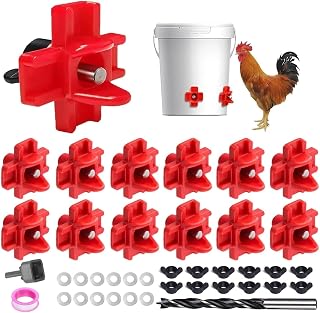 20 Pcs Horizontal Chicken Waterer Nipples with Drill BitsCheck price on Amazon
 6Pack Horizontal Automatic Poultry NipplesCheck price on Amazon
 Heavy Duty 12-Pack with Cups Chicken Water Nipples AutomaticCheck price on Amazon
 Heavy Duty 20-Pack with Cups Chicken Water Nipples AutomaticCheck price on Amazon
 15 Pack Horizontal Chicken Waterer NipplesCheck price on Amazon
 Lil'Clucker Horizontal Chicken Waterer NipplesCheck price on Amazon
CoopKeeperHQ earns a commission if you buy through our links, at no added cost to you. Affiliate disclosure.
Horizontal vs vertical poultry nipples: the quick answer
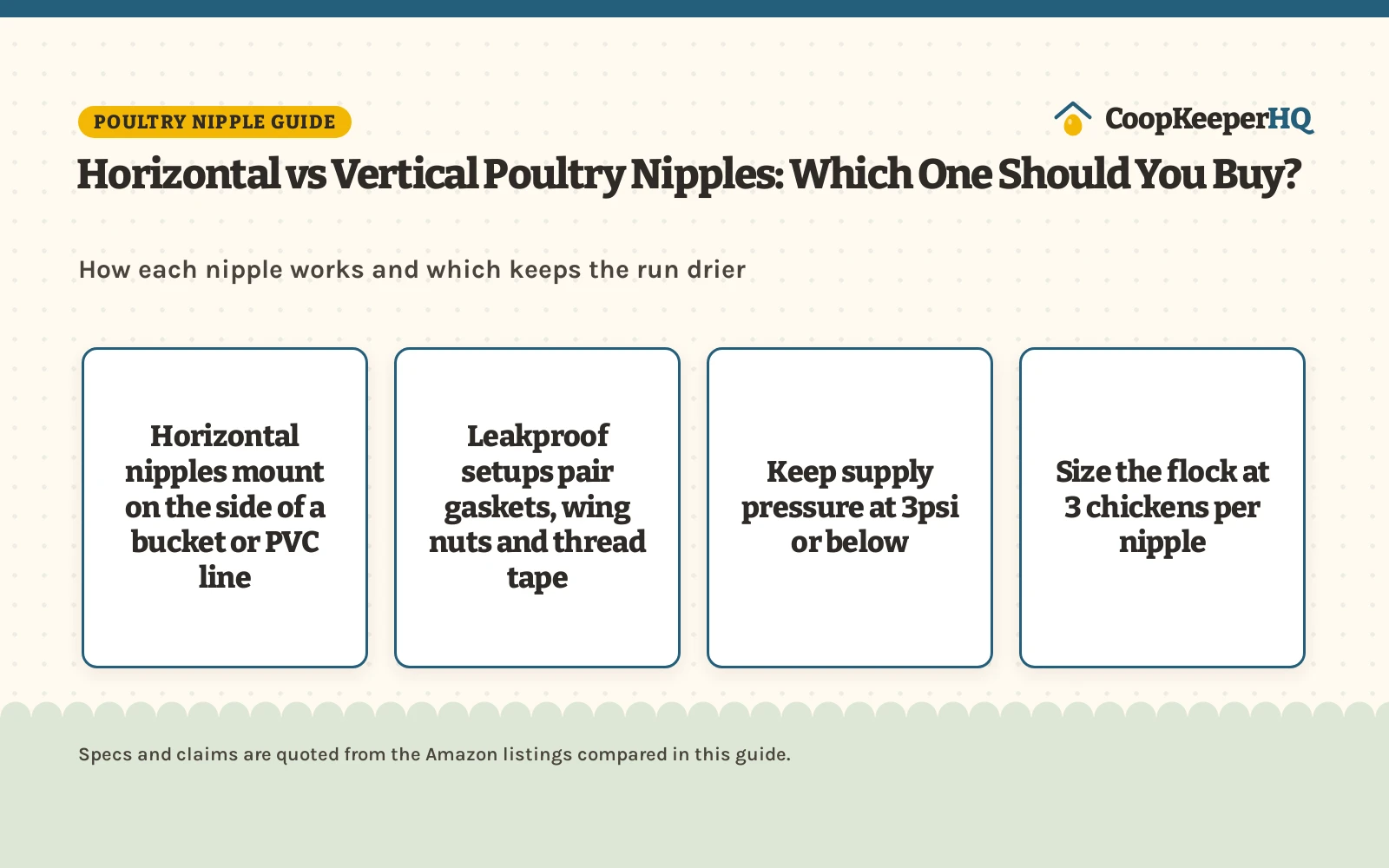
Horizontal nipples mount on the side of a container and release water when a bird pecks a pin from the side. Vertical nipples mount underneath and release water when the stem is pushed upward. The horizontal kit listings stress leak control above all else: sealed threads, rubber gaskets and thread tape that keep water inside the container and the run floor dry. Vertical nipples are the simpler hang on a jug or bucket lid, but the drip path falls straight down, so many keepers set a tray or gravel patch underneath one. If a dry run floor is the priority, the listings point toward horizontal nipples.
How horizontal nipples work
A horizontal nipple sits sideways in the wall of a bucket, jug or PVC pipe. The bird pecks the pin from the side, and water flows only while the pin is pressed. The RentACoop kit pairs each nipple with a small dribble dish that catches stray drops, and its listing recommends gravity-fed systems or keeping supply pressure at 3psi or below. The My Pet Chicken listing explains why its nipples suit winter: no water sits inside the nipple while idle, so there is nothing to freeze as long as the supply is heated. Mounting details matter here: My Pet Chicken suggests a minimum of six inches between nipples, and VandanCoop advises installing on a flat surface with thread tape for the cleanest seal.
How vertical nipples work
A vertical nipple threads into the bottom of a container and points straight down. The bird pushes the stem up with its beak to release water, and gravity closes the valve when the bird lets go. This bottom mount makes them quick to fit on a jug or a bucket lid, and the whole drip path falls straight down, which is why a tray or a gravel patch underneath is the usual setup. None of the four kits compared here is a vertical nipple, so there are no vertical listings to score in this guide; the horizontal kits below are the ranked picks. For other drinking styles, our waterer cup guide compares cup-style drinkers.
Leak control: where the listings favor horizontal nipples
Keeping water inside the container is the main job of any nipple, and the horizontal listings talk about sealing more than anything else. The senylanhxy kit ships 20 nipples with 20 rubber gaskets, 20 wing nuts, thread tape, a drill bit and an installation tool, a package aimed at a fully sealed wall mount. The VandanCoop 10-pack adds 10 rubber gaskets, 10 wing nuts, a drill bit and a 2m roll of leakproof tape, with 3/8″ threads that suit standard container walls. RentACoop takes a different line with its dribble dishes: instead of only sealing harder, it catches the odd drop that escapes while the bird drinks. Read together, the listings make the case that a horizontal mount plus a proper seal is the route to a dry run floor.
Drinking ease and training the flock
Birds learn horizontal nipples by watching water come from the pin. The senylanhxy listing uses red tips to draw the birds’ attention and notes that the sideways peck mimics natural drinking, which helps new birds catch on. My Pet Chicken suggests tapping each nipple so water fills the small reservoir, then removing every other water source while the flock learns; it also suggests dabbing something sweet on the nipples to encourage pecking. The age notes agree: the senylanhxy and VandanCoop listings recommend chicks 2 weeks or older, and My Pet Chicken notes that first-week chicks are not strong enough to press the pin. For chicks specifically, see our nipple waterers for chicks guide.
Four horizontal nipple kits, ranked by the listings
Each kit below is listed from the highest-scoring listing to the lowest, scored on what the listings state. Facts are quoted as the makers state them, with no added claims.
- senylanhxy 20-piece horizontal nipple kit. The largest kit here: 20 nipples with 20 rubber gaskets, 20 wing nuts, a drill bit, an installation tool and leakproof tape. The ABS and stainless steel build, the per-nipple sealing hardware and the stated sizing of 3 chickens per nipple put it first. Recommended for 3 chickens aged 2 weeks or older per nipple. Suits a keeper who wants to plumb a full PVC line or several buckets in one order.
- RentACoop 12-pack DIY waterer kit. 12 horizontal nipples with dribble dishes plus an installation tool, sized for a 9mm drill bit. The listing recommends gravity-fed systems or pressure at 3psi or below, claims year-round use in cold climates with a heat source, and states a 55-gallon capacity for the gravity dispenser form. The dribble dishes are the distinctive part: they catch drips at the nipple instead of relying on the seal alone.
- My Pet Chicken 10-pack horizontal side-mount nipples. High-density plastic nipples made to install with an 11/32″ drill bit, spaced a minimum of six inches apart in a bucket or PVC line. The listing’s strength is winter: the nipple holds no water while idle, so it does not freeze as long as the water supply is heated. It also gives the most training detail, from tapping the nipples to removing other water sources while the flock learns. Noted limit: not for chicks in their first week, which are not strong enough to press the pin.
- VandanCoop 10-pack horizontal nipples. 10 nipples with 10 rubber gaskets, 10 wing nuts, a drill bit, a 2m roll of leakproof tape, an installation helper and instructions. The 3/8″ thread and the UV inhibitor for sun-exposed mounts are stated pluses. It lands last because the listing’s component list and guidance are thinner than the three above, and the warranty field states no warranty.
Mounting tips drawn from the listings
Pick the container first, then the nipple. Any of these kits turns a bucket, jug or PVC pipe into a waterer, and the listings agree on the basics: drill the holes with the included bit (9mm for the RentACoop kit, 11/32″ for the My Pet Chicken kit), mount on the flattest surface available, and seal with the gaskets, wing nuts and thread tape in the box. Keep the spacing generous: My Pet Chicken lists a minimum of six inches between nipples. If the water comes from a pressurized line rather than gravity, the RentACoop listing caps it at 3psi or below. For winter runs, pair the nipples with a heated supply and see our heated waterer guide; any outdoor electrical work should run from a GFCI outlet. For the container itself, see our bucket vs PVC waterer comparison.
Birds, breed size, run time and climate in; coop floor, run space, roost length and nesting boxes out.
Wash your hands after handling birds, eggs or equipment, supervise children around the flock, and check local rules on flock size and roosters before you buy. For sick birds, call a poultry veterinarian or your state extension office. See CDC backyard poultry guidance. Read our Safety Disclaimer.
FAQ for the flock
Can day-old chicks use horizontal nipples?
The listings say to wait. The senylanhxy and VandanCoop listings recommend chicks 2 weeks or older, and My Pet Chicken notes that first-week chicks are not strong enough to press the pin. Start chicks on an open drinker and switch them over once they reach that age.
Do horizontal nipples drip between drinks?
The designs aim not to. My Pet Chicken’s nipple holds no water while idle, VandanCoop’s stops the water right after the bird drinks, and RentACoop adds dribble dishes to catch any stray drops. All three are the makers’ claims, reported as stated.
How many nipples does a flock need?
The senylanhxy listing sizes 3 chickens per nipple, so the 10, 12 and 20 packs in this guide suit small to mid-size flocks. Match the pack to the flock, and use the calculator above to keep the coop itself sized right for the birds.
Will horizontal nipples work in winter?
They can, with a heated supply. RentACoop claims year-round use in cold climates with a heat source, and My Pet Chicken’s design holds no water in the nipple, so nothing in the nipple itself freezes as long as the supply stays heated. See our heated waterer guide for the warming side.
What do I need to drill to install them?
The kits include the bits: a 9mm drill bit for the RentACoop kit and an 11/32″ bit for the My Pet Chicken kit, plus thread tape, gaskets and wing nuts. The VandanCoop kit uses a 3/8″ thread. Drill on a flat surface, keep nipples at least six inches apart, and keep supply pressure at 3psi or below.
More coop guides
- Chicken Water Nipples for PVC Pipe: 5 Top Drinkers Compared (2026)
- Bucket vs Pvc Chicken Waterer: Which One Should You Buy?
- Best Chicken Coop Waterer: 5 Top Picks for Backyard Flocks (2026)
- Best Chicken Run Waterer (2026): 5 Clean Drinkers Compared
- Chicken Nipple Waterer for Chicks: 5 Top Picks (2026)
- Best Chicken Waterer Cups and Cup-Style Waterers
- Best Heated Chicken Waterer: Picks That Will Not Freeze
- Automatic Chicken Waterer DIY: Step-by-Step Setup Guide
See the coop waterer picks and the waterer setup ideas for the rest of the flock’s drinking gear.