How Much Do Chickens Eat? Daily and Monthly Feed Math
A practical guide to daily feed consumption, monthly flock supply math, and simple feeder setups to cut waste for backyard chickens.

On this page
Every morning when you unlatch the coop door, your hens rush out into the run and head straight for the feed station. Filling feed pans and checking grain levels is one of the most familiar daily chores in backyard poultry keeping, but many keepers find themselves wondering how much do chickens eat. Chickens eat until their crops are comfortably full, regulating their own daily intake according to their body size, laying activity, weather conditions, and how much forage they find in the run or yard. Instead of eating a fixed portion measured out at set meal times, a healthy flock visits the feeder steadily from sunrise until roosting time.
As an Amazon Associate I earn from qualifying purchases. CoopKeeperHQ earns a commission if you buy through our links, at no added cost to you. Affiliate disclosure.
How much do chickens eat: daily feed consumption
Unlike dogs or livestock that receive measured meals once or twice a day, backyard poultry thrive under free-choice feeding. A chicken has a relatively small digestive tract with a pouch called a crop located at the base of the neck. During daylight hours, the bird pecks at crumbles or pellets, storing the food in its crop before passing it slowly through the gizzard for grinding and digestion. Because digestion is a continuous process, hens pace their feeding throughout the day rather than gorging all at once.
When evening approaches, you will notice your birds spending extra time at the feed hopper. They fill their crops completely before flying up to the roost so they have energy to draw on through the night. In the morning, their crops should feel empty and flat, ready for another round of morning foraging and feeder visits. Providing continuous access to complete poultry crumbles or pellets ensures that every bird in the pecking order gets sufficient nutrition without aggressive competition at the trough.
Factors that change how much feed chickens need
Feed intake is never entirely constant from week to week. Several environmental and biological factors cause a flock to consume noticeably more or less feed throughout the year:
Weather and temperature: Temperature swings have an immediate effect on poultry appetite. During freezing winter conditions, hens burn extra calories simply to maintain their internal body temperature. A flock will empty a hopper noticeably faster in cold weather than during mild spring days. Conversely, extreme summer heat depresses appetite. When temperatures soar, birds spend more time panting in the shade and drinking water, consuming less solid feed during the hottest afternoon hours and catching up in early morning.
Egg production: Developing an egg each day demands substantial protein, energy, and calcium. Active laying hens consume considerably more feed than pullets that have not yet started laying or older hens that have slowed down. When hens enter their seasonal autumn molt, egg laying pauses while the birds divert their nutritional resources into growing fresh plumage, shifting nutritional demands toward feather growth.
Run access and foraging: Flocks confined entirely to an enclosed run depend on their feeder for all daily sustenance. Flocks that free-range through a pasture or spacious garden pick up bugs, weed seeds, clover, and tender greens, naturally displacing a portion of their commercial feed consumption. In winter when grass dies back and frozen ground locks up earthworms, those same free-ranging birds return to the feeder for their entire daily intake.
Commercial bag sizes and monthly feed math
Backyard keepers planning their supply runs look to packaging figures for guidance on feed and supplement weights. Commercial poultry feeds, treats, and supplements are sold in specific container sizes suited to different flock needs and life stages.
Manufacturer listings show standard package weights across common poultry products. Manna Pro packages non-medicated chick starter crumbles in a 5 pound bag formulated for young birds from 0 to 16 weeks. For mixed backyards, Manna Pro offers all-flock crumbles containing 16% protein in an 8 pound bag, alongside a 7-grain scratch treat in a 10 pound bag. Supplemental snacks are packaged in smaller sizes, such as Manna Pro Farmhouse Favorites mealworms with 50% protein in a 10 oz bag, and Fluker’s dried soldier worms in a 16 ounce (1 pound) container. For coop herbs, MAQIHAN offers a 10 oz carton combining 10 natural herbs, while Buff Clucks packages a 12 oz herb blend with directions to mix into 30 to 50 pounds of poultry feed to provide a month supply for up to 8 chickens.
When buying poultry feed, choosing a bag size that matches your flock’s consumption rate prevents grain from sitting too long in humid conditions. Keepers with only a few birds often choose smaller bags to keep crumbles fresh, whereas larger flocks work through feed quickly enough to justify larger purchases.
Planning feed for your flock size
Because daily feed use scales directly with the number of birds in the coop, flock size determines how quickly feed hoppers empty and how often you need to resupply:
Flocks of 1 to 3 chickens: A small group of 1 to 3 chickens consumes feed at a slow, steady pace. When caring for 1 to 3 birds, an opened sack of feed remains in storage for an extended period. Because stored crumbles can absorb air moisture and lose freshness, keepers with 1 to 3 hens often choose smaller sacks or store their feed in airtight containers to keep every scoop fresh.
Flocks of 4 to 6 hens: A flock of 4 to 6 hens maintains steady daily consumption. Keepers with 4 to 6 birds find that feeding routines settle into a predictable rhythm, with hoppers requiring refilling every few days depending on the feeder’s holding capacity. To keep feed palatable, fill hoppers with enough grain to last a few days rather than overfilling troughs where crumbles can collect dust.
Flocks of 7 to 12 birds: For a larger backyard flock of 7 to 12 birds, feed turnover is rapid. A group of 7 to 12 chickens empties standard pans quickly, which can create crowding around the feeder during the morning rush. Keepers managing 7 to 12 birds benefit from high-capacity hoppers or multiple feed stations spaced across the run so that subordinate hens can eat without competition.
Preventing wasted feed in the coop and run
When estimating how much feed your flock consumes, it is essential to distinguish between feed eaten and feed wasted. Chickens naturally scratch the ground while foraging, and if feed is served in open bowls or wide pans, hens will rake their beaks through the crumbles, billing feed onto the ground. Once feed falls into the bedding or run dirt, birds step on it, spoil it with droppings, or refuse to eat it.
Spilled feed is not just lost money; it actively attracts wild rodents, squirrels, and wild birds into the run. Upgrading to the best chicken feeder no waste designs dramatically cuts down on billing. Enclosed port feeders and hooded troughs require hens to reach inside an elbow or recessed chamber to peck, preventing them from raking grain over the rim.
Feeder style and placement also play a major role in waste reduction. Comparing treadle vs gravity chicken feeders helps you choose between mechanical step-on lids that seal grain away from pests and high-capacity gravity bins. Elevating feeders on bricks or suspending hanging chicken feeders at the height of the birds’ backs prevents scratching feet from throwing shavings into the feed pan. For keepers who enjoy building coop hardware, our DIY no waste chicken feeder guide explains how to install feeder ports into clean buckets or totes.
Safe feed storage and moisture control
Proper storage is just as vital as clean feeding hardware. Poultry feed is susceptible to humidity, rain, mold, and pest infiltration. Never leave paper feed sacks open on the coop floor where moisture seeps through concrete or dirt, spoiling the bottom layer of crumbles.
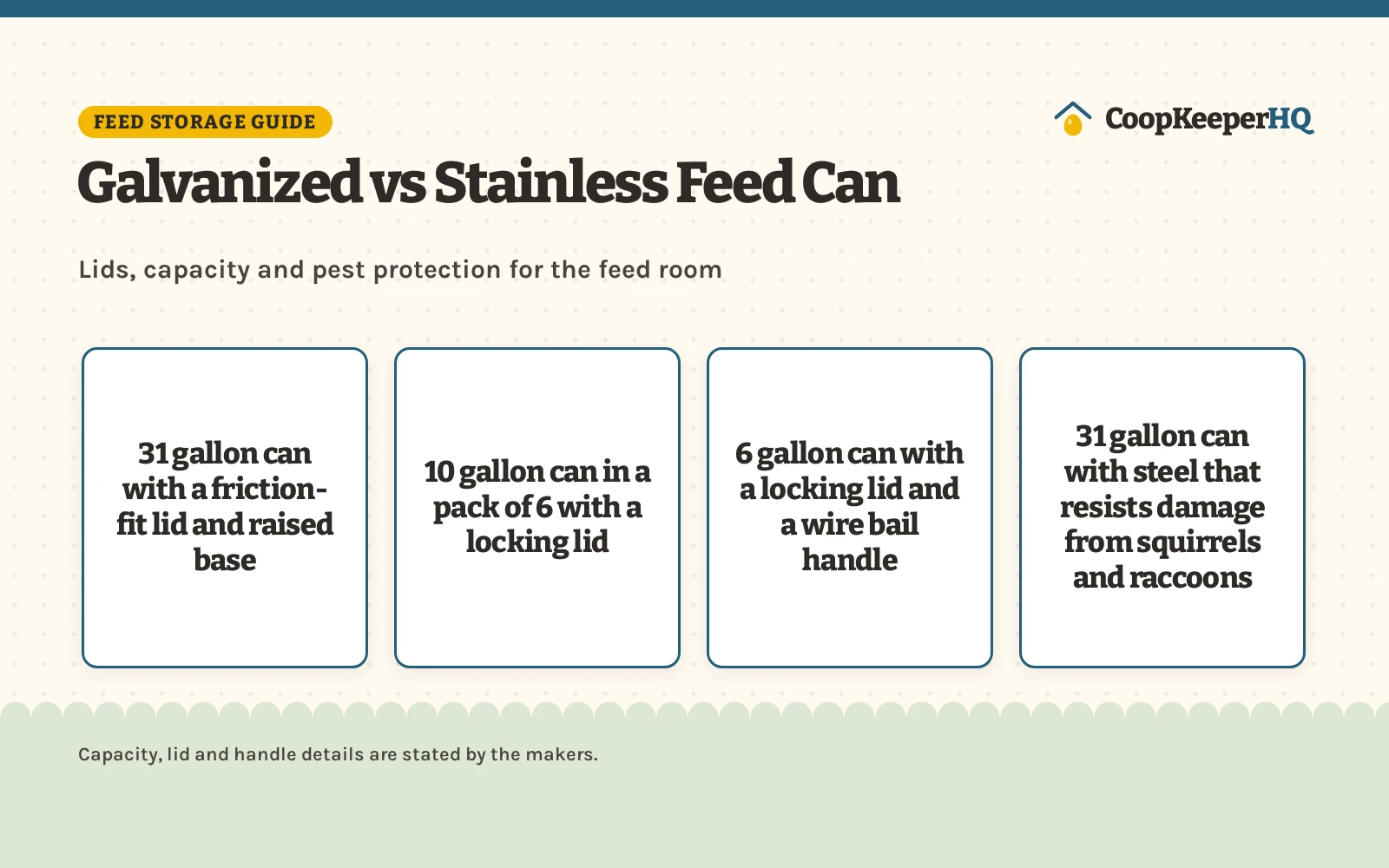
Investing in dedicated container for chicken feed options with airtight, locking lids protects your grain from mice and damp air. Galvanized metal cans with snug-fitting lids or heavy-duty plastic bins with screw-top gasket seals work well in an unheated shed or garage. Always empty and sweep out your storage bin before dumping in a new sack so older crumbles and dust do not accumulate at the bottom.
Water access and daily feeding rhythm
A chicken cannot properly swallow, digest, or metabolize dry feed without clean drinking water. When water fountains run dry or freeze solid in winter, chickens stop eating almost immediately. The digestive gizzard requires fluid to lubricate dry pellets and move ground mash through the intestines.
In cold winter regions, keeping drinkers ice-free is critical to maintaining appetite and egg production. Installing a reliable unit from our best heated chicken waterer guide ensures your flock has constant liquid water even when outdoor temperatures plunge below freezing. In summer, place drinkers in shaded spots and refresh them frequently to keep water cool and inviting.
A consistent daily rhythm simplifies flock care. Top up feed hoppers each morning, inspect waterers for debris, and observe the birds as they eat. If you notice an individual bird hanging back, puffing its feathers, or showing no interest in the morning feed rush, isolate the hen and consult a poultry veterinarian or your local agricultural extension office for guidance.
A simple flock feeding checklist
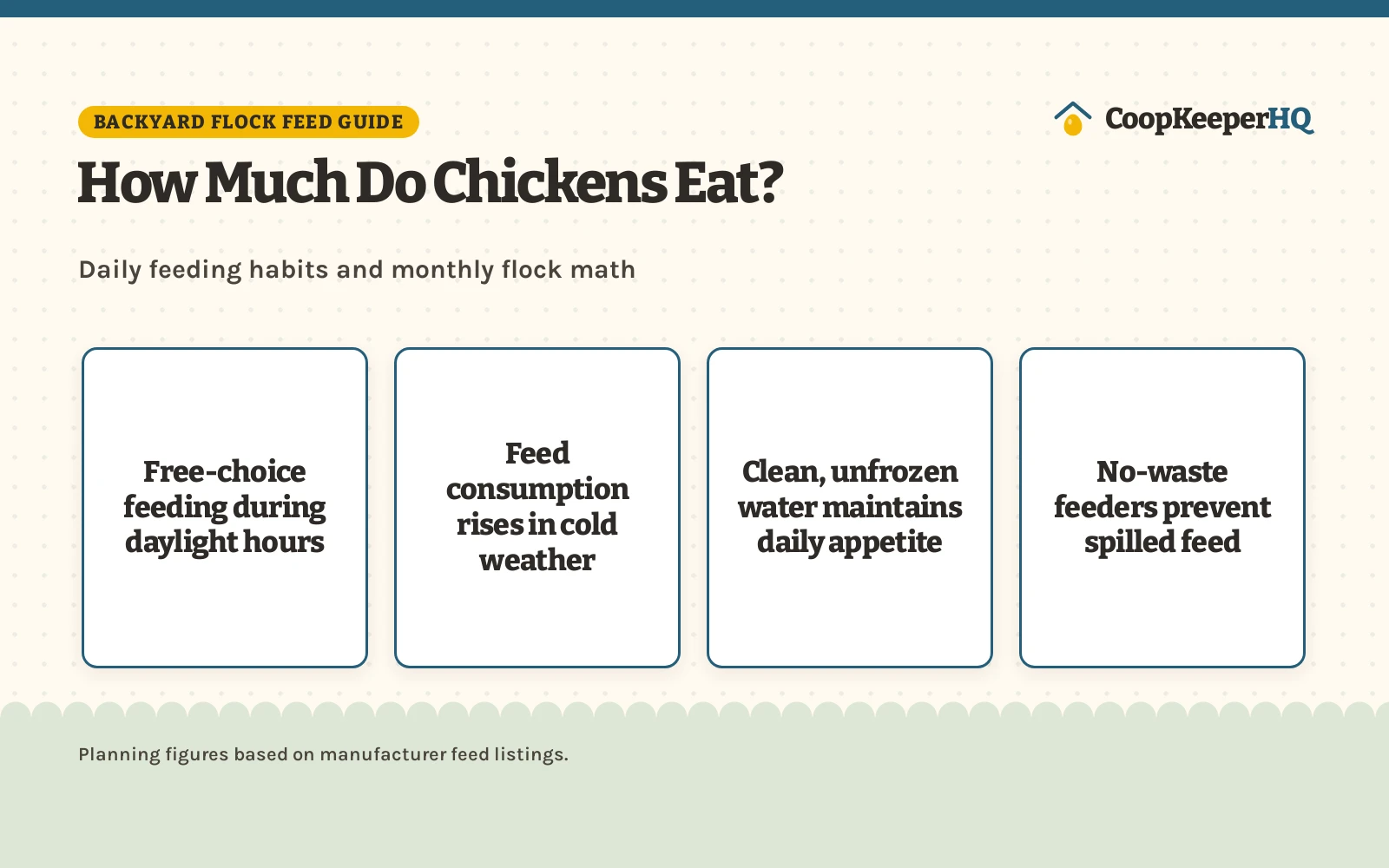
- Provide free-choice access to balanced crumbles or pellets throughout daylight hours
- Use enclosed no-waste feeder ports to prevent spilled grain and keep rodents away
- Keep feeders elevated to the height of the hens’ backs to stop scratching and soiled feed
- Store feed in airtight, pest-proof metal or gasketed plastic containers
- Ensure unfrozen, clean drinking water is always available next to the feed station
- Adjust feed supply planning based on flock size, seasonal cold, and foraging activity
How much feed your flock eats a day and a month, how long a bag lasts, and what it costs.
Wash your hands after handling birds, eggs or equipment, supervise children around the flock, and check local rules on flock size and roosters before you buy. For sick birds, call a poultry veterinarian or your state extension office. See CDC backyard poultry guidance. Read our Safety Disclaimer.
FAQ for the flock
How much feed per chicken per day is needed?
Chickens eat on a free-choice basis, consuming what they need until their crops are full. Rather than measuring out a daily ration, keepers keep feeders filled with complete feed so birds can eat steadily from morning until evening. Daily consumption fluctuates naturally with weather, laying status, and bird size, rising in cold temperatures and falling during hot spells.
How long does a bag of feed last?
How long feed lasts depends on bag weight, flock size, season, and whether birds forage. Smaller bags, such as a 5 pound chick starter bag or an 8 pound crumble sack, are designed for rapid use during specific growth stages or for small groups. For larger supplies, Buff Clucks notes in its supplement directions that 30 to 50 pounds of poultry feed mixed with herbs supplies up to 8 chickens for a month. In cold weather or with larger flocks of 7 to 12 birds, feed disappears noticeably faster.
Can you overfeed backyard chickens?
When feeding a balanced commercial crumble or pellet, chickens rarely overeat because they regulate their intake according to energy needs. However, feeding excessive treats, kitchen scraps, or scratch grains can lead to unbalanced diets and excess internal fat. Complete poultry feed should form the vast majority of their daily diet, with treats offered only as an occasional afternoon scatter.
Why are my chickens eating so much more in winter?
Chickens consume substantially more feed during cold weather because they burn calories to generate body heat. Digesting carbohydrates and protein in their gizzard produces internal warmth that keeps them comfortable on the roost. Ensure feeders remain full and provide unfrozen water so hens can process the extra feed they need to stay warm.
How do you stop chickens from wasting feed?
Chickens waste feed by raking their beaks through open troughs, scattering crumbles onto the ground where it gets stepped on and ruined. To stop feed waste, switch to an enclosed no-waste port feeder, elevate the feeder to the height of the birds’ backs, and compare gravity and treadle styles to keep pests from raiding the hopper.
More coop guides
- Best Chicken Feeder No Waste: Picks That Save Feed
- Container for Chicken Feed (2026): 5 Airtight Picks
- Treadle vs Gravity Chicken Feeder: Which Wastes Less?
- Best Hanging Chicken Feeder (2026): 5 Top Picks Compared
- Best Heated Chicken Waterer: Picks That Will Not Freeze
See our feeders and waterers guide for more coop setup picks.