How Often Do You Change Chicken Bedding
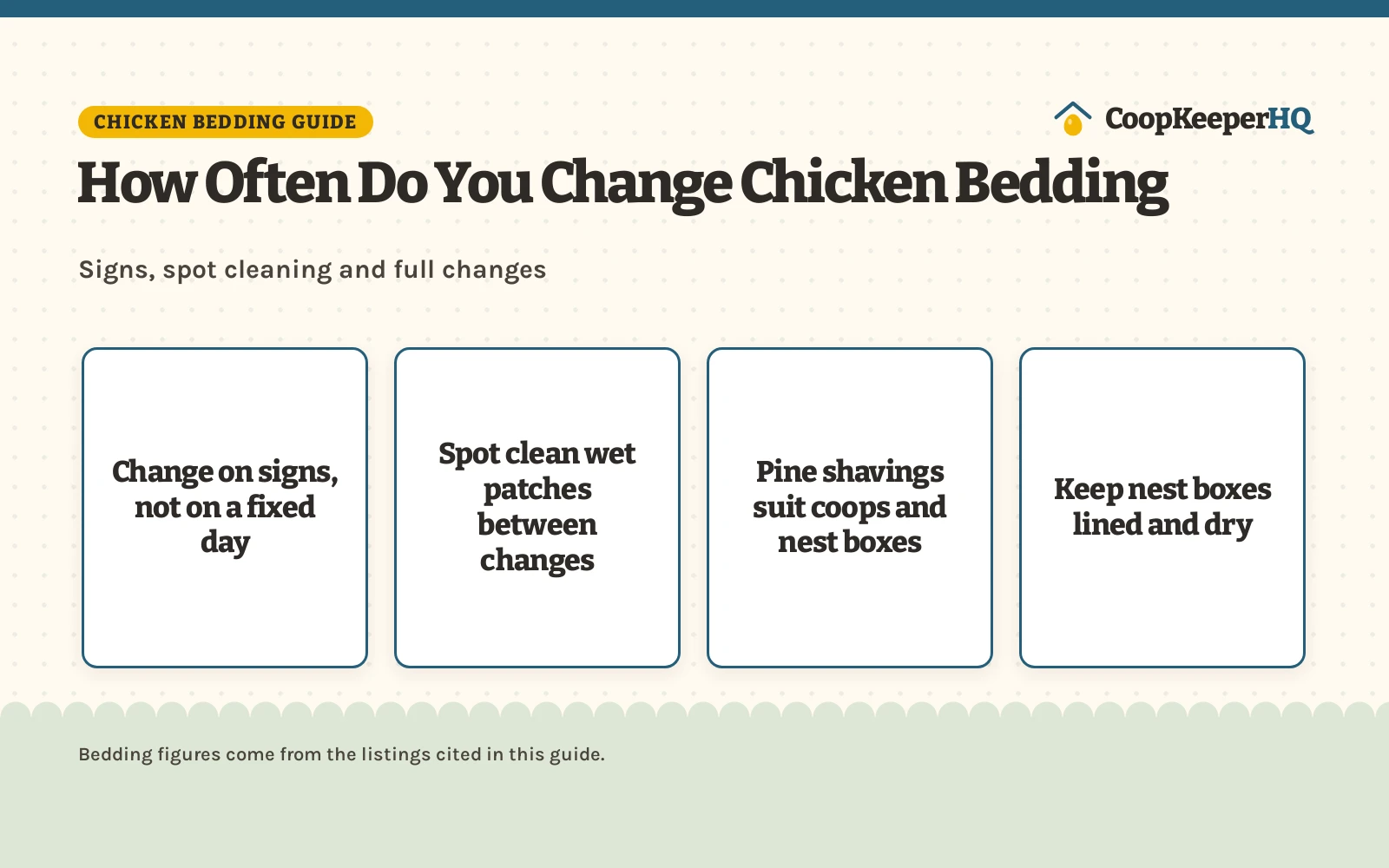
Change chicken bedding when it turns damp, smells strong or clumps, spot clean the wet patches between full changes, and let the bedding tell you when it is time.

On this page
Top picks at a glance
As an Amazon Associate I earn from qualifying purchases.
- 1
 Chicken Nesting Pads for Chicken Coop Accessories9.6/10View on Amazon
- 2
 Hemp Bedding for Chickens9.6/10View on Amazon
- 3
 Small Pet Select Pine Shavings Chicken Bedding9.5/10View on Amazon
Morning chores, bucket in hand, and the coop floor tells the story before the birds do: damp patches under the roost, a sharp smell when the door opens, bedding that clumps instead of lying loose. How often do you change chicken bedding? Change it when it shows those signs, spot clean the wet patches between full changes, and let the bedding itself set the schedule instead of a date on the calendar.
CoopKeeperHQ earns a commission if you buy through our links, at no added cost to you. Affiliate disclosure.
How often do you change chicken bedding: read the signs
Bedding has a job: soak up droppings and moisture, cushion feet and eggs, and keep the coop floor dry. When it stops doing that job, it is time to change it. The signs are plain: bedding that stays damp underfoot, a strong smell when you open the coop door, shavings that clump together instead of lying loose, and dust that rises in a cloud when you stir it. A flock that spends its days in the run wears bedding out more slowly than a flock shut in the coop, and a wet season wears it out faster than a dry one, so the calendar is a poor guide and the bedding is the honest one.
Spot clean between full changes
Most of the work is small and often. Scoop the damp patches under the roost and around the waterer, where droppings and spills land, and top up with a handful of dry shavings where the floor looks thin. A small scoop and a bucket by the coop door make this quick work. Spot cleaning keeps the floor dry between full changes and stretches the bedding further, which matters most in a wet season.
What a full change looks like
When the signs say the bedding is done, take it all out. Shovel the old bedding into a barrow or bucket, sweep the floor bare, and check the corners and under the roost for damp patches the shovel missed. Let the floor dry, then spread a fresh layer of dry bedding across the floor and into the nest boxes. Pine shavings are a common choice: CountryMax sells a 5 lb bag of pine shavings for chicken coops, and CDIWIDH sells an 80 oz bag of radiata pine shavings for nesting boxes. Paper bedding is the other material in the listings: Kaytee Clean & Cozy is a 40 liter paper bedding that the maker lists as absorbing up to 6x its weight in liquid, and Vitakraft Fresh World (on Amazon) is a 975 cu in paper bedding that absorbs up to 3X its weight. The chicken coop bedding guide compares pine, paper and other bedding types.
Nesting boxes need their own check
Nest boxes soil more slowly than the floor, but they matter more: eggs land there. Check the lining each time you gather eggs, and change it when it is damp, soiled or flattened thin. A clean, dry nest lining keeps eggs cleaner, and a soiled lining is one place to look when eggs come out dirty. CDIWIDH lists its 5 lb radiata pine shavings for chicken nesting boxes, and CoreFirm lists a 2.2 lb bag of radiata pine shavings for nesting boxes and brooders. See the nesting box guide if yours need replacing.
How long bedding stays fresh
How long a fill lasts depends on the bedding and the flock, and the makers state their figures as claims, not rules. Kaytee lists 14-day odor control for its Clean & Cozy paper bedding, and Vitakraft lists odor control for up to 14 days for its Fresh World paper bedding. Kaytee pine bedding is listed as 99.9% dust-free, and PETSPICK pine bedding is (on Amazon) listed the same way at 99.9% dust-free, with absorption up to 2x its weight in liquid. CoreFirm lists its radiata pine shavings as absorbing over 3X their weight. Treat these figures as a way to compare bags, not as a schedule: the bedding in your coop still needs the sign check, whatever the bag claims.
Deep litter or a full cleanout
Keepers use two broad approaches. One is a full cleanout: take all the old bedding out and put fresh bedding in when the signs say so. The other is the deep litter method: stir the bedding, add a fresh layer on top when the surface gets damp, and clean it all out when the whole layer turns damp. Either way the rule is the same: dry bedding stays, damp bedding goes. A fresh layer on top only helps if the bedding underneath is dry; topping wet bedding just buries the damp.
What to do with old bedding
Old bedding is garden material, not trash, for most keepers. Pine shavings are listed as biodegradable and compostable: Kaytee pine bedding is listed as all-natural and biodegradable, CoreFirm radiata pine is listed as compostable after use, and Luoglude aspen shavings (on Amazon) are listed as biodegradable and compostable. Pile it on the compost heap and let it break down before it goes on the garden. If a bag says to air it out before use, follow that: Luoglude aspen shavings list airing out for 2 to 6 hours before use. See the coop cleaning and compost guides for the rest of the routine.
A simple bedding routine
- Open the coop door and smell the air before you step in
- Scoop damp patches under the roost and around the waterer
- Top up thin spots with dry shavings
- Check nest box linings when you gather eggs
- Change the whole floor when the bedding stays damp, smells strong or clumps
- Compost the old bedding
For the full list of coop supplies, see the chicken keeping supplies list.
Birds, breed size, run time and climate in; coop floor, run space, roost length and nesting boxes out.
Wash your hands after handling birds, eggs or equipment, supervise children around the flock, and check local rules on flock size and roosters before you buy. For sick birds, call a poultry veterinarian or your state extension office. See CDC backyard poultry guidance. Read our Safety Disclaimer.
FAQ for the flock
How do I know it is time to change the bedding?
Look for damp bedding underfoot, a strong smell when you open the coop door, shavings that clump together, and dust that rises when you stir the floor. Any of those signs means the bedding has stopped doing its job. Spot clean the wet patches first, and change the whole floor when the signs cover most of it.
Can I just add fresh bedding on top of old bedding?
Yes, when the bedding underneath is dry: stir it, then add a fresh layer on top. That is the deep litter approach, and it works until the whole layer turns damp. When the bedding underneath is wet, topping it only buries the damp, so take it all out and start fresh.
Does pine or paper bedding last longer?
The makers state absorption rather than a change schedule: Kaytee Clean & Cozy paper bedding is listed as absorbing up to 6x its weight in liquid, Vitakraft paper bedding up to 3X its weight, and CoreFirm pine shavings over 3X their weight. PETSPICK pine bedding is listed at up to 2x its weight. Use those figures to compare bags, and let the signs in your coop set the change.
How often should I change nesting box bedding?
Check the lining each time you gather eggs, and change it when it is damp, soiled or flattened thin. Nest boxes soil more slowly than the floor, but eggs land there, so a clean, dry lining matters. CDIWIDH lists a 5 lb bag of radiata pine shavings for nesting boxes, and CoreFirm lists a 2.2 lb bag for nesting boxes and brooders.
What do I do with the old bedding?
Compost it. Pine shavings are listed as biodegradable and compostable, and the bedding breaks down on the heap before it goes on the garden. Kaytee pine bedding is listed as all-natural and biodegradable, and CoreFirm radiata pine as compostable after use.
More coop guides
- Best Chicken Coop Bedding: Shavings, Hemp and Sand
- How to Winterize a Chicken Coop: A Fall Checklist
- Chicken Keeping Supplies List: What You Need and What Can Wait
- Best Chicken Nesting Box: Roll-Away and Open Picks
- Best Heated Chicken Waterer: Picks That Will Not Freeze
- Best Automatic Chicken Coop Door: Picks for Every Season
See the chicken coop picks and the coop supply guides.