How to Winterize a Chicken Coop: A Fall Checklist
A step-by-step fall checklist covering draft sealing, high ventilation, deep bedding, run covers and ice-free water for a backyard flock.

On this page
Top picks at a glance
As an Amazon Associate I earn from qualifying purchases.
- 1
 PawHut 137" Chicken Coop with Extra Large Run9.7/10View on Amazon
- 2
 9.8 x 6.5 x 6.5 ft Metal Chicken Coop9.7/10View on Amazon
- 3
 Quictent 12x9x6.6ft Large Metal Chicken Coop Run With Perch &9.7/10View on Amazon
- 4
 Sweet PDZ Chicken Coop RefresherView on Amazon
- 5
 Automatic Chicken Coop Door Solar Powered with Timer & LightView on Amazon
- 6
 Chicken Coop Heater for Winter with Smart APP ControlView on Amazon
- 7
 Chicken Coop Heater Inside Coop with Remote ControlView on Amazon
- 8
 PETNF Chicken Coop Heater 140 Watts Radiant Heat ChickenView on Amazon
- 9
 Chicken Coop Heater for Winter with Remote APP ControlView on Amazon
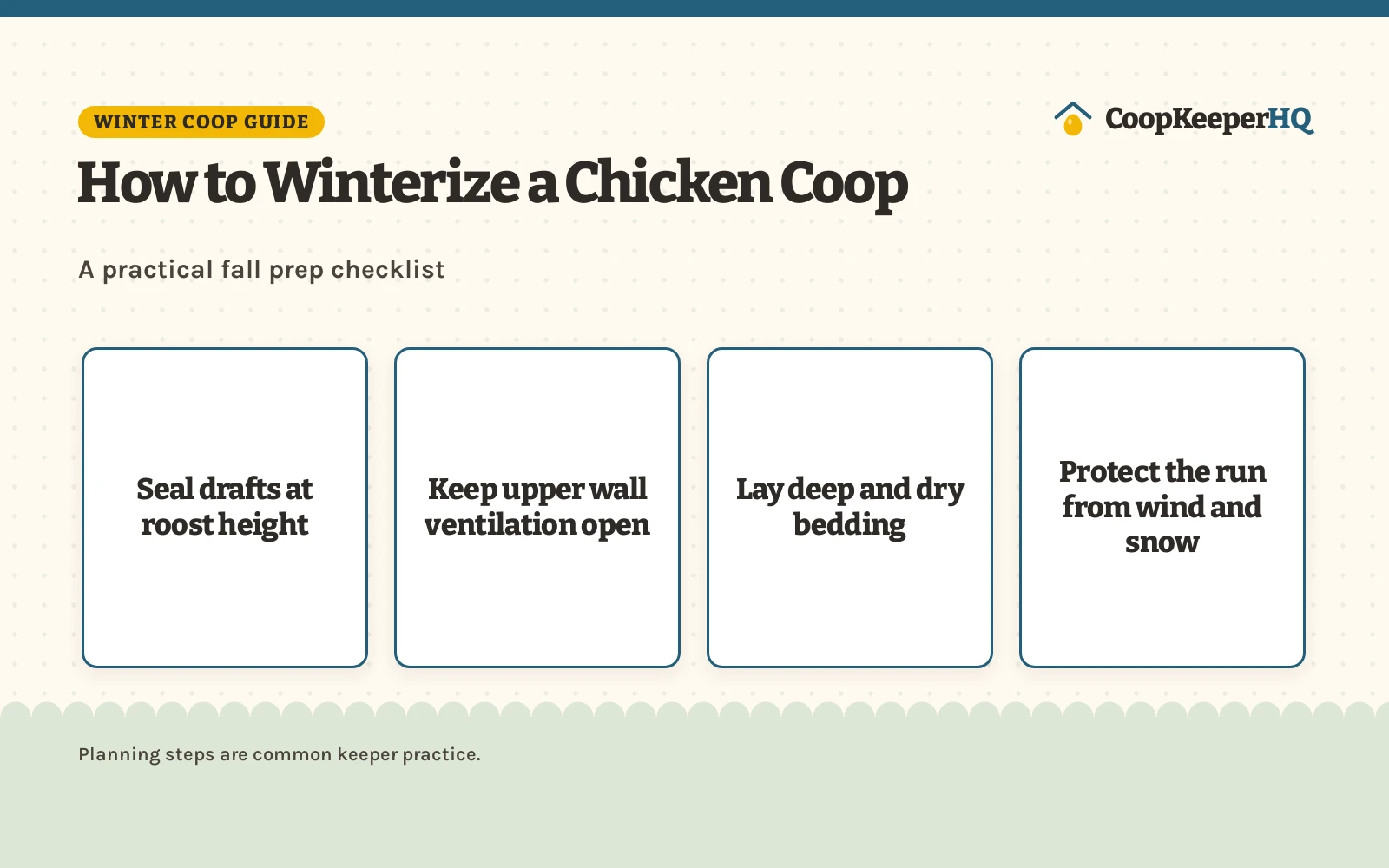
As crisp autumn mornings arrive and leaves begin to fall, everyday chores like gathering eggs and refilling feed bins bring a clear reminder that cold weather is on its way. Learning how to winterize a chicken coop comes down to practical seasonal preparation: giving the coop a thorough cleaning, closing drafts at roost height while keeping upper ventilation open, adding deep dry bedding, wrapping the run with protective covers, and keeping drinking water ice-free. Taking care of these tasks before winter storms arrive keeps your coop dry, protects your flock from biting winds, and prevents emergency repairs in subzero cold.
Other options for the coop
 Sweet PDZ Chicken Coop RefresherCheck price on Amazon
 Automatic Chicken Coop Door Solar Powered with Timer & LightCheck price on Amazon
 Chicken Coop Heater for Winter with Smart APP ControlCheck price on Amazon
 Chicken Coop Heater Inside Coop with Remote ControlCheck price on Amazon
 PETNF Chicken Coop Heater 140 Watts Radiant Heat ChickenCheck price on Amazon
 Chicken Coop Heater for Winter with Remote APP ControlCheck price on Amazon
CoopKeeperHQ earns a commission if you buy through our links, at no added cost to you. Affiliate disclosure.
How to winterize a chicken coop: start with a deep clean and inspection
Before cold weather arrives, give the coop a complete seasonal cleanout. Strip out old litter, scrape dropping boards clean, and sweep down cobwebs and dust from rafters and corners. Clearing away accumulated dust improves air quality and gives you an unobstructed look at the coop structure before winter winds hit.
Inspect walls, the roofline, and access doors for seasonal wear. Check the roof for loose shingles or seams that could allow melting snow to drip onto roosting birds. Look over all ventilation mesh and door latches to confirm that everything remains tight and predator-proof. Cover exposed openings with sturdy welded wire; our hardware cloth guide details predator-resistant mesh for coops and runs to keep hungry winter predators out.
Seal drafts at roost level while keeping high ventilation open
A common winter mistake is closing every opening until the coop is completely airtight. Chickens generate significant moisture through their breathing and night droppings. When that damp air cannot escape, it collects near the ceiling, condenses, and settles onto feathers and combs, creating conditions where frostbite can develop.
Winter coop prep means blocking drafts at bird level while allowing gentle airflow higher up. Walk inside the coop on a windy day and feel for air currents moving across where your flock perches. Seal cracks and wall gaps at roost level using wood strips, exterior caulking, or rigid barriers. At the same time, keep upper soffit or gable vents completely unblocked so moist air rises and leaves without blowing across sleeping birds.
Build up deep bedding on the coop floor
A generous layer of dry bedding insulates the coop floor against frozen ground and provides a comfortable base for your flock. After your fall cleanout, spread a thick foundation of fresh, dry shavings across the floor, adding clean material as the colder weeks progress.
Dry pine shavings, chopped straw, and hemp all provide dependable floor insulation and moisture absorption. Our chicken coop bedding review compares common materials for floor coverage. Check under the roosts regularly, remove damp clumps, and scatter fresh dry shavings over the surface whenever needed. Keeping bedding dry is essential, since damp floor litter chills the coop and releases ammonia fumes.
Inspect and prepare roosting bars and nest boxes
Chickens stay warm on bitter winter nights by settling down over their feet, tucking their toes into their downy breast feathers. If perches are narrow or made of cold metal, birds must curl their toes around the bar, leaving feet exposed to freezing air. Replace narrow perches with wide wooden boards positioned flat side up so hens can perch flat-footed.
Position roosts away from drafts, windows, and outer doors. Sand down rough edges so hens can perch without foot irritation. In the nesting area, replenish clean straw or fresh nest pads to cushion eggs. If your nesting boxes show wear, our nesting box guide offers recommendations for durable, draft-free nesting layouts that encourage steady winter laying.
Set up an ice-free watering system
Flock health suffers quickly when chickens cannot drink clean water throughout the day. In freezing weather, open water founts turn into solid blocks of ice within hours. Carrying buckets of warm water out to the run multiple times a day quickly becomes an exhausting chore.
Keep drinking stations out in a covered, sheltered section of the run rather than inside the sleeping coop whenever possible. Placing open water inside the coop introduces airborne humidity that collects overnight, directly raising the risk of comb frostbite. Installing a dedicated heated drinker in the run keeps water flowing freely throughout freezing spells. Our heated chicken waterer guide compares options that keep drinking water flowing without daily ice breaking. Plug outdoor heating bases or heated drinkers into an outdoor GFCI outlet, keeping cords secured away from curious beaks. Elevate the drinker on a sturdy stand or cinder block to keep birds from kicking dirt and debris into the basin.
Winterize the run with windbreaks and clear covers
Chickens dislike walking on snow, and bitter winter winds can keep them huddled inside a dark coop all day. Adding weatherproof covers around the outdoor run creates an active, sheltered space where your flock can scratch, dust bathe, and move around in daylight.
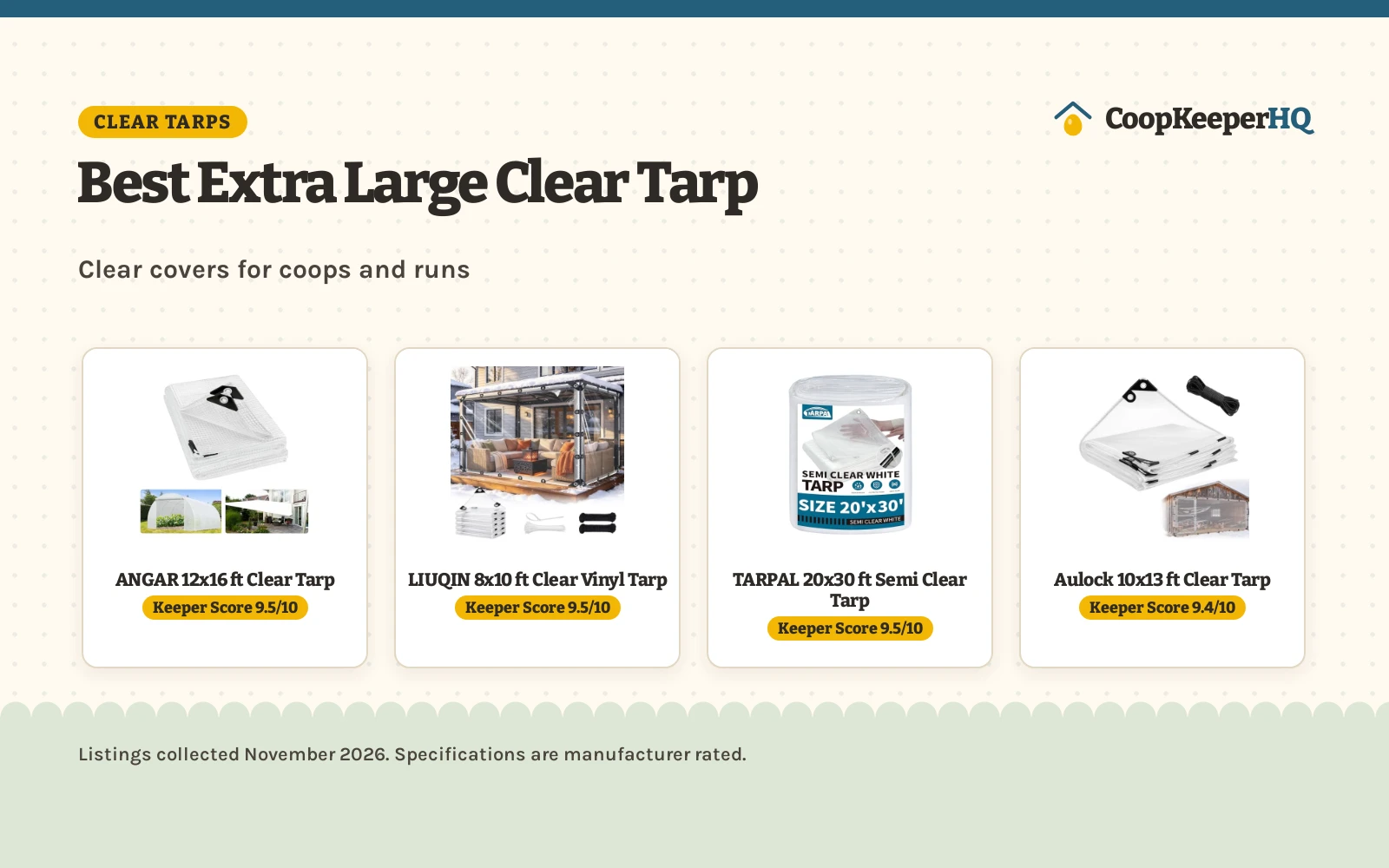
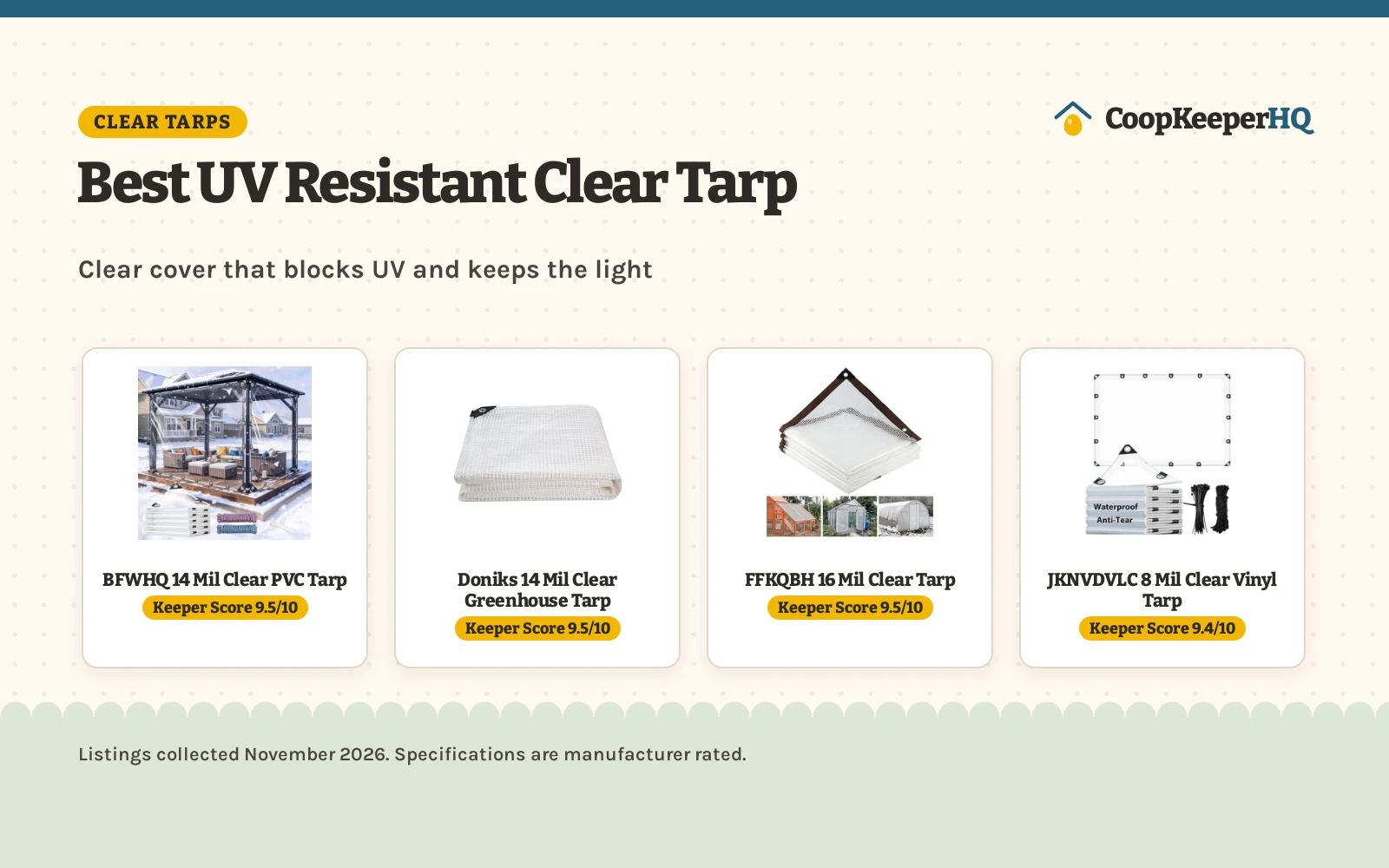
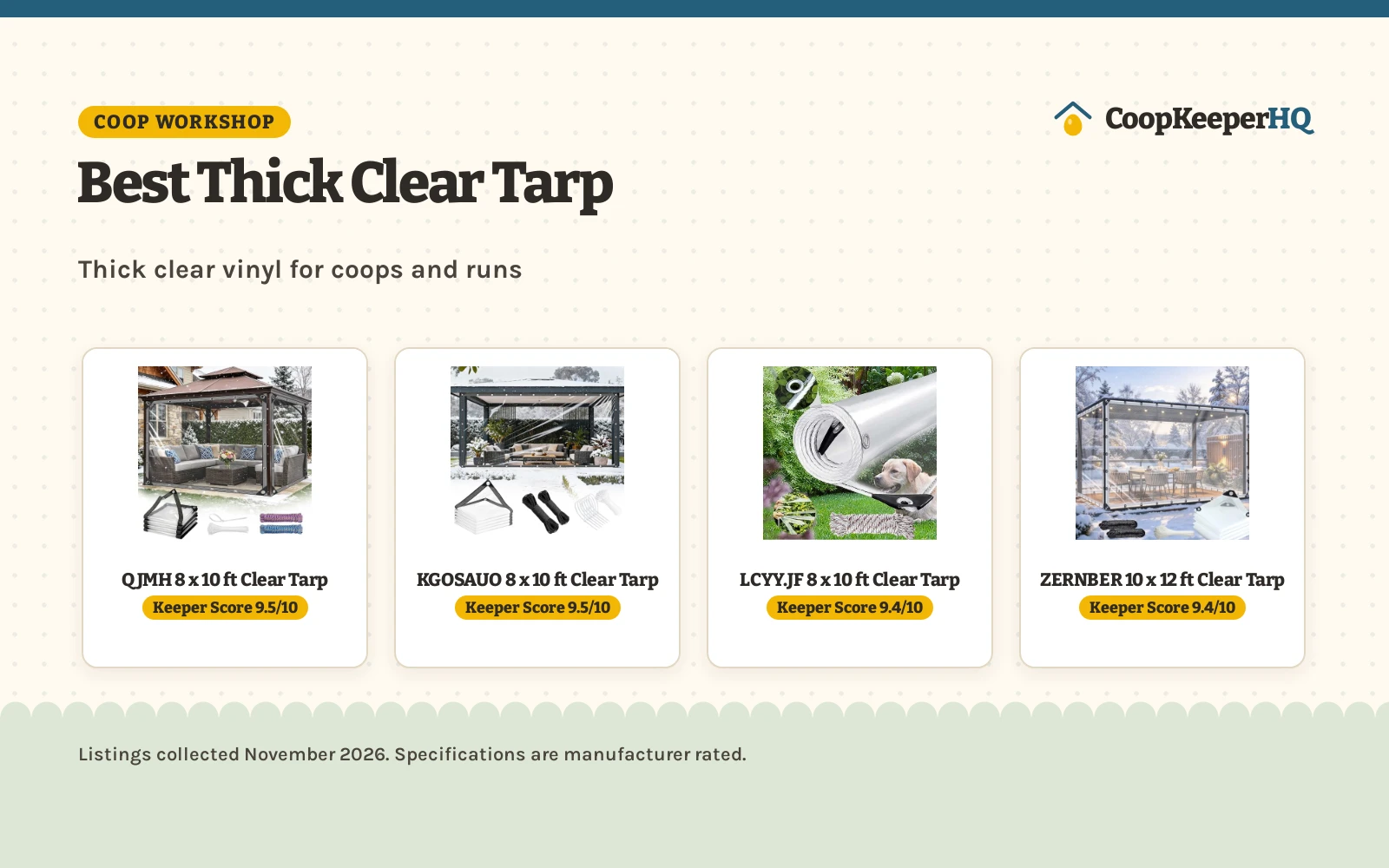
Clear vinyl and polyethylene tarps make ideal run windbreaks because they block wind and snow while letting natural sunlight through. For example, the listing for Sinessy states that its 14-mil clear vinyl tarp resists temperatures as low as -32 degrees F and can withstand wind gusts over 52 mph, while PJT lists a heavy-duty 16-mil vinyl cover with reinforced edges. For diffused daylight, TARPAL lists a 7.5-mil semi-clear cover offering approximately 60% light transmittance. For covering walk-in run sections or coop panels, MEWTOGO lists a 6.6 by 10 foot cover with metal grommets spaced every 19 inches along the hem. Wrap the prevailing windward sides of the run, leaving the leeward side partially open for ventilation. Our chicken coop cover guide highlights dependable windbreak and tarp solutions for backyard runs.
Should you add insulation or supplemental heat?
Most cold-hardy chicken breeds do not require supplemental heat inside a dry, draft-free coop. Standard heat lamps present severe fire hazards when placed in dusty coops around dry shavings. A sudden power outage can also shock birds that have become dependent on artificial heat rather than acclimating naturally to colder weather.
While most backyard coops do not need insulated walls if drafts are sealed and bedding is deep, some keepers in regions with severe subzero freezes consider radiant barriers. For example, the maker INSULATION MARKETPLACE lists a 3 mm foam core radiant barrier roll with a manufacturer-rated R-value of 12 that claims to reflect 95% of radiant energy. If you use any barrier material, it must be covered with solid wood sheathing so chickens cannot peck at it, and it must never cover or obstruct your upper ventilation vents. If severe weather requires supplemental warmth, avoid lamps and choose flat radiant panels with stated safety listings; our chicken coop heater guide examines safer panel options. If you have concerns about flock health in extreme cold, consult a poultry veterinarian or your state extension office.
Inspect wiring, latches, and outdoor electrical gear
Winter brings damp conditions, freezing drizzle, and heavy snow loads that strain coop hardware and outdoor electrical connections. Before winter storms arrive, check extension cords and plugs used for drinker heaters or automated doors. Ensure all electrical lines connect to outdoor GFCI outlets and use weatherproof connection boxes to keep out melting snow.
Inspect door hardware and predator latches on all access points. Predator activity increases in winter as natural wild food sources dwindle, and predators like raccoons and foxes will probe doors for weak spots. Make sure all gates close tightly and latch securely. If you use an automated pop door to let birds out at dawn and shut them in at dusk, our automatic chicken coop door guide covers winter-ready doors that operate reliably through snow and freezing weather.
Managing daily coop chores in freezing weather
A consistent daily routine keeps cold-weather flock care simple and stress-free. Start morning chores by verifying that drinking water is liquid and flowing freely. Scatter a small handful of scratch grains into the covered run to encourage exercise and activity.
Collect eggs promptly throughout the day so they do not freeze and crack inside nest boxes. For broader flock care through the colder months, read our guide on how to keep chickens warm in winter. At dusk, count heads as birds settle on their perches, make sure the pop door is securely closed against nocturnal predators, and check that upper vents remain clear of ice and blowing snow.
Winterizing chicken coop checklist
Follow this seasonal checklist to ensure your coop and run are ready before severe winter weather sets in:
- Thoroughly clean out old bedding, sweep down cobwebs, and inspect walls for gaps.
- Seal direct drafts at roost level using wood strips or sealant while keeping high vents open.
- Install wide wooden roosts flat side up so chickens can cover their feet with their feathers.
- Lay down a generous base of dry pine shavings or hemp bedding to insulate the floor.
- Set up an outdoor-rated heated drinker in a sheltered run area connected to a GFCI-protected outlet.
- Attach durable, clear windbreak tarps over the run to block snow and cold wind.
- Reinforce predator latches and enclose electrical plugs in weatherproof connection boxes.
- Establish a daily routine to collect eggs promptly before freezing and verify water flow.
Birds, breed size, run time and climate in; coop floor, run space, roost length and nesting boxes out.
Wash your hands after handling birds, eggs or equipment, supervise children around the flock, and check local rules on flock size and roosters before you buy. For sick birds, call a poultry veterinarian or your state extension office. See CDC backyard poultry guidance. Read our Safety Disclaimer.
FAQ for the flock
When should I winterize my chicken coop?
Winterize your coop in the fall before freezing weather and severe winter storms arrive. Completing repairs, cleaning, and tarp installation on a mild autumn afternoon ensures that everything is dry, secure, and ready before nighttime freezing temperatures set in.
Should I seal my chicken coop completely for winter?
No. A coop should never be sealed completely airtight. Chickens produce high amounts of moisture and ammonia when they breathe and drop waste overnight. You must close drafts down low around roost height to stop cold wind from ruffling feathers, but keep ventilation openings high near the roofline open so damp air can escape.
Do chickens need a heater inside the coop?
Most healthy adult chickens with full winter plumage do not need a heater. Supplemental heaters introduce serious fire risks and rely on electrical cords around dry bedding. If you choose to provide supplemental warmth during severe cold snaps, avoid heat lamps and select a flat radiant panel with an outdoor GFCI outlet. If you have questions about specific bird needs, consult a poultry veterinarian or your local state extension office.
How do I prevent chicken drinking water from freezing?
Place a dedicated heated chicken waterer or an outdoor-rated heated drinker base in a sheltered area of the run, connected to a GFCI-protected electrical outlet. Keeping water in the run rather than inside the coop prevents humidity from building up around sleeping birds, while elevating the drinker keeps debris out of the basin.
Can I use clear tarps to wrap the chicken run?
Yes. Clear vinyl and polyethylene tarps block cold wind, blowing rain, and heavy snow drifts while still allowing natural sunlight to brighten the run. Clear covers keep the ground dry so your flock can stay active outside during short winter days without walking directly through snow.
More coop guides
- How to Keep Chickens Warm in Winter Without Overheating the Coop
- Best Heated Chicken Waterer: Picks That Will Not Freeze
- Best Chicken Coop Cover (2026): 5 Top Run Tarps
See the chicken coop picks and the coop supply guides.