How to Keep Duck Brooder Clean: Dry Setup and Daily Care Guide
Practical steps for managing water mess, choosing absorbent bedding, maintaining daily airflow and keeping ducklings dry and comfortable in a brooder.

On this page
Top picks at a glance
As an Amazon Associate I earn from qualifying purchases.
- 1
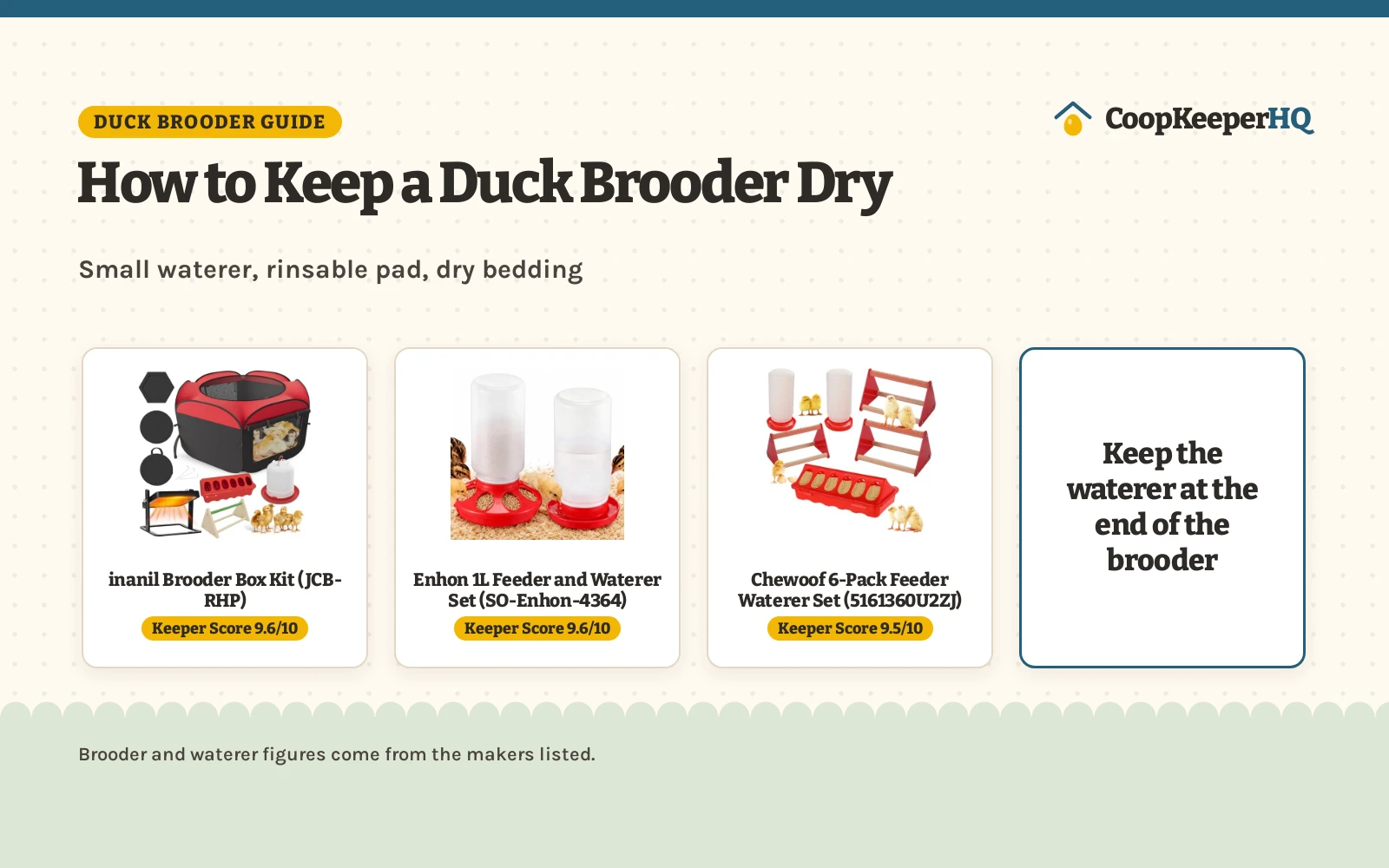
 inanil Brooder Box for Chicks Starter Kit9.6/10View on Amazon
- 2
 Enhon Chick Feeder and Waterer Set9.6/10View on Amazon
- 3
 Chewoof 6 Pack Chick Feeder and Waterer Set with 1 Feeder9.5/10View on Amazon
- 4
 Brooder Box for 15 Chicks with Heating Plate & Sliding DoorView on Amazon
- 5
 6 Packs Chicken Waterer Cups with PVC Tee FittingsView on Amazon
- 6
 IRIS USA High Sided Cat Litter BoxView on Amazon
- 7
 Premier 1 All-Season Heated Poultry Waterer for Chickens &View on Amazon
- 8
 MEDEHOO Large Chicken Coop with Unique Folding Design for 4-6View on Amazon
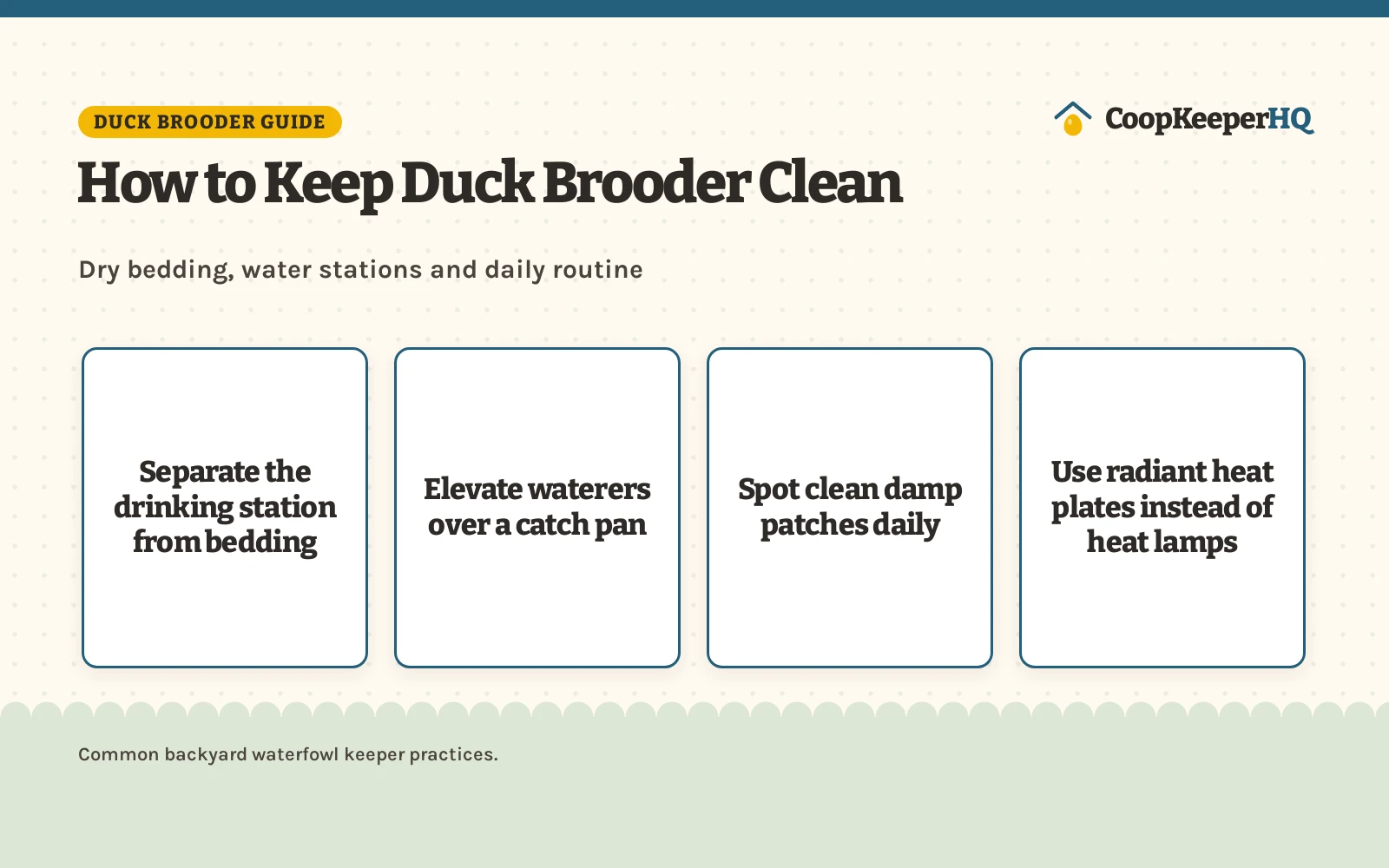
Keeping a duck brooder clean comes down to managing water mess before it soaks into the bedding. Ducklings love splashing and playing in their drinker, so the solution is to place the water container over a raised catch pan, separate the wet drinking area from the dry sleeping quarters, and spot clean damp bedding every day. Establishing these simple containment habits early keeps the brooding space dry, prevents foul smells, and provides young waterfowl with a safe, comfortable environment as they grow.
Other options for the coop
 Brooder Box for 15 Chicks with Heating Plate & Sliding DoorCheck price on Amazon
 6 Packs Chicken Waterer Cups with PVC Tee FittingsCheck price on Amazon
 IRIS USA High Sided Cat Litter BoxCheck price on Amazon
 Premier 1 All-Season Heated Poultry Waterer for Chickens &Check price on Amazon
 MEDEHOO Large Chicken Coop with Unique Folding Design for 4-6Check price on Amazon
CoopKeeperHQ earns a commission if you buy through our links, at no added cost to you. Affiliate disclosure.
How to keep duck brooder clean: start with water containment
Water mess is the primary challenge every waterfowl keeper faces during the indoor brooding phase. Unlike chicken chicks, ducklings must submerge their nostrils to clear feed debris and keep their airways clear. As ducklings drink, they drill their bills into the water, shake their heads vigorously, and splash droplets across nearby surfaces. If a drinker sits directly on wood shavings, that bedding absorbs gallon after gallon of water, transforming clean litter into a cold, sodden mat. Saturated bedding cools ducklings down, produces sour smells, and damages floors. An essential step toward a clean brooder is accepting that ducklings cannot be trained to stop splashing, so your setup must catch water before it reaches the floor.
Effective water containment starts by elevating the drinking station above the litter level. Positioning the drinker on top of a plastic-coated wire grid or a sturdy mesh platform allows escaping droplets to fall directly through into a lower basin. For example, VISCOO lists a playpen with a 48 by 24 inch footprint and a 4.7-inch waterproof bottom mat made of 600D Oxford cloth with PVC coating, which demonstrates how containment barriers prevent escaping liquid from penetrating subfloors. You can build a similar setup using a shallow plastic tray topped with wire mesh. Water that falls through the mesh stays separated from duckling feet and shavings, drastically reducing daily bedding dampness. For an overview of essential housing gear, see our duck brooder guide.
Keep ventilation steady and open
High moisture levels inside a duck brooder make adequate airflow essential. Ducklings exhale damp air, splash water constantly, and produce watery droppings that release moisture into the enclosure. If a brooder is sealed tightly in an effort to retain heat, humid air accumulates against cold surfaces, causing condensation to drip down walls and saturate bedding from above. Stagnant, moist air also accelerates ammonia accumulation, which irritates delicate eyes and respiratory membranes.
Maintain consistent airflow by keeping wire mesh tops and upper wall vents uncovered throughout the brooding period. Vents located high along the brooder walls allow warm, moisture-laden air to rise and exit without creating drafts at floor level where ducklings sleep. A gentle draft across sleeping birds can cause chilling, but open overhead ventilation simply lets humid air leave the enclosure. If condensation forms on brooder walls or the room smells damp, increase overhead airflow rather than closing off vents.
Use absorbent, fast-drying bedding
Selecting suitable litter materials makes routine cleaning manageable. Large flake pine shavings are widely favored by waterfowl keepers because they offer generous absorbency, resist packing down immediately, and provide good traction for webbed feet. Finely ground wood sawdust should be avoided because young ducklings often mistake small particles for food and consume them, leading to digestive blockages. Cedar shavings must never be used in any poultry brooder because aromatic compounds in cedar wood irritate respiratory passages.
Absorbent hemp bedding serves as an exceptional alternative to pine shavings, offering rapid moisture absorption and excellent odor control. Our duck bedding guide compares practical bedding materials that handle heavy moisture. Rather than allowing bedding to become saturated throughout the entire enclosure, use a targeted spot-cleaning approach. Scoop out damp patches around feeding zones every morning and scatter a dry layer across resting areas to keep the surface fresh.
Create a separate wet zone and dry zone
Dividing your brooder layout into dedicated zones stops moisture from spreading into sleeping quarters. In a combined brooding area where feed, water, and heat sources sit side by side, ducklings track wet mud across every inch of the floor. Establishing distinct zones contains moisture within a small, easily scrubbed section of the pen while preserving dry footing elsewhere.
Set up your wet zone along an edge of the brooder, containing the elevated waterer and a feed dish placed over rubber mats or a grated drainage platform. Position the dry zone at the opposite side, featuring clean wood shavings and a radiant heater. Ducklings naturally travel toward the wet zone to drink and feed, then return to the dry zone to rest and warm up. This simple physical separation prevents wet splashes from soaking into the main bedding pack.
Set up a mess-resistant water station
Providing clean water without creating an indoor swimming pool requires a purpose-built drinking setup. Ducklings require water deep enough to immerse their bills, but they must never have access to an open bowl wide enough to climb into. Young ducklings lack the waterproofing oils found in adult waterfowl feathers, meaning a duckling that gets thoroughly soaked in cool water can suffer rapid hypothermia.
A gravity-fed poultry fount with an enclosed dome or a drinker equipped with narrow drinking access holes allows ducklings to submerge their bills while keeping their bodies out of the water bowl. Our duck water feeder guide highlights drinkers engineered to limit splashing and prevent tipping. Placing the drinker atop a raised plastic mesh stand over an easy-to-empty catch tray ensures that unavoidable splashes drain cleanly away from surrounding litter.
Choose safer radiant heat over lamps
Heating a duck brooder requires careful equipment selection because moisture and traditional heat lamps create dangerous hazards. Standard incandescent heat lamps run at extreme temperatures, and an accidental splash of cold water against a hot glass bulb can cause it to shatter into the brooder. Furthermore, active ducklings running around an enclosure can dislodge hanging lamps, creating a severe fire danger if the fixture contacts dry bedding.
Radiant brooder heat plates offer a far safer, reliable alternative. A heat plate radiates gentle warmth downward from an insulated heating element, mimicking how a mother duck warms her young. Ducklings tuck themselves underneath the plate when chilly and emerge to explore when warm. For example, HAYOHRT lists a wooden brooder that includes an adjustable 10 by 10 inch heating plate, providing a stable warming area without high surface heat or exposed bulbs. Our heat plate vs heat lamp comparison explains why radiant heat plates eliminate fire hazards, while our brooder heat plate guide reviews models with sturdy, adjustable legs.
Manage feed mess and fast-growing ducklings
Waterfowl eating behaviors contribute significantly to brooder debris. Ducklings eat dry starter crumbles and immediately rinse their mouths with water, shuttling between feeder and drinker continuously. If the feeder sits directly beside the water station, ducklings drop wet feed into the water basin and splash soupy mash across the litter, creating rancid odors and spoiled feed.
Separate the feeder from the waterer by placing them a short distance apart within the wet zone. This spacing forces ducklings to swallow before reaching the water, keeping the feed hopper drier and cleaner. Use a gravity feeder with anti-scratch grill dividers to prevent birds from billing feed out onto the floor. As ducklings grow rapidly, their expanding size increases waste volume, requiring keepers to monitor space allowances closely to prevent overcrowding from overwhelming the bedding pack.
Mind electrical cords and damp brooder safety
Combining electrical heating equipment with water-loving birds demands diligent safety precautions. Always plug brooder heating equipment into a GFCI protected electrical outlet so power cuts instantly if moisture penetrates an electrical connection. Inspect all power cables regularly for signs of wear, moisture exposure, or damage from curious beaks.
Keep power cords routed outside the brooder frame or elevated along the ceiling where ducklings cannot reach them. Never let electrical plugs, extensions, or connections rest on the floor or near drainage trays where splash water collects. Metal brooders, such as the Kinchoix 32 by 16 inch alloy steel brooder with a slide-out tray, offer rigid walls and dedicated cable routing that keep heating gear secure and isolated from wet waste containers below.
Daily cleaning rhythm for ducklings
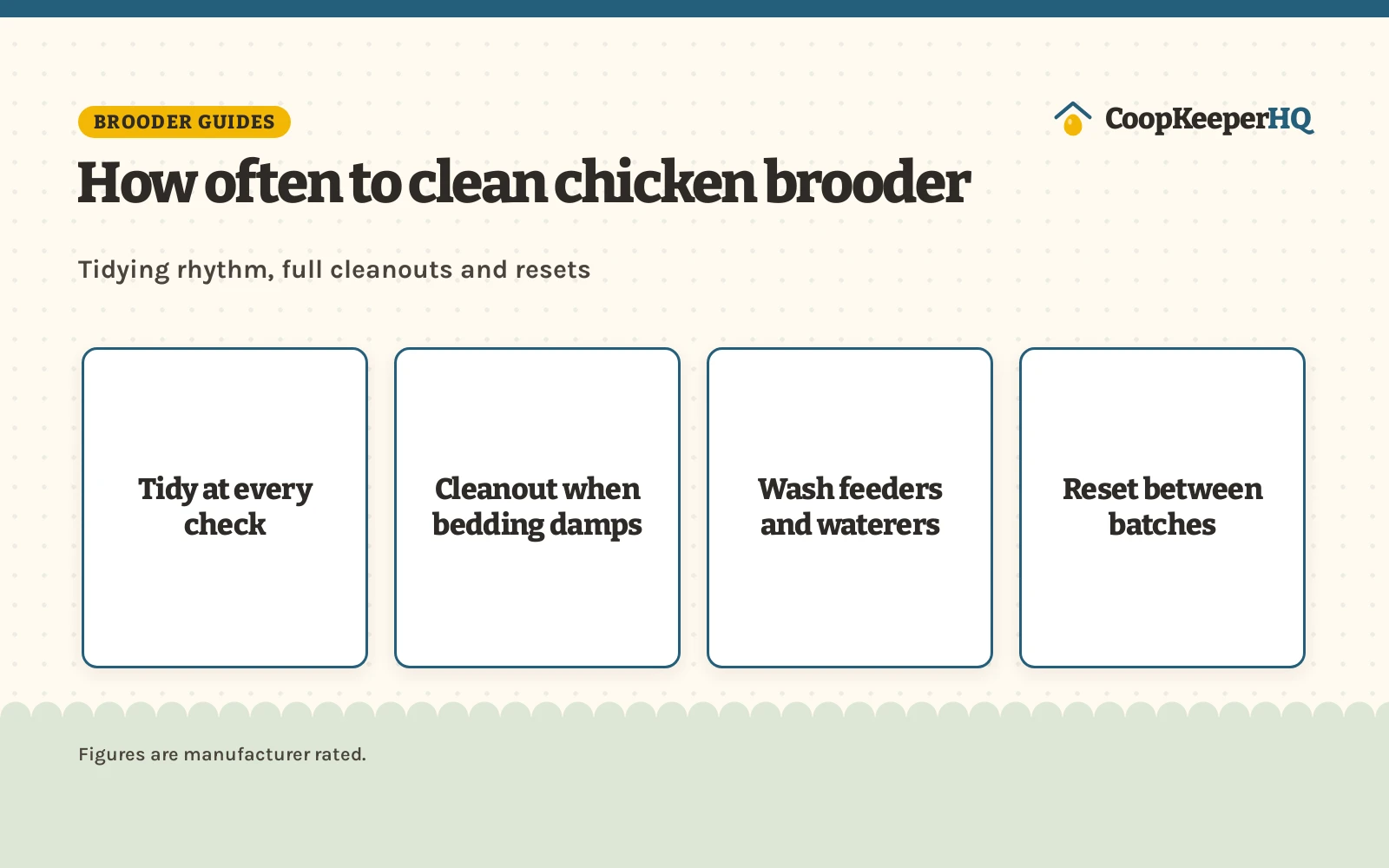
Maintaining a clean brooder is straightforward when broken down into a consistent daily schedule. Every morning, remove the waterer, empty the catch basin into an outdoor drain, and rinse out any feed sludge that settled in the drinker bowl. Refill the container with fresh, clean water and replace it onto the elevated mesh platform.
Next, inspect the bedding surface. Scoop out saturated litter around the drinking station, deposit it into a compost bucket, and rake clean shavings forward. Scatter a fresh handful of dry pine shavings across resting zones to maintain a clean surface. In the evening, check feed levels, verify that overhead vents remain clear, and confirm that the heat plate remains set at an appropriate height above the birds. Periodically, move ducklings into a temporary holding box to perform a full bedding change and scrub down the brooder floor using warm water and mild vinegar. If a young bird displays signs of distress or unusual lethargy, contact a poultry vet or your state agricultural extension office for professional guidance.
A simple duck brooder checklist
- Drinker is elevated on a sturdy wire mesh stand over a splash catch basin
- Upper wall vents and wire tops remain open to vent excess humidity
- Bedding in the sleeping zone stays completely dry and clean
- Warmth is supplied by an adjustable radiant heat plate instead of a fragile heat lamp
- Feeder is separated from the waterer and features anti-waste dividers
- All electrical cords run to a GFCI outlet and stay clear of damp areas
For advice on setting up long-term housing once your birds feather out and move outdoors, explore our duck house guide.
Birds, breed size, run time and climate in; coop floor, run space, roost length and nesting boxes out.
Heat lamps are a common cause of coop and barn fires. If you use one, secure it with more than the clamp (a chain or wire to a fixed point), keep it well away from bedding, walls and cardboard, and plug it into an outlet or a cord rated for the load. Radiant heat plates run cooler and remove most of that risk. Check chicks often in the first days: huddling under the heat means too cold, spreading to the edges means too warm. Read our Safety Disclaimer.
FAQ for the flock
How often should I clean a duck brooder?
Spot cleaning should happen daily. Remove wet bedding from around the drinking zone and empty the splash catch basin every morning. A full bedding replacement and thorough scrub of the brooder floor is typically completed on a regular weekly schedule, depending on flock size and enclosure space.
Can I use a heat lamp for ducklings?
We recommend using an adjustable radiant heat plate rather than a heat lamp. Heat lamps present a severe fire hazard around dry bedding, and splashing water droplets from active ducklings can shatter hot glass bulbs. Radiant heat plates provide safe, consistent warmth without exposed glowing elements.
What is the best bedding for a duck brooder?
Large flake pine shavings and absorbent hemp bedding perform best because they absorb moisture effectively and resist packing into a slick mat. Avoid fine wood dust or sand, which ducklings may consume, and avoid cedar shavings due to aromatic oils that can irritate respiratory passages.
Why do ducklings make such a mess with water?
Waterfowl naturally require water to clean their nostrils and swallow dry crumble feed. Ducklings dip their bills, tilt their heads back, and shake off excess moisture instinctively. Elevating the drinker on a wire platform over a catch basin contains this natural splashing behavior.
When can ducklings move out of the brooder?
Ducklings can transition to an outdoor shelter or predator-proof duck house once they have grown their adult feathers and outdoor nighttime temperatures remain mild. Consult your local agricultural extension office for housing recommendations tailored to your local climate.