How to Keep Chickens Warm in Winter Without Overheating the Coop
Dry roosts, high ventilation, deep bedding and safer heat choices for keeping a backyard flock comfortable through a cold winter.

On this page
Top picks at a glance
As an Amazon Associate I earn from qualifying purchases.
- 1
 Omlet Eglu Cube Large Chicken CoopView on Amazon
- 2
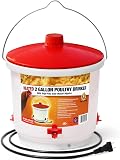 Farm Innovators HB-60P Heated Poultry Waterer DrinkerView on Amazon
- 3
 Chicken Coop Heater for Winter with Remote APP ControlView on Amazon
- 4
 Chicken Coop Heater for Winter with Smart APP ControlView on Amazon
- 5
 Farm Innovators Electric Heated Pet Water BowlView on Amazon
- 6
 K&H Brooder PlateView on Amazon
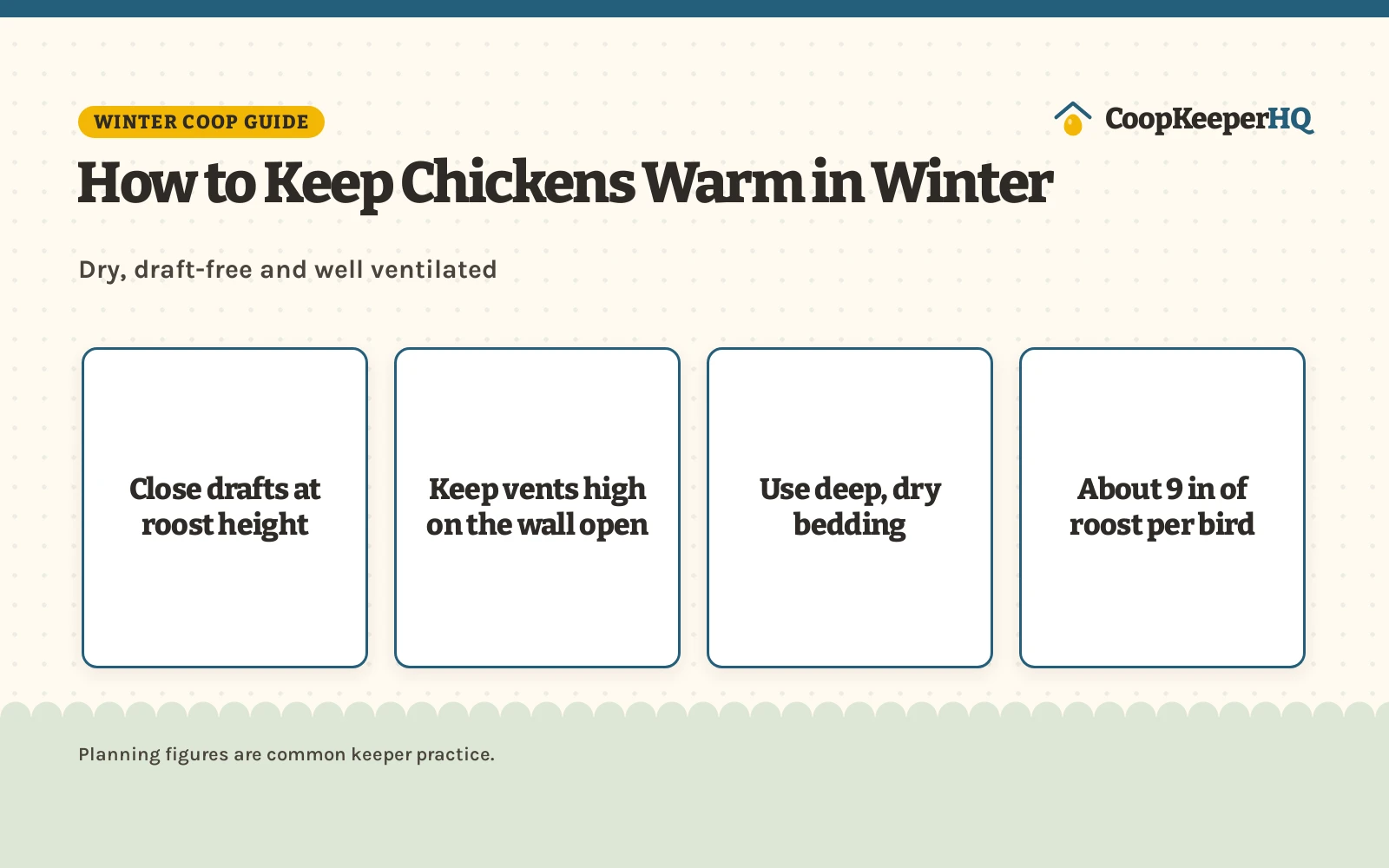
Most healthy adult chickens handle winter better than their keepers expect. They carry a thick layer of feathers, they huddle on the roost and they warm the coop with their own bodies. Keeping chickens warm in winter is mostly about three things: a dry coop, no drafts at roost height and enough ventilation higher up to carry moisture out.
Other options for the coop
 Omlet Eglu Cube Large Chicken CoopCheck price on Amazon
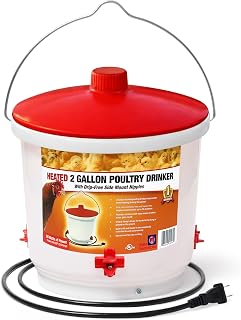 Farm Innovators HB-60P Heated Poultry Waterer DrinkerCheck price on Amazon
 Chicken Coop Heater for Winter with Remote APP ControlCheck price on Amazon
 Chicken Coop Heater for Winter with Smart APP ControlCheck price on Amazon
 Farm Innovators Electric Heated Pet Water BowlCheck price on Amazon
 K&H Brooder PlateCheck price on Amazon
CoopKeeperHQ earns a commission if you buy through our links, at no added cost to you. Affiliate disclosure.
How to keep chickens warm in winter: start with a dry roost
Wind and damp do more harm than cold air alone. Close gaps at roost height, patch holes and make sure rain and snow cannot blow in. Wet bedding and a damp floor pull warmth out of a coop, so repair roof leaks first. Hardware cloth over openings keeps predators out while you work, and our hardware cloth guide covers what to buy.
Keep ventilation, even in the cold
It feels backwards, but a sealed coop is a problem. Chickens breathe out a lot of moisture overnight, and a closed-up coop holds it. Leave vents high on the walls, above the roosts, so damp air leaves without a breeze blowing across the birds. If you want to size things, the coop size calculator uses about 4 square feet of floor per standard hen, and a crowded coop is damper than a roomy one.
Use deep bedding
A thick layer of dry bedding insulates the floor and lets you add fresh material on top. Many keepers use the deep litter method in winter: stir the bedding, add a fresh layer when the surface gets damp and clean it out in spring. Dry pine, aspen or hemp all work. Our chicken coop bedding picks compare them. Keep the nest boxes lined as well, and see the nesting box guide if yours need replacing.
Give them wide, sheltered roosts
Chickens keep their feet warm by sitting on the roost with their feathers covering their toes. A flat 2 x 4 laid wide side up lets them do that better than a round pole. Allow about 9 inches of roost per bird, and keep roosts away from drafts and doors.
Keep water from freezing
Chickens drink less when the water is frozen, and keepers lose time carrying warm water out. A heated waterer base or heated waterer solves it. Our heated chicken waterer guide compares them. Use a GFCI outlet for any outdoor electrical gear, and check cords for chew marks.
Should you add a heater?
Most flocks do not need one. A heater is a choice you make for particular climates or birds, and it brings a fire risk and a power cord into a coop full of dust and dry bedding. Do not use heat lamps in a coop. If you decide to heat, a flat radiant panel with a stated UL or ETL listing is the safer type, and our best chicken coop heater guide compares panels. Our heat plate vs heat lamp comparison explains the fire risk in more detail. If you are unsure whether your birds need extra warmth, ask a poultry vet or your state extension office.
Plan for short days and snow
Short days mean less time to eat, so keep feed and water where the birds roost. Shovel a path to the run, and keep a few clear spots for them to scratch. Many chickens will not step into snow, so a covered or tarped part of the run gives them somewhere dry to move. Make sure the roof of the run can hold snow before the first storm. If you add extra light, use a low-wattage fixture on a timer and a GFCI outlet.
Mind the electrics and the clock
Anything plugged in at the coop should run from a GFCI outlet, with cords kept off the ground and out of reach of beaks. Rain, ice and heat in a metal coop all age cords and plugs faster than you expect, so check them every few weeks in winter. If you add light to help with short days, use a low-wattage fixture on a timer and keep it clear of bedding. Do not leave a heat lamp running unattended in a coop.
Daily rhythm in cold weather
A short routine beats a long list. Look in at dusk to count heads and shut the pop door; an automatic coop door takes care of the closing if you are out late. Open vents in the morning and check that the water is not frozen. Scoop out wet spots, add a handful of dry bedding where the floor looks damp and look over the nest boxes for eggs before they freeze and crack. Plan your visits around the coldest part of the day so you are not carrying water at dawn in the worst of it. If you notice a bird behaving differently, call a poultry vet or your state extension office rather than guessing.
A simple winter checklist
- Roost area is free of drafts and the roof does not leak
- Vents high on the wall are open
- Bedding is deep and dry
- Roosts are wide and away from the door
- Water does not freeze
- Outdoor electrical gear is on a GFCI outlet with protected cords
For the full list of repairs to make before cold weather, see our guide to winterizing a chicken coop.
Birds, breed size, run time and climate in; coop floor, run space, roost length and nesting boxes out.
Wash your hands after handling birds, eggs or equipment, supervise children around the flock, and check local rules on flock size and roosters before you buy. For sick birds, call a poultry veterinarian or your state extension office. See CDC backyard poultry guidance. Read our Safety Disclaimer.
FAQ for the flock
What temperature is too cold for chickens?
There is no single number. It depends on the breed, age, feathering and how dry and draft free the coop is. Ask your state extension office or a poultry vet about your climate and flock.
Do chickens need heat in winter?
Most healthy adult chickens do not. A dry, draft-free roost with fresh bedding usually matters more than added heat. If you add a heater, use a radiant panel with a stated safety listing and a GFCI outlet.
How do I keep chickens warm without electricity?
Use deep dry bedding, close drafts at roost height, give each bird about 9 inches of wide roost and keep the flock a sensible size for the coop so they warm each other.
Should I close up the coop at night in winter?
Close the pop door for safety from predators, but leave vents high on the wall open so moisture can leave. A sealed coop is damp, and damp is the problem.
Is it safe to use a heat lamp in a coop?
Heat lamps are a well-known coop fire risk because the hot bulb can fall into bedding. We recommend a flat radiant panel or heat plate instead.
More coop guides
- How to Use Compost Bin for Coop Waste
- Chicken Coop Fan vs Heater: Which One Should You Buy?
- Insulated vs Uninsulated Chicken Coop: Which One Should You Buy?
- Side vs Top Door Chicken Coop: Which One Should You Buy?
- Mobile vs Stationary Chicken Coop: Which One Should You Get?
- Digital vs Analog Incubator Thermometer: Which Hatches Better?
- How to Keep Chickens Cool in Summer: Shade, Water and Airflow
- Are Backyard Chickens Worth It? Costs, Time and Eggs
- Chicken Keeping Supplies List: What You Need and What Can Wait
- How to Winterize a Chicken Coop: A Fall Checklist
- Best Chicken Coop Heater: Safer Panels for Winter
- Best Chicken Coop Bedding: Shavings, Hemp and Sand
See the chicken coop picks and the coop supply guides.