Post Hole Digger vs Post Driver: Which One Should You Buy?
A gas auger, a manual digger and hand drivers compared on power, weight, size and soil, with a verdict on which side suits your fence.


On this page
Top picks at a glance
As an Amazon Associate I earn from qualifying purchases.
- 1
 VEVOR Post Hole Digger, 43cc Gas-Powered Auger9.6/10View on Amazon
- 2
 Insaga Fence Post Driver9.6/10View on Amazon
- 3
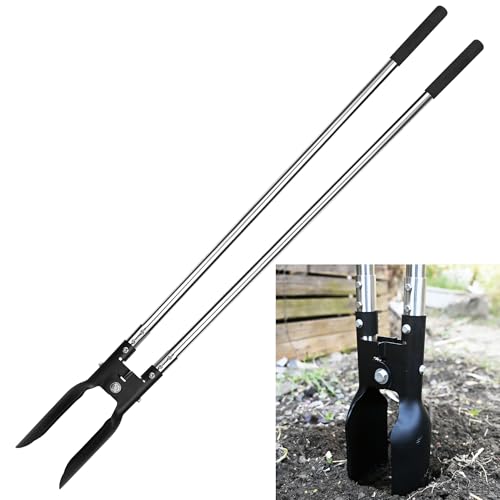 YEELOR Post Hole Digger, Manual9.4/10View on Amazon
- 4
 VASGOR Fence Post Driver9.4/10View on Amazon
Post hole digger vs post driver verdict: Choose a post hole digger when the ground must be opened first, for a new fence line or a run corner. Choose a post driver when the post can be driven straight in, for T-posts and U-posts, though the VASGOR example assumes a started hole.
A fence post either goes into a hole you dig or straight into the ground, and that choice decides the tool. A digger cuts a hole and lifts the soil out, while a driver slips over the post and hammers it down. This comparison covers how each side works, then looks at examples from the listings we reviewed.
CoopKeeperHQ earns a commission if you buy through our links, at no added cost to you. Affiliate disclosure.
The examples
| # | Product | Keeper Score | Buy |
|---|---|---|---|
| 1 | VEVOR Post Hole Digger, 43cc Gas-Powered Auger | 9.6/10 | Buy on Amazon |
| 2 | Insaga Fence Post Driver | 9.6/10 | Buy on Amazon |
| 3 | YEELOR Post Hole Digger, Manual | 9.4/10 | Buy on Amazon |
| 4 | VASGOR Fence Post Driver | 9.4/10 | Buy on Amazon |
VEVOR Post Hole Digger, 43cc Gas-Powered Auger
A 43cc gas auger with an 8 in alloy steel bit, 30 in long, a 1.2 L tank, a 9350 RPM maximum and an emergency stop switch.
Who it's for: a long fence line in farmland or garden soil.
Who should skip it: anyone digging a few holes.
The VEVOR example is a 43cc gas-powered auger, listed at 1250 W, with a maximum of 9350 RPM. Its 8 in alloy steel bit is 30 in long, the 1.2 L tank holds a 40:1 mix, and the box includes 1 drill bit, a spark plug, an oil can and a tool kit. The tool has an emergency stop switch and a foam handle, and the product is EPA-certified.
Pros
- 43cc gas engine, 9350 RPM
- 8 in x 30 in alloy steel bit
- 1.2 L tank, 40:1 mix, oil can
- Emergency stop switch, foam handle
Cons
- No warranty stated
- Needs a 40:1 fuel mix
- 26.24 lb, the heaviest example
- 1 drill bit only
Insaga Fence Post Driver
A 16 lb carbon steel post driver with non-slip handles, a double-layer welded top and a 4.7 in inner diameter for T-posts, wood, metal and U-channel posts.
Who it's for: T-posts and wood posts on a farm, ranch or garden fence.
Who should skip it: anyone on sandy, rocky or root-dense soil.
The Insaga example is a 16 lb driver, 17 in high and 11 in wide with a 4.7 in inner diameter. The listing states a double-layer welded top that withstands repeated heavy impact without cracking, non-slip handles and a powder coating. It drives T-posts, wood, metal and U-channel posts, and states not to use it on sandy, rocky, or root-dense soil.
Pros
- 16 lb carbon steel, welded top
- Non-slip handles on both sides
- Drives T, wood, metal, U-channel
- Powder coating for rust protection
Cons
- No warranty stated
- Not for sandy, rocky, root-dense soil
- 16 lb, the heavier driver
- Repeated lifts and drops
YEELOR Post Hole Digger, Manual
A manual post hole digger with a one-piece steel blade and a 55 in stainless handle that adjusts in length, joined to the blade with eight bolts.
Who it's for: a few holes for a run corner or light fencing.
Who should skip it: anyone facing a long fence line.
The YEELOR example is a manual post hole digger with a one-piece steel blade and a 55 in stainless handle that adjusts in length. The handle and blade are joined with eight bolts and a turning thread connection, and the listing includes a manual and assembly tools. One bullet calls this digger a fence post driver, though the listing is for a manual post hole digger.
Pros
- One-piece steel blade
- Handle length adjusts
- Eight-bolt join, turning thread
- No fuel, only 7.9 lb
Cons
- No warranty term stated
- Arm power on every hole
- Assembly required before first use
- No blade width stated
VASGOR Fence Post Driver
A 12 lb hand post driver, 17 in long with an 8.5 in handle width, for metal U posts, T posts and garden fence posts.
Who it's for: light T-post and U-post work.
Who should skip it: anyone wanting a heavier driver or a stated material.
The VASGOR example is a 12 lb hand post driver, 17 in long with an 8.5 in handle width. The listing calls 12 lb a moderate weight that takes little effort to use, and says it saves time and effort and limits injury compared to conventional hammers. No material is stated, and the instructions tell you to insert the fence post into the hole and hammer it many times.
Pros
- 12 lb, moderate, easy to operate
- Short 17 in length
- Fits U posts, T posts, garden fence
- Hand-powered, no fuel needed
Cons
- No material stated
- No warranty stated
- Instructions assume a started hole
- Lighter than the 16 lb Insaga
Other options for the coop
 Heavy Duty T Post DriverCheck price on Amazon
 VEVOR Electric T Post DriverCheck price on Amazon
 1900W 2-Stroke 52cc Gas T Post Driver with 3 SleevesCheck price on Amazon
 Electric Post Hole DiggerCheck price on Amazon
 PGD1032 Titan Gas Powered Post DriverCheck price on Amazon
 Heavy‑Duty T Post DriverCheck price on Amazon
Post hole digger vs post driver: side by side
| Factor | Post hole digger | Post driver | Notes |
|---|---|---|---|
| How it works | Cuts and lifts soil out to open a hole | Slips over the post and drives it down | A digger opens the hole |
| Power source | Gas on the VEVOR example; arm power on the YEELOR example | Arm power only; no gas, no electricity | Only VEVOR uses fuel |
| Example weight | VEVOR 26.24 lb; YEELOR 7.9 lb | Insaga 16 lb; VASGOR 12 lb | Varies by example |
| Example size | VEVOR bit 8 x 30 in; YEELOR handle 55 in | Insaga 17 in high, 4.7 in inner dia; VASGOR 17 in | From the listings |
| Soil | VEVOR: sandy soil, forested areas, farmland | Insaga: not for sandy, rocky, root-dense soil | Match the tool to your soil |
| Posts it fits | Holes for posts, mailboxes, fencing | T-posts, wood, metal, U-channel posts | Driver fits the post |
Specs reflect what the manufacturer lists, not measurements in a backyard flock (gathered 13 November 2026).
How each one works
The VEVOR example is a gas auger whose 8 in alloy steel bit turns and cuts, drilling deep holes without bending over with its 30 in bit. The YEELOR example is manual: its one-piece steel blade is made for digging post holes, and the handle adjusts in length. A post driver works the other way: the Insaga listing says to slip it over the post, lift and drop vertically until it reaches the desired depth, while the VASGOR listing says to insert the post into the hole and hammer it many times, so it assumes a started hole.
Power and effort
Only the VEVOR example uses fuel: its 43cc gas engine runs at a maximum of 9350 RPM, with a 1.2 L tank, a 40:1 mix and a 1.2 m pull cord the listing says makes starting easier. The rest run on arm power: the YEELOR digger has an adjustable handle, the Insaga driver states no gas, no electricity, no hassle, and the VASGOR listing calls its 12 lb a moderate weight.
Weight and size
Weights vary by example, and so do lengths: the two drivers are 17 in long, the YEELOR handle is 55 in, and the VEVOR bit is 30 in long.
| Example | Weight | Size |
|---|---|---|
| VEVOR 43cc auger | 26.24 lb | 8 in bit, 30 in long |
| YEELOR manual digger | 7.9 lb | 55 in handle |
| VASGOR driver | 12 lb | 17 in long, 8.5 in handle width |
| Insaga driver | 16 lb | 17 in high, 4.7 in inner dia |
Soil and posts
The VEVOR auger handles sandy soil, forested areas and farmland, and the YEELOR blade copes with various soil and environmental conditions, per the listings. The Insaga listing draws a line: no sandy, rocky, or root-dense soil, since those conditions reduce driving efficiency. On posts, Insaga drives T-posts, wood, metal and U-channel posts, VASGOR lists metal U posts, T posts and garden fence, and YEELOR lists digging post holes, installing mailboxes and fencing.
Fuel and upkeep
The VEVOR auger is the only example that needs fuel: its 1.2 L tank holds a 40:1 gasoline to oil mix and digs multiple holes without refueling, according to the listing. The box includes 1 drill bit, a spark plug, an oil can and a tool kit. The rest need no fuel or power: the YEELOR digger includes a manual and assembly tools, and the Insaga driver needs only lift and drop. No listing here states a warranty term.
Flock fit
VEVOR 43cc Post Hole Digger
Insaga Fence Post Driver
YEELOR Manual Post Hole Digger
VASGOR Fence Post Driver
FAQ for the flock
Should I dig a hole or drive the post straight in?
Dig when the post needs a set hole, such as a new fence line or a run corner. Drive it straight in for a T-post, U-post, wood or metal post when the ground allows it: the Insaga listing says to slip the driver over the post, lift and drop until it is deep enough.
Can a post driver set a wood post?
Yes. The Insaga listing states it drives T-posts, wood posts, metal posts and U-channel posts. The VASGOR listing covers metal U posts, T posts and garden fence posts.
What soil stops a post driver?
The Insaga listing states not to use its driver on sandy, rocky, or root-dense soil. The VEVOR auger listing says its auger handles sandy soil, forested areas and farmland.
Do I need a gas auger for a chicken run fence?
For a few holes, no: the YEELOR manual digger weighs 7.9 lb and has an adjustable handle. For a long fence line, the VEVOR 43cc auger is the gas option, and its 1.2 L tank digs multiple holes without refueling.
How the Coop Score came out
Each example is scored on performance, build, value, safety and warranty, using only what the listing publishes. No listing here states a warranty term.
| Product | Keeper Score | Perf. /35 | Build /25 | Value /25 | Safety /10 | Warranty /5 |
|---|---|---|---|---|---|---|
| VEVOR 43cc Post Hole Digger | 9.6 | 32 | 21 | 20 | 7 | 0 |
| Insaga Fence Post Driver | 9.6 | 29 | 22 | 20 | 5 | 0 |
| YEELOR Manual Post Hole Digger | 9.4 | 26 | 20 | 20 | 3 | 0 |
| VASGOR Fence Post Driver | 9.4 | 26 | 19 | 19 | 3 | 0 |
We convert points onto the range from 9.2 up to 9.8 without reshuffling anything: more points, higher number.
Which should you choose?
Choose a post hole digger if you are opening fresh holes for a new fence line or a run corner: the gas auger example for a long line of holes, the manual example for a few near the coop.
Choose a post driver if your posts are T-posts, U-posts, wood or metal posts that drive straight in, and you want no fuel and no mixing. Note that a driver does not always mean no hole first: the VASGOR example assumes a started hole.
Wash your hands after handling birds, eggs or equipment, supervise children around the flock, and check local rules on flock size and roosters before you buy. For sick birds, call a poultry veterinarian or your state extension office. See CDC backyard poultry guidance. Read our Safety Disclaimer.
More coop guides
- How to Use a Post Driver for Fence Posts
- Best Post Hole Digger for Hard Ground (2026)
- Best T Post Driver: 5 Picks for Fence Lines
- T Post Driver vs Sledgehammer: Which One Should You Buy?
- T Post vs U Post: Which One Should You Buy?
- T Post vs Wood Post: Which One Should You Buy?
- Best Post Driver for Rocky Ground (2026)
- Manual T Post Driver: How to Choose and Use One
- Best Steel T Post Driver (2026): 5 Picks for Fence Lines
- Standard T Post Dimensions Chart
See every chicken runs and fencing guide.