Types of Post Hole Diggers for Fencing
Clamshell, hand auger and powered auger compared for a chicken run fence, with advice on rocky ground and choosing the right digger.

On this page
Top picks at a glance
As an Amazon Associate I earn from qualifying purchases.
- 1
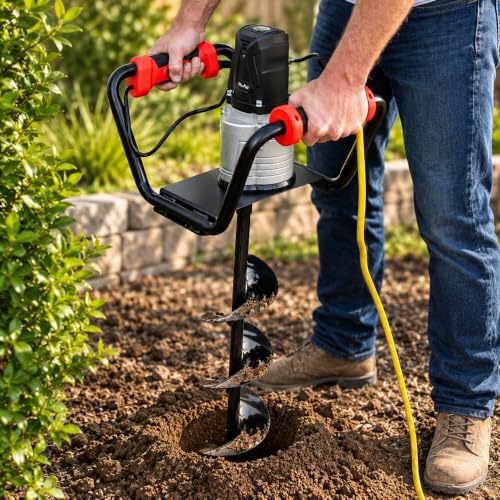 XtremepowerUS 1500W Electric Post Hole Digger9.6/10View on Amazon
- 2
 Auger Post Hole Digger9.6/10View on Amazon
- 3
 NEO-TEC 72CC gas post hole digger with 6 and 10 inch bits and9.6/10View on Amazon
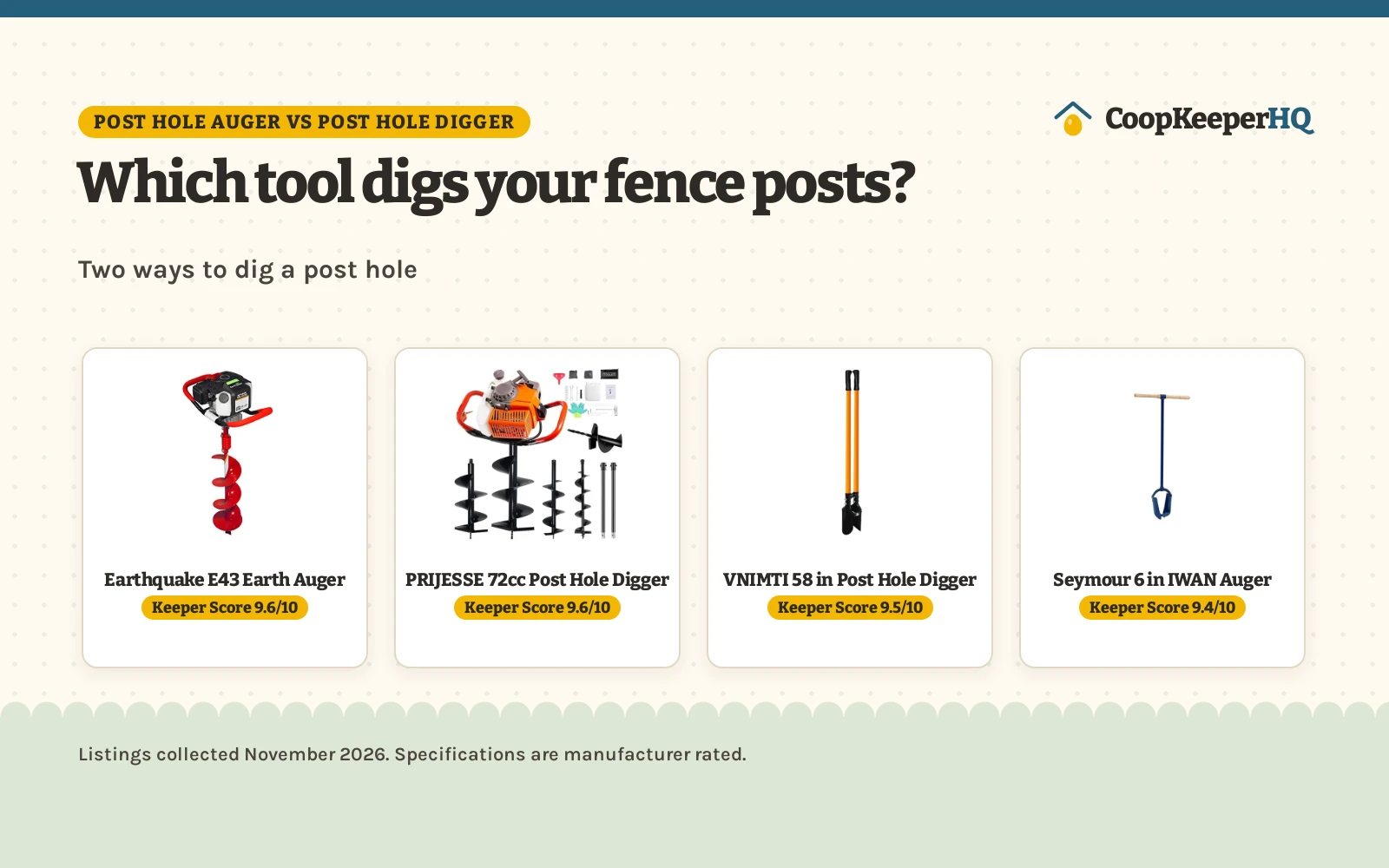
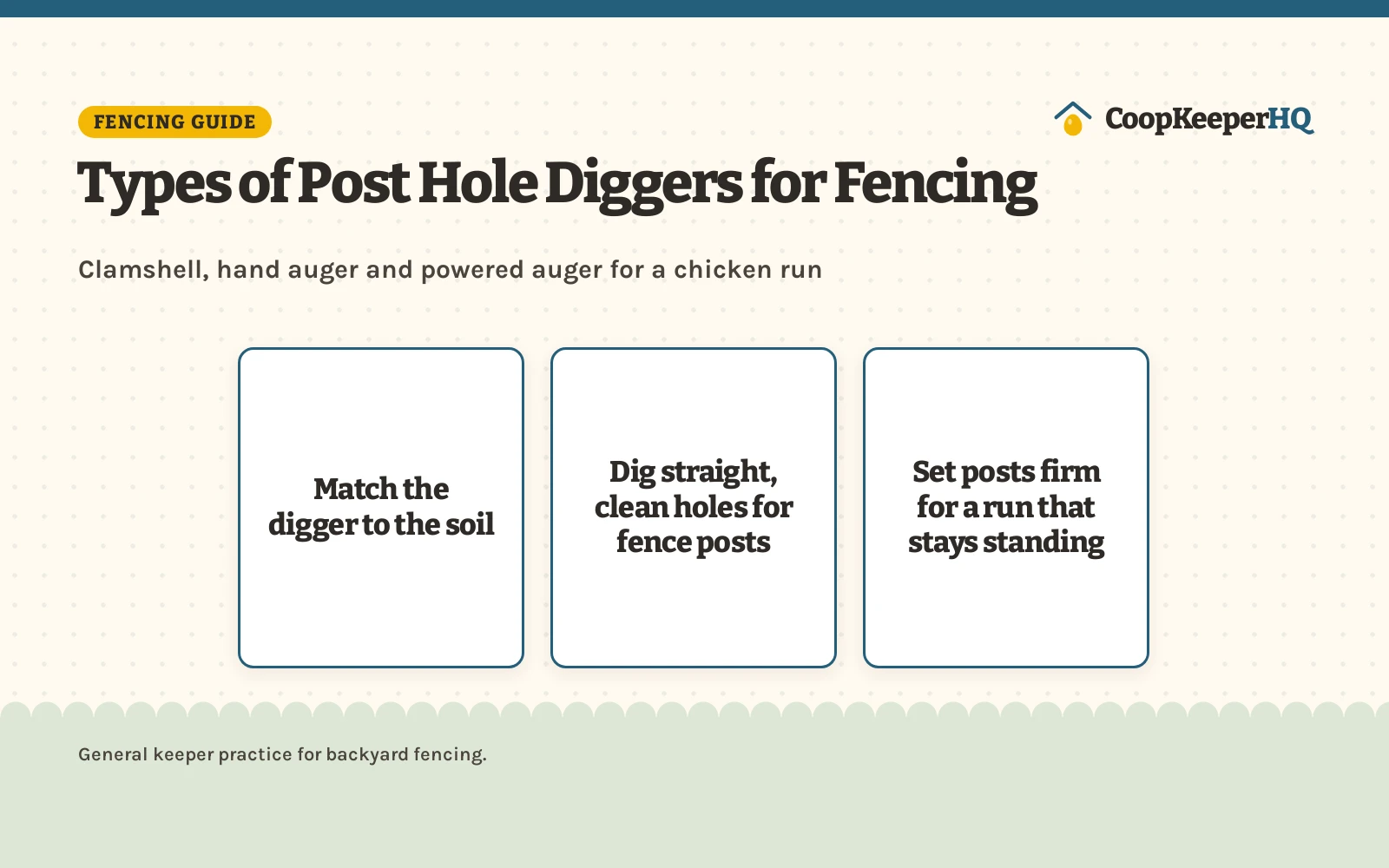
The fence around the run has to stand through wind, rain and a flock that leans on the wire all day, and a post that wobbles can start in a hole that was dug with the wrong tool for the ground. The types of post hole diggers are the clamshell digger, the hand auger and the powered auger, and the right choice depends on the soil under the run, the length of fence and how many holes the job needs.
CoopKeeperHQ earns a commission if you buy through our links, at no added cost to you. Affiliate disclosure.
Types of post hole diggers: the clamshell digger
A clamshell digger is the tool most keepers picture when they think of digging a post hole by hand. It has long handles joined at the top, with a blade at the end of each handle, and the blades close together like a scoop when the handles are spread apart. The keeper pushes the open blades into the ground, spreads the handles to bite a scoop of soil, lifts the tool out and brings the handles together to drop the soil beside the hole. The narrow blades keep the hole close to the width of the post.
A clamshell digger suits soft, loose soil and a short run of fence, where the ground gives way under the blades and the holes are easy to open. It struggles in hard clay, in ground full of roots and in soil packed with stone. For a long fence line it is slow work, since every scoop has to be lifted out by hand.
The hand auger
A hand auger is a screw-shaped blade on a long shaft with a crossbar handle at the top. The keeper turns the crossbar, the screw bites into the ground and pulls itself down, and the blade carries soil up out of the hole as it turns. The keeper lifts the auger to drop the spoil beside the hole. The hole it makes is round and even, and the screw gives steady progress in firm soil.
A hand auger suits firm soil and holes for a small run or a repair, where the fence needs a few posts and the ground is free of stone. It needs a steady, even turn, and it binds in roots and rock, where the blade stops and the keeper has to lift the auger and clear the obstruction by hand. It is light to carry and needs no fuel or power, but it is slow work for a long fence line.
The powered auger
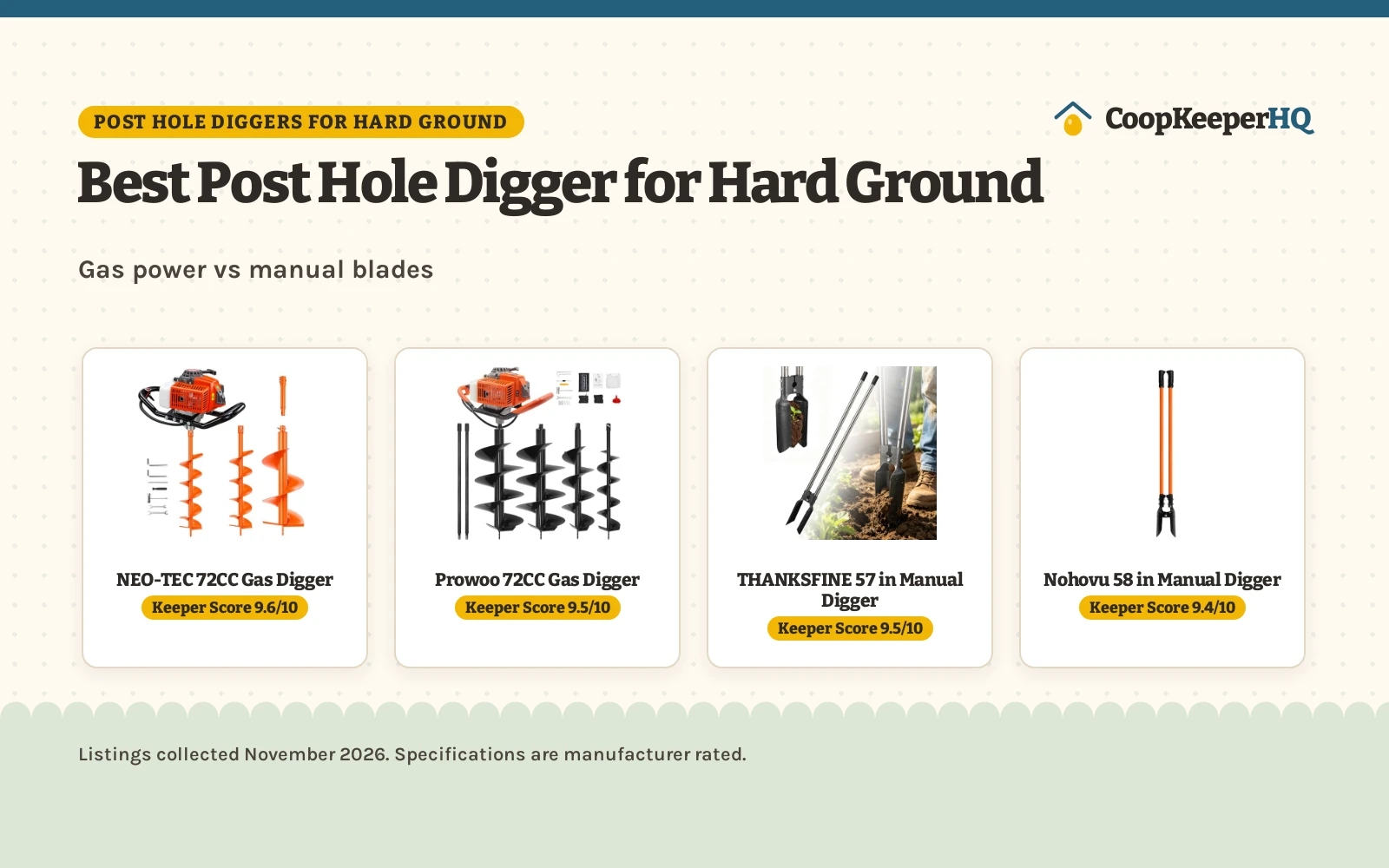
A powered auger is the same screw blade turned by an engine or a motor instead of by hand. The keeper holds the handles, starts the motor and lets the bit pull itself into the ground, lifting it out to clear the soil as the hole deepens. It cuts holes far faster than a hand tool, and it keeps going in firm ground. A powered auger suits a long fence line, a new run or hard soil.
A powered auger is heavier and harder to control than a hand tool, and a gas-powered model is loud. It needs fuel or a charged battery before the job starts. It can bind in roots and rock, and when the bit catches, the handles can twist hard in the keeper’s hands, so the keeper should hold the handles with a firm grip and let go of the throttle when the bit stops turning. Check local rules before digging, and call the local utility locate service before the work starts.
When the ground fights back
Rocky ground, thick roots and hard clay are the usual reasons a hole goes wrong. A digging bar is the tool for these spots: a long steel bar that breaks rock, pries stone out of the hole and cuts through roots that the auger cannot turn through. Work the bar in short, firm strokes and lift the broken pieces out with the digger.
Dry, hard ground can be softened by watering it and leaving it to soak, and a hole that is started in the wrong place can be moved along the fence line rather than fought over. Roots can be cut with loppers or a saw, and a post can move a little along the line to miss a root.
How to dig a post hole, step by step
Mark the fence line with string and stakes, and mark each post spot along the line. Cut the sod at each spot with a spade and set the sod aside, then open the hole with the digger and lift the spoil into a pile beside the hole. Keep the hole straight and the sides even so the post sits in the middle.
Stand the post in the hole and check that the hole is deep enough for the post to stand firm, then lift the post out and dig deeper if the post sits too high. Set the post back in the hole, check it from the fence line and the side, and brace it while the hole is filled. Backfill with the spoil in layers, tamping each layer firm, and leave the top of the fill slightly mounded so rain runs away from the post.
Choosing the right digger for a chicken run
Match the digger to the soil and to the length of fence. A clamshell digger is enough for a short run of fence in soft soil, and a hand auger suits firm soil where the holes are few. A powered auger earns its keep on a long fence line or in hard ground, and it is the tool to borrow or hire when the fence is long and the soil is hard. In rocky ground, add a digging bar to the kit.
Plan the whole run before digging. See the chicken runs and fencing guides and the chicken run ideas for layouts, and the how to use a post hole auger guide for the auger in detail.
Wash your hands after handling birds, eggs or equipment, supervise children around the flock, and check local rules on flock size and roosters before you buy. For sick birds, call a poultry veterinarian or your state extension office. See CDC backyard poultry guidance. Read our Safety Disclaimer.
FAQ for the flock
What is the best type of post hole digger for a chicken run?
It depends on the soil and the length of fence. A clamshell digger suits soft soil and a short fence, a hand auger suits firm soil and a small job, and a powered auger suits a long fence line or hard ground.
Can I dig post holes by hand?
Yes. A clamshell digger or a hand auger will dig a post hole without power, and they are light to carry and easy to store. Hand digging is slow for a long fence, so a powered auger is the better choice when the fence is long.
What do I do when I hit a rock?
Stop the auger and use a digging bar to break the rock and pry the pieces out of the hole. If the rock will not move, shift the post spot along the fence line rather than forcing the tool through stone.
How do I keep a fence post straight?
Check the post from the fence line and the side as the hole is filled, and brace the post while backfilling in layers, tamping each layer firm.
Do I need to call before I dig?
Yes. Call the local utility locate service before digging, and check local rules about fence lines and property bounds. Never dig where buried lines may run, and wait for the locate service to mark the ground before the work starts.
More coop guides
- How to Use a Post Hole Auger for Fence Posts
- Post Hole Auger vs Post Hole Digger: Which One Should You Buy?
- Chicken Run Ideas: Layouts, Netting and Fencing
- How to Set Corner Post for Fence
- How to Secure Fence Post Without Concrete
- Chicken Coop Fencing Ideas: Netting and Panels
See the chicken runs and fencing guides and the predator protection guides for more on keeping the run secure.