Pulp vs Plastic Egg Cartons: Which One Should You Buy?
Pulp vs plastic egg cartons explained: how the two materials differ, when each is the better pick, and four pulp carton packs from the listings ranked by stated specs.

On this page
Top picks at a glance
As an Amazon Associate I earn from qualifying purchases.
- 1
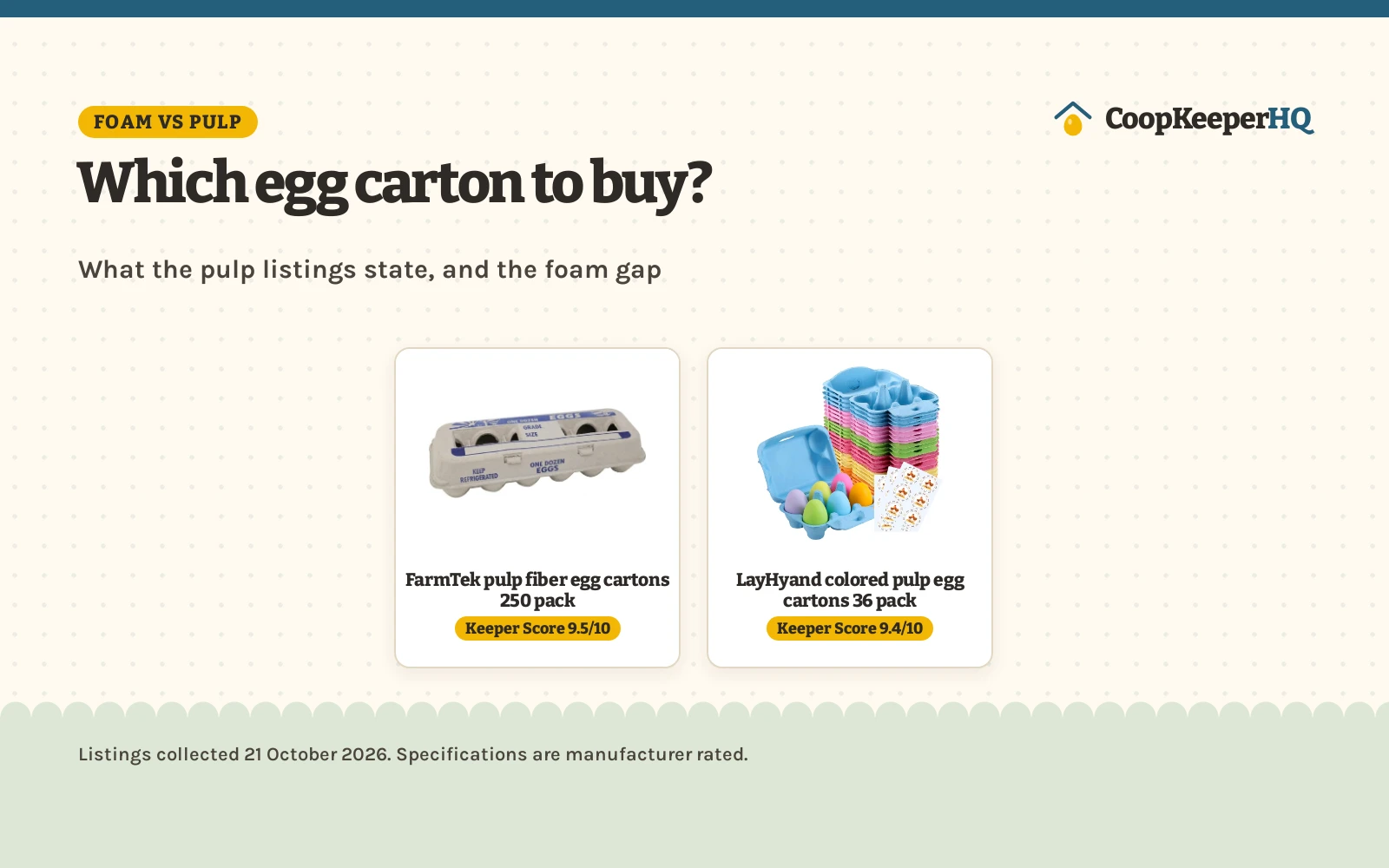
 FarmTek pulp fiber egg cartons 250 pack9.5/10View on Amazon
- 2
 LayHyand colored pulp egg cartons 36 pack9.4/10View on Amazon
- 3
 Vented Paper Pulp Egg Cartons Holds 1 Dozen Chicken EggsView on Amazon
- 4
 Paper Pulp Egg TraysView on Amazon
- 5
 Pecking Order Paper Pulp Egg CartonsView on Amazon
- 6
 Paper Pulp Egg CartonsView on Amazon
- 7
 Blue Paper Pulp Egg CartonsView on Amazon
You are carrying a basket of still-warm eggs to the kitchen and need something to put them in. Pulp vs plastic egg cartons comes down to this: pulp cartons breathe and absorb moisture, and the used carton goes to compost or recycling, while plastic cartons are the washable alternative you keep and reuse. All four listings reviewed here are pulp cartons, so this guide compares the pulp packs in detail and tells you when the other material is the better pick.
Other options for the coop
 Vented Paper Pulp Egg Cartons Holds 1 Dozen Chicken EggsCheck price on Amazon
 Egg CartonsCheck price on Amazon
 Paper Pulp Egg TraysCheck price on Amazon
 Pecking Order Paper Pulp Egg CartonsCheck price on Amazon
 Paper Pulp Egg CartonsCheck price on Amazon
 Blue Paper Pulp Egg CartonsCheck price on Amazon
CoopKeeperHQ earns a commission if you buy through our links, at no added cost to you. Affiliate disclosure.
Pulp vs plastic egg cartons: the differences
Pulp is pressed paper fiber, and every listing here leans on the same strengths. The FarmTek describes thick reclaimed paper pulp with a porous, breathable surface that allows airflow and helps absorb moisture. The Cackle Hatchery cartons are vented so air moves freely around the eggs to minimize excess moisture. The PTCOM states its cardboard absorbs humidity to prevent condensation, keeping eggs dry and fresh. Three of the four state biodegradable and compostable outright, and three call themselves reusable; the FarmTek states reusable and recyclable.
Plastic is the other side of the trade, and none of the four listings here is a plastic carton, so shop that side on its own terms. The honest trade is washability against compostability: pulp goes in the compost when it is done, while a plastic carton stays in use. What the pulp listings do state about reuse is modest: the FarmTek allows reuse for multiple rounds when kept clean and in good condition, and the PTCOM says its cartons can be opened, closed and filled daily while staying in good condition. Only the Cackle mentions washing at all, with a hand wash only care instruction.
When pulp is the better pick
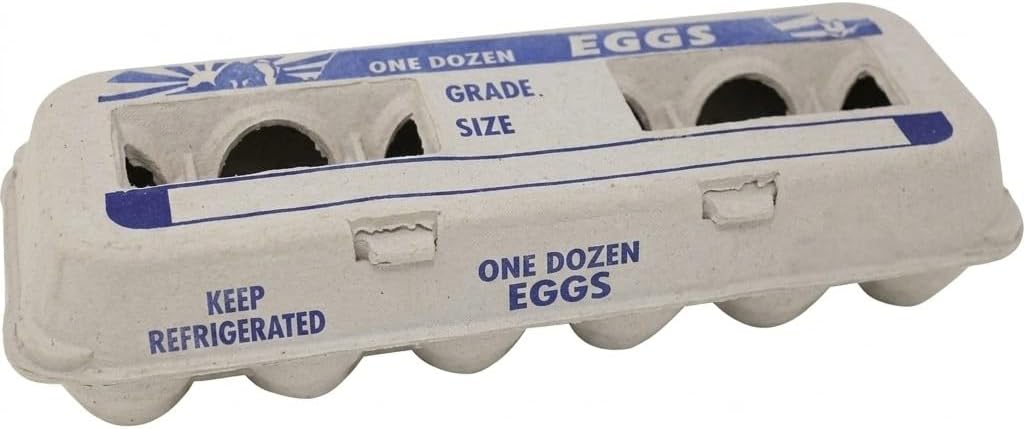
Pick pulp when the carton leaves with the eggs. If you sell or gift eggs, the FarmTek has a blue printed top with a built-in write-on label area for dates and notes, the PTCOM has a rustic Laid in the USA design with a pre-printed collected-on label and space for your own label, and the DecarDamai set includes stickers for custom information. The FarmTek 250-pack is aimed at high-volume collection for homesteads and farmers markets, and the PTCOM notes its cartons are stackable for easy storing. When the carton is empty, all four go to compost or recycling instead of the trash.
When plastic is the better pick
Pick plastic when you want a carton you can rinse out and reuse for years. Pulp is not that: it is paper fiber, and the listings describe reuse only while the carton stays clean, dry and in good condition. If your routine is collecting from your own nest boxes straight to your own fridge, a washable carton you keep is the simpler buy. For anything you hand to a customer, though, pulp is the standard the listings here are built for.
The gear: four pulp carton packs, ranked
All four are dozen-egg pulp cartons, ranked by stated specs and pack value.
1. PTCOM 48-pack pulp cartons
The PTCOM is a 48-pack of shock absorbent paper pulp cartons holding small to jumbo chicken and duck eggs. The listing states the cardboard absorbs humidity to prevent condensation, a tuck-in locking tab, a rustic Laid in the USA custom design with a pre-printed collected-on label plus space for your own label, and food safe, biodegradable, compostable, recyclable and reusable material features. It states refrigerator safe, stackable cartons at 11.5 x 4.5 x 3 in. Who it is for: backyard stands and markets that want a printed, giftable carton. Who should skip it: anyone who wants vented cartons or a 250 bulk pack.
2. FarmTek 250-pack pulp cartons
The FarmTek is a 250 bulk pack of thick reclaimed paper pulp cartons with a secure locking lid and a blue printed top with an easy write-on label. The listing states molded compartments for one dozen small, medium and large eggs, plus duck and quail eggs, breathable porous fiber that helps absorb moisture, and reuse for multiple rounds when kept clean and in good condition. Who it is for: high-volume collection, homesteads and farmers markets. Who should skip it: anyone who will not use 250 cartons.
3. DecarDamai 15-pack pulp cartons
The DecarDamai is a 15-pack of natural paper pulp cartons with solid pressed fibers stated for tear and abrasion resistance. The listing states a firm front clasp, interior pillars against crushing, a riser inside and buckle outside, and room for small, normal sized, large and duck eggs. The set includes an egg care card and stickers for custom information, and the pack weighs 1.2 lb. Who it is for: small flocks and local sellers who want a modest pack with labels included. Who should skip it: anyone buying for market volume.
4. Cackle Hatchery vented pulp cartons
The Cackle Hatchery is a vented paper pulp carton made from 100% reclaimed paper, stated biodegradable, compostable and recyclable, holding one dozen small to extra large chicken eggs. The listing states vented cartons that let air move freely around the eggs, a flip top, and 12 x 4.25 x 2.75 in when closed. One contradiction: the title says 144 pack while the bullets say package of 24, so confirm the count before ordering. Care is hand wash only. Who it is for: keepers who want vented, compostable cartons for gifting eggs. Who should skip it: anyone bothered by the pack-count confusion.
Wash your hands after handling birds, eggs or equipment, supervise children around the flock, and check local rules on flock size and roosters before you buy. For sick birds, call a poultry veterinarian or your state extension office. See CDC backyard poultry guidance. Read our Safety Disclaimer.
FAQ for the flock
Are pulp egg cartons compostable?
Three of the four state biodegradable and compostable outright: the Cackle (made from 100% reclaimed paper), the DecarDamai and the PTCOM, which are also stated recyclable. The FarmTek states reusable and recyclable.
Do pulp cartons handle moisture?
The listings say yes three ways: the Cackle is vented to minimize excess moisture, the FarmTek porous fiber helps absorb moisture, and the PTCOM absorbs humidity to prevent condensation.
Can pulp cartons hold duck eggs?
Three of the four state it: the FarmTek names large chicken, duck and quail eggs, the DecarDamai names duck eggs, and the PTCOM names small to jumbo chicken and duck eggs. The Cackle states small to extra large chicken eggs.
How many eggs does each carton hold?
One dozen each. All four listings state a 12-egg capacity.
Are pulp cartons reusable?
The FarmTek, PTCOM and DecarDamai all state reusable, with the FarmTek conditioning it on staying clean and in good condition. Only the Cackle mentions washing, with a hand wash only care instruction.
More coop guides
- Best Egg Cartons for Selling Eggs at a Farm Stand
- Best Egg Cartons for Farmers Market (2026): 5 Top Picks
- Egg Cartons for Duck Eggs (2026): 5 Top Bulk and Pulp Picks
- Types of Egg Cartons: Guide for Backyard Flocks
- Labels for Egg Cartons (2026): 5 Top Picks for Fresh Eggs
- Clear Plastic vs Paper Egg Cartons: Which One Should You Buy?
See the best egg cartons for selling eggs picks and the egg handling guides.