Spiral vs Straight Ground Anchors: Which One Should You Buy?
Spiral and straight ground anchors compared for a chicken run: how each shape holds, the lengths and packs in the spiral examples, install methods, and which shape fits your run.

On this page
Top picks at a glance
As an Amazon Associate I earn from qualifying purchases.
- 1
 Insaga 30 in Heavy Duty Ground Anchors9.6/10View on Amazon
- 2
 Ground AnchorsView on Amazon
- 3
 VortexView on Amazon
- 4
 Tent Stakes Ground Anchors Screw inView on Amazon
- 5
 Insaga 24'' Fully Welded Ground Anchors Screw inView on Amazon
- 6
 Trampoline Stakes Anchors Ground Anchors Screw inView on Amazon
- 7
 Mayne No Dig Ground AnchorView on Amazon
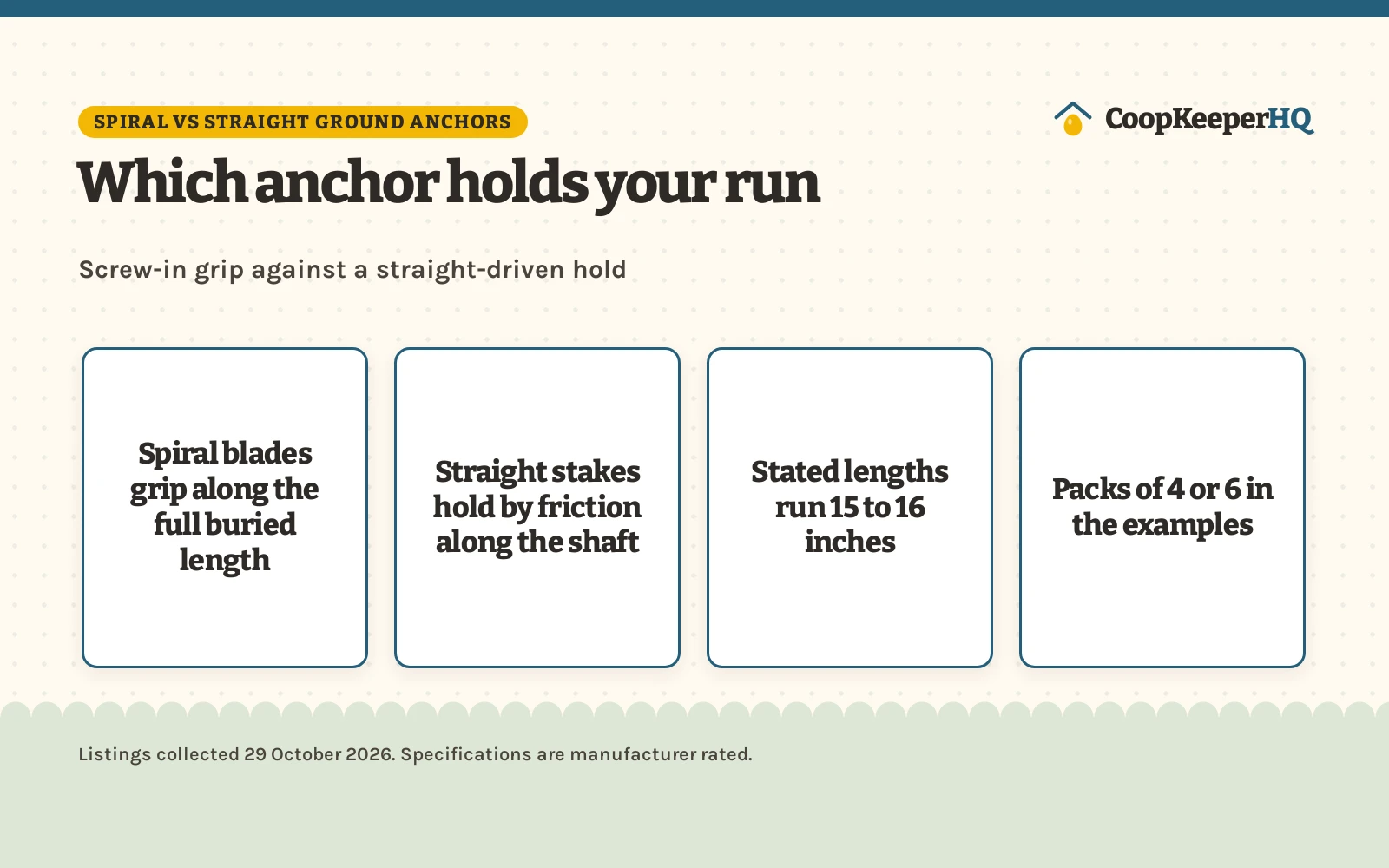
A run that stays put through a storm starts at the ground, not at the roof. In the spiral vs straight ground anchors choice, a spiral anchor screws into the soil and grips along its blade, while a straight anchor is driven straight down and holds by friction along its shaft. For a chicken run, the spiral shape is the one the examples below support with holding claims, and the straight shape fits quick, temporary pegging where a screw-in hold is more than the job needs.
Other options for the coop
 Ground AnchorsCheck price on Amazon
 VortexCheck price on Amazon
 Tent Stakes Ground Anchors Screw inCheck price on Amazon
 Insaga 24'' Fully Welded Ground Anchors Screw inCheck price on Amazon
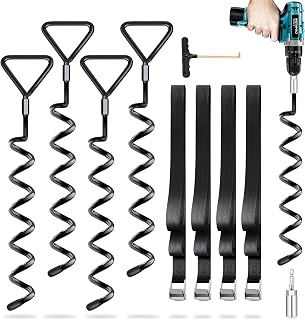 Trampoline Stakes Anchors Ground Anchors Screw inCheck price on Amazon
 Mayne No Dig Ground AnchorCheck price on Amazon
CoopKeeperHQ earns a commission if you buy through our links, at no added cost to you. Affiliate disclosure.
Spiral vs straight ground anchors: how each holds
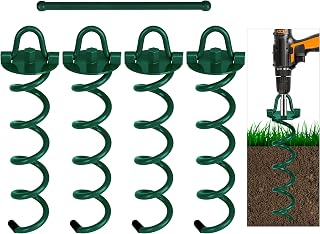
A spiral anchor works like a screw. The listings describe a full spiral blade that drills into the ground as it turns, so the soil packs around the blade and resists an upward pull along the whole buried length. The Phopich listing adds a top ring design that provides greater resistance, and the PAMAZY listing describes spaces between the spirals that the soil fills, keeping the anchor firmly in place. The hold comes mainly from the blade shape.
A straight anchor has no blade to bite. It goes in straight and stays put by friction between the shaft and the soil, plus the depth it reaches. That makes it fast to place and fast to pull, and easy to move when the run moves. It also means the hold depends on the soil gripping the shaft, with no blade working against an upward pull. For a run that must stand through high wind, the spiral listings make the stronger case; for a short-term pen that moves often, the straight shape is the simpler tool.
What the spiral listings state
Length is the first split. The Phopich example states an overall length of 15 inches (38 cm), the PAMAZY example states 15 inches long, and the Ashman example states 16 inches tall. The N1Fit example states no anchor length, so it cannot be compared on length. Blade thickness is stated on two listings: 2.21 mm thick and 40 mm wide on the Phopich blade, and 2.16 mm thick on the PAMAZY blade.
Materials are consistent: powder-coated solid steel on the Phopich and PAMAZY examples, a green powder-coated solid steel auger on the Ashman example, and rust resistant solid premium steel on the N1Fit example. Installation splits two ways. The Phopich and PAMAZY examples install with a drill through a power nut driver, each claiming 10 seconds per stake. The Ashman example installs by pushing the tip in and turning with a rod or screwdriver, and states that no specialized tools are generally required.
Packs and extras differ. The N1Fit, Phopich and PAMAZY examples come as sets of 4, and the Ashman example comes as a pack of 6. The Phopich set adds a power nut driver drill bit, a T handle hex wrench and a carry bag. The PAMAZY set adds detachable eyelets and a cover over each sharp tip for safer moving. The Ashman example has a folding ring on top for tying down.
Gear examples, in ranked order
The four examples below are all spiral anchors. Straight anchors get no example here, so the straight shape is described by shape only, with no listing figures attached. The order below is the ranking, strongest listing first.
PAMAZY Ground Anchor
The PAMAZY example ranks first on the fullest listing: 15 inches long, a 2.16 mm thick spiral blade, powder-coated solid steel, detachable eyelets, and a power nut driver for drill installation, claimed at 10 seconds per stake. The listing describes drilling into hard clay or rocky soils with the driver, and the tip covers add safety while the anchors are moved. The stated weight is 1.5 kg. Uses listed include swing sets, slides, canopies, sheds, tents, fence posts, trampolines, carports, gazebos, trees and pet houses.
Phopich Ground Anchor
The Phopich example is close behind: an overall length of 15 inches (38 cm), a full spiral blade 2.21 mm thick and 40 mm wide, a top ring design, and powder-coated solid steel. The set of 4 comes with a power nut driver drill bit, a T handle hex wrench and a carry bag, and the listing claims 10 seconds to install with an electric nut drill. The stated weight is 2.22 kg. Uses listed include trampolines, tents, swing sets, gazebos, canopies, garden sheds and carports.
Ashman Spiral Ground Anchor
The Ashman example is the longest and the largest pack: 16 inches tall, a pack of 6, a folding ring, and a green powder-coated solid steel auger, at a stated weight of 3 lbs. It installs without a drill, by turning with a rod or screwdriver, and the listing states it can be retrieved the same way. One contradiction to note: the spec table lists the material as alloy steel, metal and wood, while the bullets describe a powder-coated solid steel auger. Trust the bullets on material. Uses listed include chicken coops, playsets, trampolines, sheds, car ports, gazebos and metal fencing.
N1Fit Trampoline Stakes
The N1Fit example ranks last because its listing states the least: a set of 4 heavy duty cork-screw steel stakes, rust resistant solid premium steel, in black and silver, at a stated weight of 2.9 pounds. No anchor length and no blade thickness are stated, so it cannot be compared on either. Uses listed include trampolines, swing sets, tents and sheds. It suits a keeper who wants a simple screw-in set and does not need the stated lengths or install tools of the examples above.
Matching an anchor to your run
- Match the anchor length to the job: the examples run 15 inches, with one at 16 inches, and one listing states no length at all.
- Count the tie-down points on the run against the pack size: sets of 4 in three examples, a pack of 6 in the Ashman example.
- Pick drill installation where the listing states hard or rocky soil, as the PAMAZY listing does; pick the hand-turned Ashman example where no drill is wanted.
- Keep the tip covers on during storage and moving, as the PAMAZY set provides, and use the folding ring or eyelets for the tie-down ropes.
- Check the uses line for your structure: chicken coops are named on the Ashman listing, sheds appear on all four listings, carports on three, and fence posts on the PAMAZY listing.
Wash your hands after handling birds, eggs or equipment, supervise children around the flock, and check local rules on flock size and roosters before you buy. For sick birds, call a poultry veterinarian or your state extension office. See CDC backyard poultry guidance. Read our Safety Disclaimer.
FAQ for the flock
Should a chicken run use spiral or straight ground anchors?
Spiral anchors make the stronger case for a run that must stand through wind, since the blade grips along its buried length. Straight anchors suit quick, temporary pegging where a screw-in hold is more than the job needs.
What lengths do the examples come in?
The Phopich and PAMAZY examples state 15 inches, and the Ashman example states 16 inches. The N1Fit example states no anchor length.
How do spiral anchors go into the ground?
The Phopich and PAMAZY examples install with a drill through a power nut driver, each claiming 10 seconds per stake. The Ashman example installs by pushing the tip in and turning with a rod or screwdriver, with no specialized tools generally required.
Can spiral anchors be retrieved and moved?
The Ashman listing states its anchors are easy to insert and retrieve using a tool like a rod or stick. The other listings do not state retrieval, so check the listing in hand before planning a move.
Do spiral anchors work in hard or rocky soil?
The PAMAZY listing describes drilling into hard clay or rocky soils with the power nut driver. The other listings do not state hard-soil use, so the PAMAZY example is the one to weigh for that ground.
More coop guides
- Best Extra Long Ground Anchors (2026): 5 Compared
- Best Staples for Hardware Cloth (2026): 5 Picks for the Run
- Best Chicken Run for Bantams (2026)
See the chicken runs and fencing guides and the extra long ground anchors picks.