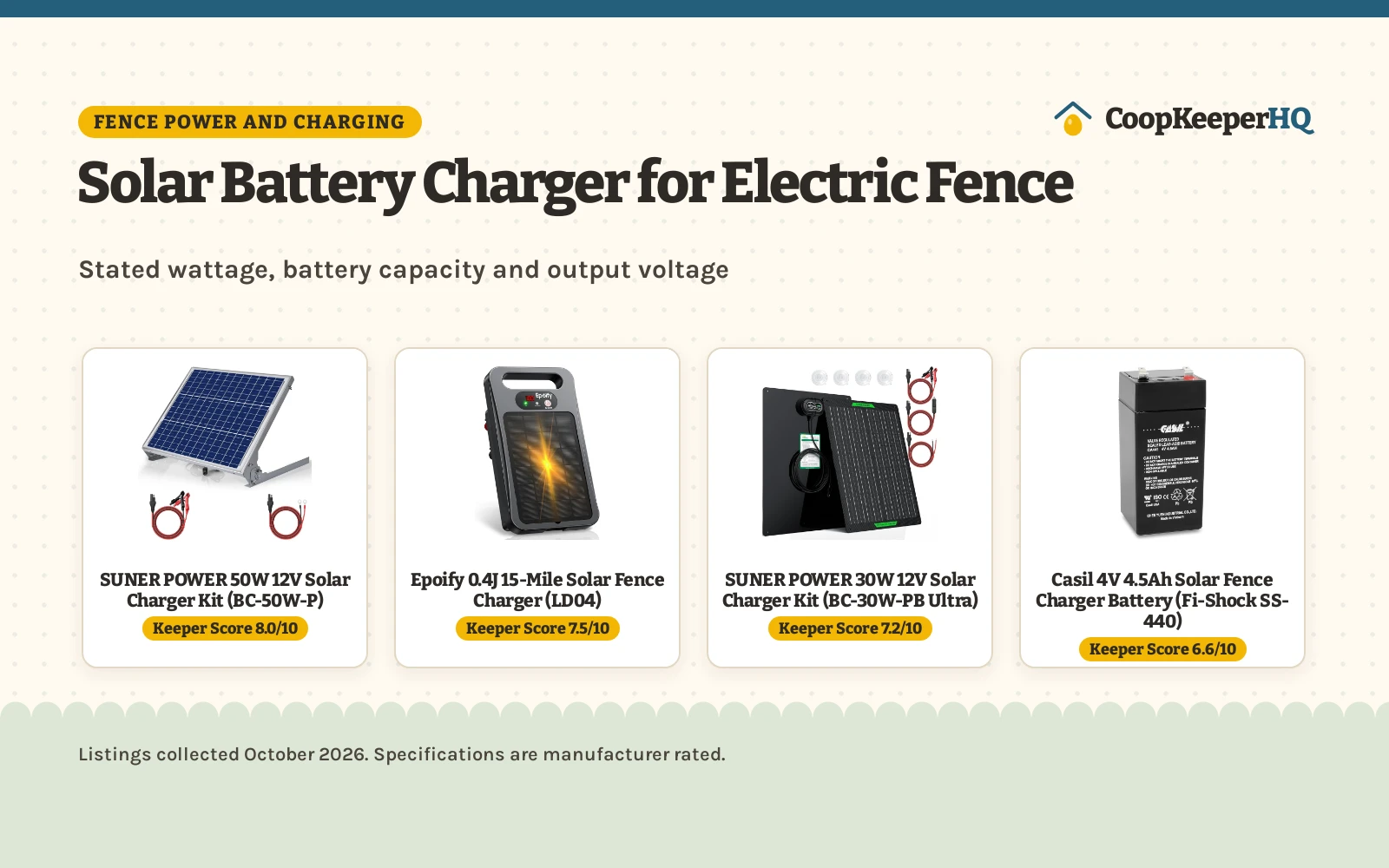
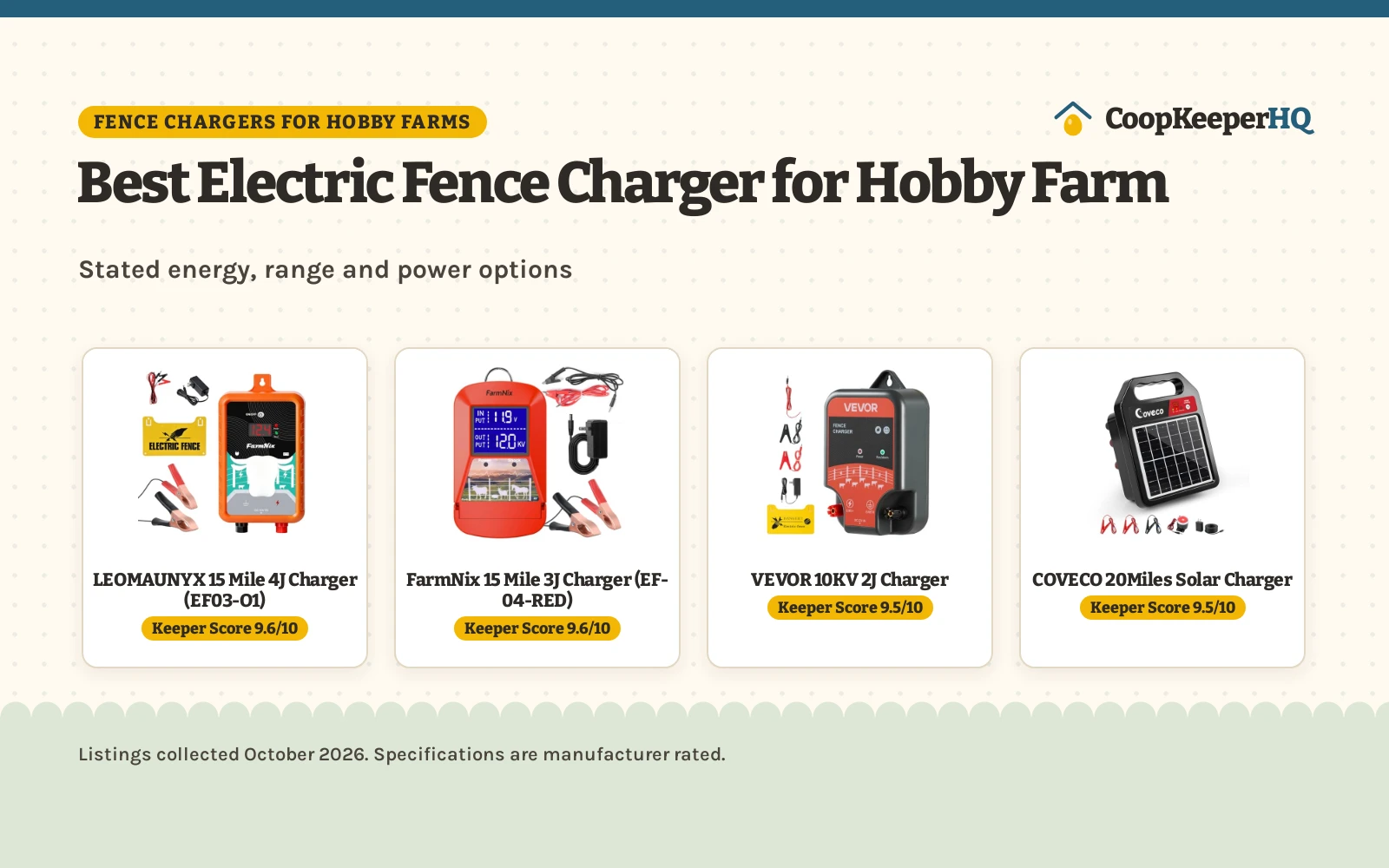
Battery vs Ac Electric Fence Charger: Which One Should You Buy?
Battery and AC fence chargers compared on joules, range, voltage and power, with a battery example and two AC examples from the listings we reviewed.


On this page
Top picks at a glance
As an Amazon Associate I earn from qualifying purchases.
- 1
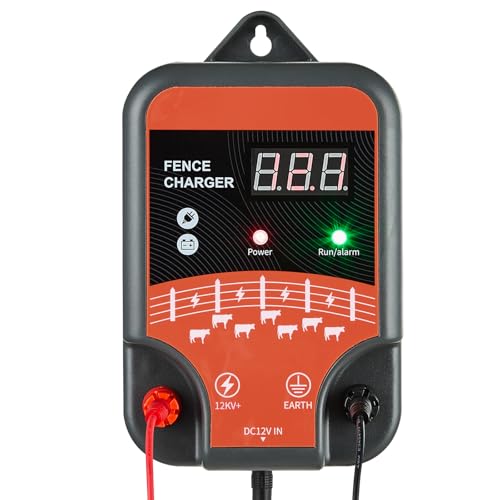 VEVOR Electric Fence Charger 10kV 3J AC DC9.6/10View on Amazon
- 2
 LEOMAUNYX 15 Miles Electric Fence Charger9.6/10View on Amazon
- 3
 FenceMate Battery Powered Electric Fence Charger9.5/10View on Amazon
Battery vs AC electric fence charger verdict: Choose a battery charger when the fence sits far from any mains outlet and a 12 V battery is on hand: the FenceMate runs on DC power and reaches up to 10 miles. Choose an AC charger when mains power is near the fence: the VEVOR and LEOMAUNYX deliver 3 and 4 joules.
Morning chores start at the run, and the fence is the first thing you check: a loose wire, a sagging strand, a gate left ajar. When the fence needs power, the choice comes down to battery vs ac electric fence charger, and the right answer depends on where the fence sits and what power is near it.
CoopKeeperHQ earns a commission if you buy through our links, at no added cost to you. Affiliate disclosure.
Three examples
| # | Product | Keeper Score | Buy |
|---|---|---|---|
| 1 | VEVOR Electric Fence Charger 10kV 3J AC DC | 9.6/10 | Buy on Amazon |
| 2 | LEOMAUNYX 15 Miles Electric Fence Charger | 9.6/10 | Buy on Amazon |
| 3 | FenceMate Battery Powered Electric Fence Charger | 9.5/10 | Buy on Amazon |
VEVOR Electric Fence Charger 10kV 3J AC DC
A 3-joule AC plug-in charger with DC battery and solar options, IP65 waterproofing and a 1.86-mile range, sold with a full installation kit.
Who it's for: a keeper with mains power near the fence who wants one charger that also runs on DC battery or solar.
Who should skip it: anyone fencing more than 1.86 miles, where the LEOMAUNYX example reaches farther.
The VEVOR charger delivers 3 joules at 10 kV with 1 pulse per second, and the maker rates its range at 1.86 miles. It runs on AC, DC battery or solar power, with IP65 waterproofing and a temperature range of -40 F to 131 F. The kit includes a full installation set, LED indicators show the working status, and the charger weighs 1.79 lb. The maker gives two voltages, 10 kV and 12 kV; check before ordering.
Pros
- Runs on AC, DC battery or solar power
- IP65 waterproof rating for rain and snow
- Full installation kit in the box
- LED indicators show working status
Cons
- 1.86-mile range is the shortest of the three examples
- No warranty term is stated
- Grounding stake needs moist ground and a 31.5 to 39.37 inch depth
- Only 3 joules against the LEOMAUNYX example at 4 joules
LEOMAUNYX 15 Miles Electric Fence Charger
A 4-joule AC and DC charger with a 12 kV output, a 15-mile range and an LED voltage display, rated for -20 C to 60 C.
Who it's for: a keeper fencing a long run or pasture with mains or DC power nearby who wants the longest stated range here.
Who should skip it: anyone fencing far from any power source, where a battery charger fits better.
The LEOMAUNYX charger delivers 4.0 joules at 12 kV, with a stated range of up to 15 miles under vegetation-free conditions. Its LED display shows voltage in real time, and the POWER and RUN indicators show the working status. The maker rates it from -20 C to 60 C and states it holds up in rain and snow, with a waterproof box suggested to prolong service life. The pulse lasts 100 microseconds. The maker gives two ranges, 15 miles and 10 km; check before ordering.
Pros
- 4 joules, the highest output of the three examples
- 15-mile range, the longest stated here
- LED display shows voltage in real time
- Rated from -20 C to 60 C for rain and snow
Cons
- No warranty term is stated
- Maker suggests a waterproof box to prolong service life
- Needs an independent grounding system
- Range of up to 15 miles needs vegetation-free fence lines
FenceMate Battery Powered Electric Fence Charger
A 0.5-joule battery charger that runs on a 12 V DC battery, with a 10 kV peak output and a range of up to 10 miles.
Who it's for: a keeper fencing ground far from any mains outlet, with a 12 V battery to spare.
Who should skip it: anyone with mains power at the fence who wants higher joules, where the AC examples fit better.
The FenceMate charger runs on a 12 V DC battery and delivers 0.5 joules at a 10 kV peak, with 4.8 kV under a 500 ohm load. The maker rates its range at up to 10 miles on a single steel or aluminum wire with no vegetation, and around 2.5 miles in average on multi-wire fences with low vegetation. It has two terminals, ground in black and fence in red, and an indicator light that flashes with each pulse. Lightning protection is included, and the compact sealed structure is rainproof, though the maker suggests a dry location or shelter.
Pros
- Runs on a 12 V DC battery, no mains outlet needed
- Range of up to 10 miles on a single wire
- Compact, sealed structure with rainproof design
- Lightning protection included
Cons
- 0.5 joules, the lowest output of the three examples
- Needs a separate 12 V battery and ground rod
- Rainproof design, but the maker suggests a dry location or shelter
- Effective range drops to around 2.5 miles on multi-wire fences with low vegetation
Other options for the coop
 Andmon MINI400 20 Miles Solar Electric Fence Charger withCheck price on Amazon
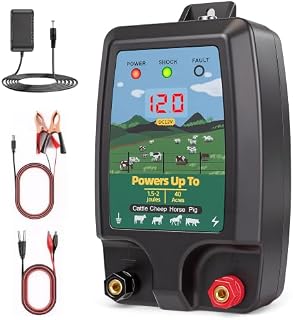 Electric Fence Charger 15 MilesCheck price on Amazon
 Electric Fence EnergizerCheck price on Amazon
 Cyclops BruteCheck price on Amazon
 15Miles Electric Fence Charger with ON/Off SwitchCheck price on Amazon
 5Miles/ 8KM Electric Fence ChargerCheck price on Amazon
Battery vs AC electric fence charger: side by side
| Product | Output energy | Range | Peak voltage | Power source | Keeper Score |
|---|---|---|---|---|---|
| VEVOR Electric Fence Charger 10kV 3J | 3 J | 1.86 miles | 10 kV | AC, DC battery, solar | 9.6/10 |
| LEOMAUNYX 15 Miles Electric Fence Charger | 4 J | 15 miles | 12 kV | AC/DC | 9.6/10 |
| FenceMate Battery Powered Electric Fence Charger | 0.5 J | Up to 10 miles | 10 kV peak | 12 V DC battery | 9.5/10 |
These are common ranges across the poultry listings we read; capacities and sizes are manufacturer ratings, quoted as the listing words them, collected 1 November 2026.
Output energy and range
Output energy is where the two sides part ways. The battery example, the FenceMate, delivers 0.5 joules, while the AC examples deliver 3 joules on the VEVOR and 4 joules on the LEOMAUNYX. Range does not follow the same split: the FenceMate reaches up to 10 miles on a single steel or aluminum wire with no vegetation, and around 2.5 miles in average on multi-wire fences with low vegetation. The LEOMAUNYX states up to 15 miles under vegetation-free conditions, and the VEVOR states 1.86 miles with an effective range of 1 to 3 km.
Power source and where each one works
The battery side needs no mains outlet. The FenceMate runs on a 12 V DC battery, so it suits fence lines far from the house or barn, as long as a charged battery is on hand. The AC examples also run without mains power: the LEOMAUNYX runs on AC and DC, and the VEVOR runs on AC, DC battery and solar power. That makes the VEVOR the flexible pick of the three. Our types of electric fence guide explains netting, strands and wire.
Weatherproofing and safety features
All three examples claim weatherproofing, but the details differ. The VEVOR states an IP65 waterproof rating and a temperature range of -40 F to 131 F. The LEOMAUNYX states a temperature range of -20 C to 60 C and holds up in rain and snow, with a waterproof box suggested to prolong service life. The FenceMate has a compact sealed structure and a rainproof design, with lightning protection included, though the maker suggests a dry location or shelter. All three need a ground rod or independent grounding system for good performance.
Flock fit
VEVOR Electric Fence Charger 10kV 3J
LEOMAUNYX 15 Miles Electric Fence Charger
FenceMate Battery Powered Electric Fence Charger
Fitting It to Your Flock
- Match the charger to the fence length: the LEOMAUNYX states up to 15 miles, the FenceMate up to 10 miles and the VEVOR 1.86 miles.
- Put the charger where power is: battery for a far fence, AC where an outlet is near.
- Plan the ground rod first: each example needs a ground connection, and the VEVOR stake needs moist ground.
- Keep the charger dry where the maker asks: the FenceMate prefers a dry location, and the LEOMAUNYX lasts longer in a waterproof box.
FAQ for the flock
Which is better for a chicken run, a battery or an AC fence charger?
It depends on power. A battery charger suits a run far from any outlet, while an AC charger suits a run near mains power and gives higher joules here: the FenceMate delivers 0.5 joules, and the AC examples deliver 3 and 4 joules.
How far can these fence chargers reach?
The LEOMAUNYX states up to 15 miles under vegetation-free conditions, the FenceMate up to 10 miles on a single wire with no vegetation, and the VEVOR 1.86 miles. Vegetation, wire type and grounding change the effective range.
Do electric fence chargers work in rain and snow?
The VEVOR states an IP65 waterproof rating and a temperature range of -40 F to 131 F. The LEOMAUNYX states a range of -20 C to 60 C and holds up in rain and snow. The FenceMate has a rainproof design, though the maker suggests a dry location or shelter.
What do I need besides the charger?
Each example needs a ground connection: the FenceMate needs a separate ground rod, the LEOMAUNYX needs an independent grounding system, and the VEVOR needs a grounding stake on moist ground. The FenceMate also needs a 12 V DC battery, and the VEVOR comes with a full installation kit.
Can one charger protect poultry and keep out wild animals?
The FenceMate is made to contain poultry and livestock and to keep out rodents and small wild animals. The LEOMAUNYX deters chickens, dogs, wolves, foxes, raccoons and skunks, and the VEVOR prevents wild animal intrusion for livestock and poultry.
How the Coop Score came out
Each example is scored out of 10 on performance, build, value, safety and warranty, using only what the listing publishes. The FenceMate states a one year limited warranty; the other two listings state no warranty term. The weights are on our How We Pick page.
| Product | Keeper Score | Perf. /35 | Build /25 | Value /25 | Safety /10 | Warranty /5 |
|---|---|---|---|---|---|---|
| VEVOR Electric Fence Charger 10kV 3J | 9.6 | 29 | 21 | 21 | 8 | 0 |
| LEOMAUNYX 15 Miles Electric Fence Charger | 9.6 | 32 | 20 | 20 | 5 | 0 |
| FenceMate Battery Powered Electric Fence Charger | 9.5 | 24 | 20 | 20 | 6 | 0 |
Keeper Scores run between 9.2 and 9.8. We spread weighted point totals across that window proportionally, so a product with more points always lands higher.
Which should you choose?
Choose battery if your fence runs far from any mains outlet and you keep a 12 V battery charged.
Choose AC if mains power sits near the fence and you want higher joules for a long run.
Use a charger rated for the length of netting you run, ground it as the manual describes and post warning signs where neighbors or children can reach the fence. Keep grass and weeds off the bottom strands, and never leave netting unpowered, because birds and wildlife can tangle in it. Read our Safety Disclaimer.
More coop guides
- Types of Electric Fence for Poultry: Netting, Strands and Wire
- How to Use Bird Netting for Poultry (2026 Guide)
- Best Aviary Netting (2026)
- Chicken Coop Fencing Ideas: Netting and Panels
- Chicken Run Ideas: Layouts, Netting and Fencing
- How to Deter Raccoons From Chicken Coop
- Chicken Run Set Up: A Step-by-Step Guide
- How Tall Should a Chicken Run Be? A Practical Guide for Backyard Flocks
- T Post Fence Calculator: How Many Posts Your Fence Needs
- How to Tie T Post Clips for a Sturdy Chicken Run
See every chicken runs and fencing guide.