Step-in vs T-post for Poultry Netting: Which One Should You Buy?
Step-in posts go in by foot for movable runs; T-posts need a driver for permanent fences. Compare installation, strength and reuse, then match the post to the job.

On this page
Top picks at a glance
As an Amazon Associate I earn from qualifying purchases.
- 1
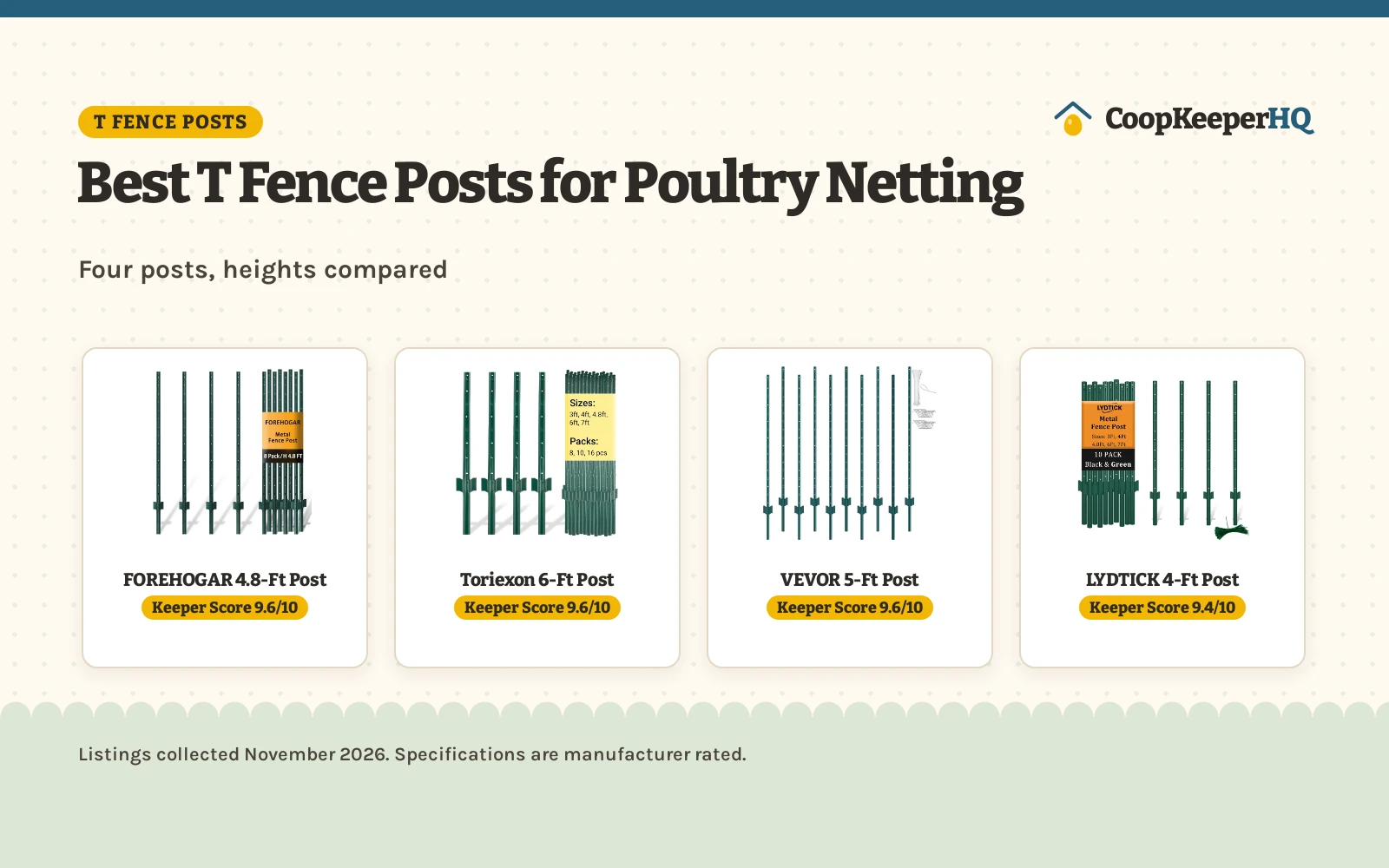
 FOREHOGAR Green Metal Fence Post 4.8 Feet9.6/10View on Amazon
- 2
 Toriexon Metal Fence Posts 6 FT9.6/10View on Amazon
- 3
 VEVOR 5 ft Fence Post9.6/10View on Amazon
- 4
 Heavy Duty Bird Netting for Chicken CoopView on Amazon
- 5
 White Plastic Chicken Wire MeshView on Amazon
- 6
 Temporary Fence with Posts 4' x 65' Suitable for BackyardView on Amazon
- 7
 Poultry Netting Electric FenceView on Amazon
- 8
 Electric Netting Fiberglass PostsView on Amazon
- 9
 42" x 82' Electric Poultry NettingView on Amazon
For step-in vs t-post for poultry netting, the short answer is: step-in posts for a run you will move, T-posts for a fence that stays. A step-in post pushes into the ground by foot with no tools; the Toriexon listing describes 48-inch posts with metal spikes at the base that you drive in by stepping on them, leaving 39 inches exposed. A T-post is a steel post you drive in with a post driver, built for permanent or semi-permanent fence lines. Pick the post that matches how long the fence needs to stand.
Other options for the coop
 Heavy Duty Bird Netting for Chicken CoopCheck price on Amazon
 White Plastic Chicken Wire MeshCheck price on Amazon
 Temporary Fence with Posts 4' x 65' Suitable for BackyardCheck price on Amazon
 Poultry Netting Electric FenceCheck price on Amazon
 Electric Netting Fiberglass PostsCheck price on Amazon
 42" x 82' Electric Poultry NettingCheck price on Amazon
CoopKeeperHQ earns a commission if you buy through our links, at no added cost to you. Affiliate disclosure.
Step-in vs t-post for poultry netting: the short answer
Choose step-in posts if the run moves: rotational grazing, a temporary garden fence, a quarantine pen. The posts go in by foot and pull out by hand, and kits like the Toriexon 4 ft by 65 ft temporary fence set up in a few minutes with 9 fiberglass posts on 6-inch double-spiked steel stakes. Choose T-posts if the fence is permanent: a fixed run, a paddock boundary, a predator-proof perimeter. They take a driver and real effort to set, but they hold heavier wire and stand for years.
What a step-in post is
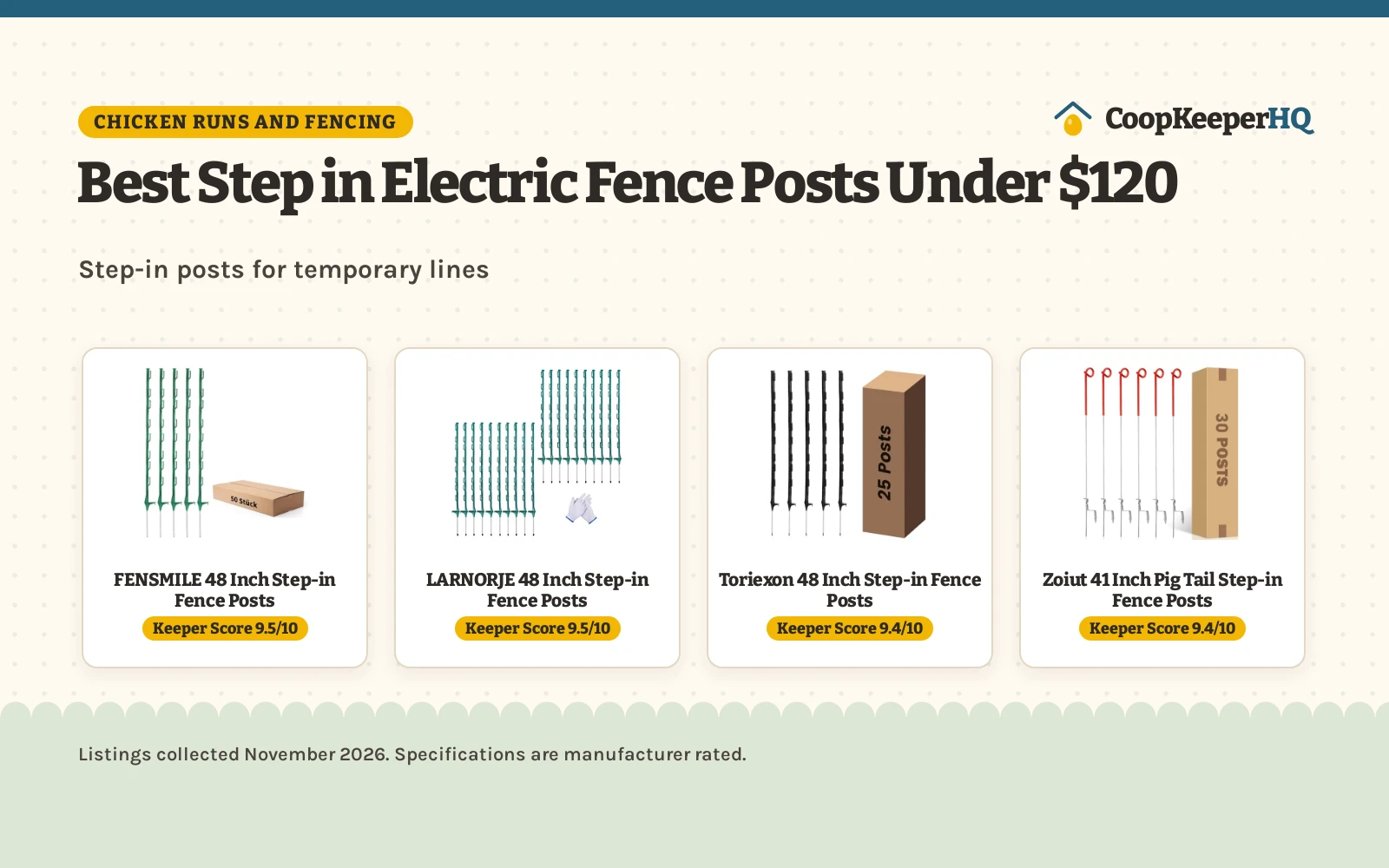
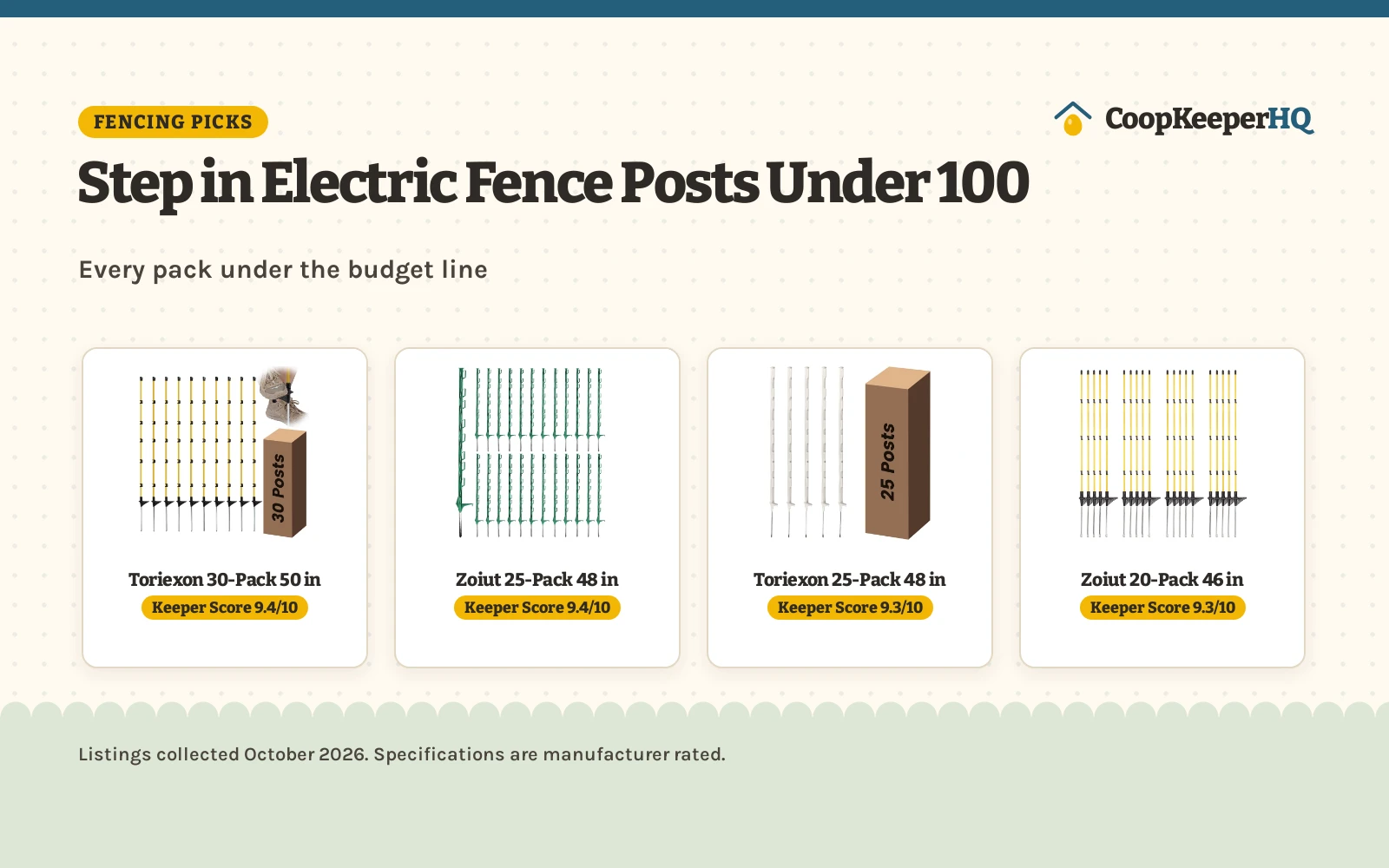
A step-in post is a lightweight post with a spike or spikes at the base that you push into the ground by stepping on it. The Toriexon 25-pack listing describes 48-inch posts of high-strength polyethylene reinforced with metal stakes at the base, with 39 inches exposed above ground and a molded clasp for height adjustment. No tools, no driver, no concrete. The trade-off is holding power: a step-in post suits light plastic netting and poultry mesh, not heavy welded wire or high-tension fence.
What a T-post is
A T-post is a steel post with a T-shaped cross-section and a spade plate near the bottom that grips the soil. You drive it with a manual post driver, and it stays: T-posts are the standard for semi-permanent and permanent fence lines on small farms. They hold heavier wire, taller netting and corner tension far better than a step-in post. The cost is effort and commitment: driving a line of T-posts is real work, and pulling them back out takes a puller or a lot of leverage.
Installation: minutes against an afternoon
This is the biggest practical difference. A step-in run goes up fast: unroll the netting, step each spike into the ground, and tie the mesh to the posts. The Toriexon temporary fence listing says you can get a suitable enclosure in a few minutes, and its 10.38-pound package carries to wherever the run goes. A T-post line is a project: mark the line, drive each post, set corners and braces, then hang the wire. For a movable paddock you rebuild every week, the step-in wins on time alone.
Strength, height and predators
Match the post to the job the fence does. Step-in posts suit light mesh: the plastic netting listings here run 15.7 inches wide in rolls of 16.4, 20 and 33 feet, with mesh holes of 0.5 to 0.8 inches, and the ORIVOGAS 19.5 by 19.5 ft bird netting covers a run against hawks with 50 cable ties and 8 ground stakes in the box. That is containment and hawk cover, not a predator-proof wall. For digging predators and a fence that must not move, T-posts with heavier wire and a buried apron are the serious answer; see our predator-proofing guide. A 4 ft fence like the Toriexon temporary kit also will not stop a determined flyer, so clip wings or add overhead netting where hawks hunt.
Cost, reuse and moving the run
Step-in posts are the reusable choice. Pull them, coil the netting, and set the run on fresh grass next week; the plastic mesh listings describe exactly this roll-up-and-store routine, and the Moyios kit even includes 100 zip ties for reattachment. T-posts are buy-once, set-forever: they cost more in effort than in money, and moving them is a chore. If your plan is rotational grazing across the yard, step-ins pay for themselves in saved labor. If the run has one home, T-posts are the last posts you will set.
Which should you buy?
Buy step-in posts if the run moves, the ground is soft enough to take a spike, and the mesh is light plastic netting or poultry mesh. Our step-in fence post picks compare the options.
Buy T-posts if the fence is permanent, the wire is heavy, or predators are the main concern. Pair them with proper wire and see the hawk protection wire picks for the overhead side.
Many keepers end up with both: T-posts on the permanent perimeter, step-ins for the movable grazing runs inside it.
Setting up either way
- Plan the line first. Walk the run, mark corners and the gate, and count posts before you buy.
- Keep corners strong. Corners take the tension; brace them or double the posts whatever post you use.
- Attach mesh low and high. Tie netting at the top and bottom of each post so chickens cannot duck under or hawks cannot lift it; the listings include zip ties and cable ties for this.
- Leave a gate. Plan how you get in with feed and water before the fence goes up.
- Check after storms. Step-in posts lean in soft ground after heavy rain; walk the line and straighten them.
Birds, breed size, run time and climate in; coop floor, run space, roost length and nesting boxes out.
Wash your hands after handling birds, eggs or equipment, supervise children around the flock, and check local rules on flock size and roosters before you buy. For sick birds, call a poultry veterinarian or your state extension office. See CDC backyard poultry guidance. Read our Safety Disclaimer.
FAQ for the flock
Can I use step-in posts for a permanent chicken run?
You can, but T-posts do the job better. Step-in posts suit light netting and movable runs; for a run that stands for years, driven steel posts hold heavier wire and resist leaning and predators.
Will step-in posts hold poultry netting?
Yes for light mesh. The Toriexon temporary fence pairs a 4 ft by 65 ft net with 9 fiberglass posts on 6-inch double-spiked steel stakes, and the plastic mesh listings from 15.7 inches by 16.4 ft up to 33 ft are made to tie to light posts with zip ties.
Can chickens fly over a 4 ft fence?
Many can. The Toriexon temporary fence stands 4 ft, which contains calm heavy breeds but not determined flyers. Clip wings or add overhead netting, such as the 19.5 by 19.5 ft bird netting, where escape or hawks are a concern.
Do I need a gate in a step-in fence?
Plan one. You will carry feed and water through daily, and lifting netting over a step-in line gets old fast. Leave a gap with an extra post and a simple tie closure.
How do I attach netting to the posts?
With ties. The Moyios mesh includes 100 zip ties and the ORIVOGAS netting includes 50 cable ties for fastening mesh to posts, and the Toriexon step-in posts have a molded clasp for height adjustment. Tie top and bottom so nothing slips.
More coop guides
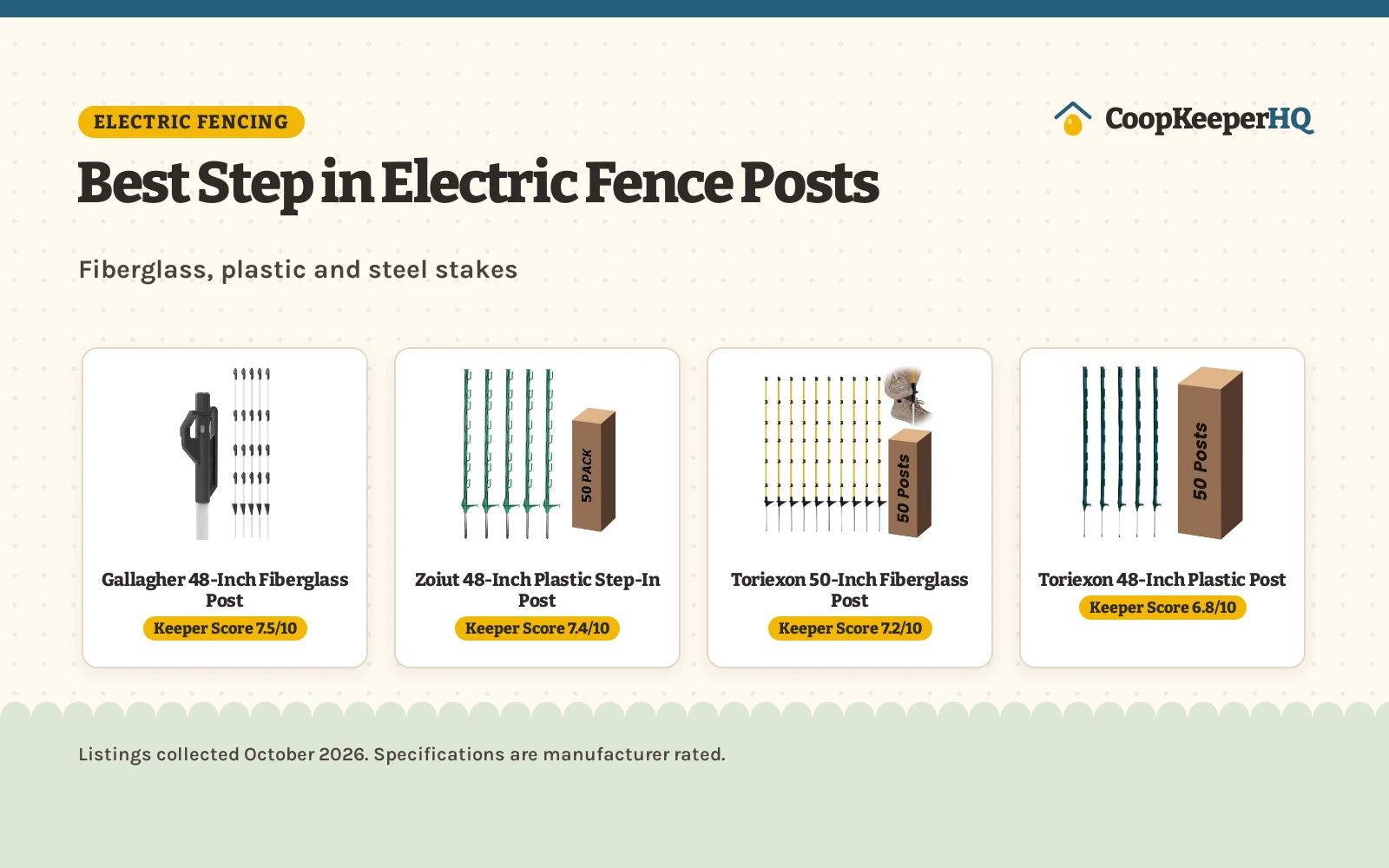
- Best Step in Electric Fence Posts (2026): 5 Top Stakes
- Best Chicken Wire for Hawk Protection (2026): 4 Wire Picks for Overhead Runs
- How to Predator Proof a Chicken Coop and Run
- Best Chicken Run Cover: Tarps and Roofs That Fit
- Chicken Coop vs Chicken Run: What Each One Does
- Best Ground Anchors for Chicken Run (2026): Wind Picks
See the chicken coop picks and the coop supply guides.