Wheelbarrow Types: Which One to Buy
Wheelbarrow types explained: steel and poly trays, wheel layouts and tire choices, and when a garden cart suits coop chores better.

On this page
Top picks at a glance
As an Amazon Associate I earn from qualifying purchases.
- 1
 WORX Aerocart Garden Cart9.7/10View on Amazon
- 2
 Dual-Wheel Wheelbarrow Garden Cart9.6/10View on Amazon
- 3
 CAMMOO 13" NO-Flat Tires 1400lb Garden Cart Wheelbarrow with9.6/10View on Amazon
Feed sacks, damp bedding and a full muck bucket all need the same thing: a way to move a heavy load across the yard without wearing out your back. Wheelbarrow types differ in the tray, the wheels, the tires and the handles, and each layout suits a different chore. A deep steel tray with a wide tire carries muck over soft ground, while a light poly tray suits quick trips with feed and dry bedding. This guide walks through each type so the barrow matches the chores you do most.
CoopKeeperHQ earns a commission if you buy through our links, at no added cost to you. Affiliate disclosure.
Wheelbarrow types: the tray comes first
Start with the tray, because it sets what the barrow can carry and how long it lasts. Steel trays take knocks and hold a sharp load such as broken fencing or a spade full of gravel, and they dent rather than crack when a load shifts. Poly trays stay light in the hand, shrug off rust and rinse clean after a muck run, but a sharp edge can gouge the surface. A shallow tray loads fast and tips out clean, while a deep tray holds a big muck-out in a load and suits a long run to the compost heap. Size the tray to the chore you do most, not to the chore you do once in a while. The bedding for composting guide covers what goes on the heap.
Wheels: where the load rides
A classic barrow rides on a wheel at the front and rests on legs at the back. That layout turns in a tight space, tips out with a lift of the handles and fits through a narrow run gate. A cart with wheels at the sides stands on its own when parked, so it suits slow loading at the feed store or a straw stack. Side wheels need more room to turn, and they spread the weight across a wider path, which helps on a lawn. Match the layout to the ground: a front wheel for tight runs and muddy corners, side wheels for open yards and level paths.
Tires: air-filled or solid
Air-filled tires grip soft ground, soak up bumps and roll quietly over a rough yard. A thorn, a nail or a sharp edge can leave one flat at the worst moment. Solid tires never go flat, which suits a yard full of wire offcuts and thorns, but they ride harder and sink sooner in deep mud. The wheelbarrow for a muddy yard guide compares barrows built for soft ground, and the pneumatic vs solid tire wheelbarrow comparison weighs the trade-off. Pick the tire for the ground crossed most, not for the ground crossed once in a while.
Handles and balance
Handles set how a full tray feels. Straight handles give leverage for lifting and tipping. Loop handles give a firm grip for a short pull. Wood handles feel warm in cold weather and can splinter with age, while steel tube handles resist bending. Whatever the shape, the grip should let the back stay straight while the tray rides level. Load the tray with the heavy end low and near the wheel, and the barrow stays steady on the way to the heap.
Garden carts and wagons: the close cousins
A wheelbarrow is not the only hauler in the yard. A garden wagon with a pull handle and a flat bed carries feed sacks, straw bales and a stack of fencing with the load sitting low, and it follows behind on a path. The garden wagon vs wheelbarrow comparison sets out when each one wins, and the small vs large garden cart guide covers bed sizes for a small yard and a hobby farm. A steel bed takes knocks like a steel tray, while a poly bed rinses clean; the aluminum vs steel garden cart comparison covers the metal choice. For feed runs, the garden wagon for hauling feed guide compares wagons built for sacks. Use a wagon when the load is long, flat or bulky; use a barrow when the path is narrow, the ground is soft or the load needs tipping out.
Sizing a wheelbarrow for coop chores
Size follows the chore list. A shallow tray suits a small yard where the run is a short walk from the shed and the loads are light: feed, a forkful of bedding, a bucket of water. A deep tray suits a muck-out day, when the bedding comes out in load after load and the heap sits at the far end of the garden. The wheelbarrow size chart covers tray sizes and what they hold, and the wheelbarrow capacity guide explains what a garden cart holds by comparison. Check the gate before buying: the barrow must pass the run gate, the shed door and any gap in the fence on the route to the heap. A barrow that fits the route beats a big tray stuck at the gate.
A simple checklist
- Tray suits the load hauled most
- Tire suits muddy ground or a firm path
- Handles feel steady with a full tray
- Barrow fits through the run gate and shed door
- Wheel turns freely and the tray sits level
- Storage keeps the tray dry between chores
For the price side of the choice, see the how much a wheelbarrow costs guide, and browse the coop supplies guides for the rest of the chore kit.
Birds, breed size, run time and climate in; coop floor, run space, roost length and nesting boxes out.
Wash your hands after handling birds, eggs or equipment, supervise children around the flock, and check local rules on flock size and roosters before you buy. For sick birds, call a poultry veterinarian or your state extension office. See CDC backyard poultry guidance. Read our Safety Disclaimer.
FAQ for the flock
What type of wheelbarrow is best for a chicken coop?
A deep tray with an air-filled tire suits most coop chores: it carries muck, bedding and feed across soft ground to the heap. For a small yard with firm paths, a light poly tray with a solid tire needs less care and still handles daily loads.
Steel or poly tray: which one suits a coop?
Steel takes knocks from fencing, spades and frozen bedding, and it dents rather than cracks. Poly stays light, never rusts and rinses clean after a muck run. Pick steel for rough loads and poly for light daily hauling.
Are air-filled tires better than solid tires for a muddy yard?
Air-filled tires grip soft ground and cushion the ride over ruts. Solid tires win on a yard full of thorns and wire offcuts, where a flat tire strands the load on the way to the heap. Match the tire to the ground crossed most.
When is a garden cart better than a wheelbarrow?
A garden cart suits long, flat loads such as feed sacks and straw bales, and it stands on its own while loading. A wheelbarrow suits a narrow path, soft ground and a load that needs tipping out. Many keepers end up with a cart and a barrow, each for the chores it suits.
What size wheelbarrow suits a small yard?
A shallow tray suits a small yard: it still carries feed, bedding and a bucket of water. A deep tray pays off when the compost heap sits at the far end of the garden and the muck comes out in load after load.
More coop guides
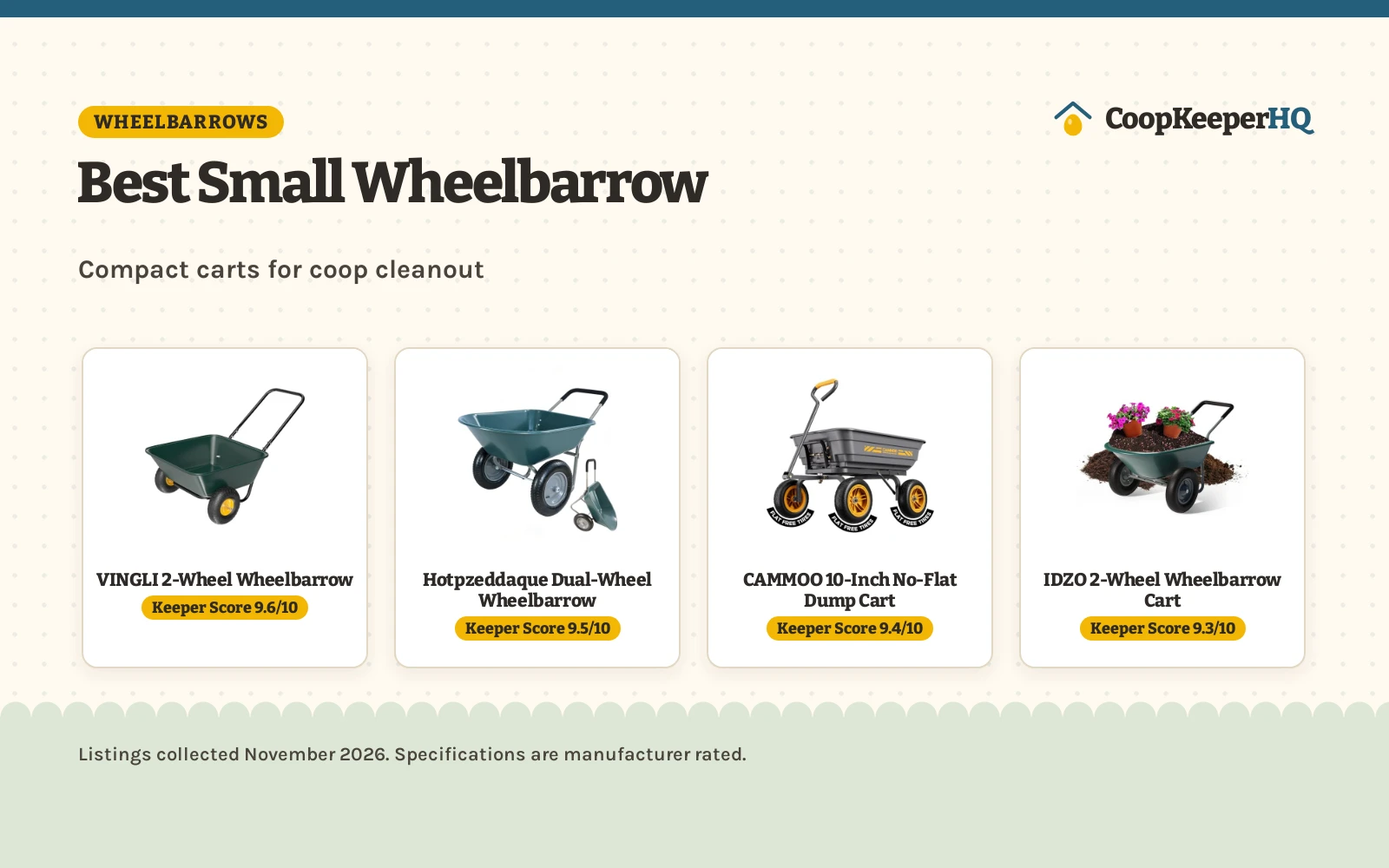
- Best Small Wheelbarrow (2026): 4 Picks for the Coop
- Best Wheelbarrow for Muddy Yard (2026): 4 Picks for the Coop
- Size of Wheelbarrow: Dimensions and Capacity Chart
- Capacity of a Wheelbarrow: How Much a Garden Cart Holds
- Garden Wagon vs Wheelbarrow: Which One Should You Buy?
- Pneumatic vs Solid Tire Wheelbarrow: Which One Should You Buy?
- Poly vs Steel Garden Wagon: Which One Should You Buy?
- Small vs Large Garden Cart: Which One Should You Buy?
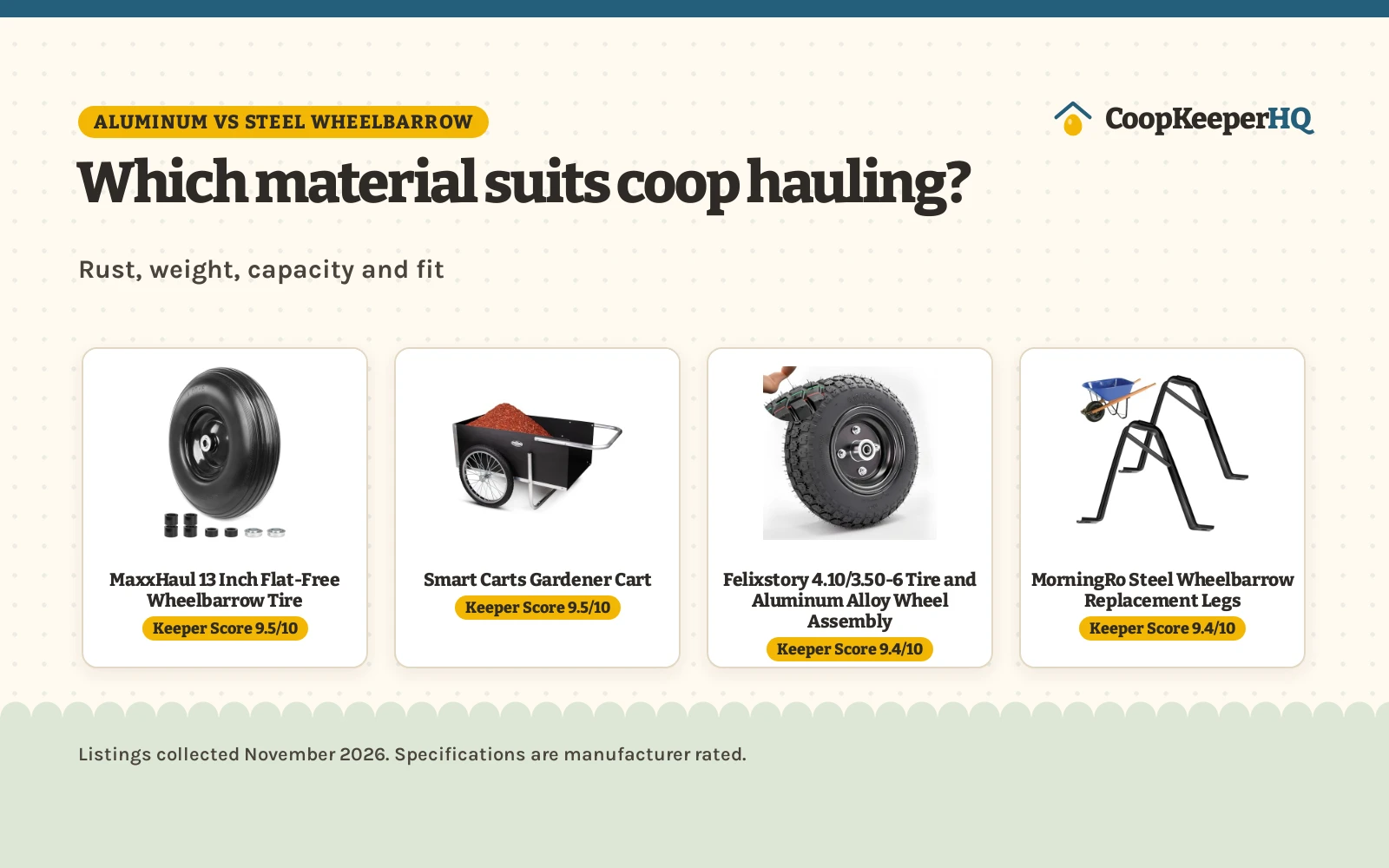
- Aluminum vs Steel Garden Cart: Which One Should You Buy?
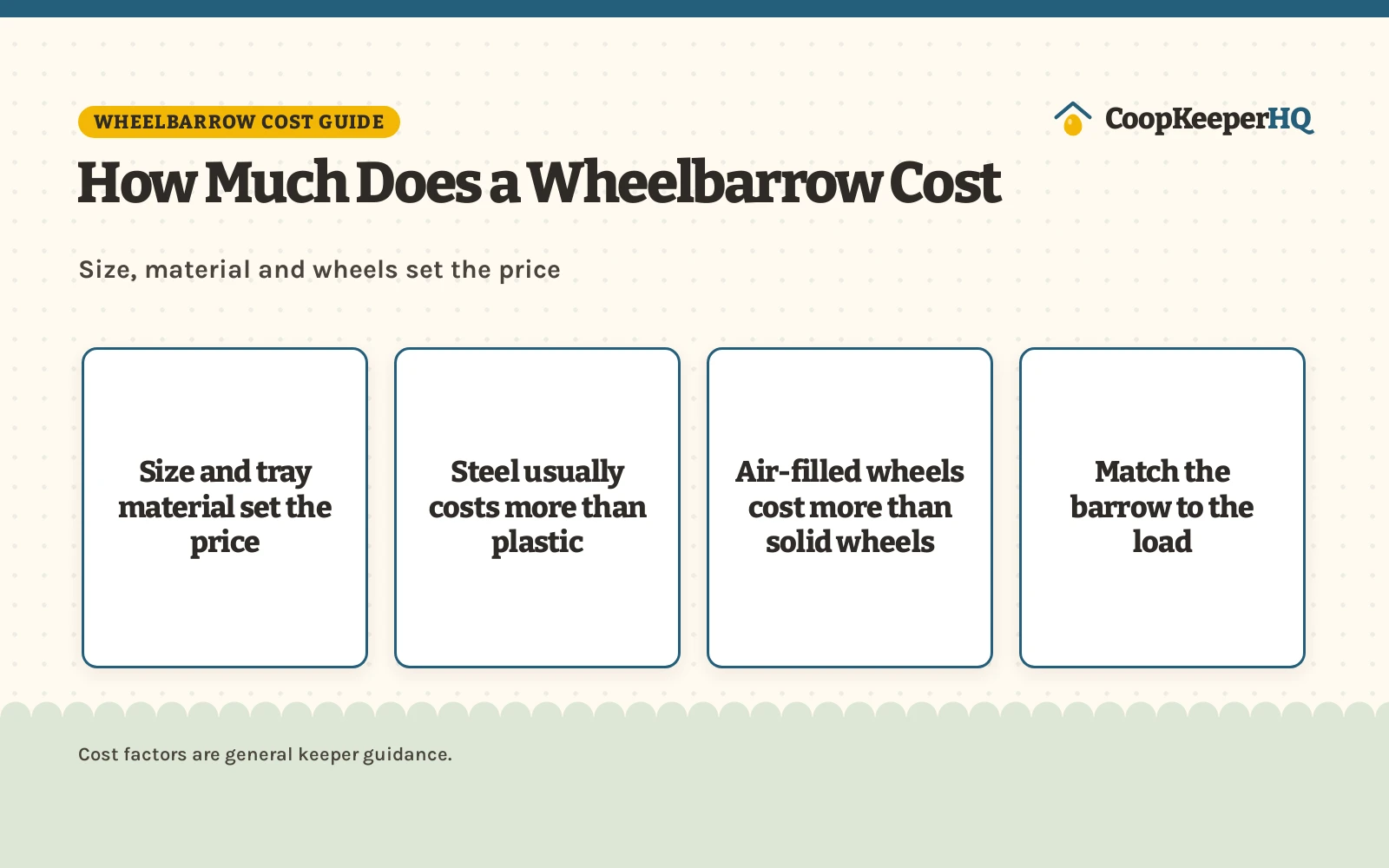
- How Much Does a Wheelbarrow Cost for Feed Hauling
- Best Garden Wagon for Hauling Feed (2026)
See the coop supply guides and the chicken coop picks.